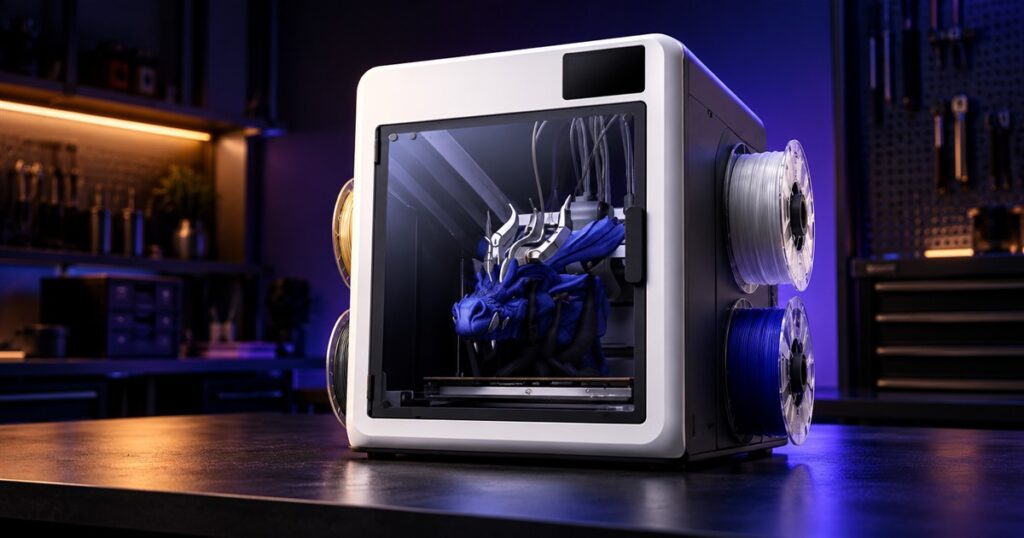
Printing a tiny dragon should not require producing an entire side dish of plastic noodles. Yet multicolor 3D printing has a habit of giving you the thing you wanted, plus a colorful pile of evidence that your hobby has developed a digestive system. Creality’s K3 nozzle-changing 3D printer takes aim at that second output.
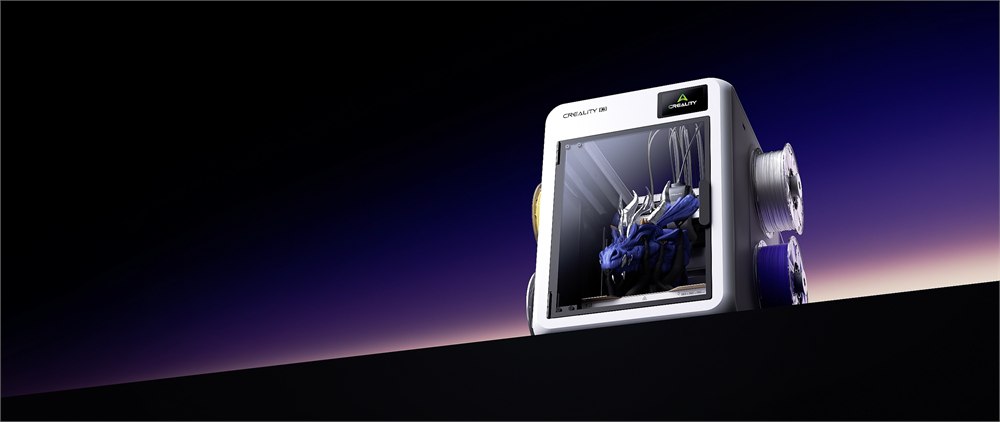
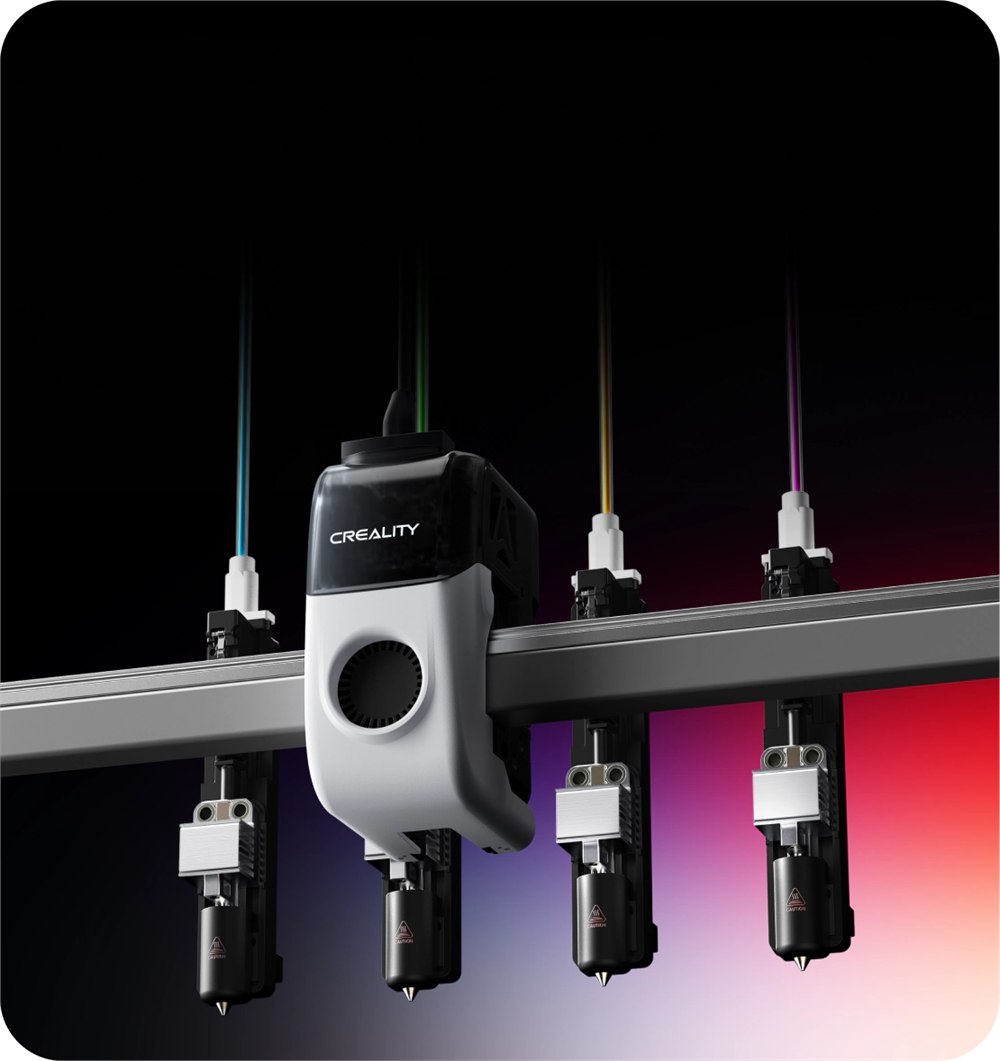
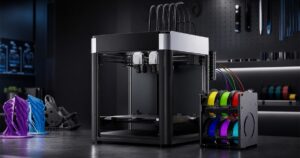
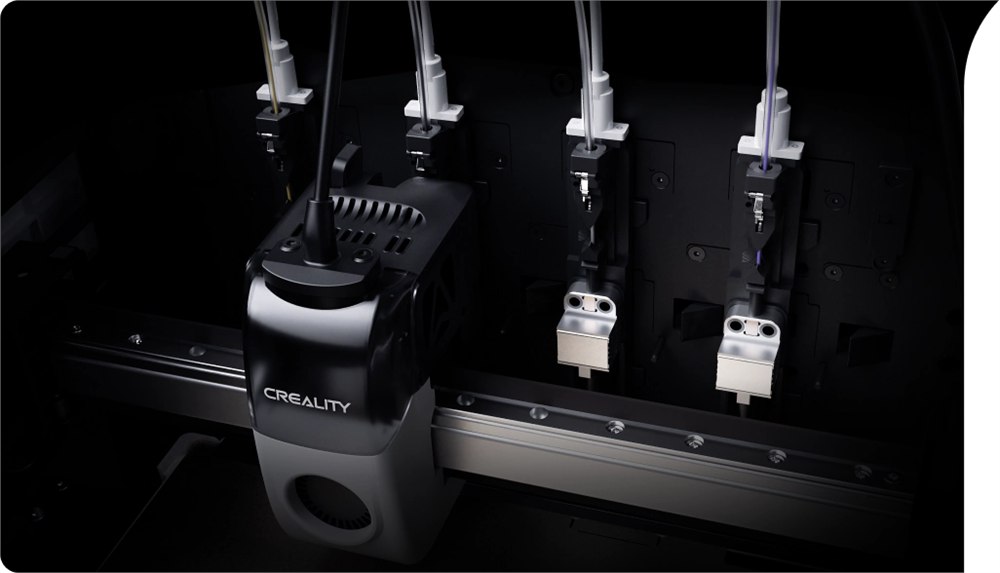
The K3 uses four separate nozzle channels and switches between them instead of repeatedly pushing different filaments through one shared nozzle. Creality calls the system KliTek. The practical attraction is easy to understand: keep the colors ready in their own lanes, then bring the right nozzle into action when the model needs it. Your dragon gets its wardrobe changes without quite so much backstage mess.
This is still a machine for people who enjoy making things, adjusting settings, and occasionally staring at a moving printhead like it owes them money. The interesting change is where that effort goes. Rather than treating every color change as a miniature cleaning cycle, the K3 makes changing the delivery hardware part of the job.
Four nozzles, fewer color-change chores
Creality describes an independent four-channel, four-nozzle architecture. Its product-page headline puts nozzle changes at 4.8 seconds, while the main explanation rounds that to five seconds. That figure describes the nozzle exchange; it should not be read as a promise that every operation involved in switching materials is finished in that same blink.
The company says this approach can cut overall print time by up to 80% and filament use by up to 85%, compared with single-channel, single-nozzle printers. Those are Creality laboratory claims, with the stated purge-saving explanation applying to setups using four colors or fewer. They are useful reasons to pay attention, not a guarantee that every desk ornament will emerge five times faster.
There is another important detail hiding behind the exciting waste-saving pitch: Creality’s own example comparisons still include prime towers and, where needed, supports. So the sensible expectation is less waste from color changes, rather than a magical workshop in which every millimeter of filament becomes a finished masterpiece. Even your most optimistic dragon still has to obey geometry.
The nozzle size can change, too
Color is the obvious crowd-pleaser, but nozzle diameter is where the K3 gets particularly interesting for practical prints. Creality describes using a smaller nozzle for outer-wall detail and a larger one for infill. Think of it as drawing the visible edges with a finer pen, then filling the hidden areas with something that does not insist on taking all afternoon.
The listed size options are 0.2, 0.4, 0.6, and 0.8 millimeters. The printer comes with 0.4-millimeter nozzles by default; the mixed-size kit is a separate purchase. Mixing sizes also requires configuration in Creality Print. This is a capability to plan around, rather than an excuse to assume every accessory shown in a glamorous product picture arrives in the box.
- Multicolor models: separate nozzle channels reduce repeated unloading, reloading, and purging through one shared outlet.
- Detailed outer surfaces: smaller nozzle options can be assigned to areas where finer detail matters.
- Faster hidden infill: larger nozzle options can handle less visible interior work when the slicing setup supports it.
- Flexible projects: Creality advertises TPU printing, with additional accessories required.
- Support strategies: the company describes PLA and PETG combinations for breakaway supports, plus PVA support printing with extra accessories.

That range creates more possibilities, but it also creates choices. A decorative model, a flexible part, and a component with awkward internal supports are different jobs. The useful question is which arrangement serves the object you actually want to make. Buying every option because it sounds impressive is how a modest hobby bench becomes a very expensive drawer collection.
| Feature | What Creality lists | What to keep in mind |
|---|---|---|
| Nozzle channels | Four independent channels | The purge-saving explanation covers four colors or fewer. |
| Nozzle exchange | 4.8 seconds in the headline; five seconds rounded | Exchange time is not the whole printing workflow. |
| Nozzle sizes | 0.2, 0.4, 0.6, and 0.8 mm options | 0.4 mm supplied; mixed-size kit sold separately. |
| Flexible filament | TPU from 85A to 95A advertised | Additional TPU accessories sold separately. |
| Enclosure | Optional top cover | Sold separately; relevant to thermal control. |
| Color blending | Layered translucent filament approach | Not precise matching of every requested color. |
Soft materials and support structures get a turn
Creality’s TPU pitch spans Shore hardness ratings from 85A to 95A. The company describes its S-Drive feed system working with high-flow nozzles and adjusted slicing algorithms to handle flexible filament. That is a more specific proposition than simply adding the word “flexible” to a brochure and hoping the spool sorts itself out.
For supports, the manufacturer illustrates PLA models with PETG breakaway supports, or the reverse arrangement. It also describes water-soluble PVA supports for complex shapes, while explicitly noting that PVA printing requires additional accessories. These options address different cleanup problems. A support designed to separate from the model has a very different job from a permanent structural connection.
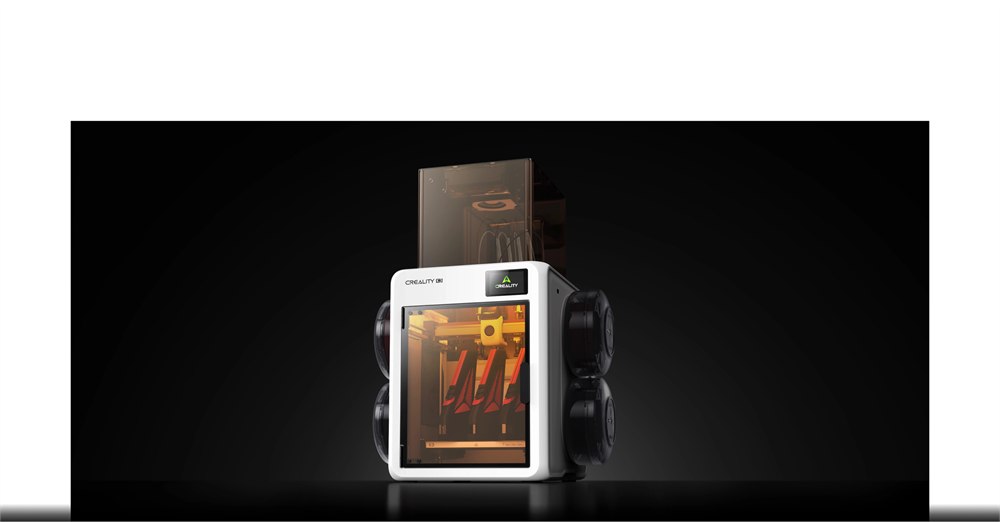
The optional top cover adds another decision. Creality presents it as a way to close the chamber for thermal management and quieter operation, and recommends stable chamber temperature for engineering filaments such as ABS. The cover is sold separately. If your shopping list is driven by a particular material, check the complete configuration for that material before choosing a package.
A colorful result still needs a realistic expectation
Creality also promotes layered color blending using translucent filaments. Rather than treating the headline as a promise of perfect color reproduction, pay attention to the company’s qualification: layered mixing is not precise color matching and cannot reproduce every specified color. It is an interesting creative option, especially for decorative work, with a very real boundary.

The hardware has its own supporting cast. Creality lists 37 sensors, including 12 dedicated to nozzle changing, and describes monitoring latch engagement, alignment, position, and locking. It also reports testing more than 800,000 high-speed nozzle changes with drift below 25 micrometers. These remain manufacturer test claims; they are not a substitute for long-term experience in a busy home workshop.
That distinction matters because a fast exchange is only useful when the next nozzle lands where the print expects it. The K3’s appeal is the combination of mechanical switching and the software that assigns work to it. There is plenty here for makers who want to experiment, but no sensible reason to describe it as a machine that removes every setup decision.
The useful details before making room on the bench
- Product: Creality K3 nozzle-changing 3D printer with the KliTek four-channel system.
- Main purpose: multicolor and multi-material printing with less repeated purging through a shared nozzle.
- Included nozzle size: 0.4 mm by default, with other sizes available separately.
- Optional equipment: mixed-size nozzle kit, TPU accessories, PVA accessories, and top cover require attention when choosing a setup.
- Performance figures: manufacturer claims and laboratory comparisons, with results dependent on the printing job.
International pricing has been reported as expected below US$900, but final pricing and availability remain unconfirmed. Creality’s K3 page currently invites visitors to sign up for updates. Treat that figure as a launch expectation, and check the eventual package contents rather than budgeting as though every optional part is included.
For the right maker, the promise is pleasantly concrete: spend more of the printing session building the object and less of it clearing out yesterday’s color. The tiny dragon may still take over your desk. At least its plastic noodle entourage has a chance of becoming smaller.
Product details and images: Creality. Launch-price reporting: New Atlas.
| Pros | Cons and considerations |
|---|---|
| Four nozzle channels target color-change waste. | Prime towers and supports can still consume material. |
| Different nozzle sizes can serve different print areas. | Mixed-size kit is extra and needs slicer configuration. |
| Flexible-filament and soluble-support options broaden potential projects. | TPU and PVA setups require additional accessories. |
| Optional cover supports more controlled chamber conditions. | The top cover is sold separately. |
| Layered color blending offers creative possibilities. | It cannot precisely reproduce every color. |
| Fast exchange and large savings are promising. | Claims are manufacturer figures; final price and availability remain unconfirmed. |
Save this find.
Thank yourself later.
Your next great gift idea. Your someday space. Your collection of wonderfully weird things.
Save to PinterestPick a board. Keep the inspiration.
This 3D Printer Swaps Between Four Nozzles to Cut Multicolor Printing Waste
Where to find This 3D Printer Swaps Between Four Nozzles to Cut Multicolor Printing Waste
OddityMall may earn a commission from qualifying purchases at no extra cost to you.