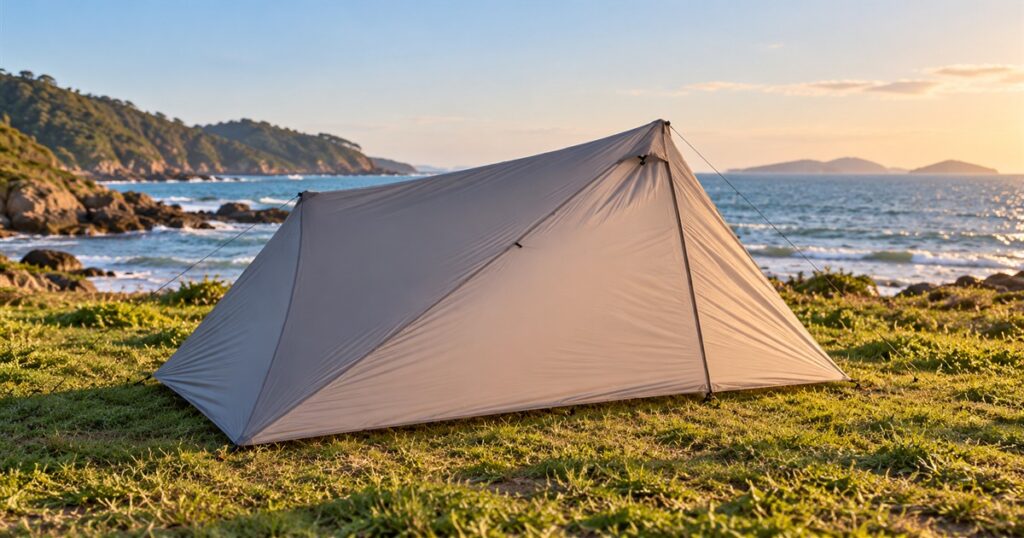
Backpacking is a hobby in which adults spend good money to carry fewer things, then spend the entire walk discussing the things they decided not to carry. ROAMER has a useful contribution to that conversation: a double-wall solo tent that skips a dedicated pole set and offers three ways to hold its roof up. Your trekking poles can do a second shift. Suitable branches can apply for the position. Even secure overhead anchor points get a look in.
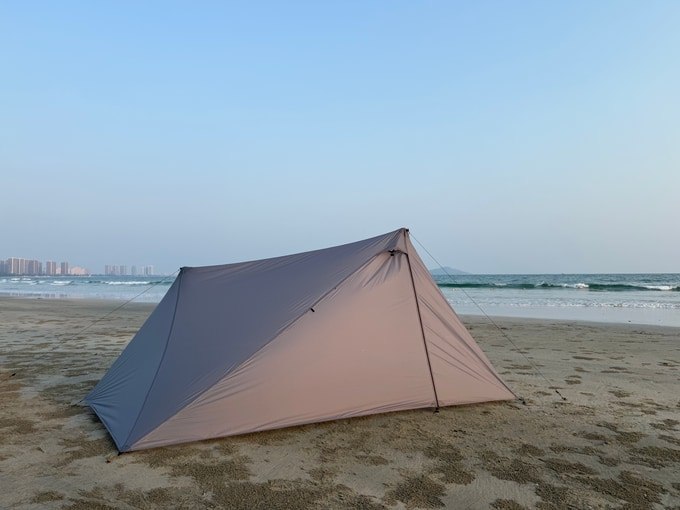
Made by FLFQ-Aloner, this little shelter is designed around a fairly sensible compromise. It aims to give one person a proper sleeping enclosure, a separate rainfly, and enough floor width to avoid feeling like a burrito that has made poor travel arrangements. The original complete kit is advertised at 744 grams, or about 1.64 pounds, before adding the supports you choose to bring.
There is also a newer Light Gray option with a 10D nylon fly. The campaign headline puts that version at 665 grams packed, while its reward description says 655 grams. That ten-gram disagreement needs clarification from the maker before anyone builds a packing spreadsheet around it. Other colors retain the original advertised 744-gram configuration. Those are different versions, not a magical tent that gets lighter whenever you refresh your browser.
A solo tent with three ways to stand up
The interesting part is the pitching flexibility. ROAMER can use trekking poles, suitable branches, or lines that suspend its peaks from secure overhead anchors. In the suspended arrangement, the tent still sits on the ground. This is not a hammock tent, a floating bedroom, or a permission slip to sleep halfway up a tree.
That flexibility gives you choices when planning a trip. If you already hike with trekking poles, they can serve as shelter supports at camp. Branches offer another option where appropriate ones are available. Overhead anchors can support the peaks at a suitable site. None of those choices eliminates the need to think about the campsite, the anchors, or the pitch. The maker explicitly says every arrangement requires secure staking and proper guyline tension.
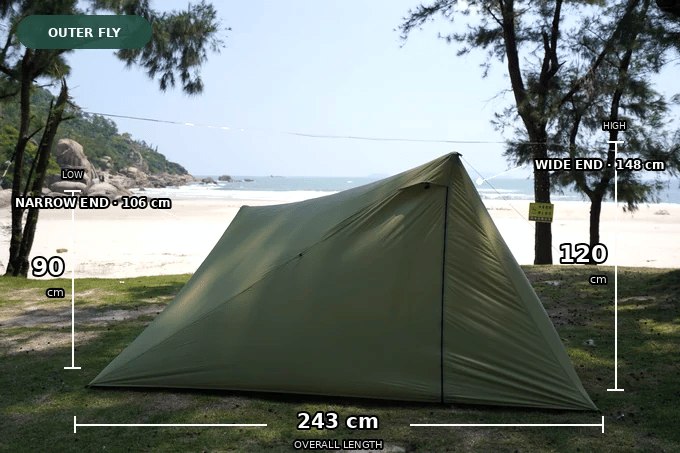
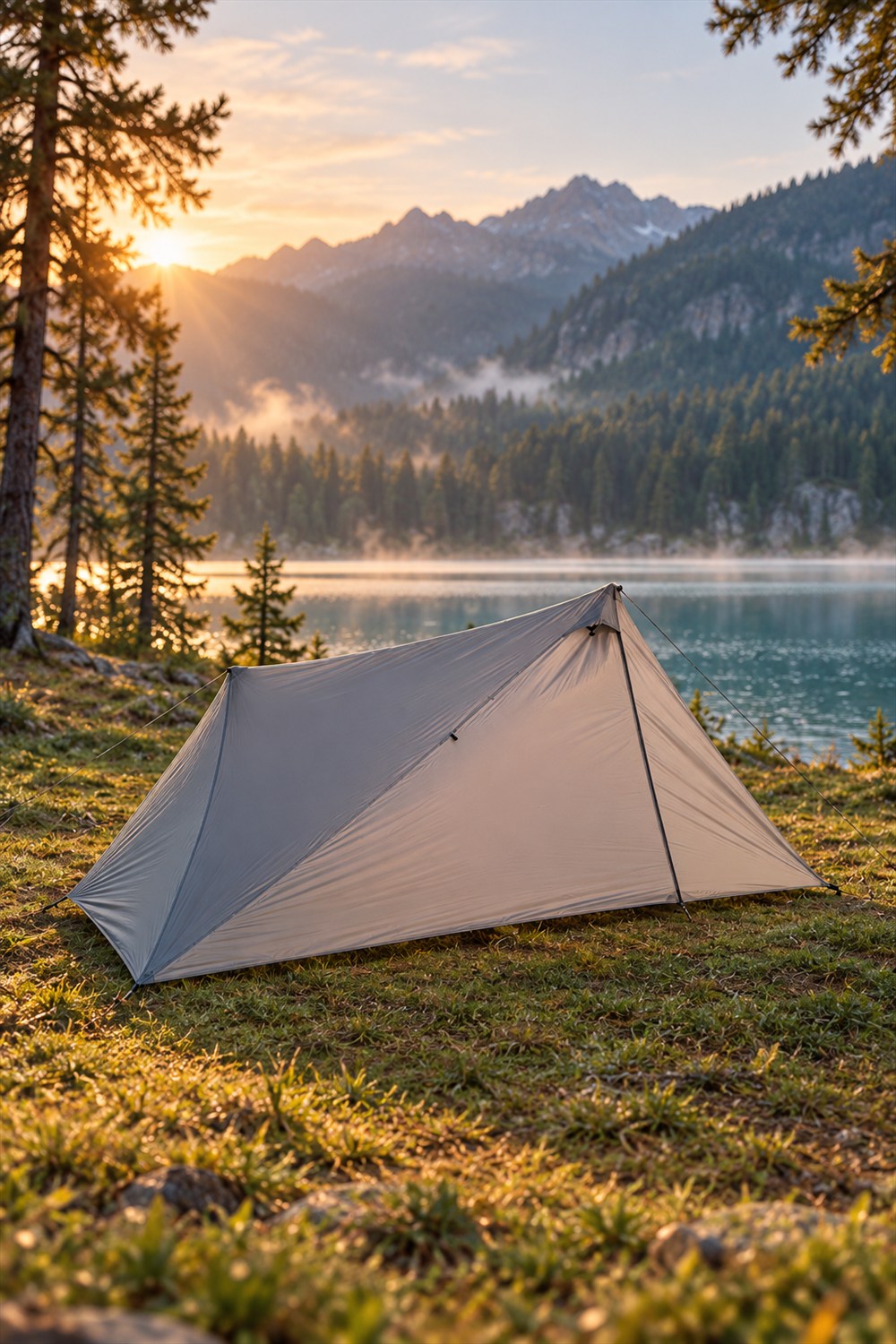
The shape is noticeably asymmetric, with a taller peak at one end and a lower one at the other. It looks less like a miniature suburban house and more like a very purposeful fabric wedge. That taller section is where the design concentrates useful room. The lower end saves structure where your feet are unlikely to demand a cathedral ceiling.
It also means this is not a freestanding dome you can casually pick up and move while everything is assembled. The supports, stakes, and tension are part of the system. Anyone accustomed to a conventional pole-frame tent should practice the setup before discovering, at dusk, that their preferred campsite is mainly rock with decorative attitude.
Room for a person, plus a little dignity
The stated inner floor measures 226 by 90 centimeters, approximately 89 by 35 inches. That is a long rectangle for one sleeper, rather than a claim that two friends can squeeze in if they believe in teamwork. The campaign demonstrates a 70-by-180-centimeter sleeping pad inside it, with space alongside for essentials.
Floor dimensions are useful, but they do not tell the whole comfort story. Sloping fabric changes how much room is available higher up, and your sleeping pad and bag affect how you occupy it. Taller campers should consider the complete sleeping setup rather than simply comparing their height with the floor length. Your toes deserve better than a technical victory.
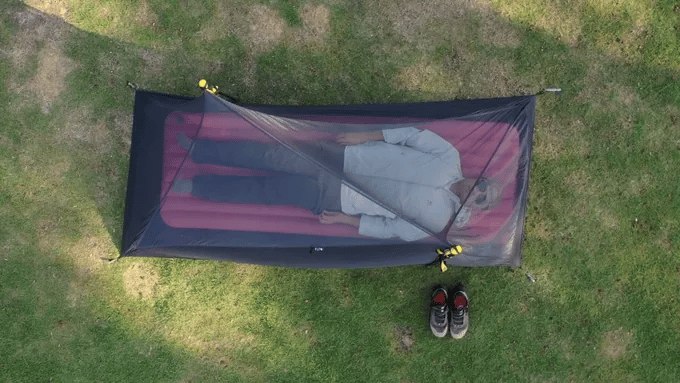
For someone traveling alone, the separate inner tent is a practical part of the appeal. Mesh encloses the sleeping area while the outer fly handles the weather-facing job. The design also includes vestibule space, so there is a place outside the sleeping enclosure for the sort of trail gear you would not invite onto a clean pillow.
- Trekking-pole pitch: make use of supports you may already carry, with staking and guyline tension still required.
- Branch-supported pitch: use suitable natural supports where the campsite and conditions allow.
- Suspended peaks: use secure overhead anchor points while keeping the sleeping floor on the ground.
- Separate sleeping enclosure: the mesh inner and rainfly form a double-wall shelter.
- Solo floor plan: the 90-centimeter width gives one camper room to arrange a sleeping pad and nearby essentials.
What the weight figures actually include
The original 744-gram figure covers the fly, inner tent, stakes, guylines, and storage sacks. Trekking poles are not included. That distinction matters: a tent without a dedicated pole set can save packed bulk, but your chosen supports still belong in your overall load calculation. The mountain does not care which column of your spreadsheet contains them.
There is another small detail to confirm before ordering. The campaign story lists six stakes, while some reward descriptions list seven. The sensible reading is that stakes are included, with the exact count requiring confirmation for your selected reward. Neither the stake count nor the upgraded weight discrepancy changes the basic pitching concept, but both matter when comparing the contents of actual packages.
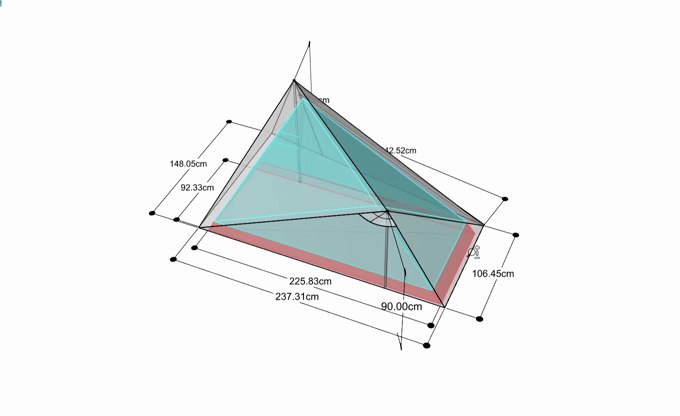
| Detail | What the campaign lists |
|---|---|
| Capacity and floor | One person; 226 × 90 cm inner floor |
| Original complete-kit weight | 744 g; supporting poles excluded |
| Light Gray 10D version | 665 g in the headline; 655 g in the reward description |
| Original packed volume | About 3.2 liters |
| Pitching choices | Trekking poles, suitable branches, or suspended peaks |
| Original fabric arrangement | 15D silnylon fly, mesh inner, 20D bathtub floor |
The maker describes the original packed shelter as occupying about 3.2 liters. That is a useful number for a backpack already negotiating a custody dispute between food, water, and a spare layer. Small packed volume may also appeal to bikepackers and paddlers, although the shelter still needs a suitable place to pitch wherever the journey ends.
Two walls, sensible expectations
Double-wall construction separates your sleeping space from the outer rainfly. ROAMER’s maker describes ventilation that helps moisture escape and a bathtub floor for ground-side protection. Those are useful design features; they are not a promise that moisture will never appear in any weather. An ultralight shelter remains a fabric shelter, and conditions still get a vote.
The original fabric specification combines a 15D silnylon outer fly with a mesh inner and a 20D bathtub floor. The newer Light Gray upgrade changes the fly to 10D nylon. Buyers should check the specification of the version they select instead of assuming every color uses the same fabric. Color shopping has unexpectedly acquired a technical appendix.
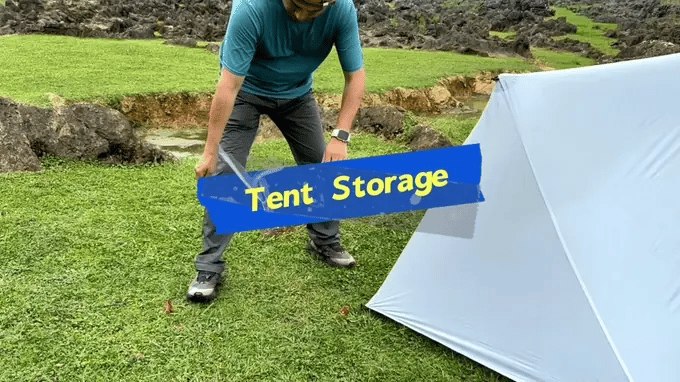
The campaign also makes one campsite rule very clear: do not cook inside the tent or vestibule. Keep the stove outside. A covered entrance is useful for gear, but it is not an indoor kitchen with unusually ambitious ventilation. Likewise, lightweight fabric deserves careful site selection, proper drying, and sensible storage between trips.
- Product: FLFQ-Aloner ROAMER double-wall solo shelter.
- Main attraction: three pitching options without a dedicated tent-pole set.
- Sleeping area: a rectangular 226 × 90 cm inner floor.
- Original configuration: advertised at 744 g complete, excluding supporting poles.
- Updated option: Light Gray with a 10D fly; confirm the conflicting 665 g and 655 g figures.
- Buying considerations: crowdfunding delivery, separate shipping, and reward-specific specifications.
ROAMER is currently on Kickstarter, with single-shelter rewards starting at US$199, including a Light Gray upgrade reward at that price. The planned retail price is listed as US$349. Shipping is charged separately. The US$199 rewards currently show estimated delivery in December 2026, and the campaign is scheduled to end November 12, 2026. This is crowdfunding, so the delivery estimate is a target rather than a guaranteed arrival date. Confirm your chosen reward’s contents and specifications before pledging.
Images courtesy of FLFQ-Aloner’s official ROAMER campaign. For a solo camper who already carries trekking poles, the appeal is easy to understand: less dedicated structure to pack, a separate sleeping enclosure, and several ways to put a roof over your evening. Your backpack may finally have room for the snacks you were going to bring anyway.
| Pros | Cons and considerations |
|---|---|
| Three pitching options | Every setup needs suitable supports, secure stakes, and tension |
| Double-wall sleeping enclosure | Ventilation does not guarantee condensation-free conditions |
| 90 cm-wide solo floor | Sloping walls affect usable space above the floor |
| Compact original kit advertised at 744 g | Supporting poles are not included in that weight or package |
| Lighter 10D Light Gray option | Campaign gives conflicting upgraded weights and stake counts |
| Current entry reward below planned retail price | Shipping is extra and crowdfunding delivery is not guaranteed |
Save this find.
Thank yourself later.
Your next great gift idea. Your someday space. Your collection of wonderfully weird things.
Save to PinterestPick a board. Keep the inspiration.
This Ultralight Solo Tent Can Use Trekking Poles, Branches, or Overhead Lines
Where to find This Ultralight Solo Tent Can Use Trekking Poles, Branches, or Overhead Lines
OddityMall may earn a commission from qualifying purchases at no extra cost to you.