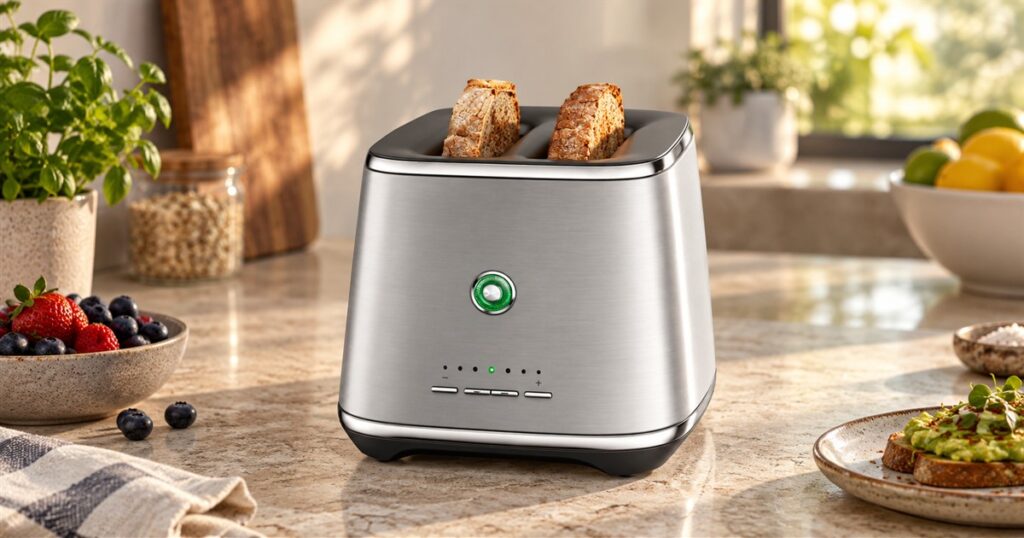
Toast is a surprisingly personal matter. One person wants bread that has briefly heard about heat. Another wants a slice the color of a well-traveled briefcase. Somehow, both people live in the same house, use the same toaster, and act shocked when breakfast becomes a negotiation.
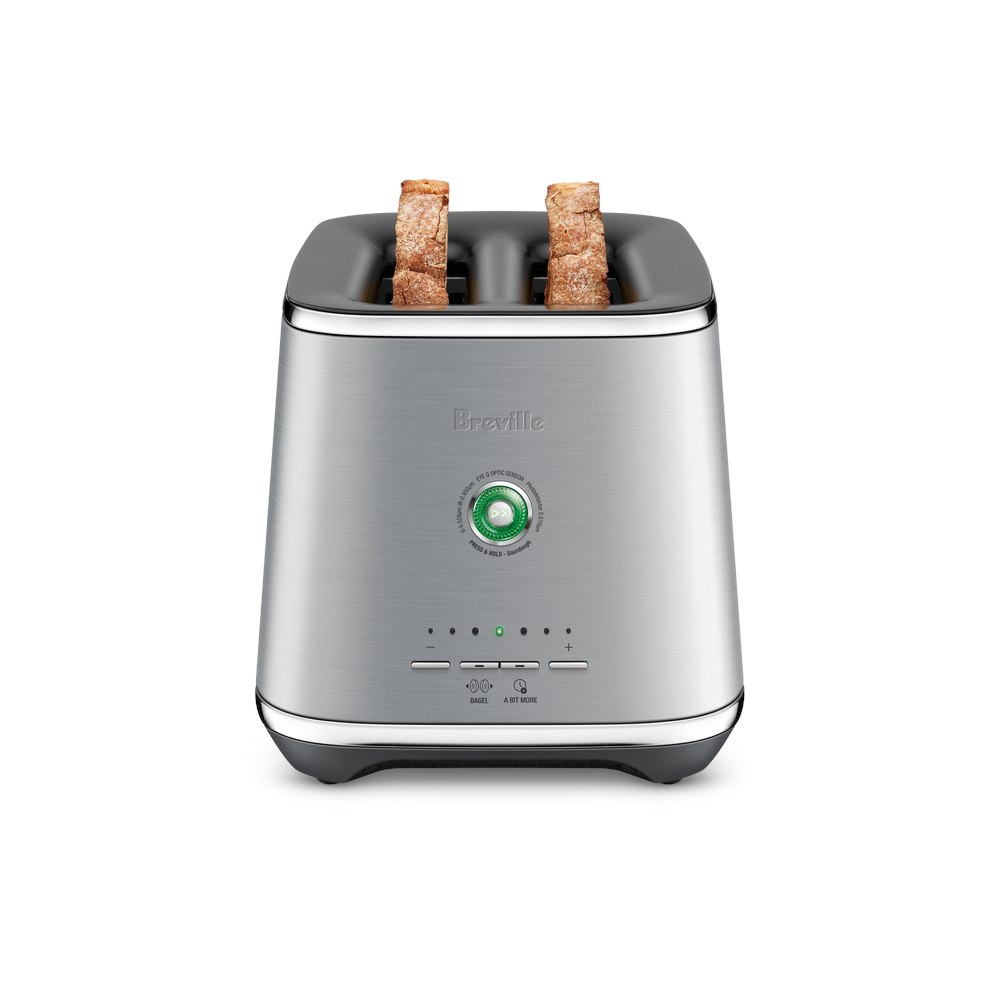
The Breville Eye Q 850 Auto 2 Slice Toaster gives that argument a new referee. It is a color-sensing toaster that watches bread brown and stops when it reaches your selected shade. Finally, a kitchen appliance willing to pay attention to the thing you asked it to cook.
There is something wonderfully excessive about putting this much thought into toast. There is also something deeply understandable about it if you have ever scraped a blackened slice over the sink while insisting the rest was still perfectly good.
A toaster with its eyes on breakfast
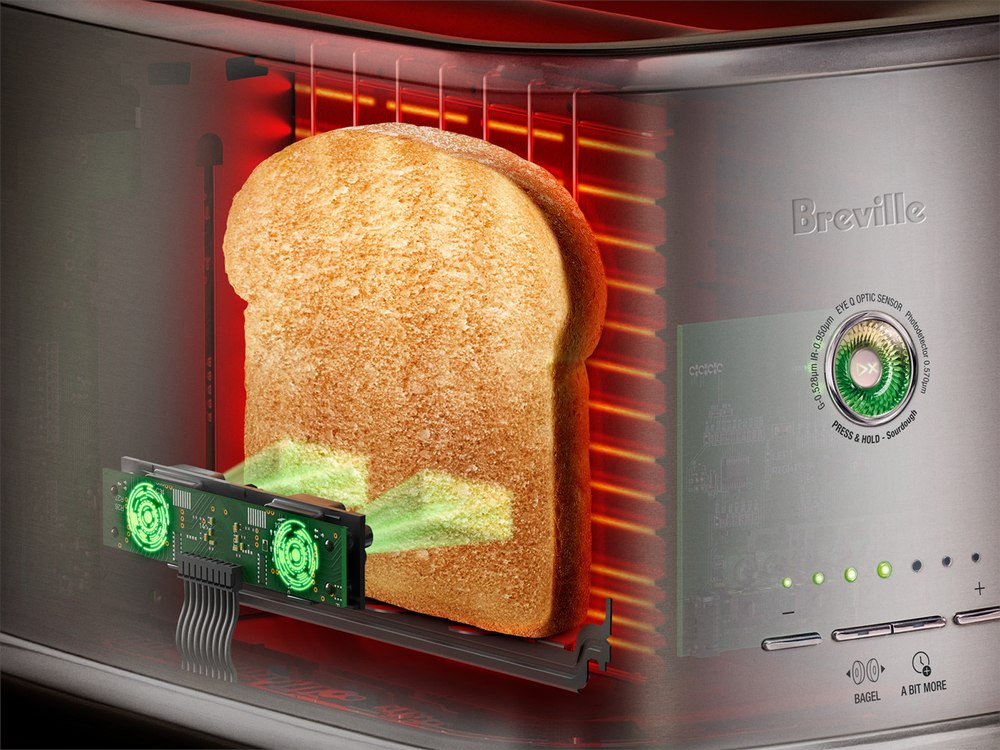
Breville says its optical system checks color ten times per second. You choose from seven shades; the toaster handles the browning decision. It also automatically lowers and raises the bread, giving the whole process the quiet confidence of a tiny bread elevator.
The useful idea is easy to grasp: judge the result you actually want. A darker surface is something you can see on your breakfast plate. A number on a timer is merely a promise made several minutes ago, before anybody knew how this particular slice would behave.
Related posts:
 This Adorable Slice Of Bread/Toast Cat Cone Is Perfect For Post Surgery Recovery
 This Multi-Purpose Toaster Also Cooks Beans and Eggs For a Quick and Easy Breakfast
 This Slim Long-Slot Toaster Saves Counter Space While Still Handling Bagels
 This Smart Toaster Has a Built-In Touchscreen, Actually Has a Ton Of Really Cool Features
Think of it as shifting the conversation from how long breakfast has been working to whether breakfast has finished its assignment. That is an appealing distinction for anyone who has repeatedly pressed a toaster lever down and immediately started supervising it like a nervous manager.
None of this makes toast a substitute for a proper meal or turns the kitchen into a laboratory you need a badge to enter. The appeal is much smaller and more relatable: a familiar daily ritual with one fewer little guessing game attached.
The bread still gets a vote
Sourdough is lovely until its dramatic crust and irregular holes decide to make themselves everyone’s problem. The dedicated sourdough setting adjusts the cycle, and Breville recommends a lighter selection for especially rustic bread. Your artisanal loaf can keep its personality; ideally, it can lose the scorched edges.
Frozen bread can use the sensing system without a separate defrost button. Timer mode switches to conventional timed operation for suitable foods, while the bagel setting supplies extra heat to one side. Those options matter because the breakfast drawer rarely contains a perfectly uniform collection of identical slices.
A household that buys the same sandwich loaf every week may have very different expectations from one that brings home a new bakery specimen every Saturday. Neither approach is wrong. One is predictable, and the other occasionally requires a bread knife with the emotional stamina of a lumberjack.
- Choose a shade for everyday toast instead of making the clock your breakfast consultant.
- Use the sourdough option when the loaf has more character than the average dinner guest.
- Pick the appropriate bagel or timer setting for a change of breakfast plans.
- Keep your preferred shade in mind when someone else has been experimenting with the controls.
A few details worth knowing before breakfast
The instruction manual adds a useful practical catch: a single slice belongs in the marked sensing slot. Bread needs to sit in front of the sensor. That is worth learning before declaring the toaster uncooperative while waving a piece of sourdough at it.
There is also an extra-browning button for toast that comes out lighter than you want. Apparently, even an optical system understands that people reserve the right to change their minds after seeing the finished product. This is a healthy foundation for any kitchen relationship.
| Detail | What to know |
|---|---|
| Capacity | Two slices |
| Shade choice | Seven levels |
| US model power | 120 V, 60 Hz, 1,200 W |
| Single-slice placement | Use the marked sensing slot |
| Housing | Steel |
| Sound | Adjustable volume, including mute |
The two-slice capacity is the obvious household calculation. A solo breakfast or a pair of toast eaters is a different situation from feeding a table of hungry people at once. Count mouths before counting clever features. No amount of elegant engineering makes waiting for the next batch feel shorter to a hungry teenager.
And while the brushed metal body looks comfortable beside other countertop appliances, it still needs a home. Picture it in the space where it will actually live, with room to load the bread and reach the controls. Product admiration is easy; countertop geography is the serious part.
The crumb department has been considered
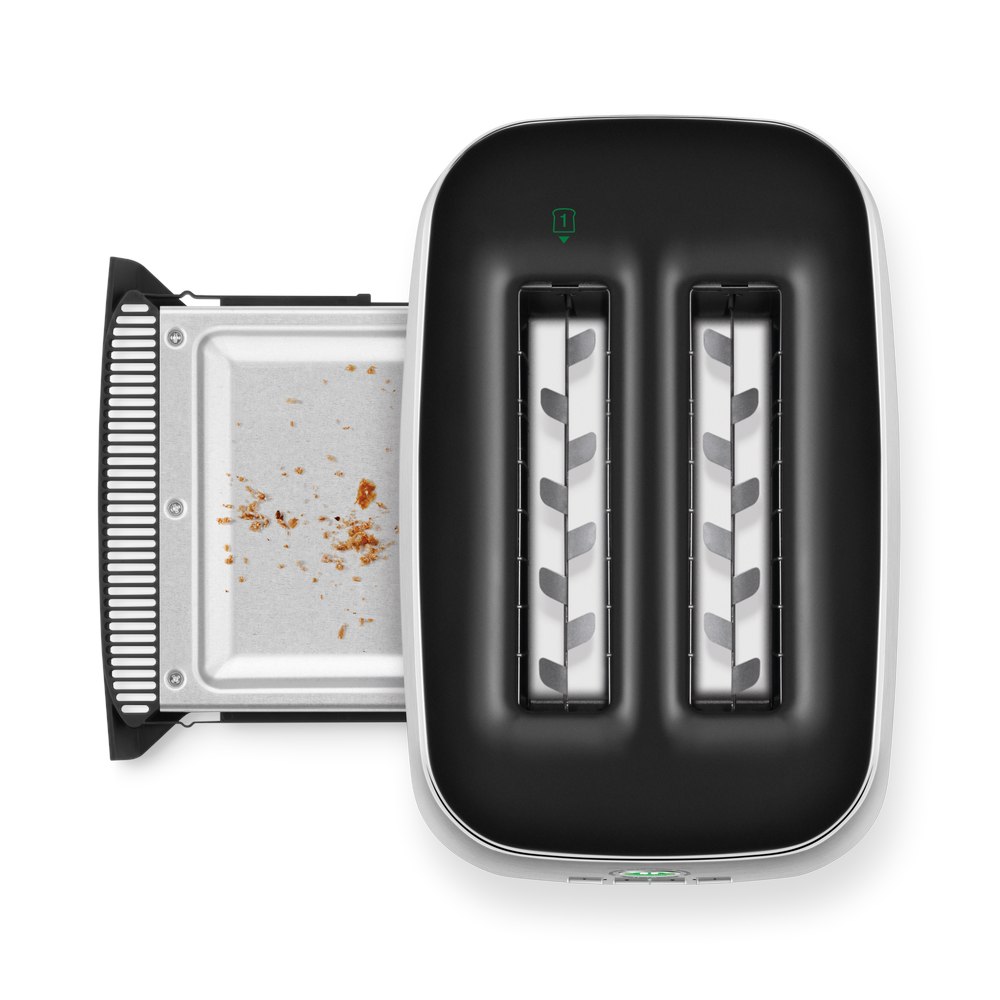
A ceramic-coated top and removable catch-all tray are designed to simplify cleanup. The internal cavity directs crumbs downward. You still need to empty the tray, because even a very clever toaster has not agreed to take responsibility for every tiny piece of bread in your life.
That matters more than a glamorous toaster photo suggests. Crumbs accumulate quietly, then announce themselves all at once when you move an appliance to wipe the counter. Suddenly, the kitchen appears to have been occupied by a very small, very messy bakery.
Follow the manual for cleaning, and let the unplugged toaster cool first. Add butter or jam after toasting. The Breville instructions cover the operating and care details, including which foods belong in the slots.
Who would actually enjoy this?
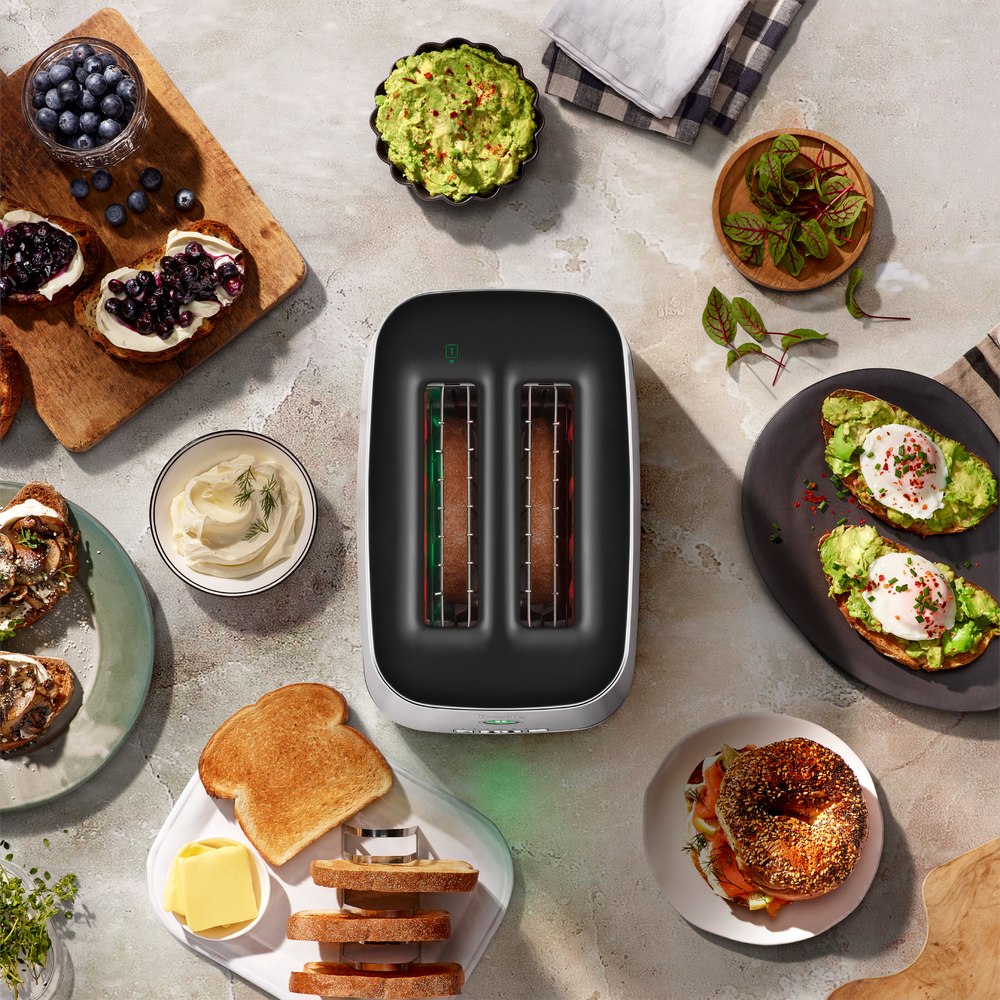
This feels aimed at the person who has a firm opinion about toast but would prefer not to make producing it a hobby. You know the person: the butter must reach the edges, the jam has a designated spoon, and a pale patch in the middle of a slice is apparently a matter for a committee.
It also makes sense as a gift for a breakfast enthusiast who likes an appliance with a specific, explainable trick. The pitch takes one sentence. You do not have to gather everyone around a presentation to explain why the toaster is interesting, which is considerate behavior at a housewarming.
On the other hand, if your existing toaster produces breakfast you are happy with, this is a luxury upgrade to weigh on its merits. A new mechanism is fun; a meaningful improvement to your own morning is the part that matters. Bread does not award bonus points for how impressive the countertop looks.
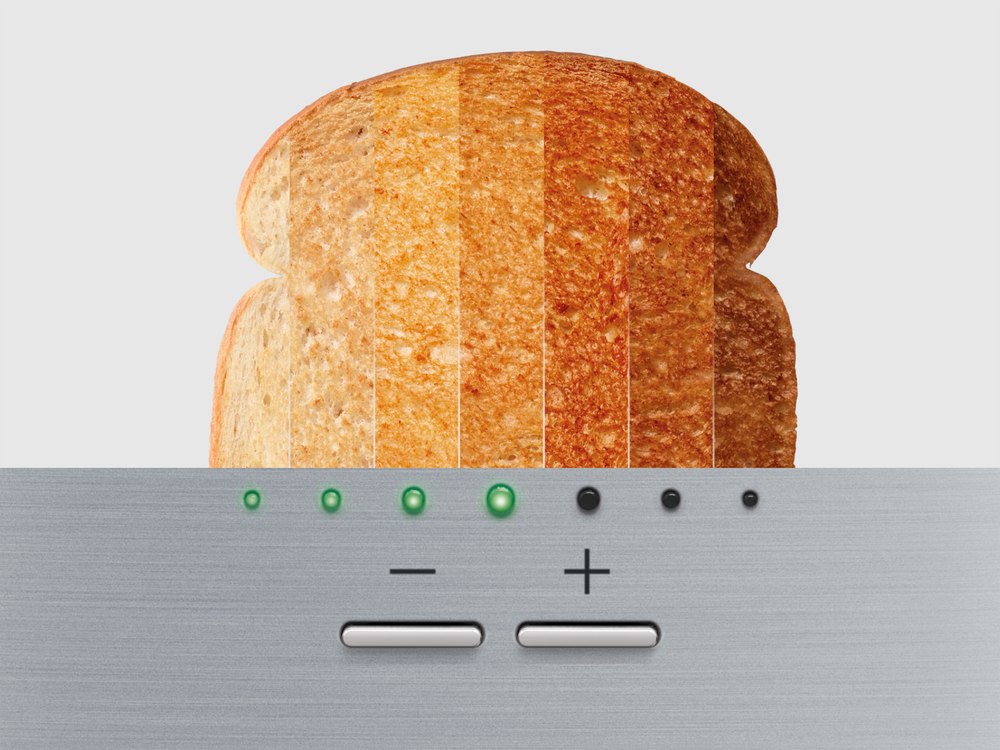
Product photos: Breville.
The breakfast briefing
- Product: Breville Eye Q 850 Auto 2 Slice, model BTA850.
- Main attraction: optical browning control with automatic lowering and lifting.
- Choices include shade adjustment, sourdough handling, bagel operation, and a timer option.
- Practical extras include a removable crumb tray and adjustable sound.
- Best fit: toast enthusiasts comfortable with a two-slice countertop appliance.
Breville’s US store currently lists the Eye Q 850 at $299.95 with an add-to-cart option. That makes it a deliberate breakfast splurge. Check the current listing before ordering, especially if you are comparing models or shopping outside the United States.
For the right kitchen, the charm is that its elaborate technology serves an extremely ordinary wish: please make this bread the color I like. It is a modest request, delivered with the conviction of someone who has already lost too many mornings to the toast lottery.
| Pros | Cons and considerations |
|---|---|
| Senses browning to control the result | Bread must be correctly positioned for sensing |
| Automatic lowering and lifting | Two-slice capacity can mean multiple batches |
| Options for different breakfast foods | You still need to select the appropriate setting |
| Removable tray helps with crumbs | Regular cleanup remains part of ownership |
| A distinctive upgrade for toast fans | Premium price for a familiar kitchen task |
Where to find This Color-Sensing Toaster Watches Your Bread Brown and Stops at Your Chosen Shade
OddityMall may earn a commission from qualifying purchases at no extra cost to you.
Related posts:
This Adorable Slice Of Bread/Toast Cat Cone Is Perfect For Post Surgery Recovery
This Multi-Purpose Toaster Also Cooks Beans and Eggs For a Quick and Easy Breakfast
This Slim Long-Slot Toaster Saves Counter Space While Still Handling Bagels
This Smart Toaster Has a Built-In Touchscreen, Actually Has a Ton Of Really Cool Features