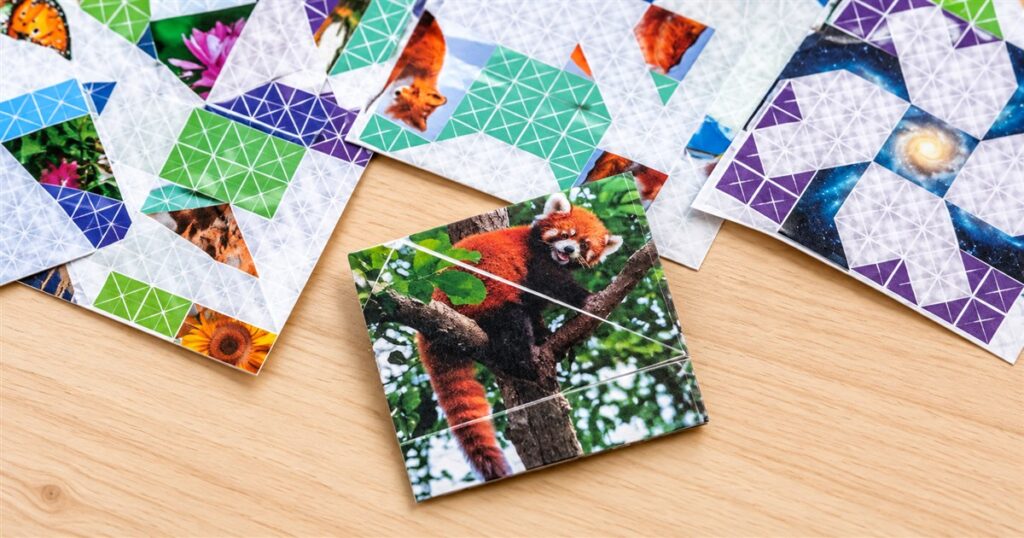
A square of paper should not be able to make you question your entire education. FOLDOLOGY gives it that opportunity. This paper folding picture puzzle game turns a printed sheet into a small logic challenge: work out the folds until scattered pieces of a photograph line up into one complete image. Your opponent has no batteries, no strategy guide hidden up its sleeve, and, technically, no sleeves.
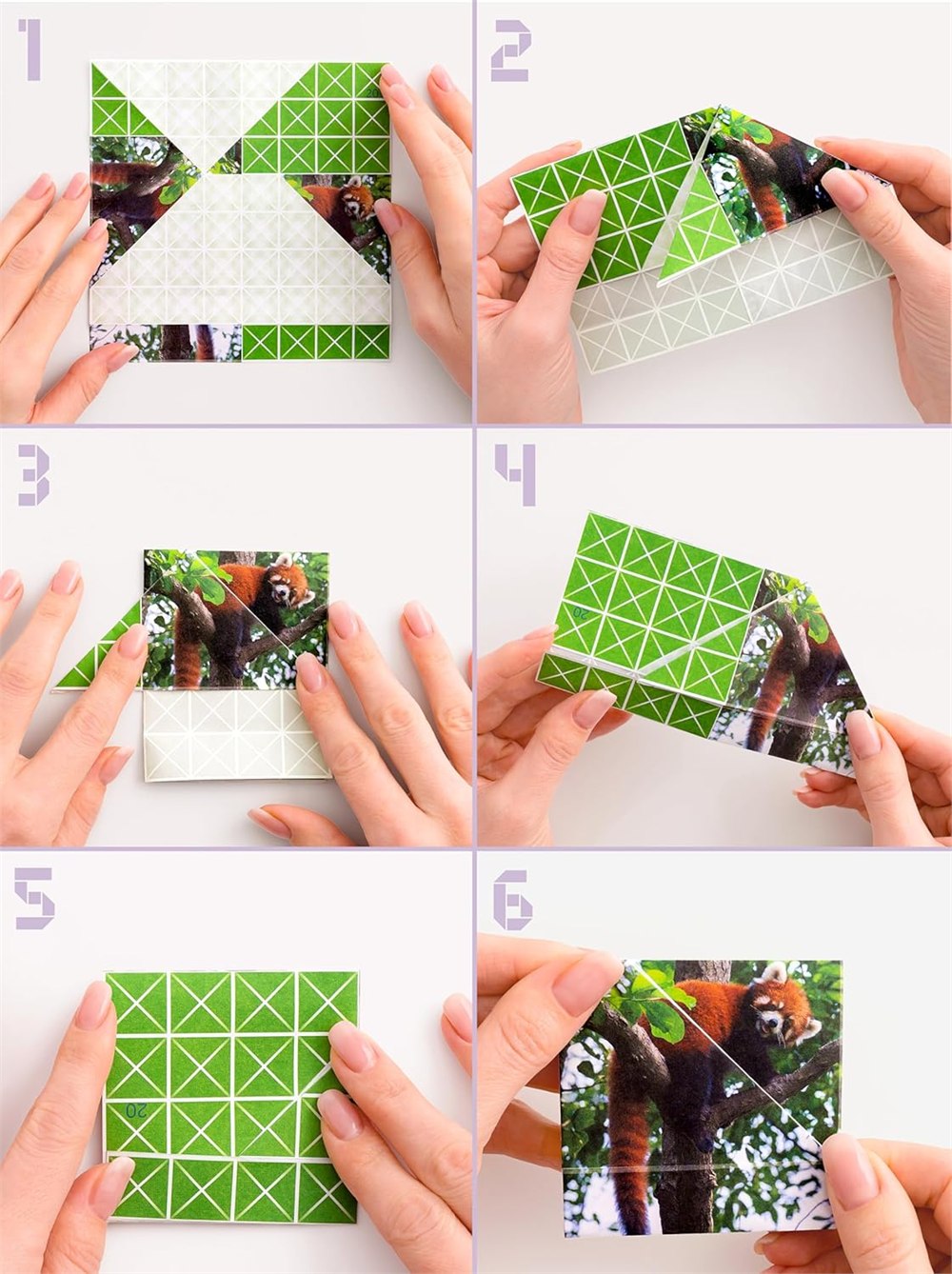
The original FOLDOLOGY booklet contains 100 puzzles arranged from easier challenges to harder ones. Each sheet is its own puzzle, so the next problem is waiting when you finish the current one. It is a pleasingly simple format for an activity that can eventually have you staring at a corner as though it owes you an explanation.
The trick is that you are not following a recipe for a paper crane. You are trying to discover how the picture fits together. Folding becomes the method for solving the problem, rather than a series of instructions to copy. That distinction is what makes this feel more like a puzzle book than a traditional origami kit.
A photograph hiding in plain sight
An unfolded sheet mixes picture fragments with patterned areas. At first glance, it looks like someone interrupted a photo printer halfway through its arts-and-crafts phase. The goal is to fold that sheet into a flat square with a completed picture on one side. The official instructions also show a finished reverse side made from the dark-colored squares.
There is something especially satisfying about a puzzle where the answer becomes an actual object you can hold. A completed red panda picture, for instance, gives you a recognizable little finish line. You have not merely filled a box with a number. You have negotiated with several flaps of paper and persuaded an animal to reassemble.
Related posts:
 This Toilet Paper Jigsaw Puzzle Is Perfect For The Pandemic Hoarder In Your Life
 This Sphere Shaped Gradient Puzzle Contains 540 Different Colors
 This Amazing Dining Table Has a Hidden Game/Puzzle Compartment Under The Surface
 Kodak Has Released a 51,300 Piece Jigsaw Puzzle That Should Keep You Busy All Quarantine
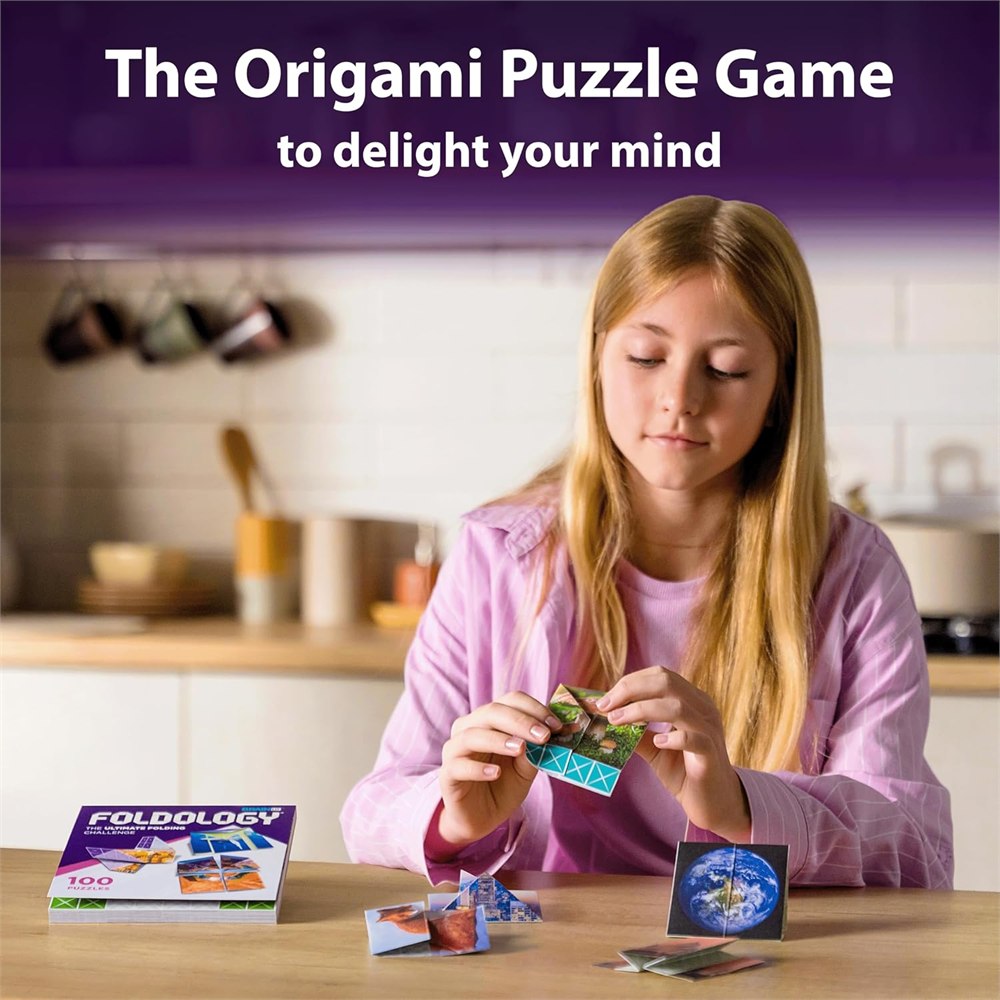
The sheets include a printed grid to help you place folds. That gives you visual reference points, but it does not do the thinking for you. Knowing where a crease can go and knowing which crease should happen next are very different skills. Anyone who has ever confidently folded a map into something shaped like a sandwich can appreciate the distinction.
FOLDOLOGY says no previous origami experience is needed. Starting at the beginning matters, though, because the progression introduces folds as the challenges become tougher. Skipping straight to a late puzzle is possible in the same way that starting a mystery novel at the courtroom scene is possible. You may find yourself missing some useful context.
The instructions leave the good part to you
The booklet explains the rules, then leaves you to find the solution. That is the whole appeal. You can study the image fragments, try a fold, check the result, and change your approach. No little arrow pops up to congratulate you for touching the correct corner. The paper is refreshingly indifferent to your need for validation.
For a gift, this makes the original booklet the sensible starting point for someone new to the series. The maker also offers harder follow-up volumes, but the first set is designed to build from accessible puzzles toward more demanding ones. There is no need to gift somebody the final boss before they have met the tutorial.
- Start with the early puzzles and let the difficulty build.
- Use the printed grid as a guide when lining up folds.
- Look at both picture fragments and patterned sections before committing to a crease.
- Keep the current sheet somewhere flat when taking a break.
- Use the maker’s folding tips or video solutions if a particular puzzle has thoroughly won the argument.
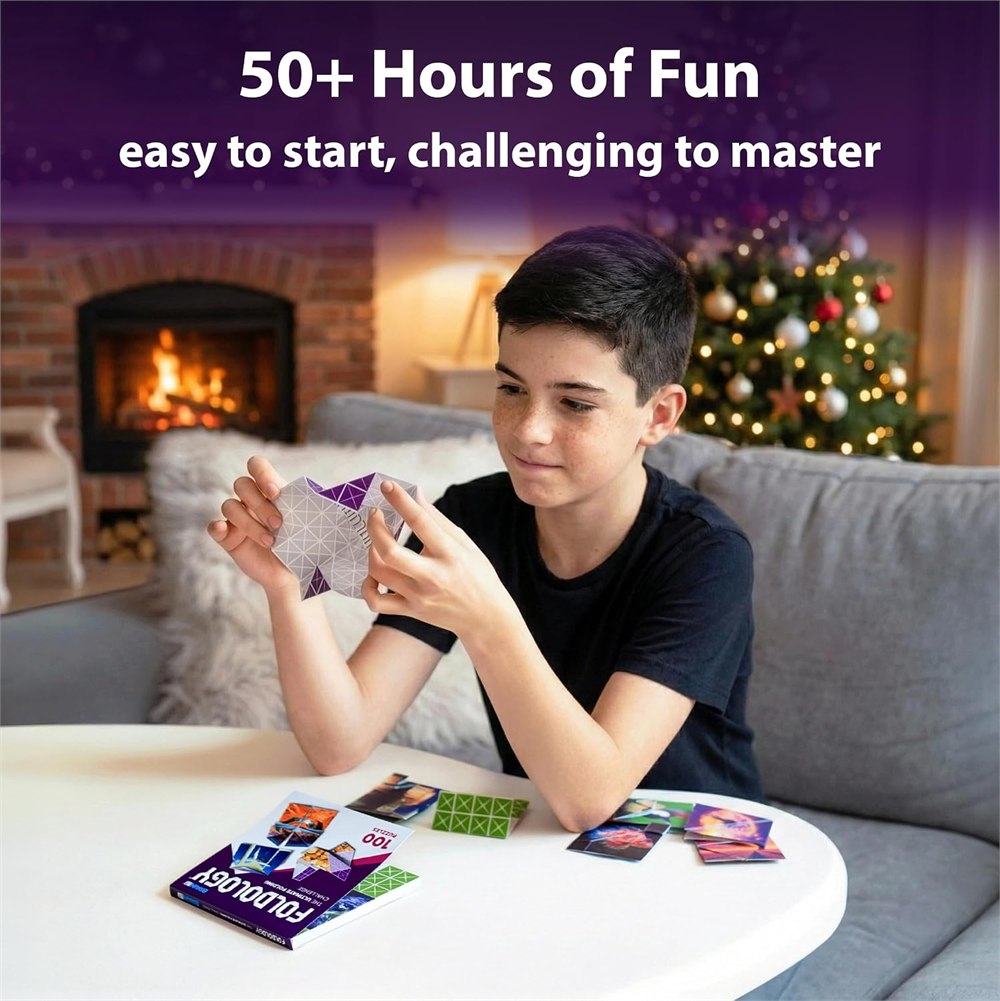
The availability of video solutions is a useful escape hatch. A puzzle should offer resistance; it does not need to become a permanent roommate. You can decide whether you want a nudge, a full explanation, or one more attempt before admitting that a red panda has outmaneuvered you.
Small enough for a break, involved enough to hold it
A paper booklet is an appealing travel companion because the entertainment does not depend on a charged screen. It can go in a bag for a quiet evening away, a pause between activities, or a tabletop challenge at home. You still need enough space to handle the sheet comfortably. Attempting a delicate fold while balancing a drink and a boarding pass seems like an unnecessary expansion pack.
There is also no collection of loose jigsaw pieces to count before you pack up. The individual sheet contains the challenge. That does not make paper immune to coffee, enthusiastic pets, or the mysterious crushing powers of a backpack, but it does simplify the cleanup considerably.
| Detail | Original FOLDOLOGY |
|---|---|
| Format | Booklet of individual paper puzzles |
| Number of puzzles | 100 |
| Goal | Fold each sheet into a flat square with a complete picture |
| Progression | Easier puzzles build toward harder challenges |
| Previous origami experience | Not required |
| Help when stuck | Official folding tips and video solutions |
The maker recommends it primarily for teens and adults, while also suggesting it for interested kids aged 10 and older. Younger players may need help on later puzzles. That sounds like a good excuse for an adult to sit down and assist, right up until the adult also cannot solve it and the household acquires a committee.
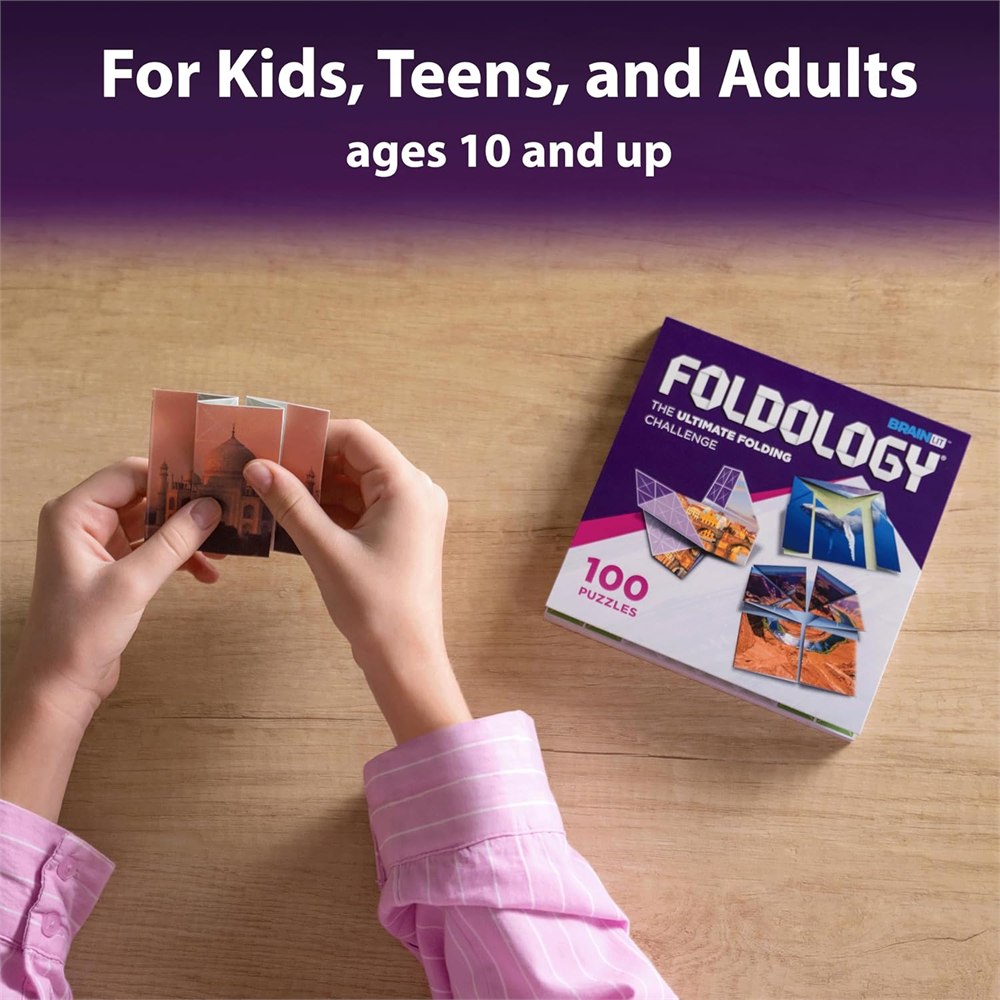
It works particularly well as a gift idea for someone who enjoys the process of figuring things out. A person who likes logic puzzles, visual challenges, or a quiet activity for their hands has a clear reason to be interested. Someone who wants a craft project with every step prescribed may prefer a more instructional origami book.
The finished result is flat. You are not building a shelf full of paper dragons or learning a catalog of sculptural animals. Some folding techniques overlap with origami, but the purpose here is picture reconstruction. Knowing that before buying avoids the awkward moment when somebody asks where the crane is and you hand them a square.
A few folds before buying
FOLDOLOGY provides printable sample puzzles on its website, including easier and medium-level examples. Those are a useful way to find out whether this particular flavor of head-scratching appeals to you. A printer, scissors, and some patience get you a taste of the idea before you choose the full booklet.
The purchased version uses paper selected for folding, vibrant printing, and a guide grid, according to the maker. Home-printed samples offer a preview of the challenge rather than an exact substitute for the physical product. Ordinary printer paper can demonstrate the idea without settling the question of how the finished booklet feels in your hands.
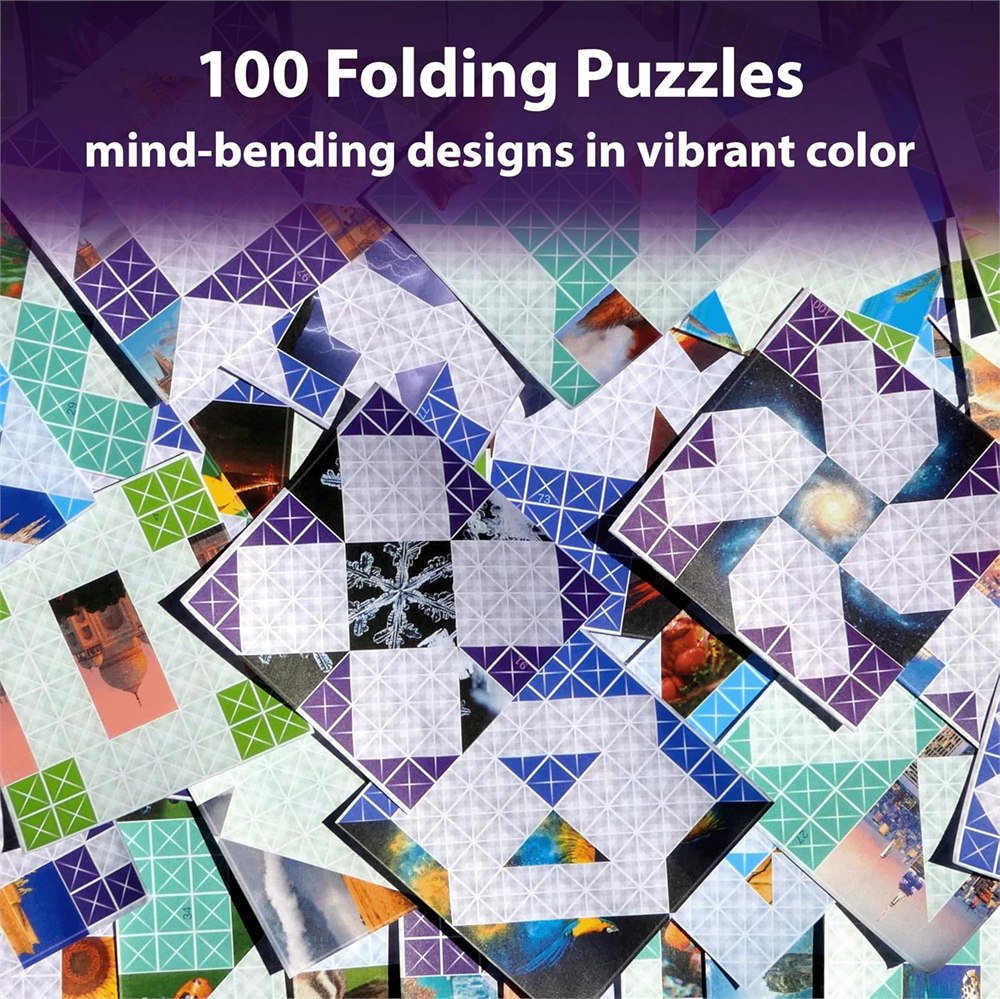
Size deserves a quick check when ordering. The current Amazon option is labeled 6 by 6 inches, while the maker’s older website FAQ describes a 5-inch booklet. Check the selected edition’s dimensions if it needs to fit a particular pouch or stocking. Paper may be flexible, but gift-shopping assumptions are surprisingly brittle.
- Original FOLDOLOGY includes 100 individual picture puzzles.
- Players discover the folding sequence instead of copying a full set of solution steps.
- Every completed puzzle forms a flat square.
- The challenges gradually become more difficult.
- The maker recommends the set for teens, adults, and interested children aged 10 and up.
- Printable samples, folding advice, and video solutions are available from the maker.
The original booklet is sold through Amazon, with the listing showing offers from $13.97 when checked. Seller, delivery, and selected-size details should be confirmed before ordering. FOLDOLOGY’s own website links buyers to Amazon and provides the sample puzzles and help pages.
Product details and image credit: FOLDOLOGY / Brain Lit and its official Amazon product listing.
| Pros | Cons |
|---|---|
| 100 challenges in one compact format | Later puzzles may need considerable patience |
| No prior origami experience required | Does not teach a collection of 3D origami models |
| Paper-based activity without screen time | Sheets need care around spills and rough handling |
| Samples and solutions available online | Looking up a solution gives away that puzzle’s discovery |
| Clear progression from easier to harder | Selected-edition size needs checking before purchase |
Where to find These Paper Folding Puzzles Turn Scattered Photos Into Complete Pictures
OddityMall may earn a commission from qualifying purchases at no extra cost to you.
Related posts:
This Toilet Paper Jigsaw Puzzle Is Perfect For The Pandemic Hoarder In Your Life
This Sphere Shaped Gradient Puzzle Contains 540 Different Colors
This Amazing Dining Table Has a Hidden Game/Puzzle Compartment Under The Surface
Kodak Has Released a 51,300 Piece Jigsaw Puzzle That Should Keep You Busy All Quarantine