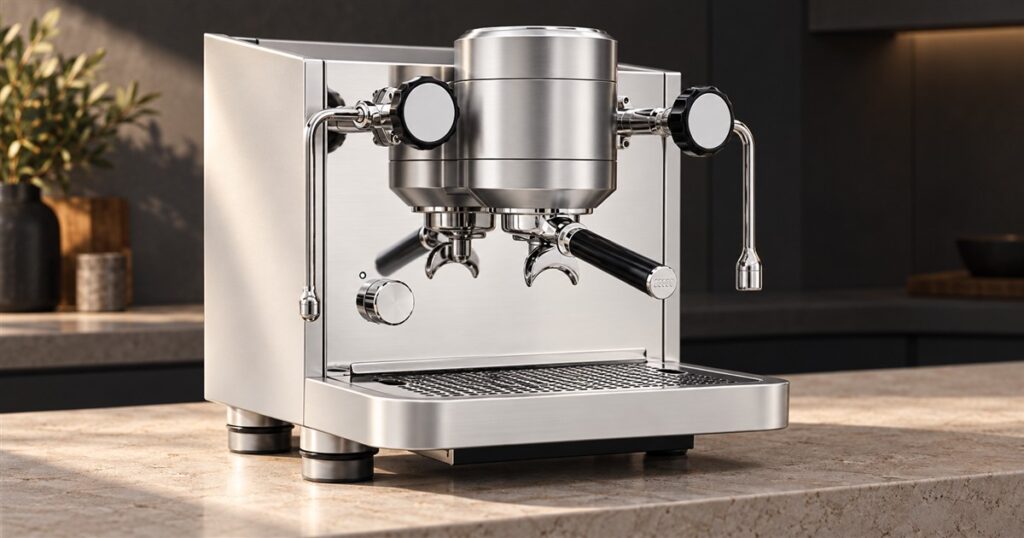
Your coffee machine has probably never made you consider installing a revolving showroom platform in the kitchen. The Rocket x Audi espresso machine might. It takes the restrained curves of the original Audi TT, wraps them around serious coffee hardware, and gives your morning espresso the visual confidence of a car that always gets the good parking spot.
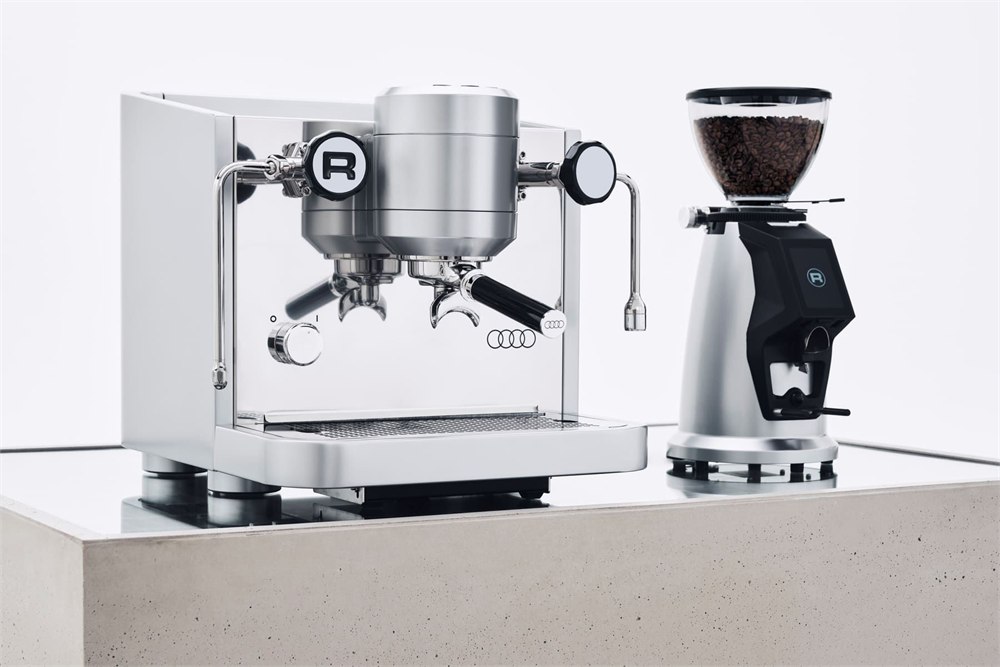
This is a real portafilter espresso machine developed by Rocket Espresso with Audi, based on Rocket’s Bicocca. The collaboration involves the Audi Design Team and Valerio Cometti + V12Design. Beneath the aluminum bodywork are dual stainless-steel boilers, a rotary pump, and an electrically heated brewing group with PID temperature control.
In other words, the automotive connection goes beyond sticking four rings on an appliance and declaring it sporty. The shape, proportions, controls, and surfaces have all received attention. Your mismatched mugs are about to feel severely underdressed.
A coffee machine with Audi TT curves
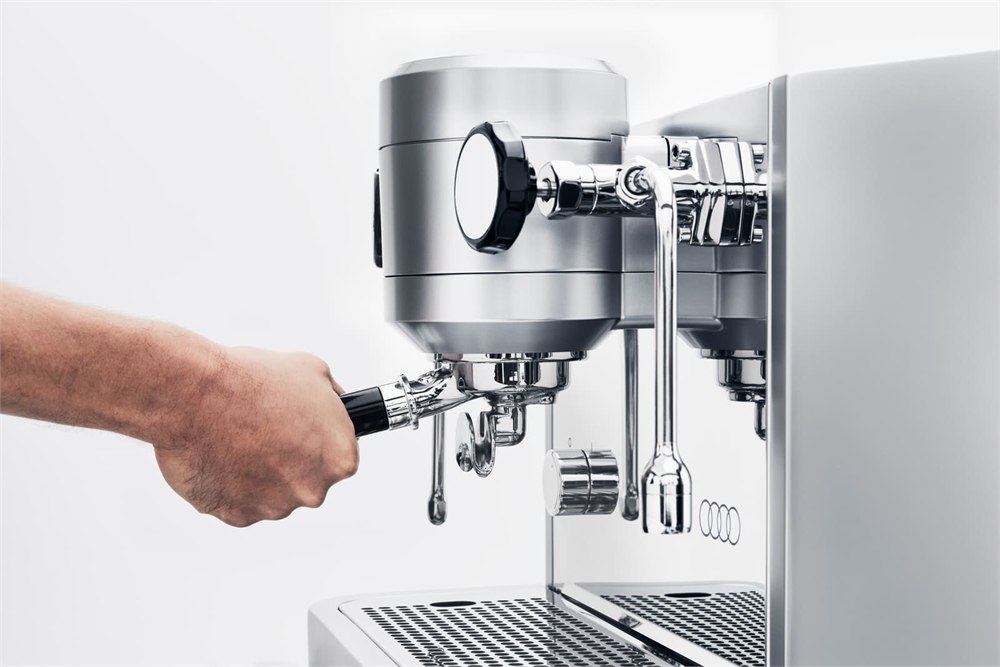
The TT influence is expressed through smooth surfaces and carefully resolved curves rather than tiny headlights or a pretend grille. Matte aluminum sits beside deep black details, with rounded transitions that make the housing look like a single deliberate object. It is unmistakably coffee equipment, just coffee equipment that has opinions about architecture.
Rocket describes the side panels as rising toward the rear. That gives the machine a more dynamic profile while also creating a boundary around the cups on top. It is a useful little intersection of function and styling: the dramatic bodywork actually has a job beyond standing there looking expensive.
Related posts:

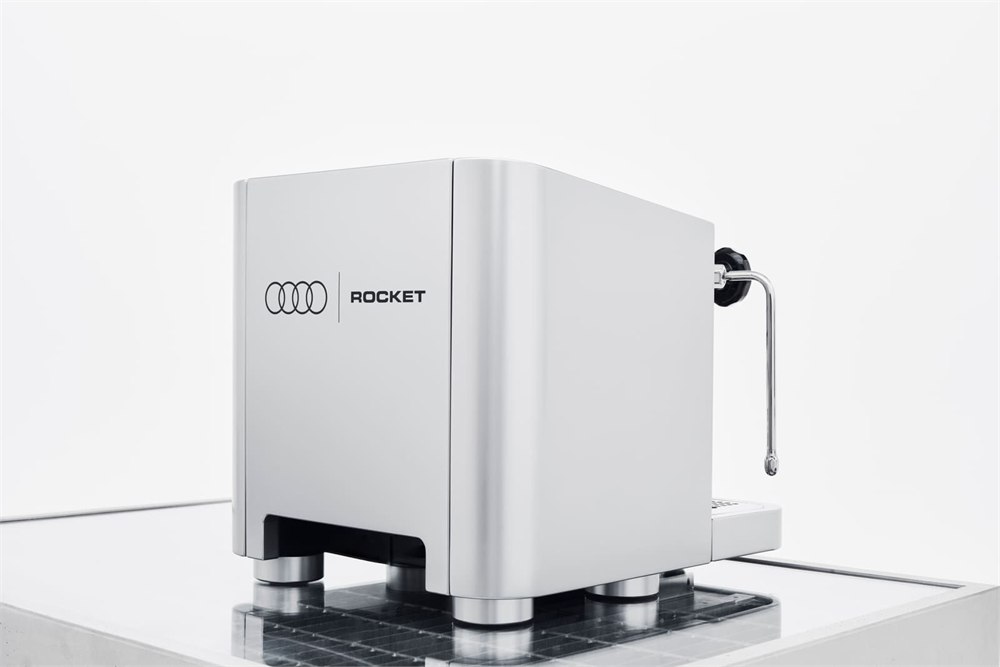
Circular aluminum feet lift the body slightly above the counter. Seen from behind, the machine has broad, clean panels instead of the busy industrial clutter you might expect from café equipment. That matters if your coffee setup lives on an island where people can see the back. Suddenly, the rear view is part of the attraction.
The glossy black handle and rotary controls provide contrast against the silver housing. The front brewing unit follows the geometry of the body instead of looking like an unrelated component bolted on during lunch. Even if nobody in the household cares about cars, the overall shape gives them something more interesting to look at while waiting for caffeine.
What is beneath the aluminum bodywork?
The technical foundation is a dual-boiler system: a 0.5-liter coffee boiler and a separate 1.5-liter steam boiler. Those are two distinct parts of the machine’s heating setup, rather than one vague capacity figure dressed up in marketing language. Rocket also lists insulation around the boilers for energy saving.
The electrically heated brewing group has PID temperature control. Its purpose is to hold a consistent set temperature and reduce heat loss through the group, supporting repeatable extraction. It cannot rescue every questionable bag of beans, but temperature management is at least one less thing being left entirely to chance.
A rotary pump completes the core hardware, and water can come from either a direct connection or the built-in reservoir. The latter holds 1.8 liters and includes a reserve sensor. That gives you a choice between a plumbed coffee station and a setup where someone still has to remember to fill the tank. We all know who that someone becomes.
- Separate coffee and steam boilers: 0.5 liters and 1.5 liters respectively, both stainless steel.
- Temperature control: an electrically heated brewing group with PID regulation.
- Water supply options: direct connection or the 1.8-liter reservoir.
- Physical controls: glossy black rotary knobs and a traditional portafilter handle.
- Digital interface: a 3.5-inch touchscreen integrated into the brewing unit.
A touchscreen that stays out of the silhouette
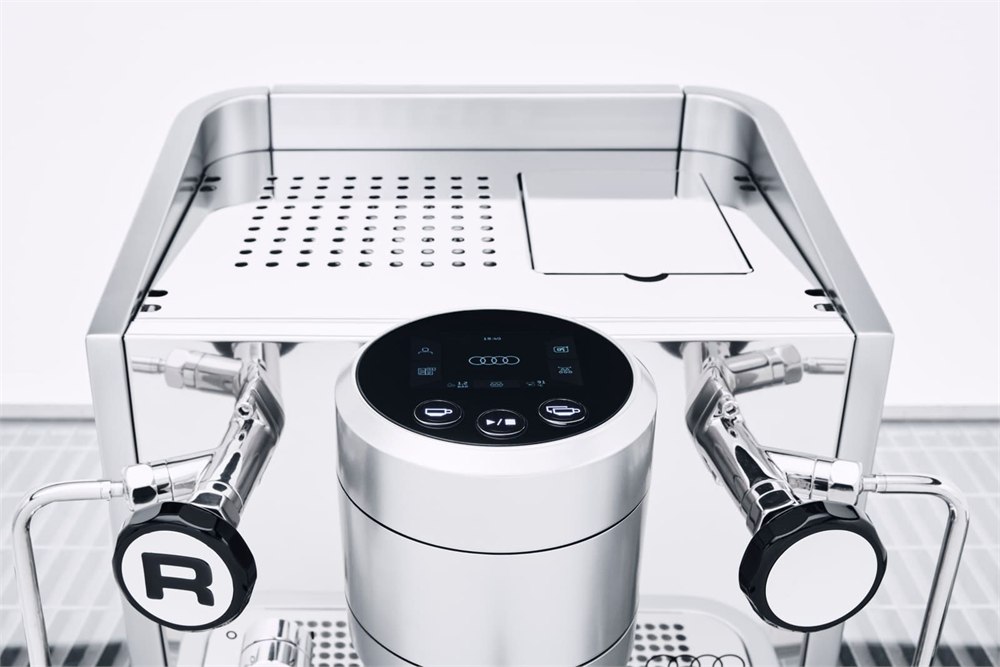
The 3.5-inch display is tucked into the upper part of the brewing unit. From the front, the big cylindrical shape stays visually clean; from above, the controls become visible. It is a neat solution for anyone who wants digital convenience without a tablet seemingly glued to the front of their kitchen appliance.
Rocket calls the interface textless. The emphasis is on icons rather than filling the machine’s face with words. The official photos show the dark display surrounded by aluminum, with the familiar hands-on espresso hardware below. There is still a handle to work with, rather than a promise that the machine will conduct your entire morning for you.
That distinction matters. This is portafilter territory, with the brewing process remaining part of the experience. People who enjoy preparing espresso may find that appealing. People whose ideal coffee routine consists of pressing one button while staring blankly into the distance should think about what kind of daily ritual they actually want.
| Detail | Rocket x Audi specification |
|---|---|
| Size | 409 mm wide × 465 mm deep × 400 mm high |
| Weight | 35 kg, about 77 lb |
| Coffee / steam boilers | 0.5 L / 1.5 L, stainless steel |
| Reservoir | 1.8 L with reserve sensor |
| Power | 1600 W; 115 V and 220–240 V specifications listed |
| Interface | Integrated 3.5-inch touchscreen |
Measure the counter before getting emotionally involved
At 35 kilograms, this is about 77 pounds of espresso machine. It is not something you casually slide out of a cupboard on Saturday and tuck away after brunch. Choose a stable location, think through access for filling and cleaning, and give the footprint a proper measurement before the aluminum curves distract you.
The listed dimensions work out to roughly 16.1 inches wide, 18.3 inches deep, and 15.7 inches high. Those figures describe the machine itself. Your usable coffee station also needs space for the way you prepare coffee and access the equipment, so a perfectly machine-sized gap is not automatically a comfortable workspace.
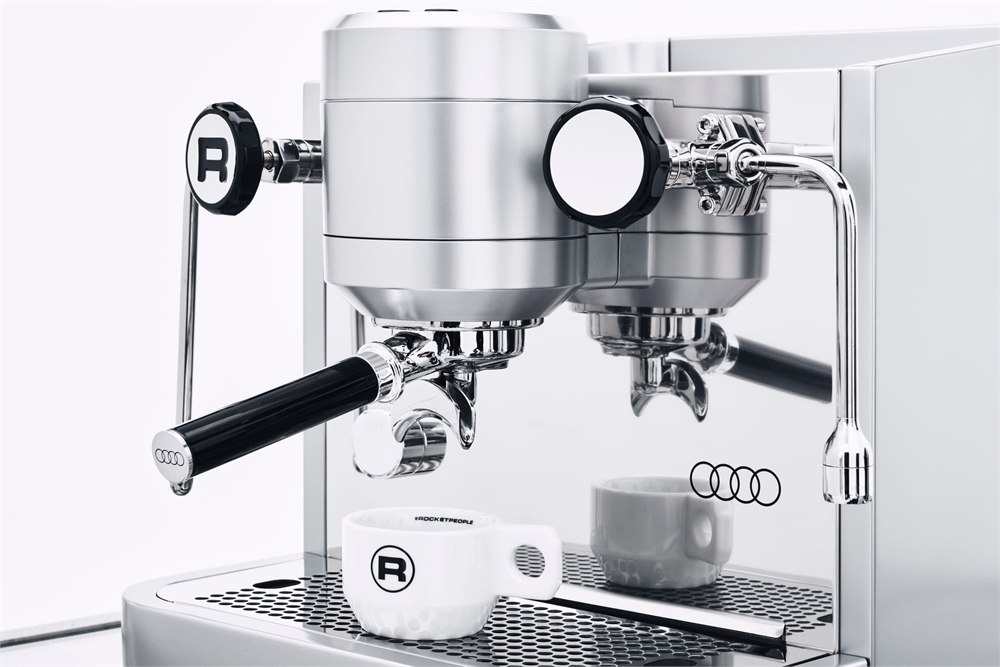
Rocket presents it alongside a specially developed Spluga grinder, with both pieces sharing a coordinated design approach. The pairing looks particularly tidy in the official photography. Treat the grinder as something to confirm separately with the seller, however; a beautiful two-piece photo is not the same thing as a promise that both pieces are included.
The published electrical specifications cover 115-volt and 220–240-volt versions, each listed at 1600 watts. Confirm the version being offered for your location. International shopping is exciting until a large metal box arrives with electrical requirements that do not match the kitchen where you intended to admire it.
Who would put this in their kitchen?
The obvious audience is someone who likes espresso equipment and automotive design in roughly equal measure. It also makes sense as a sculptural centerpiece for a carefully planned coffee station. The appeal is partly the dual-boiler hardware and partly the fact that the machine still looks interesting when nobody is making a drink.
It is a more committed proposition for a casual coffee drinker. Weight, counter space, hands-on preparation, and the separate grinder question all deserve consideration. A sleek housing does not make those practical details disappear, even if it does make them considerably more photogenic.
Perhaps the nicest part is that the design reference stays restrained. You do not need a racing-themed kitchen, checkered towels, or a spouse willing to call breakfast “the pit stop.” It borrows the car’s visual discipline without turning the counter into an automotive souvenir shelf.
The details to keep in mind
- Rocket Espresso and Audi collaboration based on the Bicocca portafilter machine.
- Audi TT-inspired aluminum housing, rising side panels, circular feet, and black controls.
- Dual stainless-steel boilers, rotary pump, and PID-controlled heated brewing group.
- Integrated 3.5-inch touchscreen and a choice of reservoir or direct water connection.
- 35 kg weight and a 409 × 465 × 400 mm footprint.
- Coordinated Spluga grinder shown by Rocket; confirm package contents separately.
Espresso Perfetto’s last listed price for the Rocket Bicocca Audi Edition was €6,499. Confirm the current price, delivery estimate, electrical version, and included equipment with the retailer before ordering. This is firmly in luxury coffee-station territory, where the espresso machine may be the most carefully designed thing in the room, including the room.
Product details and images: Rocket Espresso.
| Pros | Cons / considerations |
|---|---|
| Distinctive Audi TT-inspired housing with attractive rear panels | Luxury pricing puts design appeal at a substantial premium |
| Dual boilers and PID-controlled heated brewing group | Portafilter preparation still requires hands-on involvement |
| Reservoir and direct water connection options | Reservoir use still requires refilling |
| Touchscreen integrated neatly into the group | 35 kg weight favors a permanent counter location |
| Coordinated grinder available as a design pairing | Confirm grinder inclusion and regional electrical version |
Where to find This Audi-Inspired Espresso Machine Puts Dual-Boiler Coffee Hardware in a Sculpted Aluminum Body
OddityMall may earn a commission from qualifying purchases at no extra cost to you.