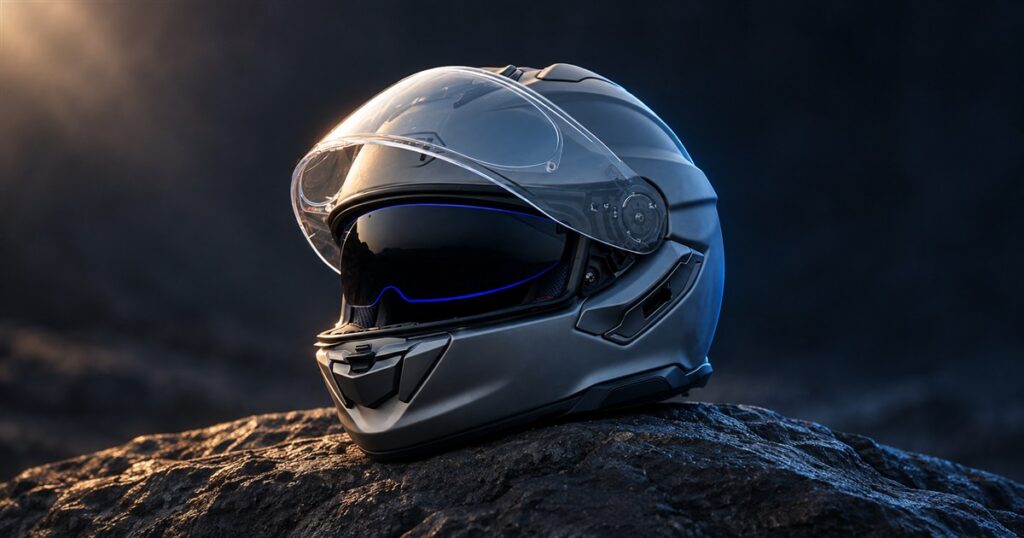
A motorcycle already asks your hands, feet, eyes, and balance to attend the same meeting. Your phone insisting on a separate meeting down by the handlebars feels rude. The Shoei GT-Air 3 Smart HUD motorcycle helmet moves navigation and riding information into your field of view, giving your head its own tiny dashboard without requiring you to dress like a fighter pilot on a coffee run.
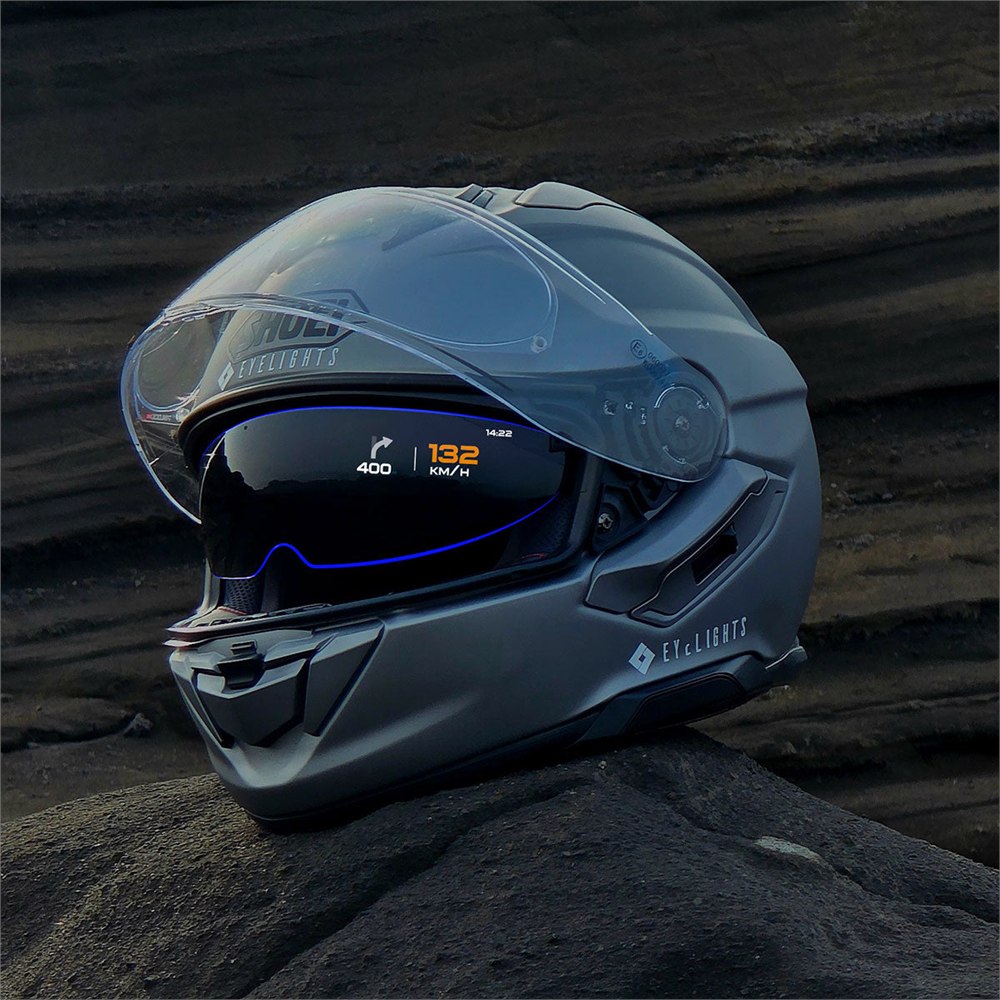
Developed by Shoei and EyeLights, this full-face helmet combines a touring lid with a built-in heads-up display, audio, microphone, and communications hardware. The interesting part is the integration. You aren’t simply clipping another glowing rectangle onto the motorcycle and hoping the mounting bracket survives your relationship.
The helmet is the display’s home. That makes the whole proposition feel less like a collection of accessories and more like a single piece of riding equipment with a very ambitious side hustle.
A little navigation window where you’re already looking
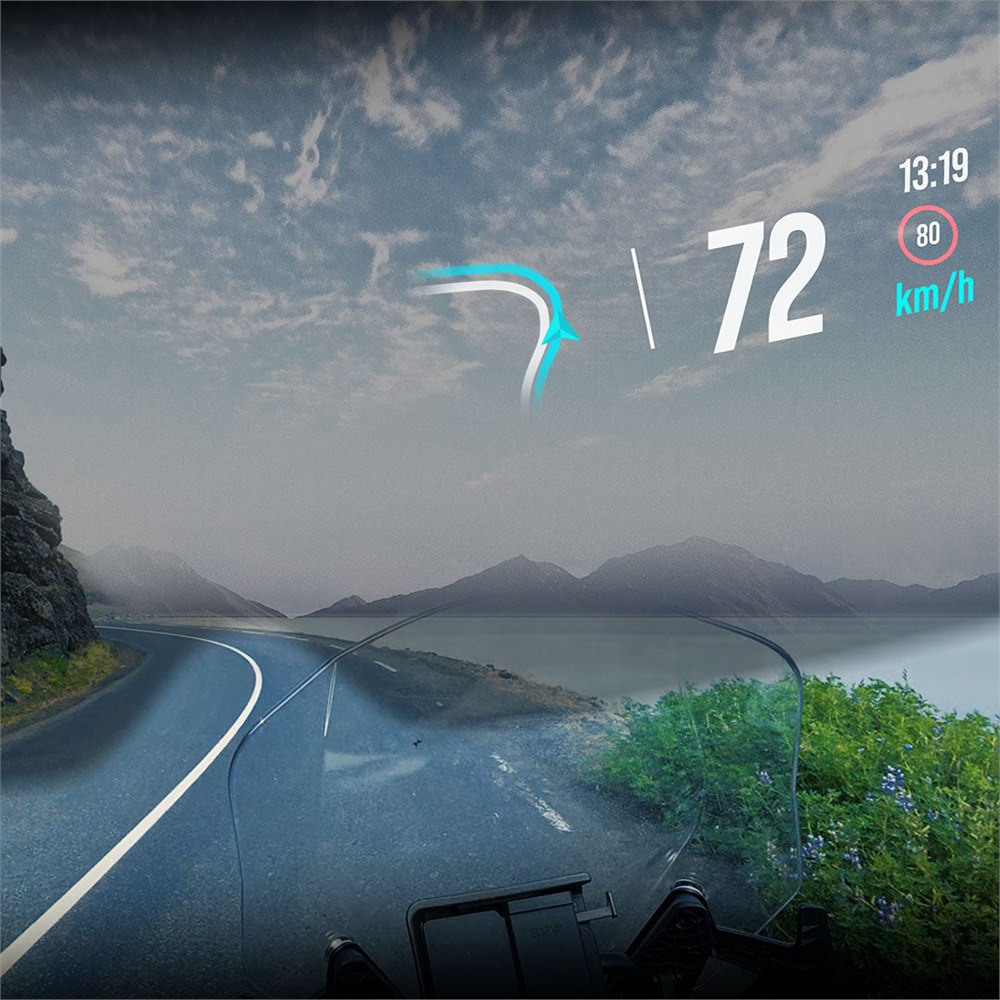
EyeLights lists a nano-OLED HUD with customizable information including maps, speed, calls, and navigation cues. The projected information appears at a virtual distance of roughly three meters. Think of a small readout sitting ahead in your view, rather than a phone screen physically attached to the inside of your nose.
That distinction matters to the appeal. A handlebar display asks for a downward glance, while spoken instructions can leave you wondering which of three closely spaced turns counted as “the next right.” A visible direction cue offers another way to resolve that little geographical argument.



It does not make every intersection simple. A roundabout can still contain enough exits to feel like an aptitude test. But having the next instruction in a consistent place is a compelling idea for riders who regularly travel unfamiliar routes.
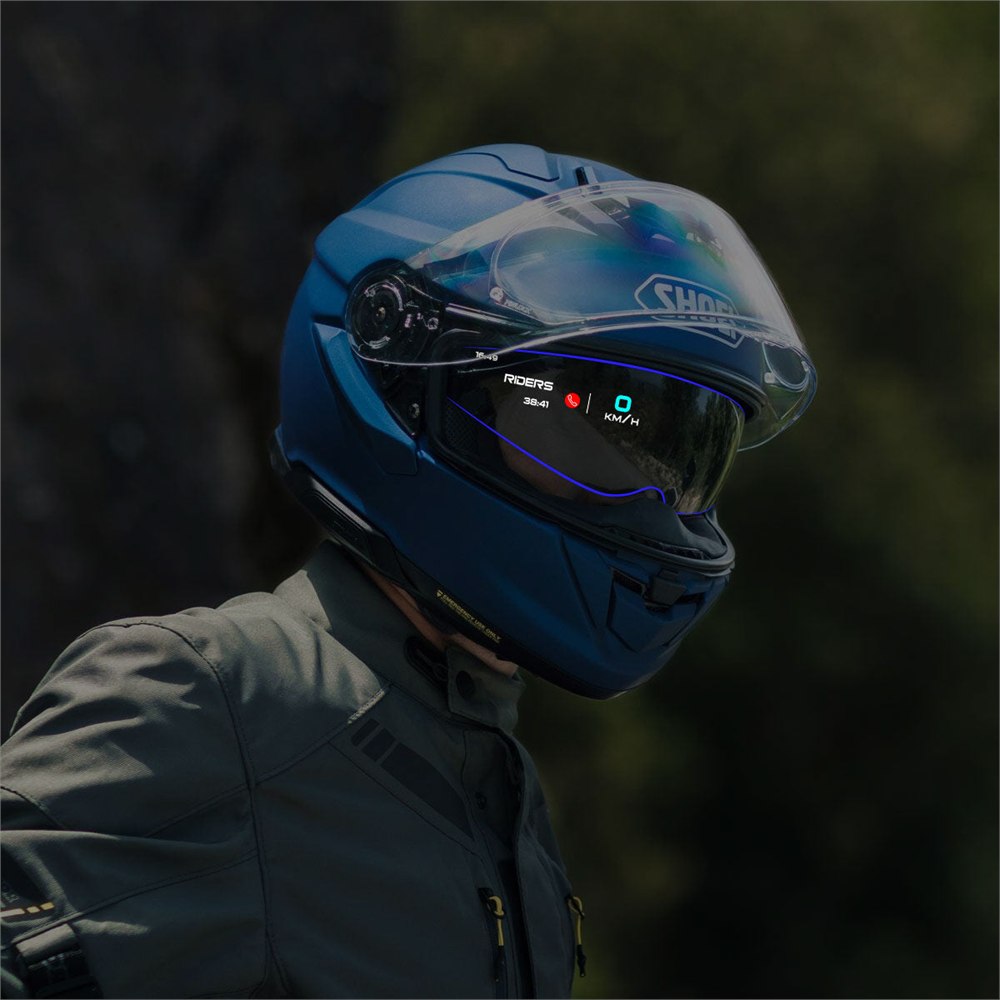
The official visuals illustrate the display with floating graphics. Those pictures explain the concept; they aren’t a promise that every rider will see an identical view in every lighting condition. Fit, setup, and the way the display sits in your own sightline deserve an actual try before you commit.
Nor should a HUD be treated as permission to pay less attention. The road remains the main event. Navigation is useful; turning your helmet into an inbox with cheek pads is an ambition best left unexplored.
The hardware has moved into the helmet
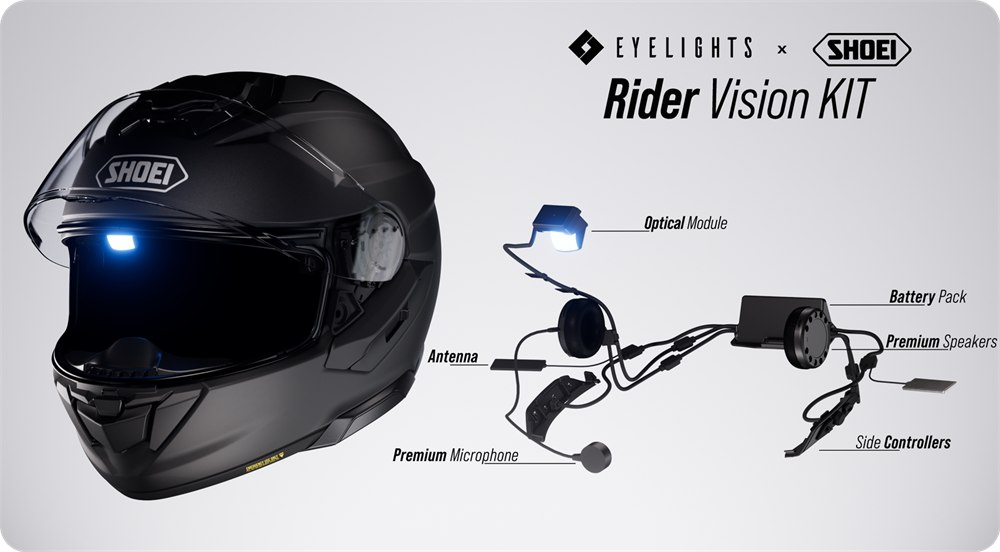
The Rider Vision Kit imagery shows an optical module, antenna, speakers, microphone, battery pack, and side controls. That’s a surprisingly substantial guest list for something intended to disappear into the shape of a helmet.
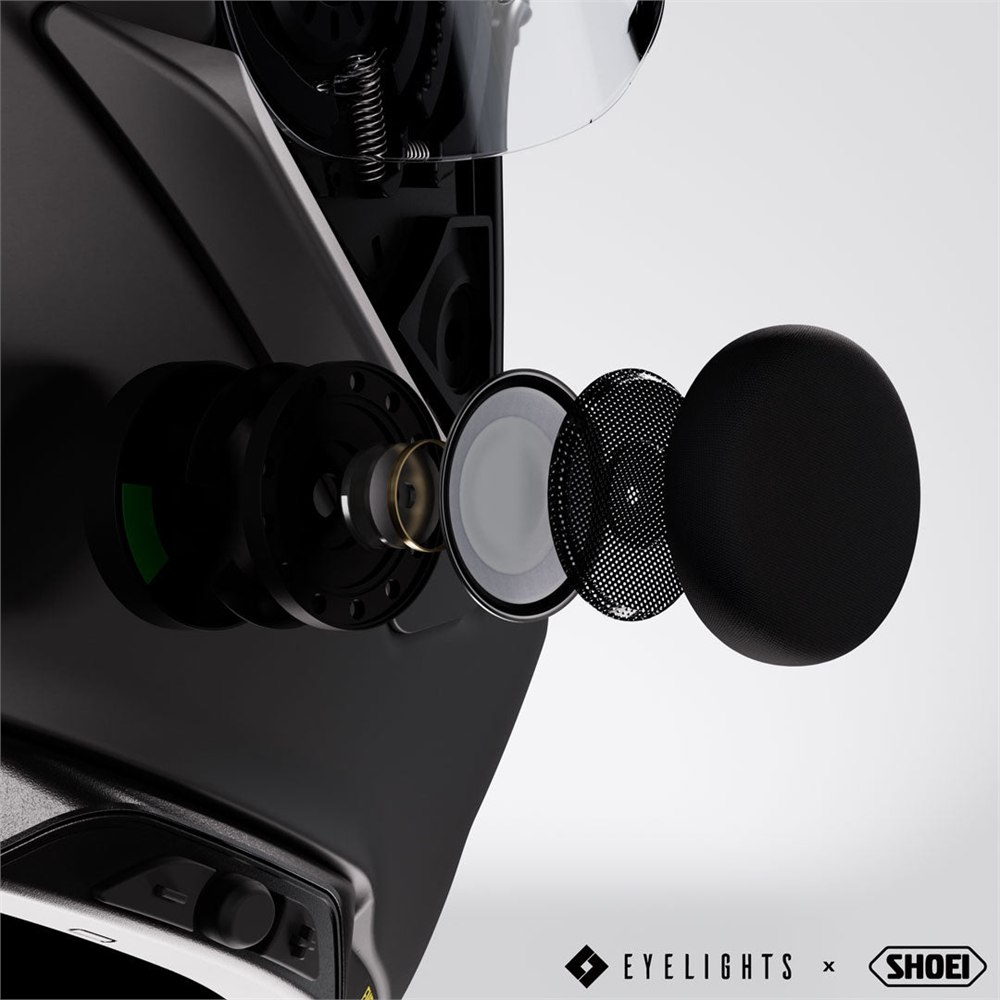
EyeLights describes premium audio and a noise-reducing microphone, with Siri and Google voice control. The useful idea is to bring directions and communication into the same setup instead of accumulating several unrelated systems with their own controls, charging habits, and strongly held opinions about pairing.
Anyone who has prepared for a ride by checking pockets, gloves, keys, earplugs, and a phone mount knows the pre-departure ritual can become its own recreational activity. A more integrated arrangement could make that routine tidier, though you still have to learn how this particular system works.
Before deciding whether the extra technology belongs on your head, consider how you actually ride:
- Frequent unfamiliar routes give visual navigation a clearer purpose than the same short commute every morning.
- Group rides make communications features more relevant, especially when riders already use different equipment.
- Long days make battery planning part of the decision, alongside comfort and fit.
- Riders who prefer minimal information may want a restrained display setup rather than every available notification.
- An in-person fitting can answer questions that an impressive product photo simply cannot.
The best use case is specific. You want the information, you already wear a full-face touring helmet, and you value having the pieces work together. Buying it solely because it looks futuristic risks discovering that the future mostly needs charging.
What the listed features actually cover
| Feature | Listed detail |
|---|---|
| Display | Integrated nano-OLED heads-up display |
| Information | Navigation, maps, speed, calls, and other selectable cues |
| Viewing distance | Approximately three meters virtually ahead |
| Battery | More than ten hours, according to EyeLights |
| Audio | Speakers and noise-reducing microphone |
| Colors | White, deep matte gray, and matte black |
| Listed sizes | S, M, L, XL, and XXL |
The battery figure is a manufacturer claim, so it makes sense to plan with a margin instead of arranging a journey that ends at the precise moment the electronics give up. A long ride can already provide plenty of surprises without adding a dramatic final percentage.
Color choices are pleasantly ordinary for a product with this much science-fiction energy. You can have the unusual technology without needing a paint scheme that announces your arrival from the next solar system.
Group chat, now with motorcycles
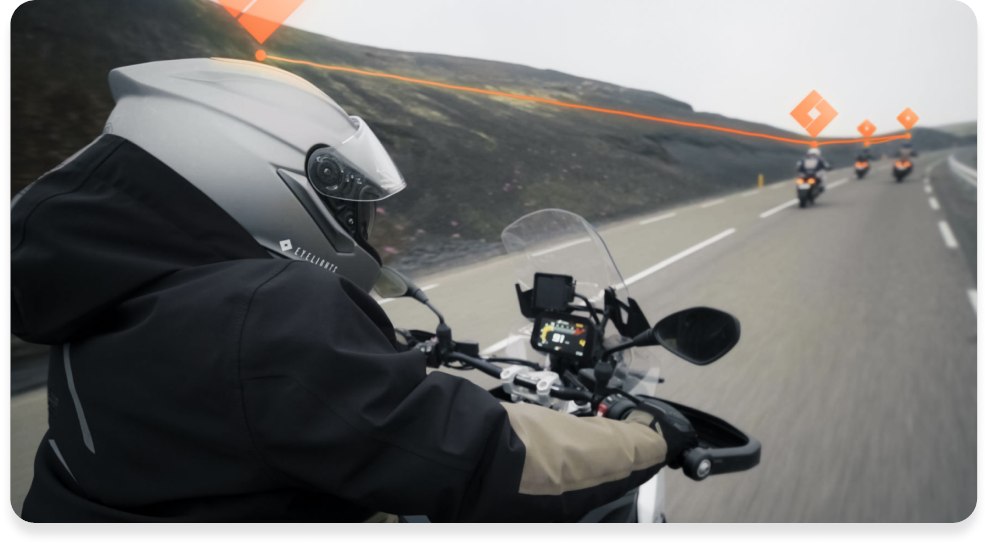
EyeLights advertises a universal intercom with online and offline mesh modes, cross-brand compatibility, and an online proposition without a fixed distance or rider-count limit. Those headline claims deserve to be read alongside the actual setup requirements. They shouldn’t be interpreted as infinite offline radio range.
For a riding group, the important questions are practical: how do existing headsets connect, which mode will you use, and what happens on the routes you normally take? “Can everybody hear the fuel-stop plan?” is a more useful test than whether the feature list sounds like a telecommunications empire.
Clear group communication can be wonderfully mundane. Someone needs fuel, someone missed a turn, and someone has discovered a bakery that apparently changes the entire itinerary. A shared conversation has value even when nobody says anything remotely cinematic.
Try the helmet before falling for the screen
A clever display doesn’t rescue an uncomfortable fit. The order of operations should still begin with how the helmet sits on your head, then move to the controls, audio, and HUD. Your forehead should not spend an afternoon negotiating with a pressure point just because the navigation looks excellent.
The same goes for learning the interface. Spend time with the settings while stationary and work out which information you actually need. There’s a considerable difference between a helpful prompt and a tiny entertainment district hovering in front of your face.
This is the kind of product that makes a demonstration especially valuable. Seeing the optics yourself can settle the question far better than another hour of staring at dramatic helmet photography. Your head, inconveniently, is not a standardized showroom mannequin.
The integrated approach is still the most interesting part. Motorcycling technology often grows outward: another mount, another box, another cable. This puts a surprisingly elaborate collection of electronics into an object you were already planning to wear.
It feels like a plausible next step for touring equipment, particularly for someone who wants visual directions without filling the handlebars with gadgets. Whether it earns its place in your riding routine is a personal question, not something a glowing arrow can decide for you.
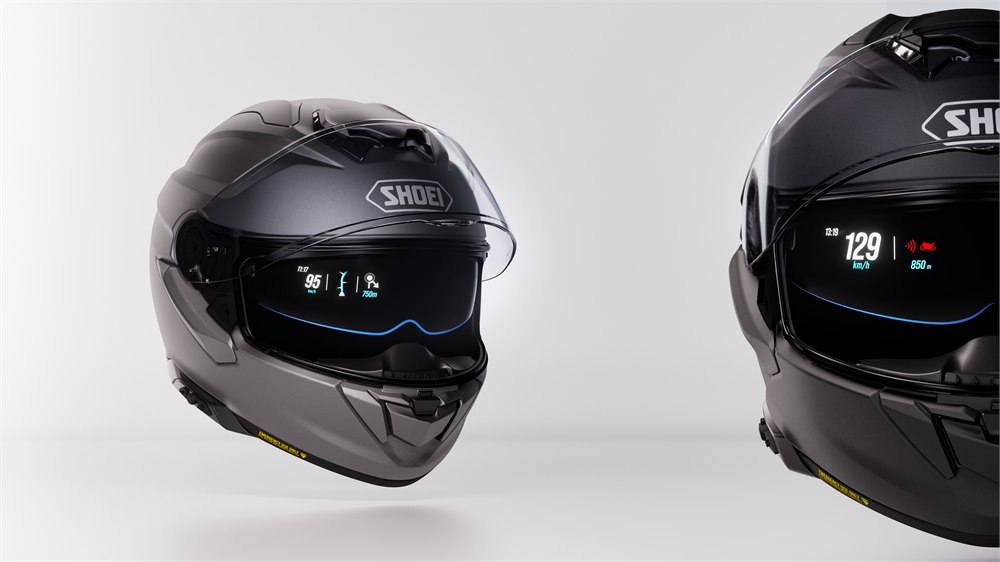
Product images and illustrated display views: EyeLights.
The key details before your next ride
- Product: Shoei GT-Air 3 Smart, developed with EyeLights.
- Main attraction: a heads-up display integrated into a full-face motorcycle helmet.
- Supporting features: audio, microphone, voice control, and intercom.
- Best fit: riders who want navigation and communications in one helmet setup.
- Worth checking in person: helmet fit, display position, and control operation.
- Availability depends on the chosen size, color, and current ordering terms.
EyeLights currently lists the helmet at €1,249. Its page includes pre-order wording, so confirm the delivery terms for your chosen version before ordering. That’s a serious helmet purchase, but at least the navigation system has finally agreed to attend the same meeting as your eyes.
| Pros | Cons and considerations |
|---|---|
| Navigation appears in the rider’s field of view | Display position should be tried with your own fit |
| Audio and communications share an integrated setup | Connections and controls still require setup |
| More than ten hours of claimed battery life | Charging remains part of trip planning |
| Several colors and sizes are listed | Delivery terms depend on the selected version |
| A distinctive touring-helmet concept | Premium price and more technology to learn |
Where to find This HUD Motorcycle Helmet Puts Navigation in Your Field of View
OddityMall may earn a commission from qualifying purchases at no extra cost to you.