Paper airplanes are one of humanity’s most reliable lies. You fold one during a meeting, convince yourself you understand lift now, launch it across the room, and watch it immediately choose a career in floor inspection.
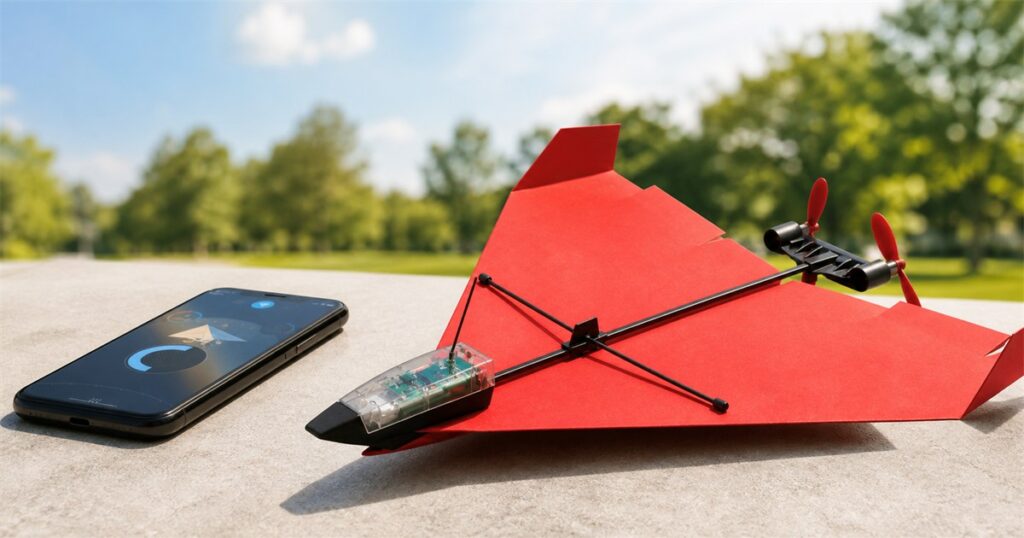
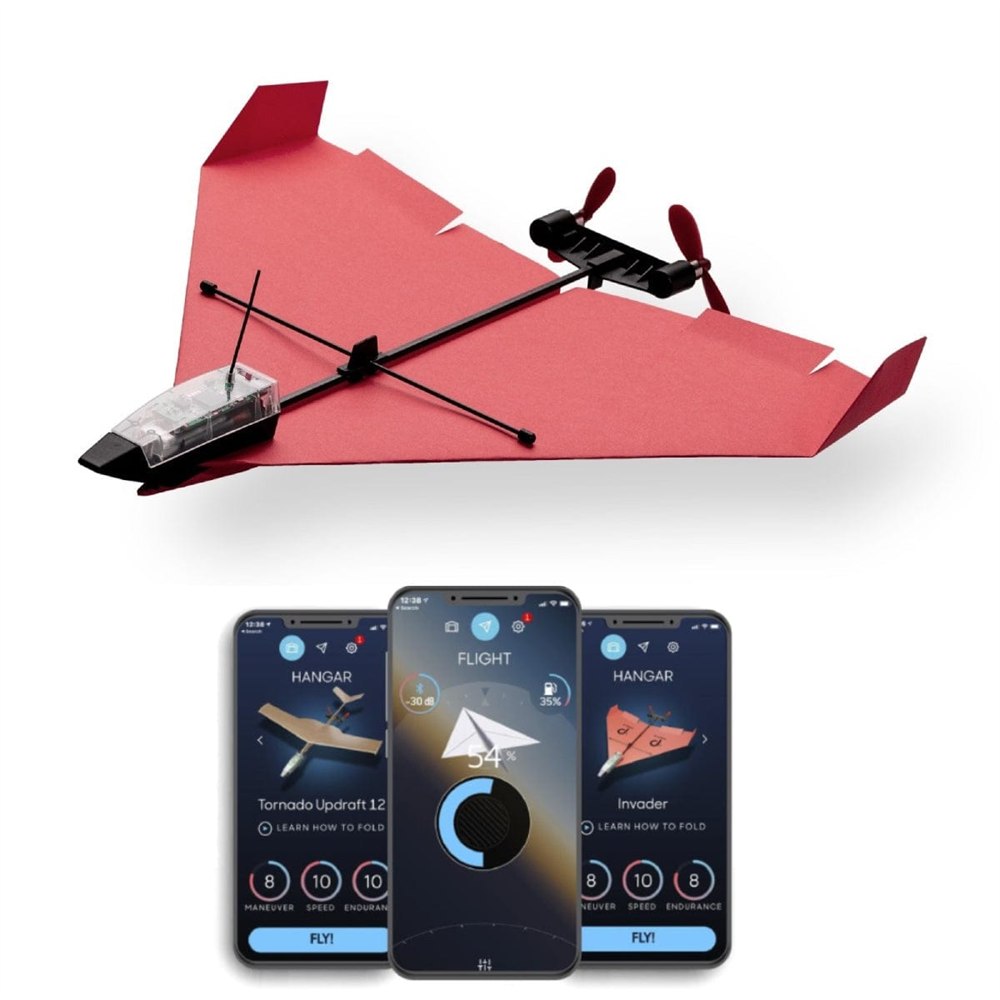
The POWERUP 4.0 is here to make that tiny office rebellion significantly more aerodynamic. It is a smartphone-controlled paper airplane kit from POWERUP Toys that clips a lightweight twin-motor Bluetooth flight module onto a folded paper plane, then lets you steer the whole thing from an iOS or Android phone like you are running air traffic control for a very ambitious sheet of cardstock.
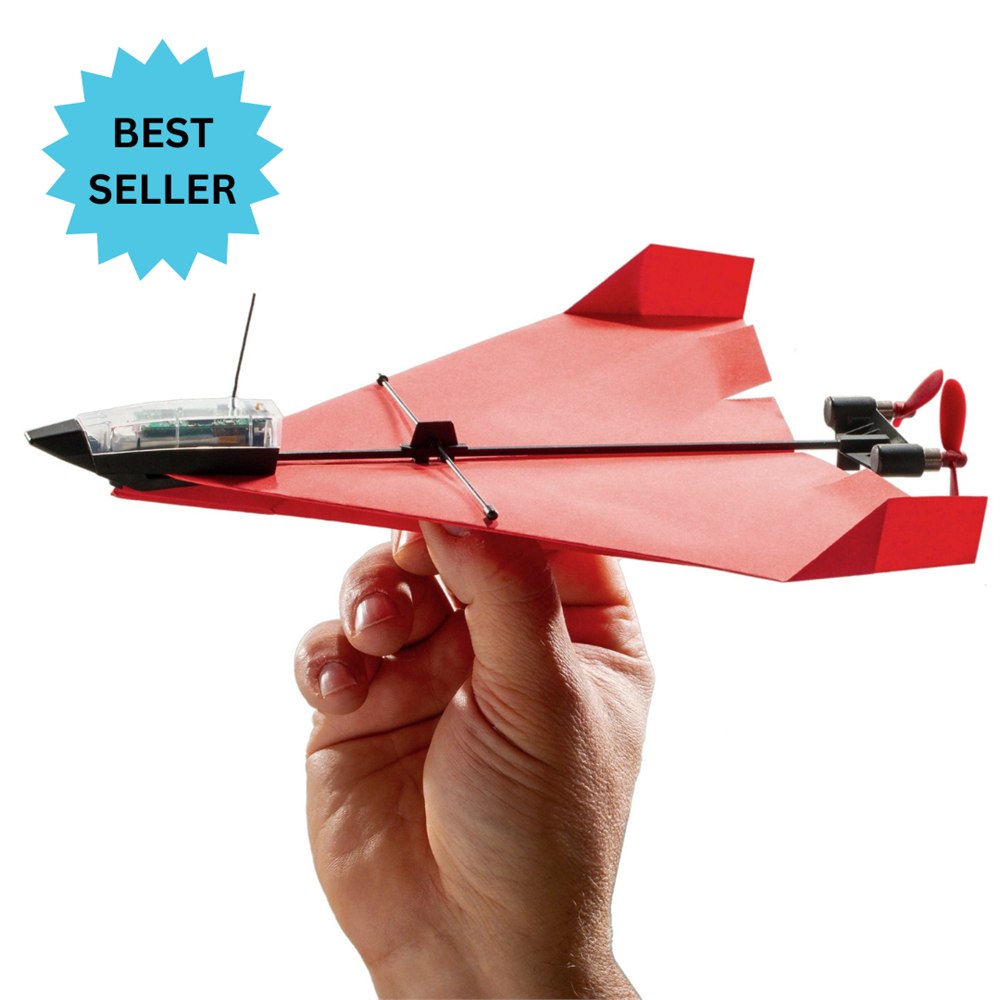
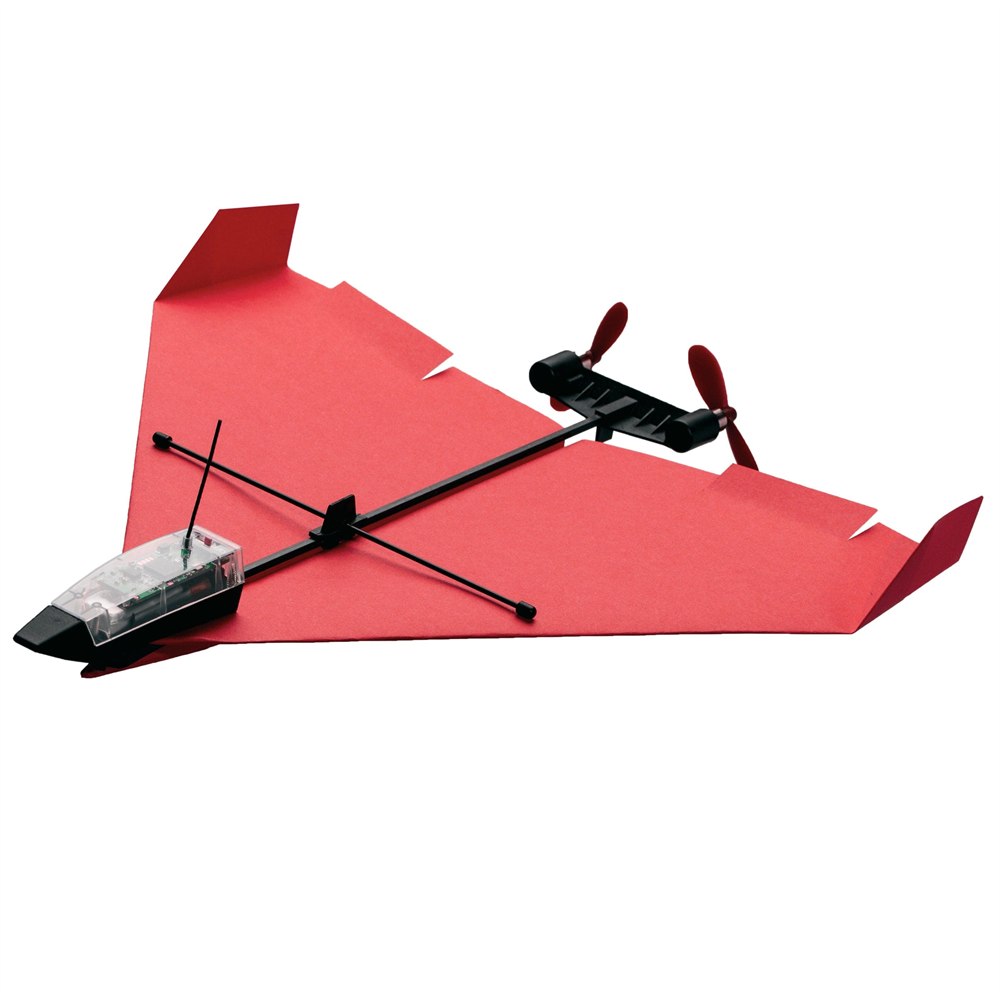
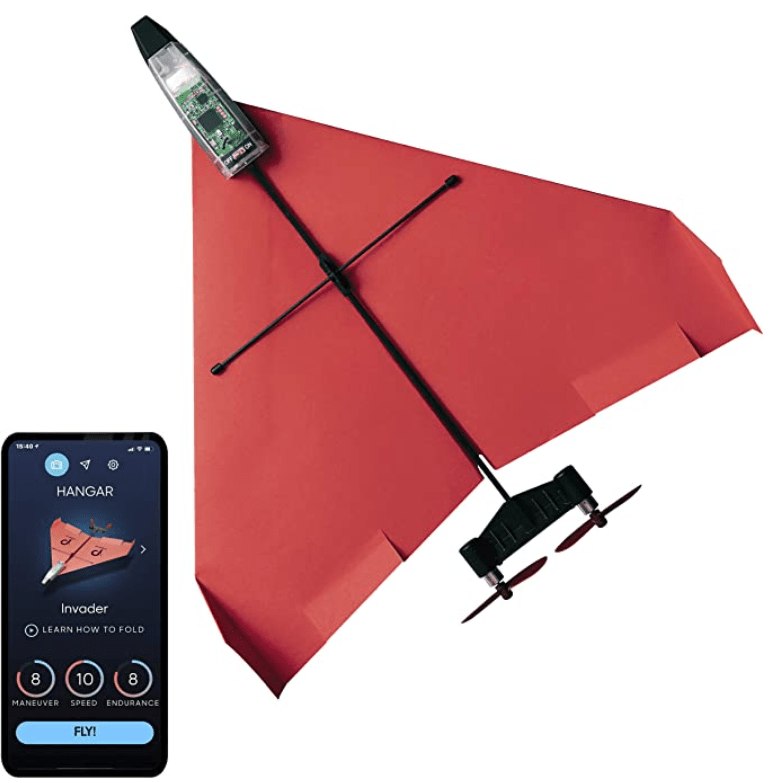
This is not a normal RC plane pretending to be a paper airplane. The fun part is that the aircraft can still be built from paper, light foam, or balsa designs, as long as the wing setup stays under the weight limit. The module brings the expensive-looking parts: a carbon-fiber body, a nylon-reinforced nose and motor mount, rear twin propellers, an onboard flight computer, autopilot assistance, gyro stabilization, and a phone app that turns backyard aviation into a small personal science fair.
It is basically what would happen if your childhood paper airplane grew up, got Bluetooth, developed a flight log, and started acting superior to every crumpled homework glider that came before it.
A Tiny Flight Module For Big Desk-Pilot Energy
The heart of the kit is a 19-gram module that attaches to a folded plane. POWERUP says the setup has a 2:1 thrust-to-weight ratio, which is a very technical way of saying this little red paper triangle has more ambition than most people after lunch. The app pairs over Bluetooth and lets you steer by tilting your phone left or right, while the onboard computer works to smooth out launch mistakes, wind wiggles, and the kind of overconfident throw that usually ends in a shrub.
Related posts:
 These Garage Door Decals Make It Look Like There’s an Airplane, Horse, or Giant Dump Truck In Your Garage
 These Texting Mittens Have a Transparent Window To Use Your Phone In The Cold
 There’s Now a Giant 18-Foot Airplane Lake Float So You Can Party On Your Own Private Jet
 This Bubble Window For Your Fence Allows Your Dogs To Peek To The Other Side
The official product page lists a range of 240 feet, while the Amazon listing describes up to 230 feet. Either way, this is not just a across-the-living-room toy unless your living room is also an aircraft hangar. POWERUP recommends open outdoor spaces, because the plane can reach up to 20 mph and because nobody wants to explain a propeller-assisted paper airplane incident to a lamp.
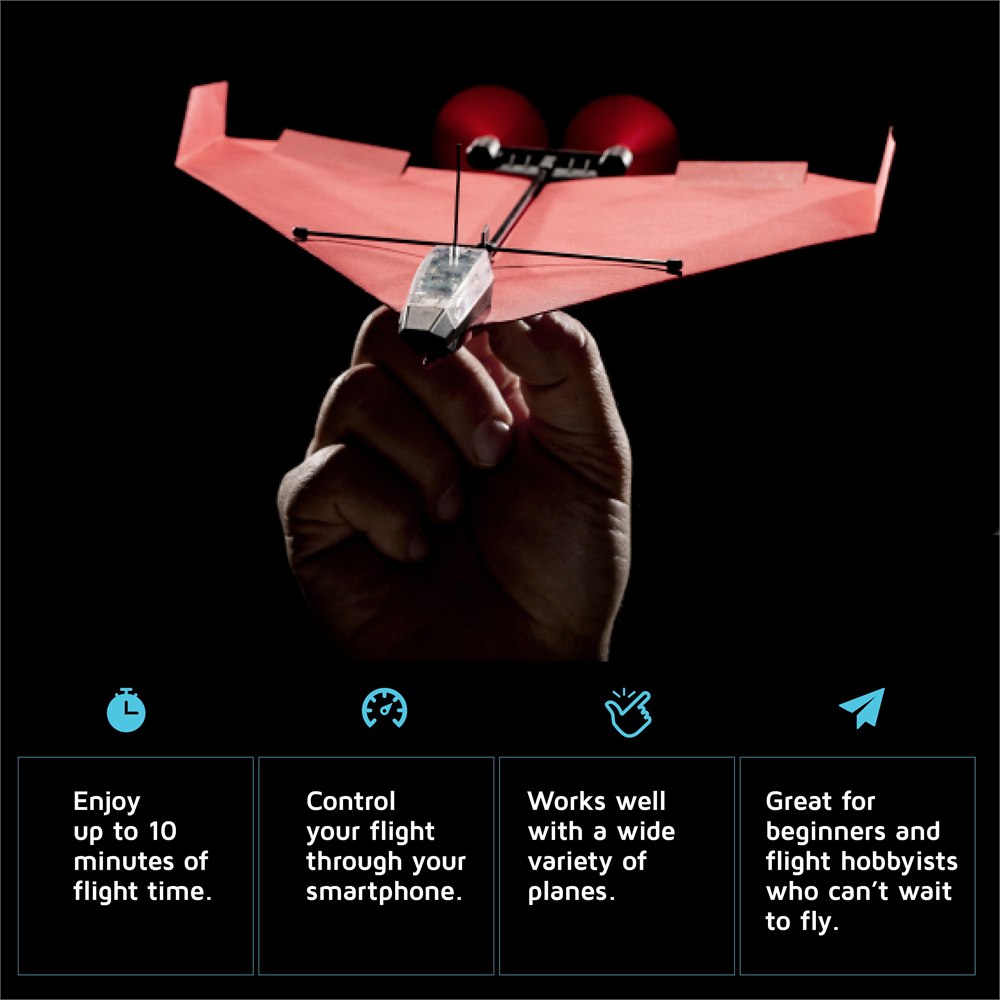
The onboard flight computer is doing more than looking cute under a clear plastic cover. It helps prevent nosedives, reduces choppy flight, and can bring the plane down if it flies beyond app communication range. That is a helpful feature for anyone whose previous flight plan was mostly “throw hard and blame gravity.”

What The Kit Actually Includes
POWERUP lists the kit as a complete starter setup. You still get the ritual of folding the plane, but you are not left hunting around the junk drawer for the parts that make it fly. The box includes the motorized Bluetooth module, templates, a charging cable, and replacement parts for the small things that are most likely to meet grass, pavement, or an emotionally unavailable tree.
- One POWERUP 4.0 twin-motor Bluetooth module for attaching to a compatible paper, foam, or balsa plane.
- Four paper plane templates so your first flights do not depend entirely on middle-school memory.
- A micro USB charging cable for topping up the module between flights.
- A crossbar, spare propeller set, trim card, and user guide for setup and repairs.
- App-based controls with steering, flight logging, leaderboard features, folding help, and real-time flight data.
The kit is recommended for ages 8 and up, but this is very much the kind of product where the adult “helping” may become suspiciously invested. One minute you are supervising a kid’s STEM activity, the next you are talking about turn angles in the driveway like you own a wind tunnel.
The Specs, For People Who Need To Know Why It Flew Into The Fence
The official specs make the POWERUP 4.0 more interesting than the usual motorized toy plane. The module is small, but it is built around real flight variables: weight, thrust, battery life, range, speed, and material compatibility. That makes it especially good for tinkerers who want to test wing shapes instead of simply watching a prebuilt RC plane circle the yard until the battery gives up.
| Feature | POWERUP 4.0 detail |
|---|---|
| Control method | Bluetooth smartphone app for iOS or Android |
| Flight range | Up to 240 ft / 73 m on the official product page |
| Speed | Up to 20 mph, or about 9 m/sec |
| Module weight | About 19 grams with a listed 2:1 thrust-to-weight ratio |
| Flight time | Up to 10 minutes per charge |
| Charging time | About 25 to 30 minutes for a full charge |
| Materials supported | Paper, light balsa, cardboard, or foam designs under the weight limit |
The app also shows flight analytics such as heading, thrust levels, and turn angles in real time. That turns a simple toy flight into a loop of test, crash, adjust, and pretend the crash was actually data collection. If you have ever wanted to say “the wing loading is the issue” while holding a wrinkled piece of paper, this is your moment.
It Is A Toy, A STEM Lesson, And A Mild Threat To Picnic Calm
The most charming thing about POWERUP 4.0 is that it keeps the paper airplane part alive. You are not just buying a sealed flying gadget. You are changing folds, trying different templates, experimenting with wing shapes, and watching the module respond. The official FAQ says the quick-connect system can attach to thin materials like paper and thicker materials like cardboard, foam, and balsa wood, as long as the wing weight stays below 0.71 ounces, or 20 grams.
That makes it useful for classrooms, families, hobbyists, or anybody who has ever looked at a normal paper airplane and thought, “Nice, but what if this had a tiny nervous system?” It teaches lift, drag, thrust, gravity, balance, and the humbling truth that aerodynamics does not care how confidently you folded the nose.
The durability claims are also worth noting. POWERUP describes the body as carbon fiber, with reinforced plastic parts and a rubber bumper. Amazon’s listing mentions a nylon-reinforced nose and motor mount, and the official FAQ says the module is designed to survive most crashes. Most is doing real work there. This is still a flying object with small propellers, so repeatedly introducing it to walls is not a maintenance plan.
Weather is another place where expectations matter. The flight computer and stabilizers can help in less-than-perfect conditions, but POWERUP still recommends clear, calm days for the smoothest flights. If you are using paper, rain remains paper’s ancient enemy. The product page notes waterproof paper in the template kit for damp conditions, but the backyard sky gods are still allowed to have opinions.
Who This Is Really For
This is a gift for the person who never mentally left the part of childhood where throwing something across a yard counted as research. It works for kids who like building things, adults who like pretending they are helping, teachers who want a more exciting aerodynamics lesson, and hobby tinkerers who enjoy improving a design after every crash landing.
It is less ideal for tiny indoor apartments, impatient users who do not want to trim or adjust anything, or anyone expecting a stabilized camera drone experience. The POWERUP 4.0 is still delightfully paper-airplane-adjacent. That means it rewards experimentation, open space, and the willingness to say “one more flight” several times after sunset.
For the practical shopping details, the POWERUP 4.0 Airplane is listed on the official POWERUP Toys store for $59.99 and is also available through Amazon. The official store currently lists the product as available, and Amazon has shown a matching $59.99 offer for the same POWERUP 4.0 kit.
- Product: POWERUP 4.0 Smartphone-Controlled Paper Airplane Kit
- Maker: POWERUP Toys
- Core trick: Turns compatible folded paper, foam, cardboard, or balsa planes into app-controlled aircraft
- Controls: Bluetooth smartphone app with tilt steering and flight analytics
- Flight range: Up to 240 feet on the official product page
- Flight time: Up to 10 minutes after a 25 to 30 minute charge
- Best use: Outdoor flying, STEM experiments, backyard tinkering, and giftable toy chaos
| Pros | Cons |
|---|---|
| Turns ordinary folded planes into app-controlled flyers | Needs open outdoor space for the most fun |
| Lightweight module works with multiple wing materials | Paper designs still dislike rain and rough handling |
| Autopilot and gyro stabilization help smooth out bad launches | There is still a learning curve for trimming and folding |
| Flight analytics make it more educational than a basic toy plane | Ten-minute flight time means charging breaks are part of the ritual |
| Included templates and spare propellers make experimenting easier | Small propellers and fast flight require sensible supervision |
| Works as a STEM gift for kids and adults | Not a camera drone or a fully prebuilt RC plane |
Where to find This Smartphone-Controlled Paper Airplane Kit Lets You Pilot Your Folded Plane
OddityMall may earn a commission from qualifying purchases at no extra cost to you.
Related posts:
These Garage Door Decals Make It Look Like There’s an Airplane, Horse, or Giant Dump Truck In Your Garage
These Texting Mittens Have a Transparent Window To Use Your Phone In The Cold
There’s Now a Giant 18-Foot Airplane Lake Float So You Can Party On Your Own Private Jet
This Bubble Window For Your Fence Allows Your Dogs To Peek To The Other Side