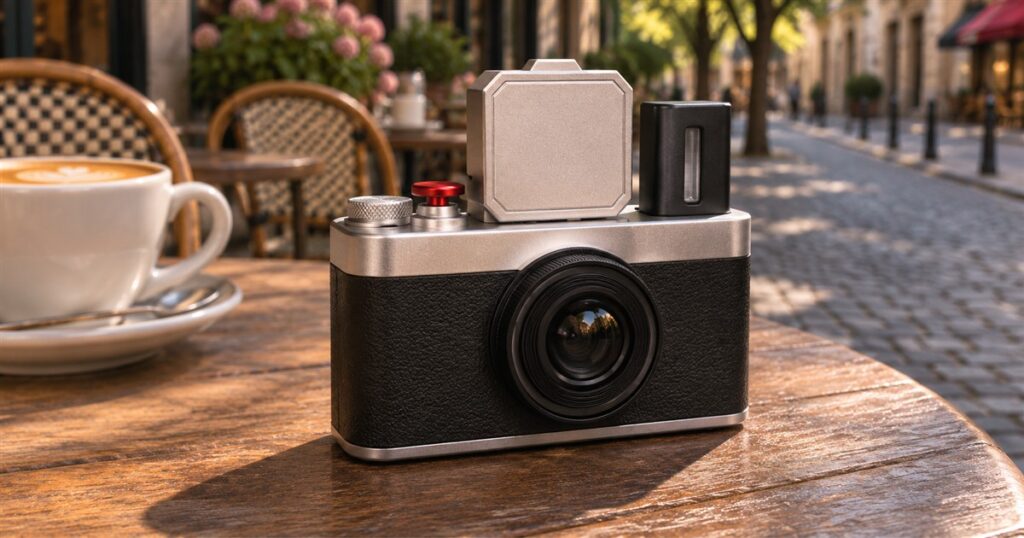
Your phone has probably taken 47 pictures of the same sandwich. The Fotorgear Campix would like you to calm down, look into the top of a tiny camera, and consider whether the sandwich deserves quite that much archival attention. This film-inspired digital camera organizes pictures into 36-shot rolls and gives your fingers actual controls to fiddle with. Finally, a camera for people who miss winding film but have absolutely no desire to find a photo lab.
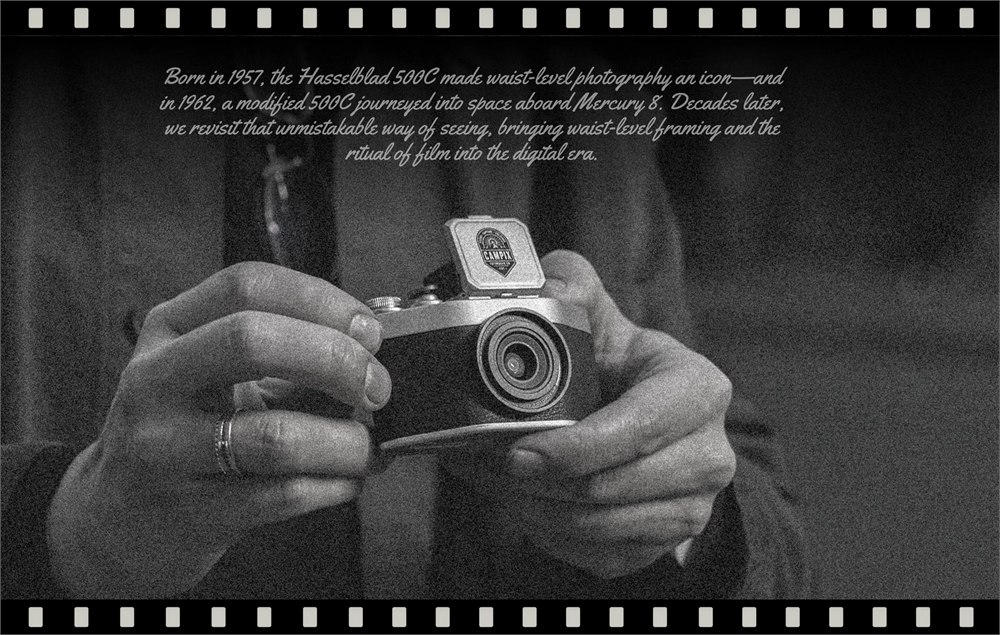
Campix is a standalone digital camera built around a waist-level viewfinder and a deliberately old-fashioned shooting ritual. You compose by looking down into its flip-open hood rather than holding a big rear screen in front of your face. The photos are digital, the rolls are digital, and the satisfaction of operating a little mechanical-looking object is very much the point.
Fotorgear combines a silver-and-black camera body, a red shutter button, tactile controls, and a connected developing experience. It looks ready for an afternoon wandering around town with someone who has strong opinions about coffee and an entirely reasonable number of tote bags. Under the nostalgic routine, though, it still supports modern conveniences including RAW files and wireless transfers.
A digital camera that asks you to look down
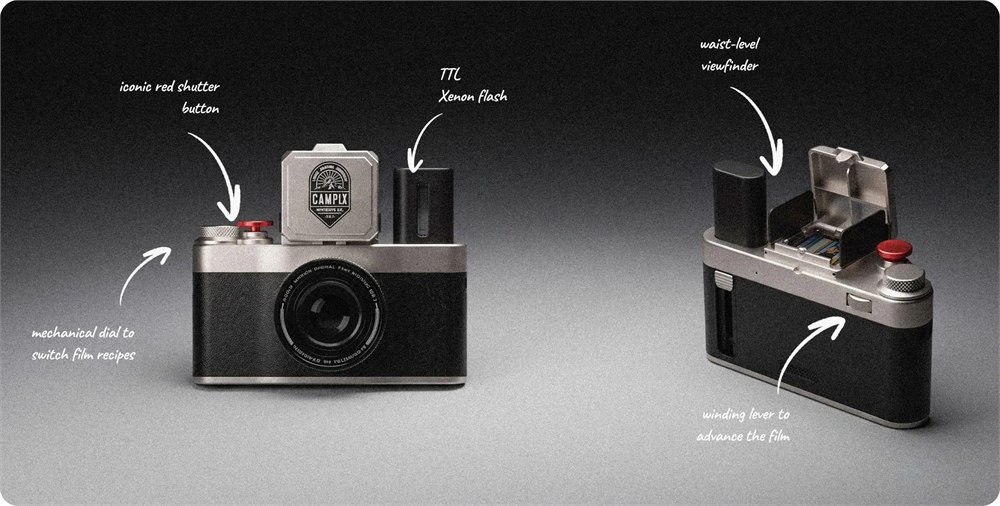
The waist-level finder is the central attraction. Open the hood, hold the camera below your face, and look down to compose. That changes the physical experience of taking a picture: your face is no longer hidden behind a phone, and framing becomes a small, deliberate action. A familiar street corner can feel different simply because you are approaching it from a different height.
This is an electronic viewing experience dressed in the language of classic cameras. It does not require photographic film, chemical development, or a darkroom that used to be the guest bathroom. The raised hood and physical controls supply the ritual while the camera stores digital photographs.
Related posts:



The appeal is easy to understand for casual walks, travel snapshots, and everyday photography. You get a separate object devoted to taking pictures, instead of unlocking a phone and immediately remembering six unrelated obligations. It cannot stop your phone from existing, but it can keep that phone out of the act of shooting.
Thirty-six frames, then another roll
Each digital roll holds 36 frames. Finish the roll, advance to a fresh one, and the pictures remain grouped as a set. The limit describes the roll format, not a lifetime allowance of 36 photographs. You are not buying a camera that retires halfway through a birthday party.
The physical advance control gives the process a tactile punctuation mark. Shoot, advance, continue. Where a phone encourages an endless stream of near-identical options, this approach makes a smaller batch feel like a finished collection. Whether that produces better photographs depends on the photographer; it certainly gives the photographer something more interesting to do with a thumb.
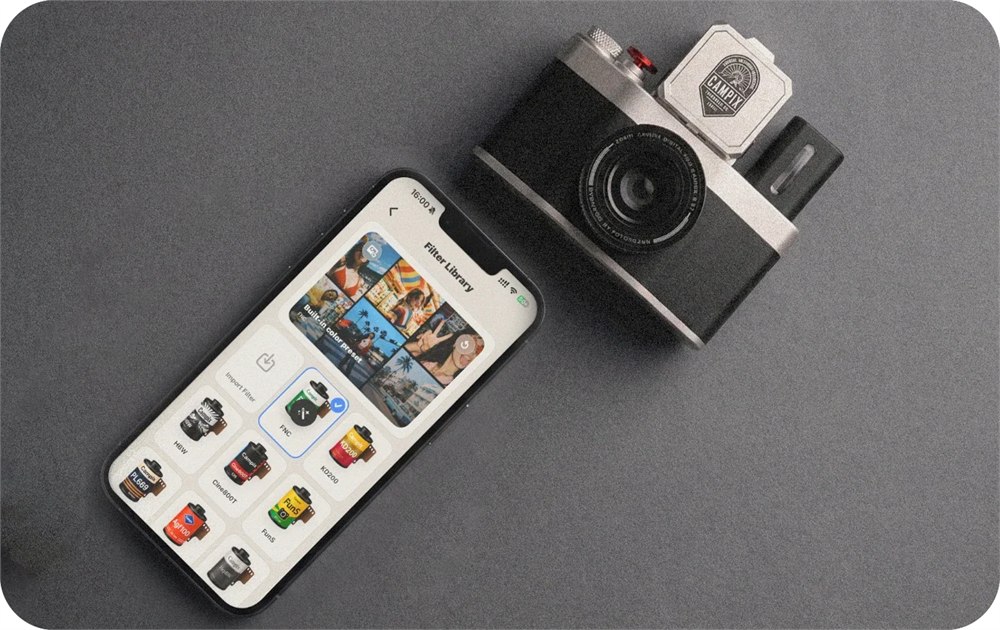
There is a practical difference between this and actual film. After developing a digital roll, Fotorgear says you can redevelop it using different film recipes as often as you want. You can also export individual favorites instead of downloading the whole roll again. A questionable color choice does not have to become a permanent historical document.
- Compose through the top-mounted waist-level finder.
- Work through 36-frame digital rolls without buying film.
- Use physical controls for the film-inspired shooting routine.
- Develop and redevelop photographs with different recipes in the connected app.
- Export selected pictures, including RAW files in DNG format.
The useful bits beneath the nostalgia
Campix supports JPEG and RAW, with DNG export for people who want more editing flexibility. That matters because a stylized look does not have to be the end of the conversation. You can enjoy the camera’s film-inspired recipes and still retain a route into a more involved editing workflow.
The official product presentation also lists Wi-Fi and USB-C transfers, automatic ISO, automatic metering, and TTL flash. Those features help explain the intended balance: give the photographer a tactile experience without demanding that every casual snapshot turn into a technical assignment. You can leave the calculations to the camera while concentrating on the scene.
| Feature | What it means for the user |
|---|---|
| Waist-level viewfinder | Compose by looking into the top of the camera. |
| 36-shot digital rolls | Keep pictures together in defined batches without physical film. |
| JPEG and RAW support | Choose ready-to-use images or DNG files for further editing. |
| GN7 xenon flash with TTL | Built-in flash automatically adjusts output for the scene. |
| Wi-Fi and USB-C | Transfer photographs to a phone or computer. |
| Connected developing app | Apply recipes, revisit a roll, and export favorites. |
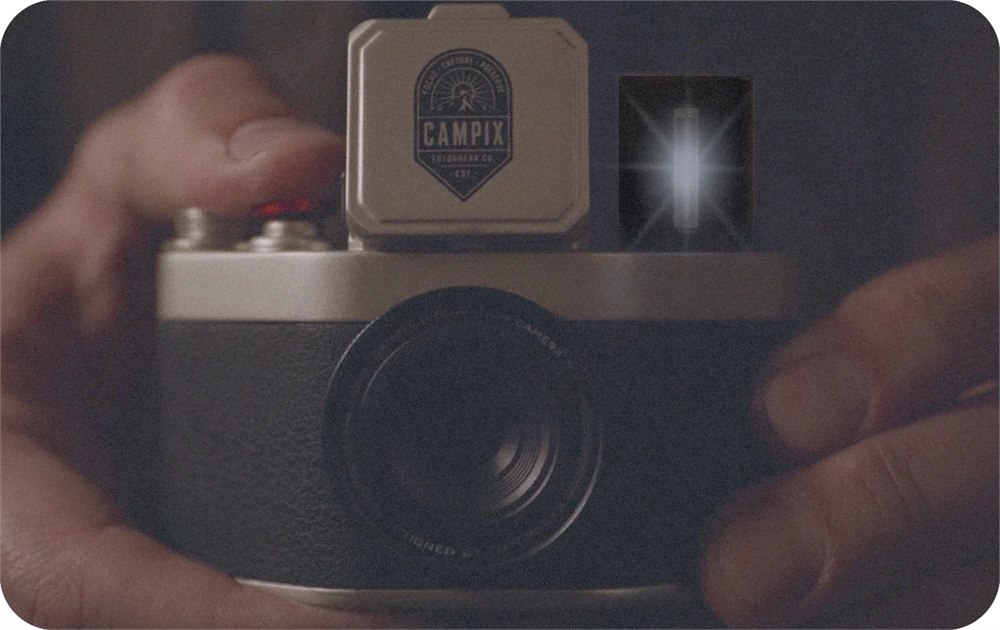
The built-in xenon flash is another nice departure from simply pretending a phone is an old camera. Fotorgear specifies a GN7 flash with TTL support, which adjusts flash output automatically. That is a manufacturer specification, not a promise that every dim restaurant will suddenly look like a professional portrait studio.
The camera can take pictures independently. A phone is needed for the connected developing experience, rather than for pressing the shutter. Fotorgear describes the app as free, with no subscription fees, and says it handles camera connection, film recipes, development, and exporting selected photos. Anyone allergic to another monthly bill can appreciate the intention.
Optional lenses come with a compatibility catch
Fotorgear lists selected optical lens add-ons for Campix: 8mm, 16mm, 60mm, 75mm macro, and 1.55× anamorphic options. These are intended to offer different perspectives, from wider scenes to close-up and more specialized compositions. They are optional equipment, so check the contents of a particular reward bundle before assuming a collection of lenses is included.
The compatibility rule is specific. Campix uses Fotorgear’s T-mount interface and supports selected Fotorgear lenses; the maker says third-party lens compatibility is not available at this stage. This is not an invitation to attach whatever giant lens has been living in your closet since your wildlife-photography phase.
That makes the camera easier to understand as its own small system. If the basic shooting ritual is what interests you, start by judging that experience. If different optics are a major attraction, compare the actual add-on choices and bundle contents. A lens assortment should solve a photographic itch, rather than become another collection you organize more often than you use.
Who will enjoy the slower routine?
Campix makes the most sense for someone who enjoys the process of taking photographs. The separate camera, downward-looking finder, advance control, and grouped rolls all create little boundaries around an activity that smartphones have made nearly frictionless. Sometimes a bit of friction is enjoyable. People still buy notebooks despite having devices capable of storing several million grocery lists.
It is less obvious for someone whose main priority is immediate phone-style sharing with the fewest possible steps. The developing workflow is part of the attraction here, so it is also part of the commitment. You should want the routine, not merely tolerate it because the camera looks charming on a shelf.
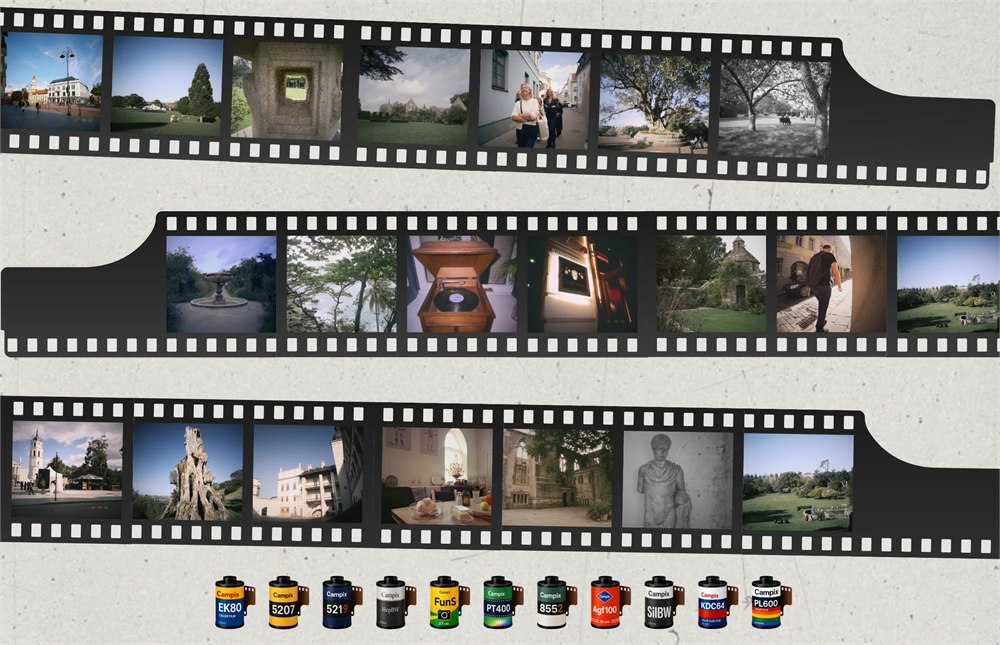
Film recipes offer another reason to experiment. The maker’s examples show a range of color and monochrome treatments, and the ability to redevelop pictures means one roll can be revisited with a different mood. The photographs shown in the recipe examples are Fotorgear’s demonstrations, not our own test shots.
Product images and recipe examples courtesy of Fotorgear.
- Standalone digital camera with a flip-open waist-level finder.
- Film-inspired controls and 36-frame digital roll organization.
- JPEG and RAW capture with DNG export.
- Built-in GN7 TTL xenon flash.
- Optional selected Fotorgear T-mount lenses; no current third-party support.
- Connected app for recipes, redevelopment, and selected photo exports.
Campix is offered through Kickstarter, with an advertised starting campaign price of about $109. Reward tiers, bundle contents, and availability can change, and shipping is additional. Fotorgear’s purchase guide lists January 2027 as the planned start of shipping. This is a crowdfunding project rather than an in-stock retail purchase, so delivery dates and fulfillment remain subject to the campaign’s risks.
For the right photographer, the attraction is not another specification to brag about. It is the prospect of heading outside with a small camera, making a roll of pictures, and looking at them later with a little anticipation. Your sandwich may still get photographed. It just might finally have to earn its place in the roll.
| Pros | Cons |
|---|---|
| Distinctive waist-level composition and tactile controls | The slower routine will not suit every photographer. |
| Digital rolls require no physical film | Connected development adds steps compared with immediate phone sharing. |
| RAW/DNG support and repeat recipe development | The app is part of the connected developing experience. |
| Built-in TTL xenon flash | Real-world results depend on lighting and shooting conditions. |
| Optional lenses provide different perspectives | Compatibility is limited to selected Fotorgear lenses. |
| Campaign offers several reward configurations | Crowdfunding delivery is not guaranteed; shipping costs extra. |
Save this find.
Thank yourself later.
Your next great gift idea. Your someday space. Your collection of wonderfully weird things.
Save to PinterestPick a board. Keep the inspiration.
This Waist-Level Digital Camera Shoots 36-Photo Rolls Without Film
At a glance
Product snapshot
- Listed price
- From $109 (campaign)Prices and availability can change. Check the seller for current details.
- Where to find it
- Kickstarter
- Category
- Gadgets