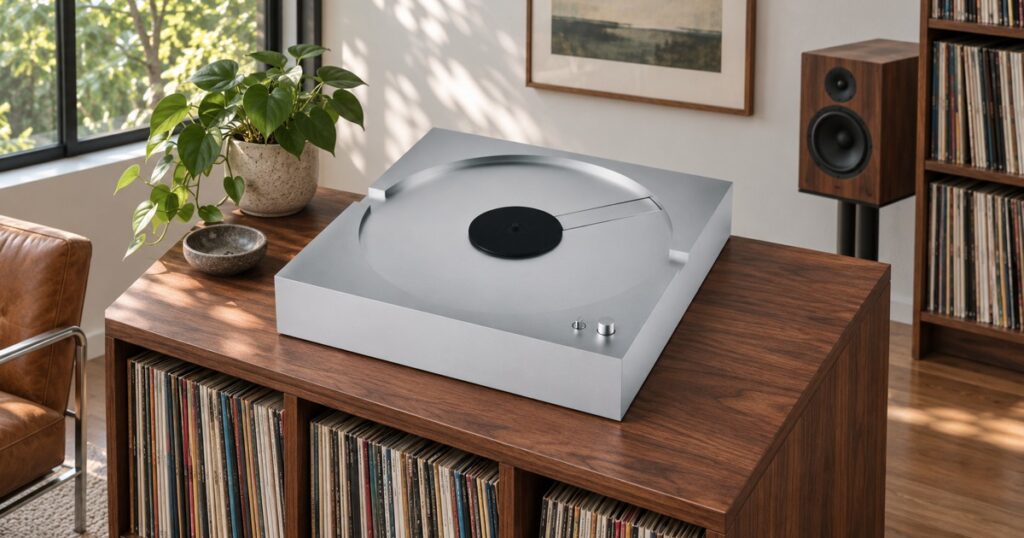
Put your favorite side of the record face down. Yes, the side you want to hear. That instruction ought to get somebody gently escorted away from the stereo, but the Waiting For Ideas PP-2 plays vinyl from underneath. Press Play and the label looking up at you has absolutely nothing to do with the song coming out of the speakers.
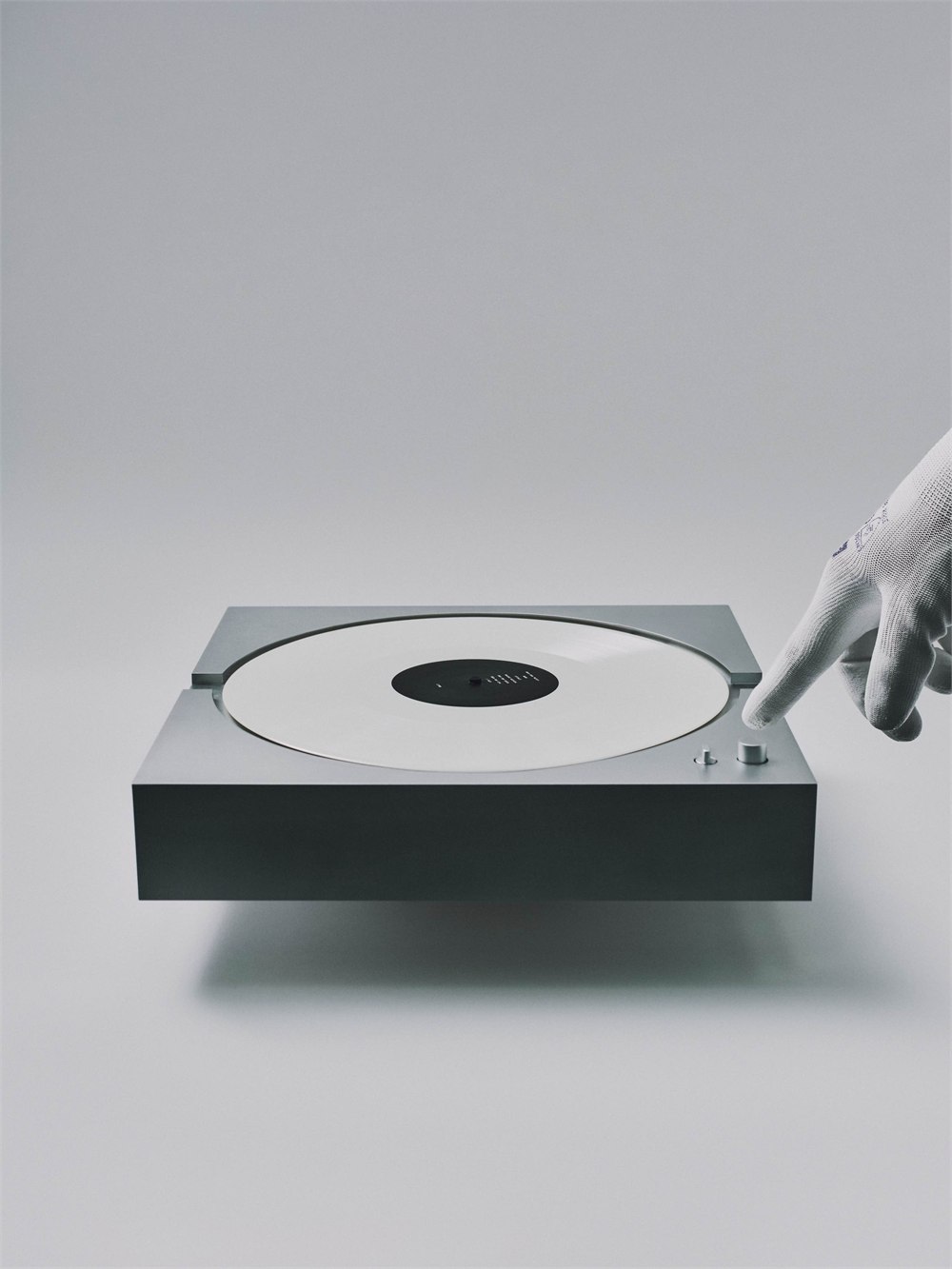
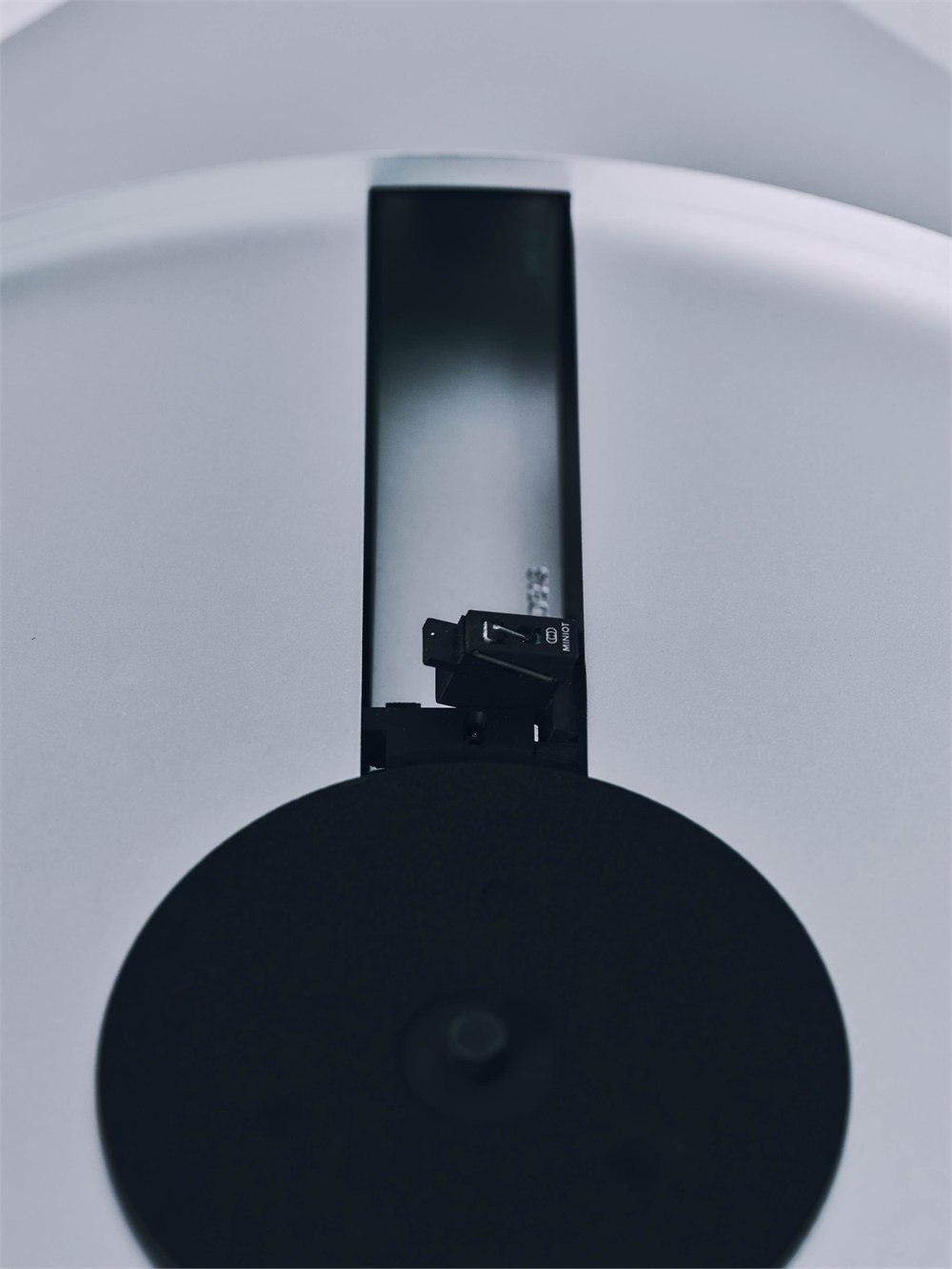
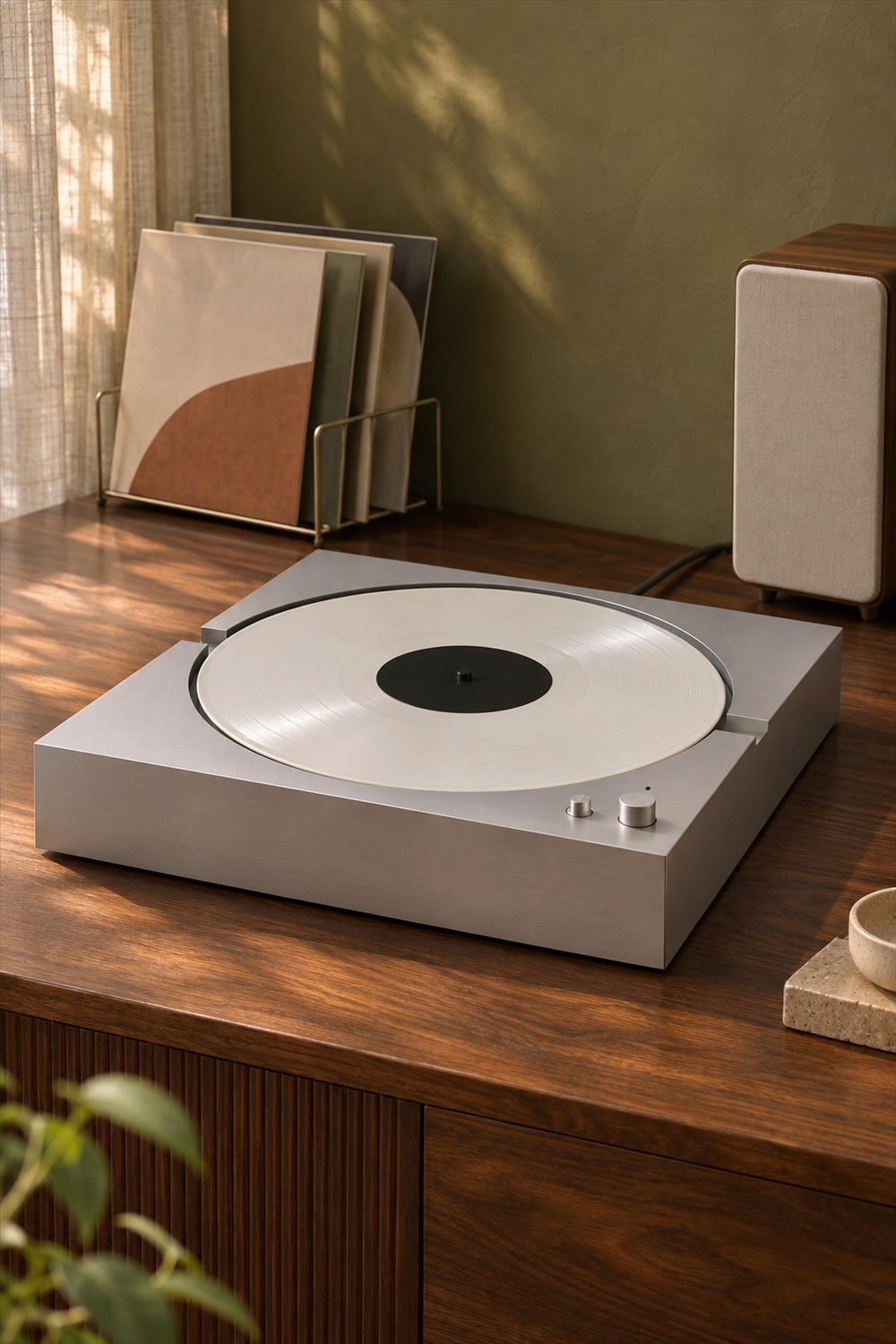
Get close to this silver square and try to find the usual long arm with a needle at the end. There’s no finger lift to pinch, no counterweight sticking out the back, no delicate little descent to supervise while somebody’s dog chooses that exact moment to lean against your knees. There is a stylus. It’s just working on the other side of the scenery.
What light actually reads
An optical stylus turntable sounds like it ought to shine a laser at an LP from across the room. The PP-2 does something much more interesting for people who like records: it keeps the physical part. The tip follows the groove. The groove moves the stylus. It’s that movement, rather than a photograph of the groove or a digital copy of the song, that the optical system reads.
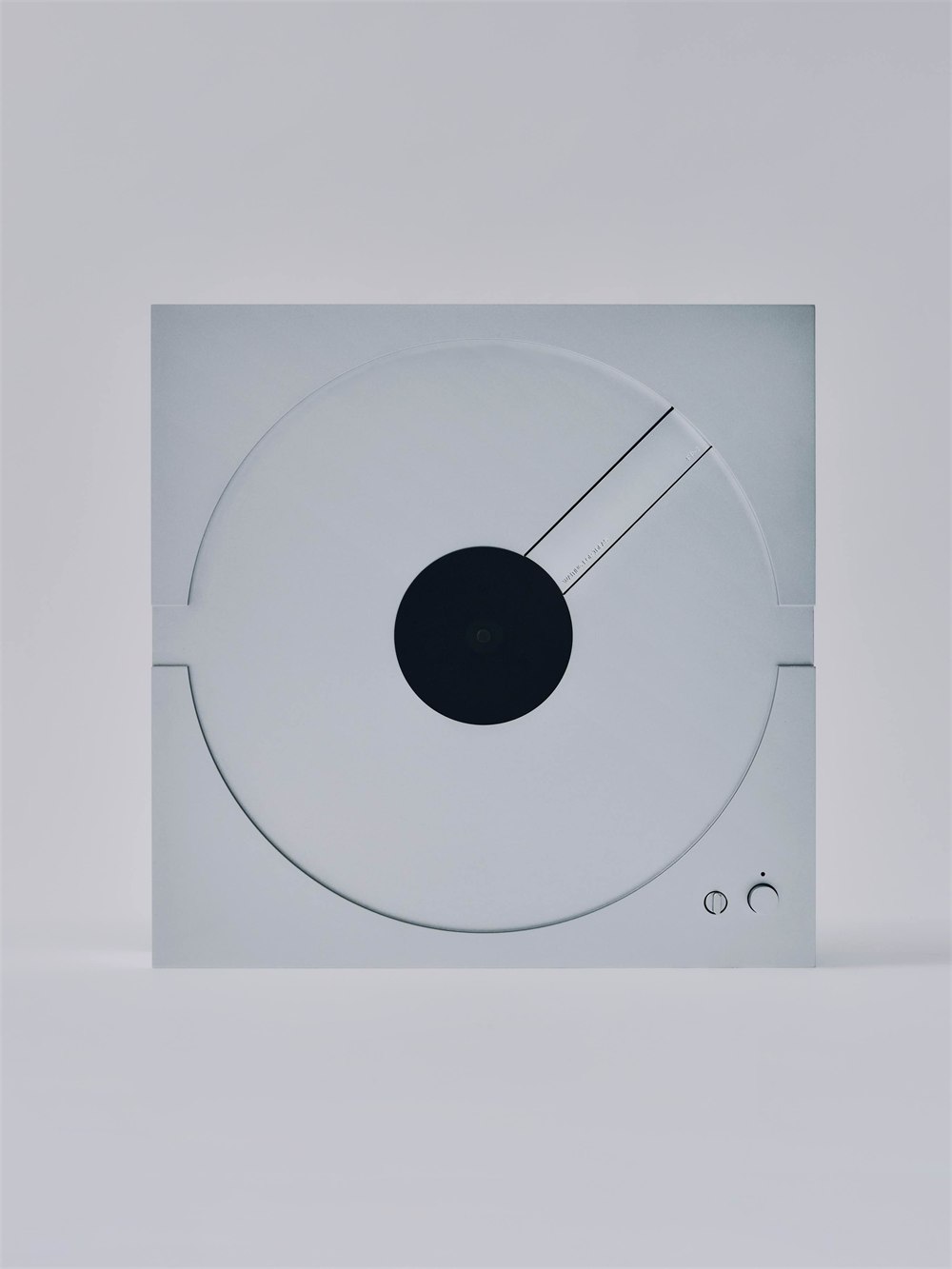
In a conventional magnetic cartridge the movement involves a magnet and coils. Here the pickup measures movement with light instead. Waiting For Ideas says doing away with the magnets allows a lighter stylus assembly. You can appreciate the engineering without promising your dinner guests that the tambourine on track three will change their lives. The record is still the performance, scratches and all.
There’s another optical job happening inside the deck, and it has nothing to do with picking up the tune. The axial flux motor drives the platter directly. An optical control system adjusts the speed a thousand times a second, according to the studio. One use of light follows the music; the other minds the pace. Think singer and drummer, if the drummer were willing to accept that much supervision.
Related posts:
 These Incredibly Clever Hidden Storage Ideas Will Make Great Use Of Your Home Space
 This Bubble Window For Your Fence Allows Your Dogs To Peek To The Other Side
 This Outdoor Double Doghouse Has a Deck Where Both Your Pooches Can Lounge All Summer
 Ultimate Solar Powered Smart Lounger With Built-In Speakers, Misters, ans USB Charging
A record shelf’s worth of decisions, minus a few
The PP-2 plays at 33 and 45 rpm. That’s a useful pair of numbers to know before you start pulling sleeves, particularly if the family collection includes much older discs. A pile of 78s calls for a different plan. And if your great pleasure in owning a turntable is carefully lowering the needle at the start of the third song, consider how attached you are to that little gesture. Flipping the record over isn’t the only habit this one changes.
- Pick the side you want to hear before putting the record down. Its label will be out of sight during playback.
- Give the square chassis a level spot with room to lift a record clear of the top. Measure depth as well as width.
- Look for a line, AUX or CD input on the amplifier, or an input on powered speakers. The deck already has its own preamp.
- Keep the sleeve handy. It’s suddenly the most convenient place to read the track list for the side that’s actually playing.
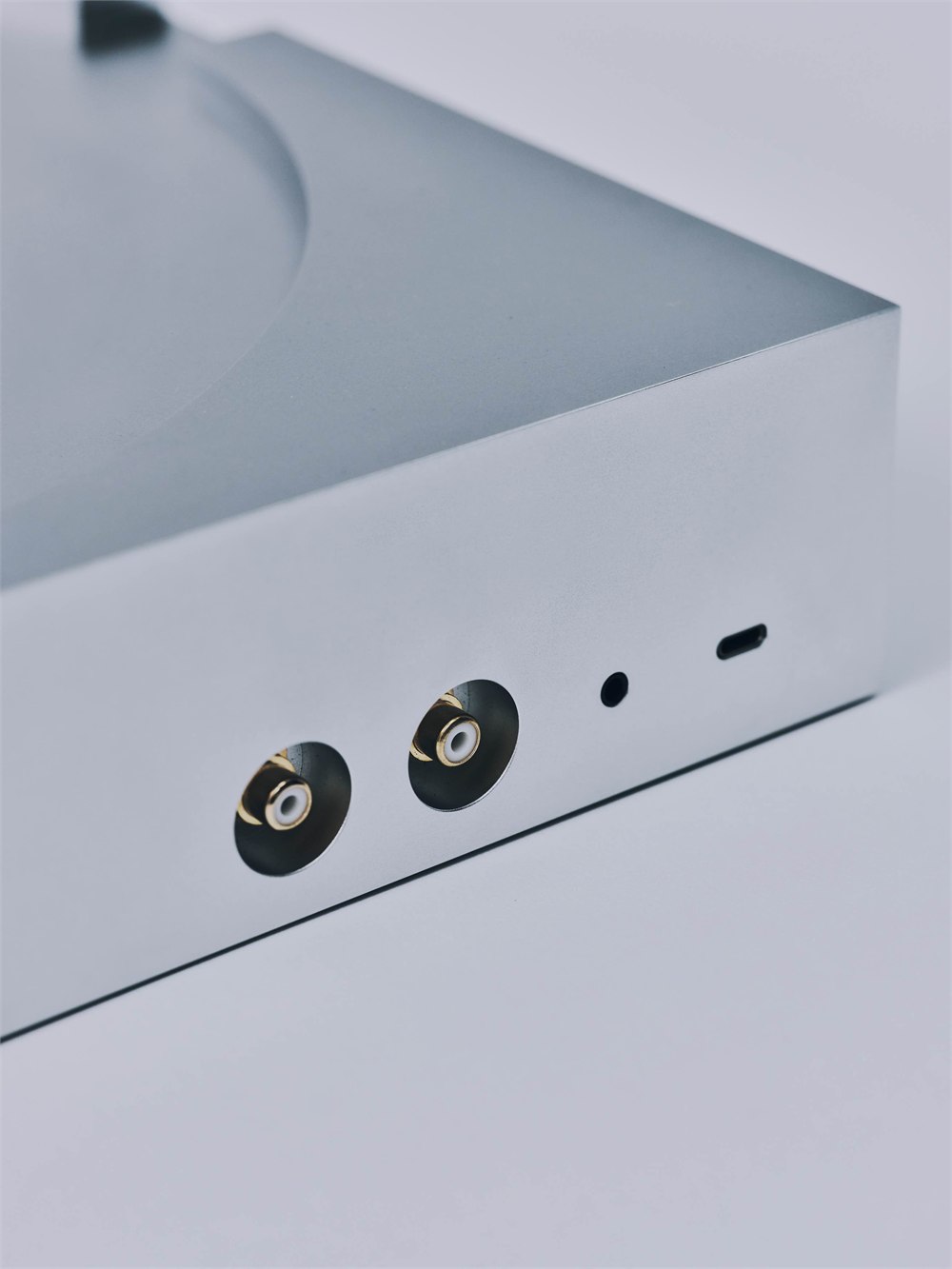
Round the back, the familiar connections are almost a relief. RCA outputs let the deck feed an ordinary line input. There’s also a 3.5 mm mini-jack audio output, and the power connection is 5 V USB-C. Don’t mistake that last socket for the way to get music into the stereo: Waiting For Ideas lists it under power. Your collection may have survived three changes of listening format, but it hasn’t become a USB stick.
| Part of the setup | What the PP-2 provides |
|---|---|
| Shelf footprint | 35 cm wide by 35 cm deep, before cable clearance |
| Height | 7.5 cm |
| Playback speeds | 33 and 45 rpm |
| Signal path | Optical pickup and built-in Harmony preamplifier |
| Audio outputs | RCA and 3.5 mm mini-jack |
One block of aluminum, two small controls
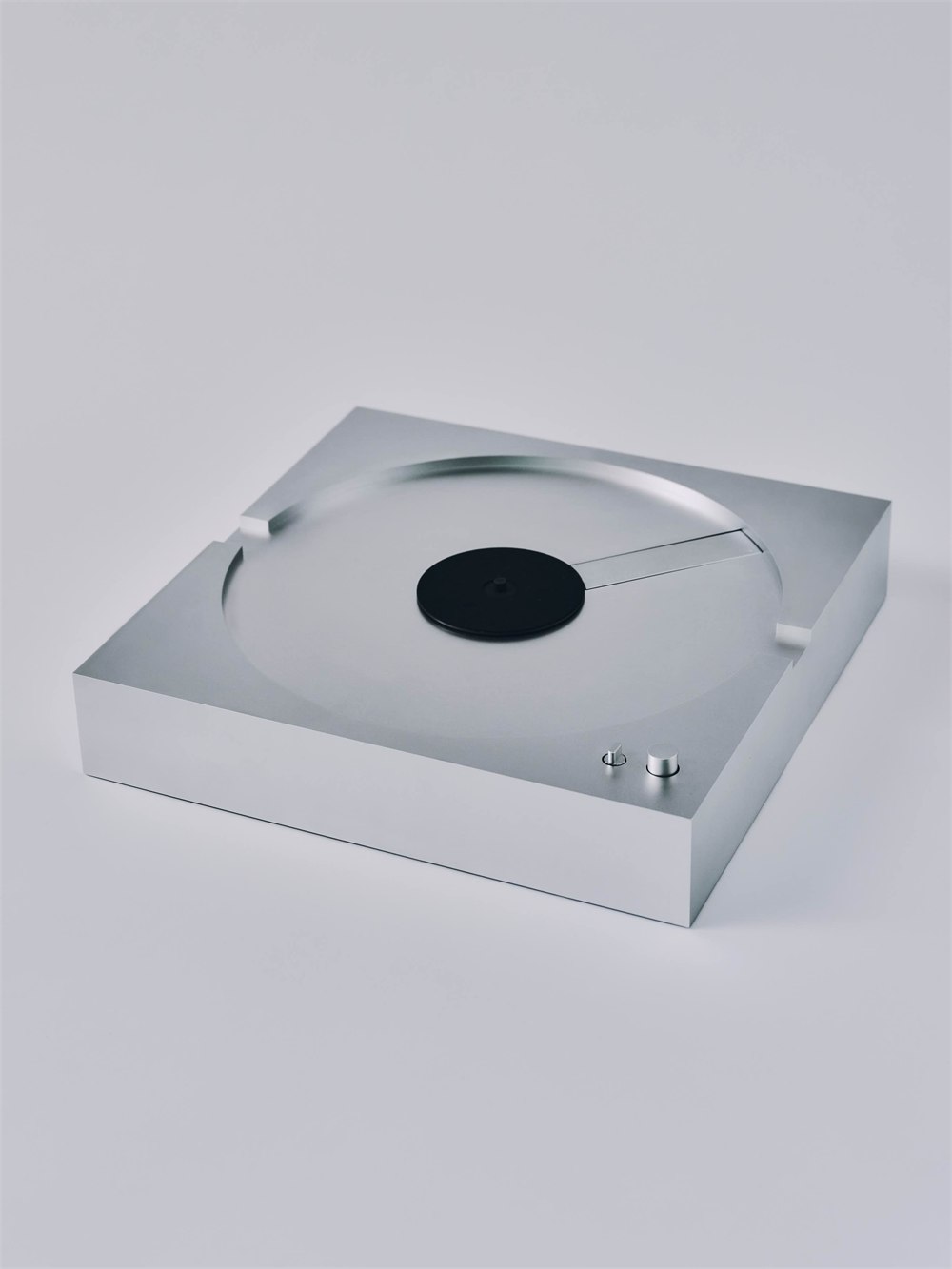
Waiting For Ideas machines the chassis from a solid block of aluminum and anodizes it. The finish is silver, the center is black, and the circle cut into the top leaves remarkably little for the eye to trip over. Two small controls occupy one corner. The cuts at the edges of the circle look particularly good from above: here is a square object that clearly has a job involving a round one.
Seen head-on, it’s only about three inches tall. Seen from above, it takes up nearly fourteen inches in both directions. Those measurements tell rather different stories if you’re thinking about sliding one into a bookcase. Tape out a 35-centimeter square, lay an LP sleeve nearby and reach in as if you’re picking up a disc. A shelf can pass the tape-measure test and still make your elbow negotiate a treaty with a cabinet door.
The built-in Harmony preamp also affects what lives on that shelf. An amplifier with a spare line input can take the PP-2’s signal without an extra phono stage between the two. Active speakers offer another route. Passive speakers still need an amplifier; two RCA plugs at the back of a very expensive silver object do not repeal that particular law of the living room.
There are two stylus choices when ordering: Optical Analog Classic and Shibata. Both belong to the optical system, so you don’t have to buy the upgrade to get the upside-down playback trick. The technology is by Miniot, the design is from Waiting For Ideas, and the person explaining why the wrong label is showing will, regrettably, have to be you.
Before you clear a space for it
- The desired side faces down, and there’s no exposed tonearm to cue by hand.
- A direct-drive motor handles rotation; a separate optical pickup reads stylus movement.
- The silver aluminum deck measures 35 by 35 by 7.5 cm.
- The built-in preamp feeds a line input or active speakers. Classic and Shibata stylus versions are offered.
Waiting For Ideas lists the silver PP-2 at €8,900 with the Classic stylus, with another €700 for Shibata. The shop asks buyers to allow up to eight weeks for assembly and shipping. Shipping costs depend on the destination, and customers outside the European Union may owe import duties and taxes. That’s a fairly serious commitment to putting a record on the wrong way round. At least you’ll know exactly what to do when it arrives.
| Pros | Cons |
|---|---|
| No exposed arm to balance or lower | No familiar hands-on needle drop |
| Preamp built in for a line-level connection | Passive speakers still need an amplifier |
| Low profile with support for LPs and 45s | No 78 rpm speed listed |
| Choice of two optical stylus versions | High base price and a further premium for Shibata |
Save this find.
Thank yourself later.
Your next great gift idea. Your someday space. Your collection of wonderfully weird things.
Save to PinterestPick a board. Keep the inspiration.
This Optical Stylus Turntable Plays Vinyl Records Upside Down
At a glance
Product snapshot
- Listed price
- €8,900Prices and availability can change. Check the seller for current details.
- Where to find it
- Waiting For Ideas
- Category
- Gadgets
Related posts:
These Incredibly Clever Hidden Storage Ideas Will Make Great Use Of Your Home Space
This Bubble Window For Your Fence Allows Your Dogs To Peek To The Other Side
This Outdoor Double Doghouse Has a Deck Where Both Your Pooches Can Lounge All Summer
Ultimate Solar Powered Smart Lounger With Built-In Speakers, Misters, ans USB Charging