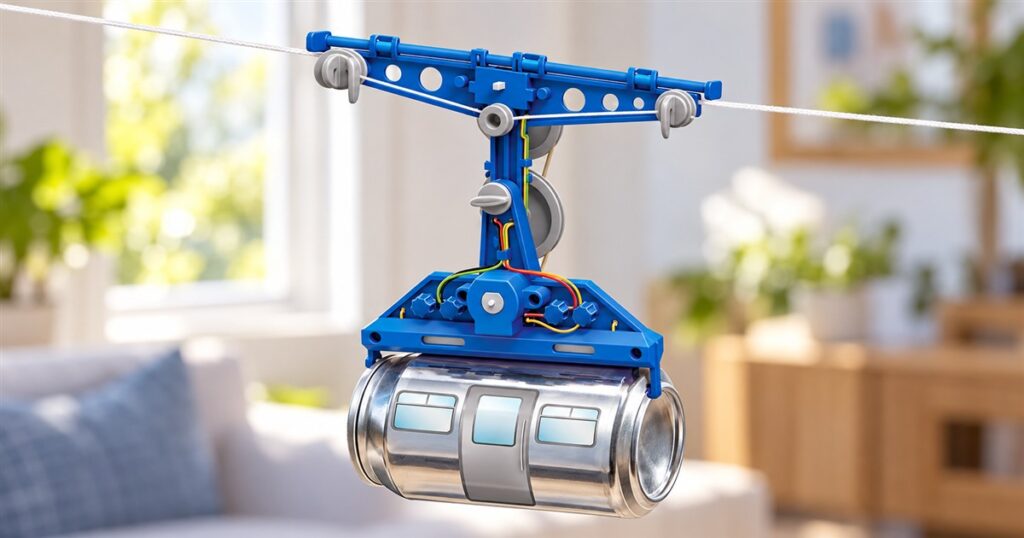
Your empty soda can has spent its entire life preparing for a second career in public transportation. You thought it was headed for the recycling bin. The 4M KidzRobotix Tin Can Cable Car kit has other plans: give it a motor, suspend it from a string, and promote it to the smallest transit authority in your house.
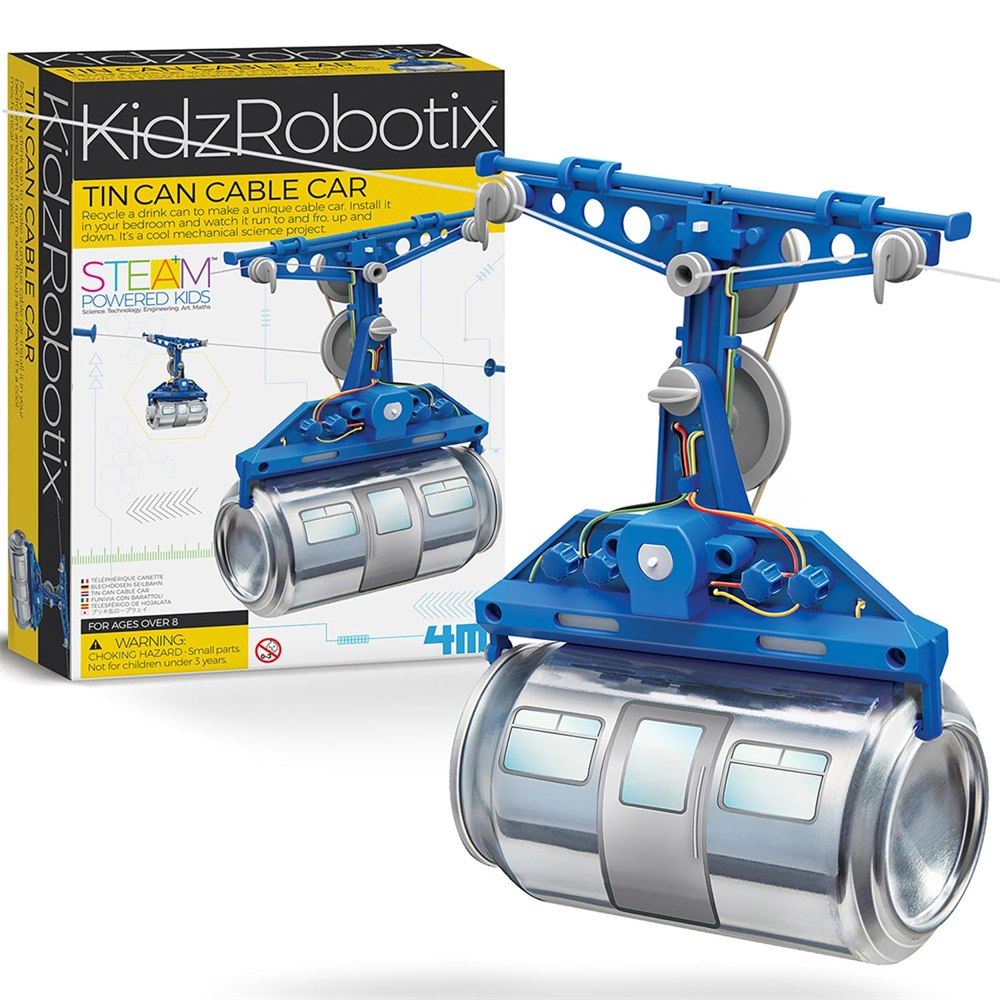
This is a build-it-yourself mechanical science kit that turns a used drinks can into the cabin of a working model cable car. The finished creation travels along a string and reverses direction at the ends. It is wonderfully unnecessary transportation for a passenger population of zero, which somehow makes the whole operation more appealing.
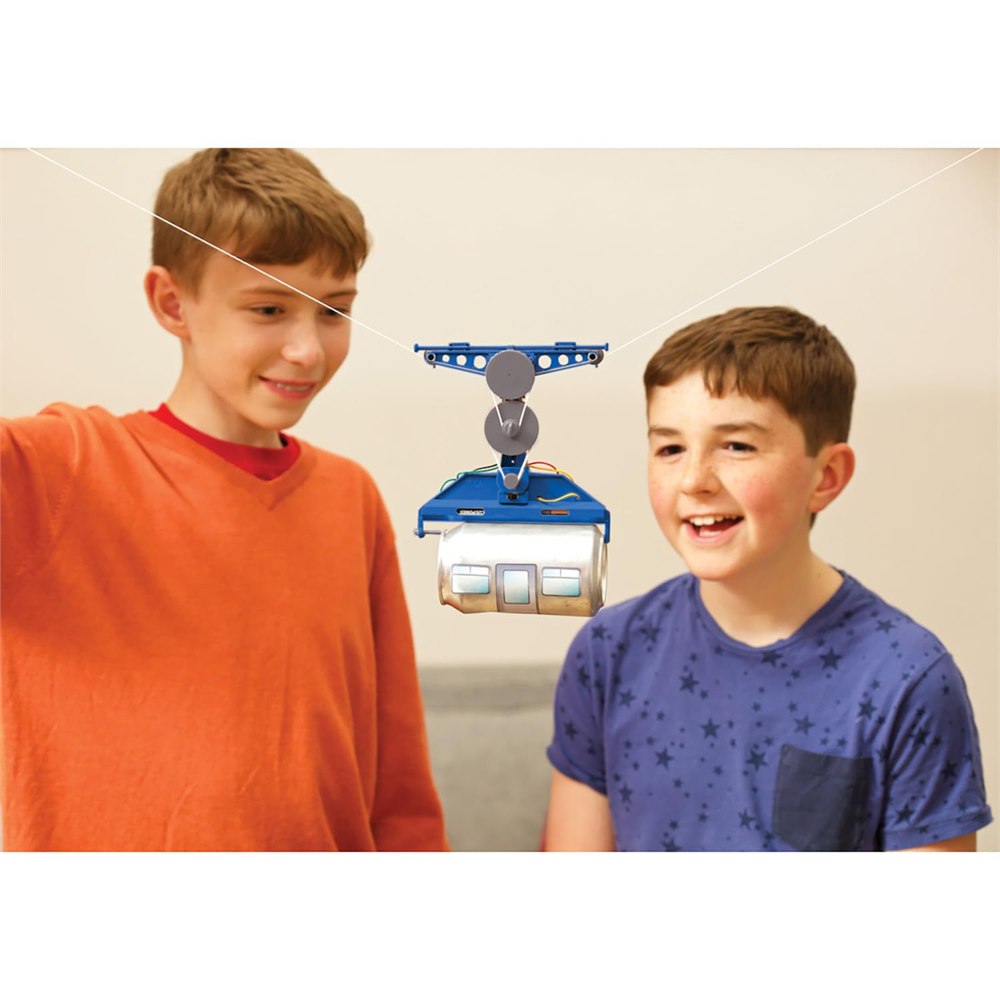
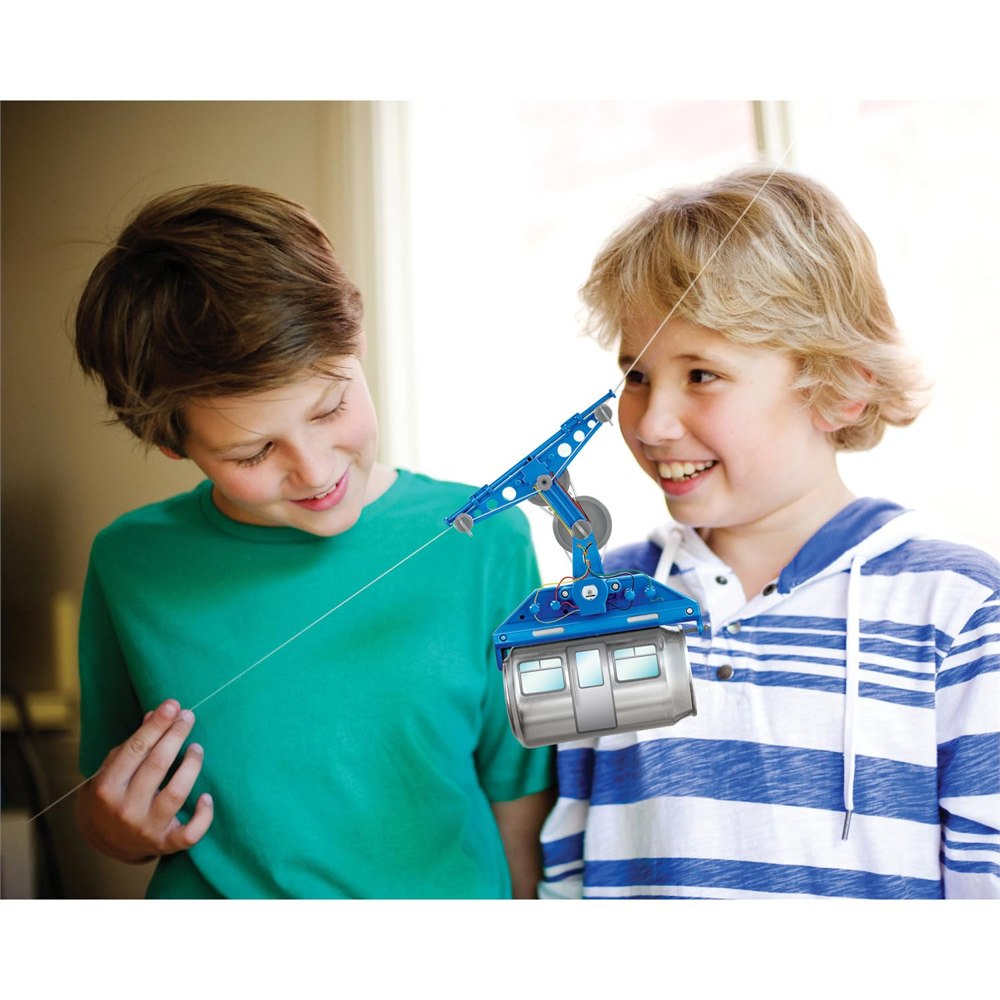
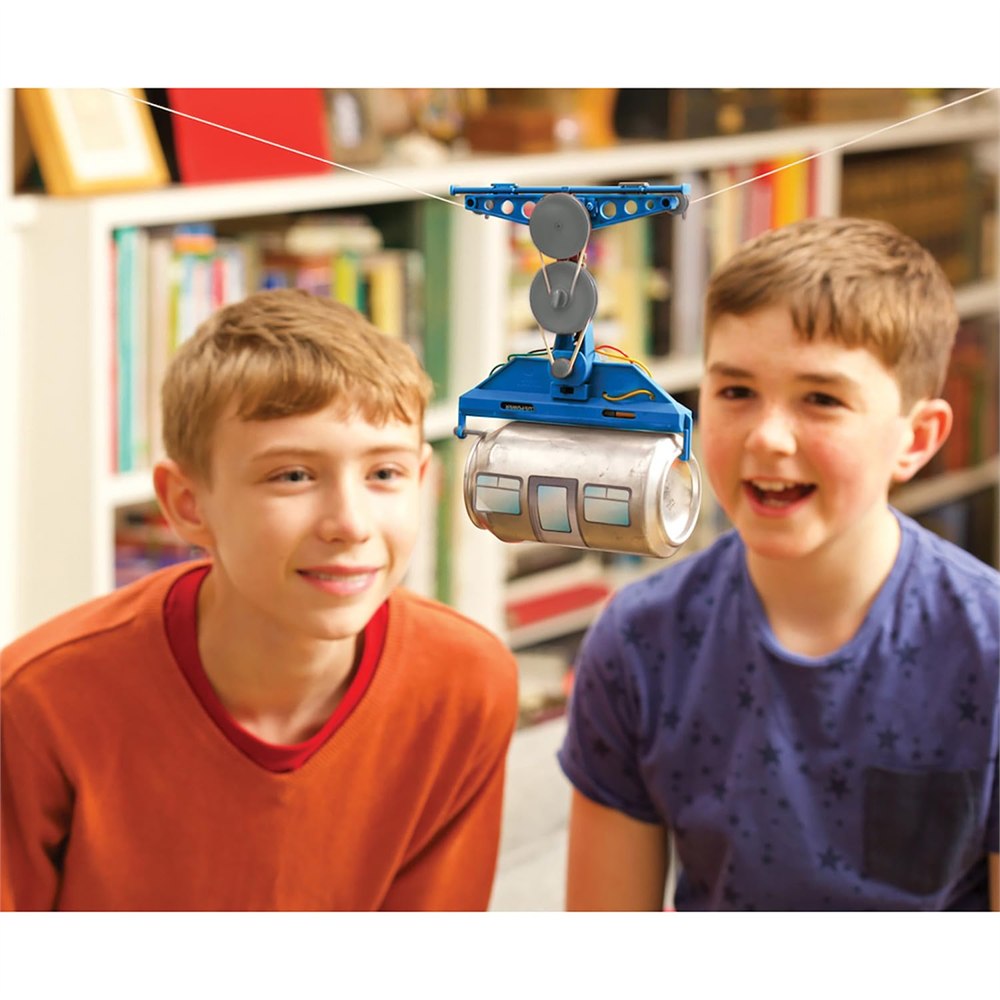
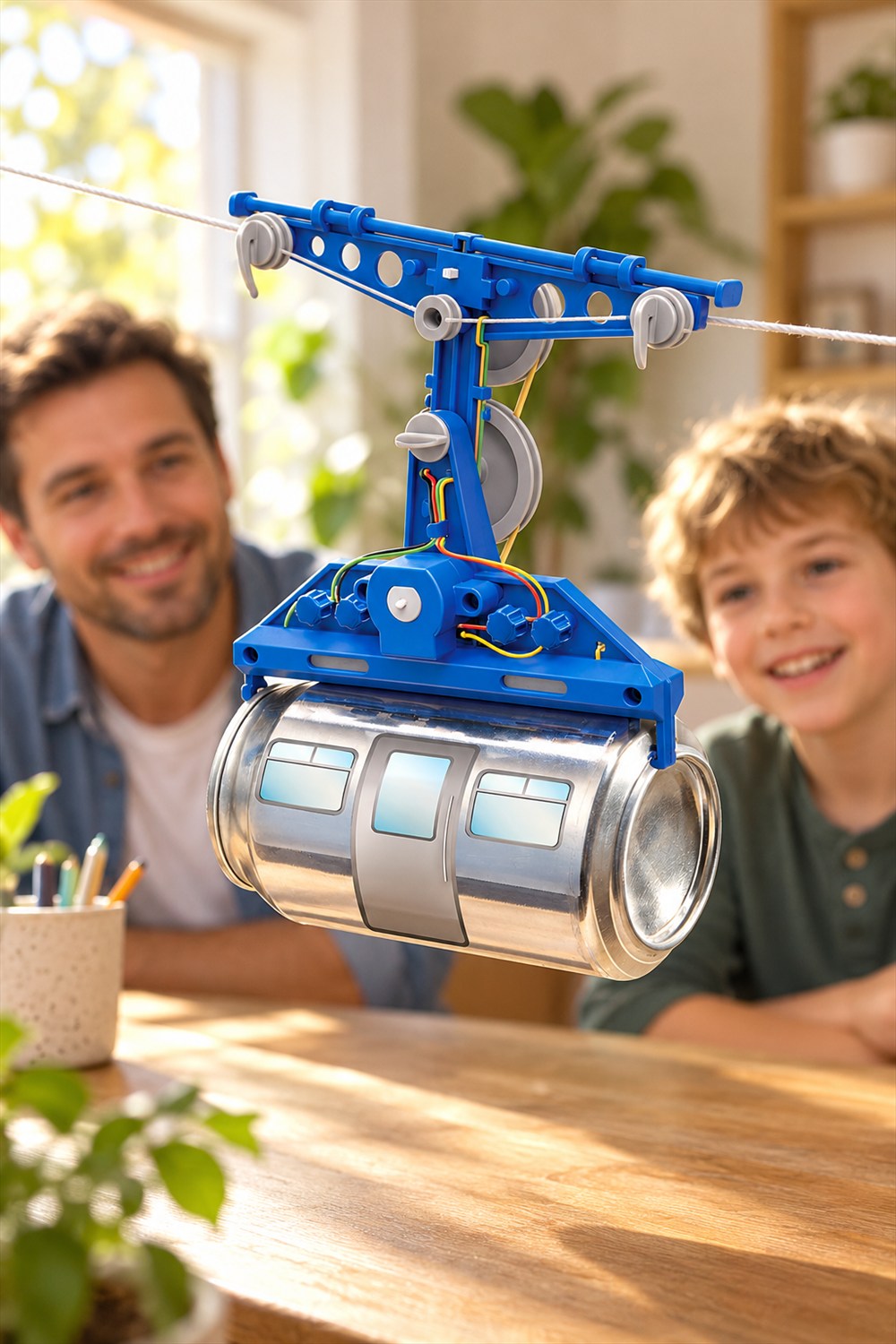
The can becomes the silver gondola hanging below a blue plastic frame. Above it sits the exposed mechanism, with gray wheels, pulleys, elastic belts, and visible wiring. Instead of hiding the interesting bits inside a smooth shell, this little machine puts its workings on display. You can follow the motion with your eyes rather than merely trusting that something clever is happening under a lid.
A soda can gets a surprisingly ambitious makeover
The supplied sticker gives the can illustrated windows and a door, so the finished cabin looks like a tiny mountain gondola. The shape is still unmistakably a beverage can lying on its side. That is part of the joke: there is no attempt to disguise the humble origins of your new aerial railway.
What makes the project interesting is the combination of a familiar object and a purpose-built mechanism. The can supplies the cabin shape; the kit supplies the parts that make it move. It is a tangible example of repurposing an object, with a much better reveal than declaring an empty jar to be a pencil holder and taking the rest of the afternoon off.
Related posts:



There is assembly involved, so this belongs in the hands-on project category rather than the open-the-box-and-press-a-button category. Recommended for ages eight and up, it also calls for adult supervision and assistance. An adult hovering nearby can be useful, provided they remember whose present this is before announcing a complete redesign of the railway network.
The mechanical parts are the main attraction
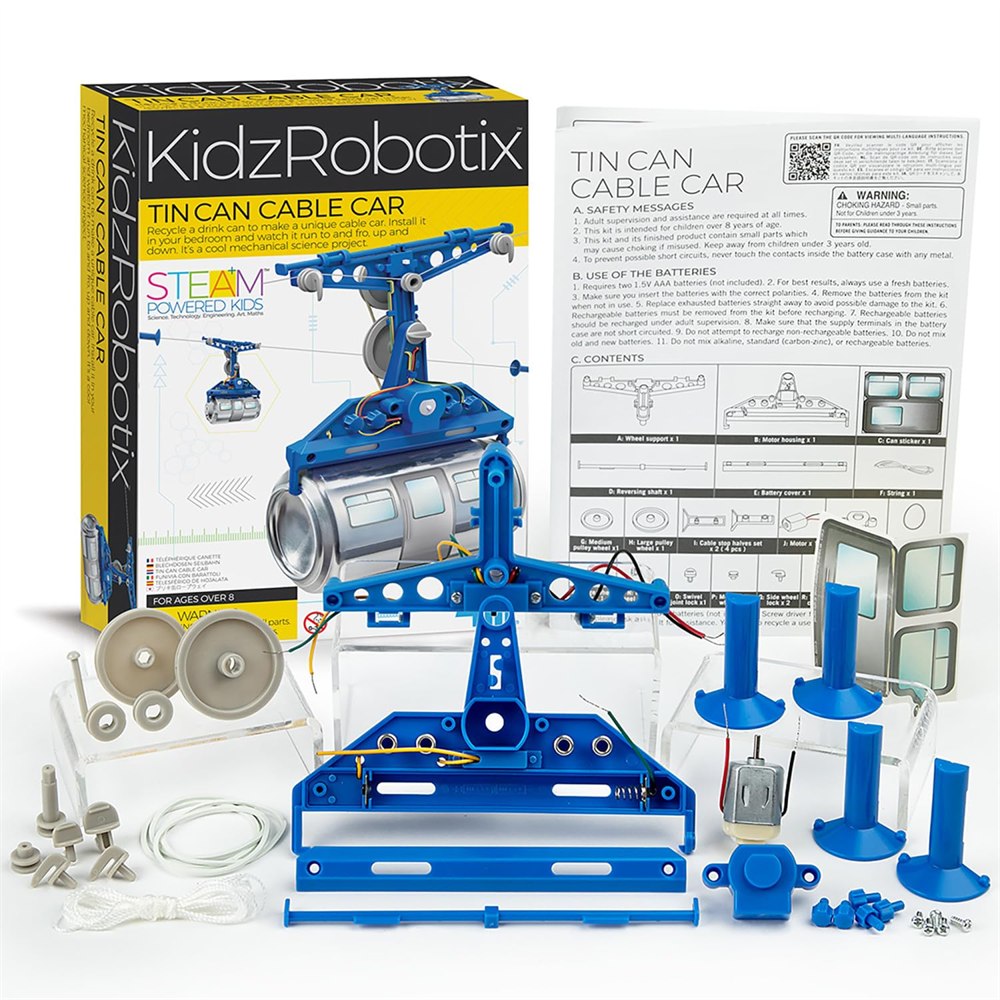
The included motor drives a pulley system using elastic bands. That visible arrangement gives kids something concrete to watch as movement passes from one component to another. It is a nice starting point for talking about how an electric motor can produce movement somewhere else in a machine.
Automatic reversing adds another layer of interest. A reversing shaft interacts with the end of the route to change the direction of travel. The result is a cable car that can head out and come back along its string instead of requiring someone to retrieve it after every trip. Even a very small transportation service deserves a return journey.
These are approachable mechanical ideas presented as a toy you have assembled yourself. Seeing parts work together can make the process more satisfying than watching a finished object perform a trick. The kit does not need an elaborate fictional mission to justify itself; getting a recycled can to cross the room is already a respectable afternoon objective.
- Build the drive system: assemble the motor housing, wheel support, pulleys, and other supplied components.
- Add the cabin: use your own empty soda can and decorate it with the included sticker.
- Set up the route: the finished model runs on the supplied string, with a clear space for travel.
- Watch the return trip: the reversing mechanism changes its direction at the ends.
- See the engineering: exposed wheels, belts, and wiring keep the mechanism visible.
The assembly instructions matter here. Small parts, connections, and the routing of the belts are all part of making a working model. This is the kind of activity where slowing down and matching the diagram beats confidently attaching a part upside down, then blaming gravity for its lack of cooperation.
What comes in the kit, and what you supply
The box contains the mechanical components for one cable car, including the motor, wheel support, motor housing, pulleys, wheels, string, elastic bands, fasteners, and can sticker. It also includes detailed instructions. The household supplies are a separate part of the equation, and worth gathering before announcing that construction has officially begun.
| Detail | What to expect |
|---|---|
| Finished project | One motorized model cable car using a recycled drinks can |
| Travel | Runs along a string and reverses direction at the ends |
| Included components | Motor, pulleys, wheels, frame parts, string, elastic bands, sticker, and assembly hardware |
| Power | Two 1.5V AAA batteries, not included |
| Other supplies | Used soda can and small crosshead screwdriver, not included |
| Recommended age | Eight years and older, with adult supervision and assistance |
The missing batteries are especially easy to overlook when buying this as a gift. A box of intriguing parts can lose some of its immediate magic if the final step is waiting for someone to raid the television remote. Having the right batteries, screwdriver, and an empty can ready makes the project easier to begin.
Because the model travels on a string, its play space matters as much as its tabletop assembly space. Plan a clear route and follow the supplied setup instructions. A moving cable car is entertaining; a string stretched across the household’s busiest walking path is a family meeting waiting to happen.
A small project with a visible payoff
This is a particularly appealing idea for a child who likes figuring out why things move. The finished toy keeps the mechanism accessible to the eye, while the recycled cabin provides a familiar point of reference. Yesterday it was a can. Today it has a route. That transformation is easy to understand even before anyone starts using engineering vocabulary.
It also gives an adult and child something specific to do together. One person can follow the instructions while the other locates the next component, with roles changing as the build progresses. There is room for patience, observation, and the occasional search for a screw that has developed a sudden interest in life under the table.
Expect a mechanical model, not a programmable robot or a remote-controlled vehicle. Its appeal comes from building the mechanism and watching it carry out its repeated trip. That focused purpose is useful to know when choosing a gift: it suits someone who enjoys construction and visible moving parts more than someone expecting lots of electronic modes.
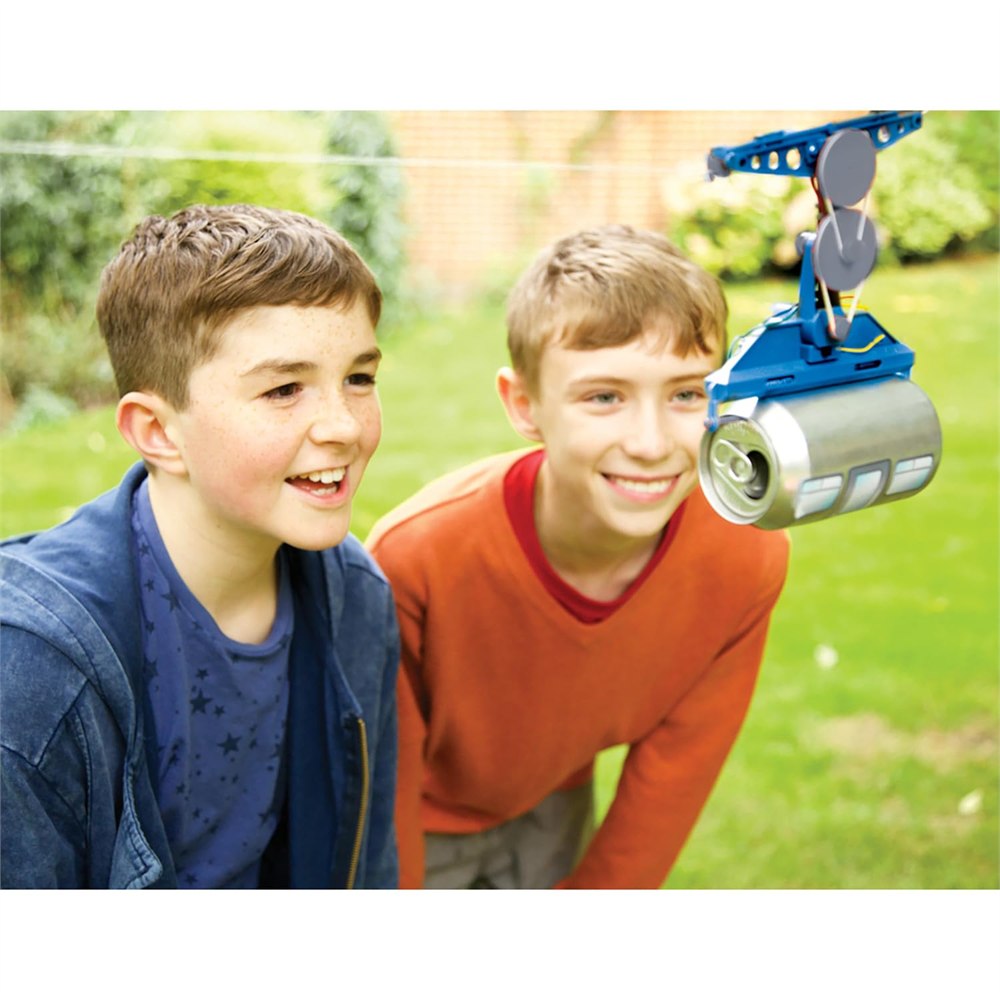
The recycled-can element is equally specific. You are reusing one household object as part of a toy, not buying a grand solution to packaging waste. That modest scale is actually part of the charm. It invites a child to look at an everyday object and imagine another use for it, then provides a mechanism that makes that idea work.
Small parts make this unsuitable for children under three, and the stated eight-plus age recommendation should guide the purchase. Adult assistance is part of the intended experience. The point is to enjoy assembling and operating the model, not to rush through the instructions in pursuit of an imaginary speed record for municipal infrastructure.
Product images: 4M product listing on Amazon.
The key details before construction begins
- 4M KidzRobotix Tin Can Cable Car is a DIY mechanical science kit.
- A used soda can becomes the hanging cabin of one working model.
- The motorized pulley system moves the car along a string.
- An automatic reversing mechanism sends it back along the route.
- The kit includes its mechanical parts, string, can sticker, and instructions.
- You provide a soda can, two AAA batteries, and a small crosshead screwdriver.
- It is recommended for ages eight and up with adult supervision and assistance.
The kit is currently listed on Amazon.com for $18.99 and was in stock when checked. Price and availability can change. Allow for the separately required supplies if they are not already at home, particularly if this is going straight into wrapping paper.
For a little mechanical project, it delivers a very clear punchline: the recycling bin has lost a can, and the bedroom has gained a cable car. No mountain, ski pass, or expensive holiday required. Just a small build, a clear stretch of string, and a can with newfound professional ambitions.
| Pros | Cons |
|---|---|
| Turns a familiar household object into a moving model | You must supply the soda can |
| Visible motor and pulleys make the mechanics easy to observe | Assembly and careful setup are required |
| Automatically reverses for a return journey | Needs a clear string route to operate |
| Includes mechanical parts and illustrated cabin sticker | Batteries and screwdriver are not included |
| Offers a shared building activity for ages eight and up | Adult assistance is required; small parts rule out toddlers |
Save this find.
Thank yourself later.
Your next great gift idea. Your someday space. Your collection of wonderfully weird things.
Save to PinterestPick a board. Keep the inspiration.
This Tin Can Cable Car Kit Turns an Empty Soda Can Into a Working Gondola
Where to find This Tin Can Cable Car Kit Turns an Empty Soda Can Into a Working Gondola
OddityMall may earn a commission from qualifying purchases at no extra cost to you.