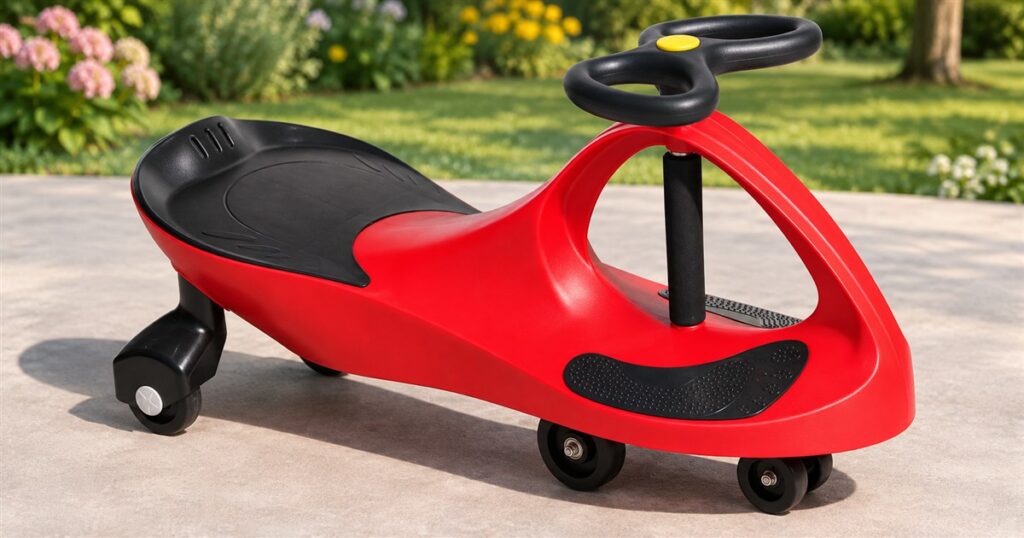
Children arrive with an astonishing supply of energy and no useful charging cable for transferring it into household appliances. The PlasmaCar has at least found a way to put some of that energy into transportation. Wiggle its steering wheel from side to side and this low little ride-on starts moving, without pedals, batteries, or a parent pushing from behind like an unpaid chauffeur.
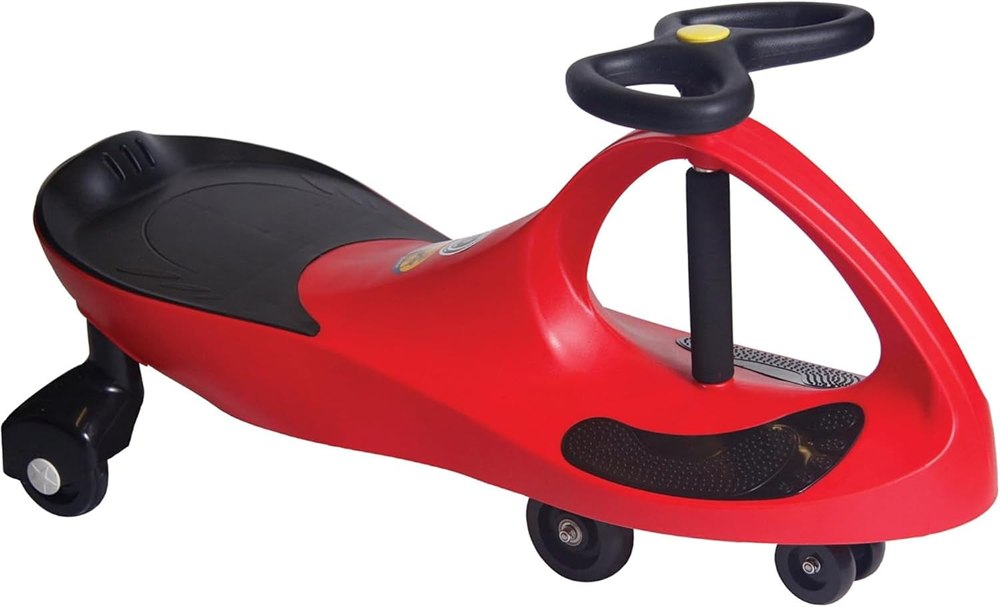
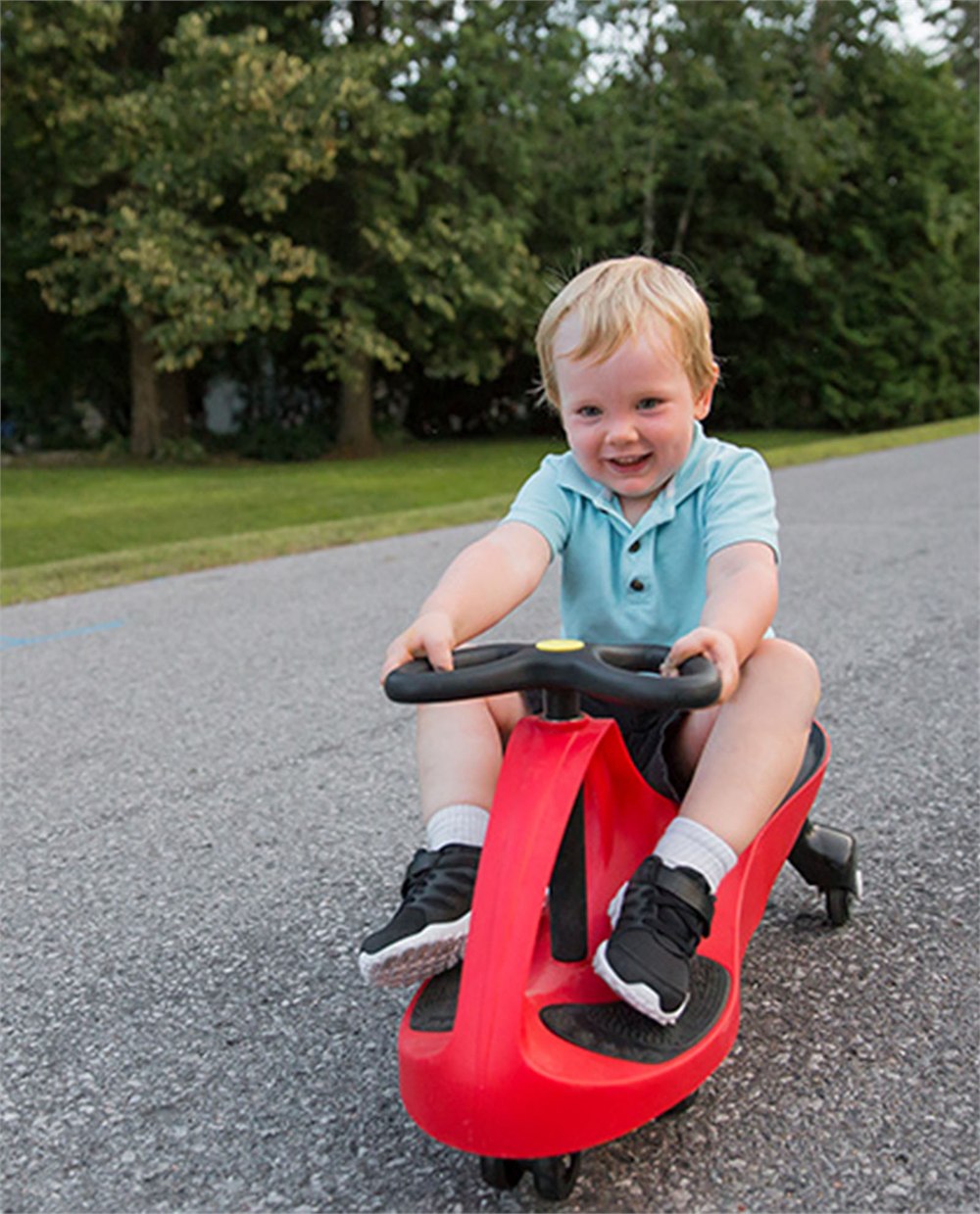
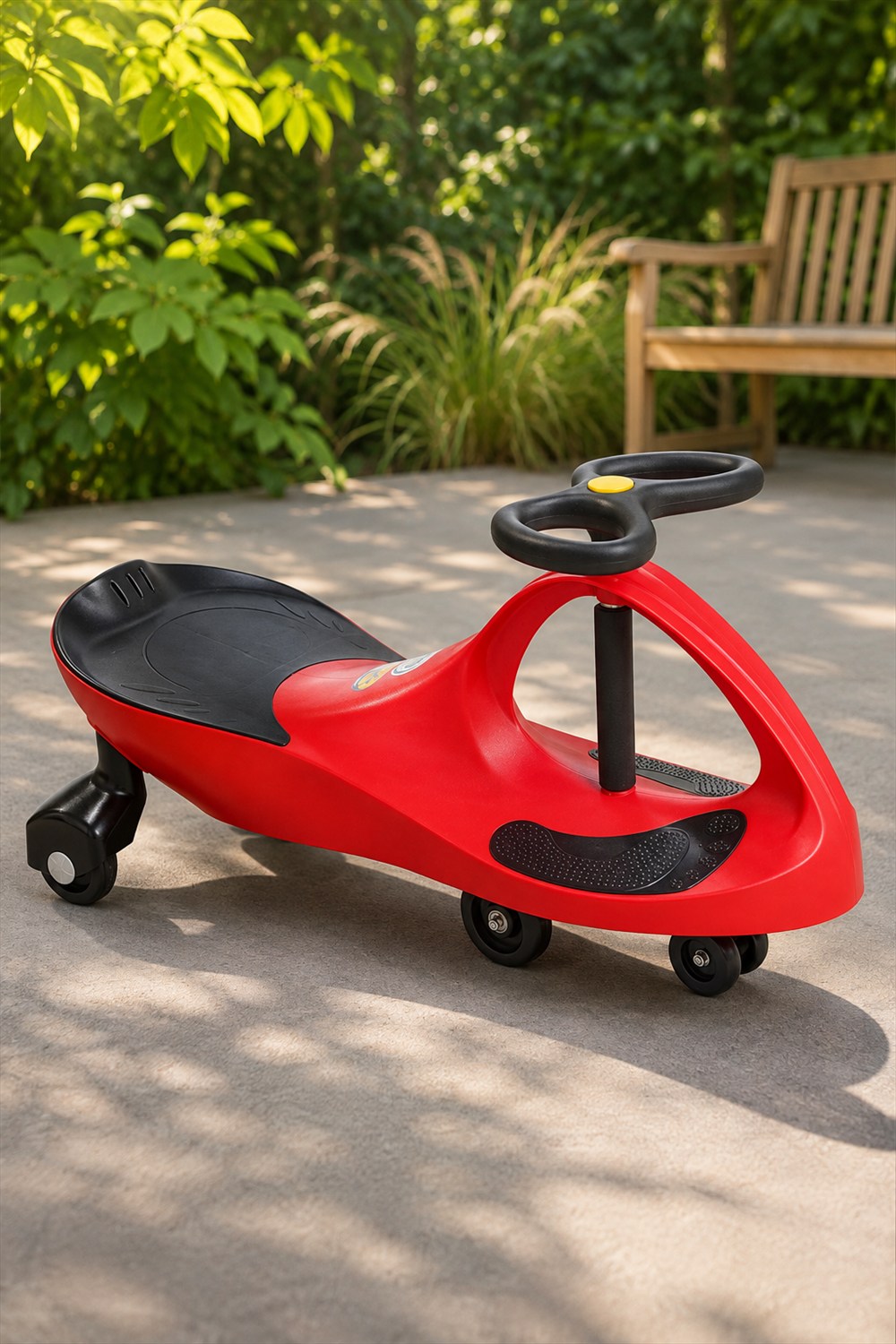
The Original PlasmaCar looks a bit like someone asked a racing car to become a friendly plastic shoe. There is a broad seat at the back, a curved body stretching toward the front, and a steering wheel with two rounded handholds. Underneath, small wheels handle the actual rolling. It is a pleasingly odd arrangement, especially when you realize the steering is also how the rider supplies the motion.
This is the original human-powered design, rather than an electric ride-on with a battery hiding under the seat. There is no charging session between turns and no motor doing the work. The child remains the power source. Parents are still responsible for finding an appropriate place to ride, supervising, and settling the inevitable dispute over whose turn ended three minutes ago.
The steering wheel has two jobs
PlaSmart’s instructions describe sitting with feet on the footrests, leaning slightly forward, and moving the steering wheel back and forth. The turning motion works through the front wheel assembly to propel the car. It looks unusual because our usual expectation is that a steering wheel changes direction while something else supplies the push. Here, the driver’s arms have been assigned both departments.
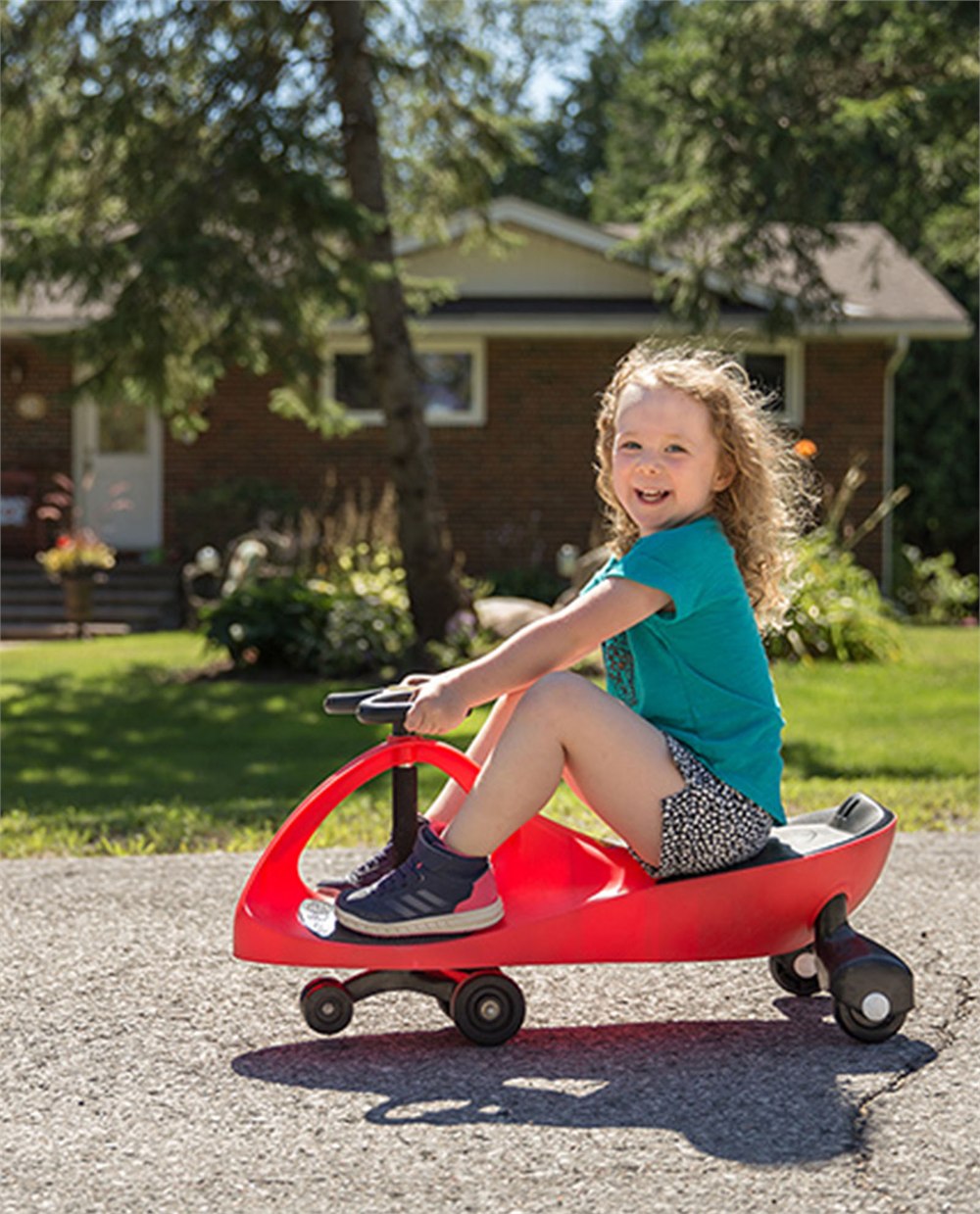
That small mechanical surprise is the whole appeal. A toy does not need a screen to produce a satisfying discovery. Sometimes it only needs to make a familiar action do something unexpected. Turn a wheel, move across the ground, try a slightly different motion, and feel the result. It is the sort of thing that makes an adult watching nearby start forming a very flimsy excuse to inspect it more closely.
The manufacturer rates the car for ages three and up, with a maximum of 220 pounds on smooth, flat surfaces. That figure does not automatically mean every adult will fit comfortably or that every surface is appropriate. This remains a small, low vehicle. Anyone considering a turn should check the current instructions, fit, and conditions rather than treating the headline weight limit as a personal invitation.
Simple machinery still needs the right place to play
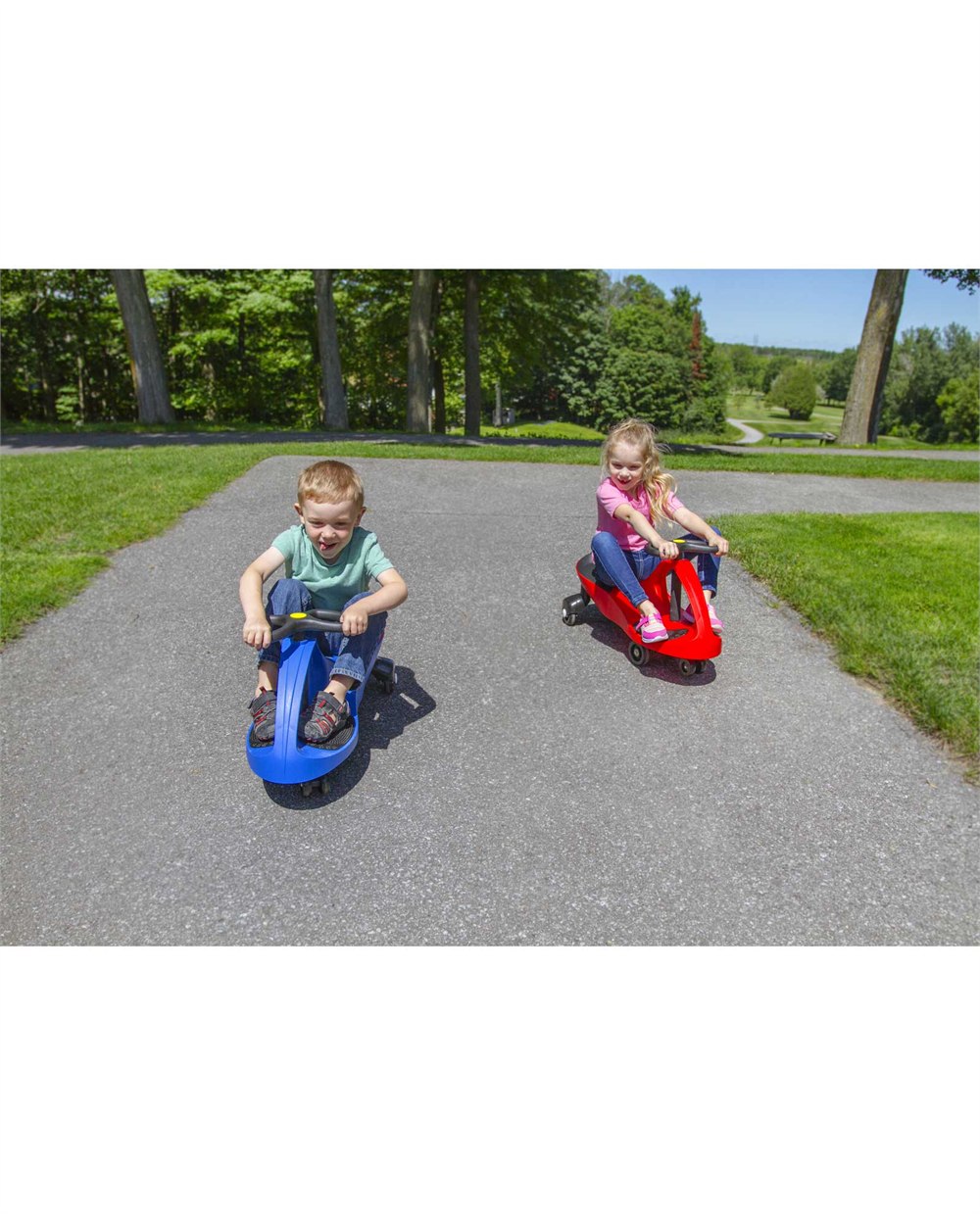
A smooth, level riding area is central to the experience. Thick carpet, grass, bumps, and slopes are not interchangeable with the surface shown in a polished product demonstration. Before buying a ride-on, it is worth looking at the space where it would actually live. The generous imaginary playroom in your head may not resemble the real room containing a coffee table and forty-seven building blocks.
The official instructions specifically warn against wooden floors, because the standard wheels may damage them. That matters more than a broad retailer description of indoor play. If your available space is mostly hardwood, do not assume that a small plastic toy is automatically a polite guest. Floors have a remarkable ability to turn a cheerful purchase into an extremely specific household argument.
- Choose a clear, smooth, flat area separated from traffic, stairs, pools, and slopes.
- Follow the manufacturer’s assembly and riding instructions before the first turn.
- Use adult supervision and the protective equipment recommended in the instructions.
- Check the flooring instead of assuming all indoor surfaces are suitable.
The manual explains stopping by ceasing the steering motion, allowing the car to slow, and putting the feet down. There is no reason to discover that sequence for the first time while approaching a garden ornament. Give the rider room to understand starting, steering, and stopping before the family starts inventing elaborate courses.
| Feature | What it means in practice |
|---|---|
| Steering-driven movement | The rider supplies the motion through repeated steering. |
| No battery or motor | No charging routine between rides. |
| Low molded seat | A small ride-on format; check the rider’s fit. |
| Age guidance | Three years and up, with supervision and instructions followed. |
| Surface requirements | Smooth and flat; standard wheels are not recommended for wood floors. |
| Assembly | An adult needs to assemble it correctly before use. |
Very little car, surprisingly clear personality
The red-and-black version has the cheerful confidence of a much more expensive vehicle. The black seat forms a shallow scoop, while the red front arch leaves a large open space beneath the steering wheel. Textured areas give the feet somewhere obvious to go. It is visually simple enough to understand at a glance, even if the propulsion requires a little demonstration.
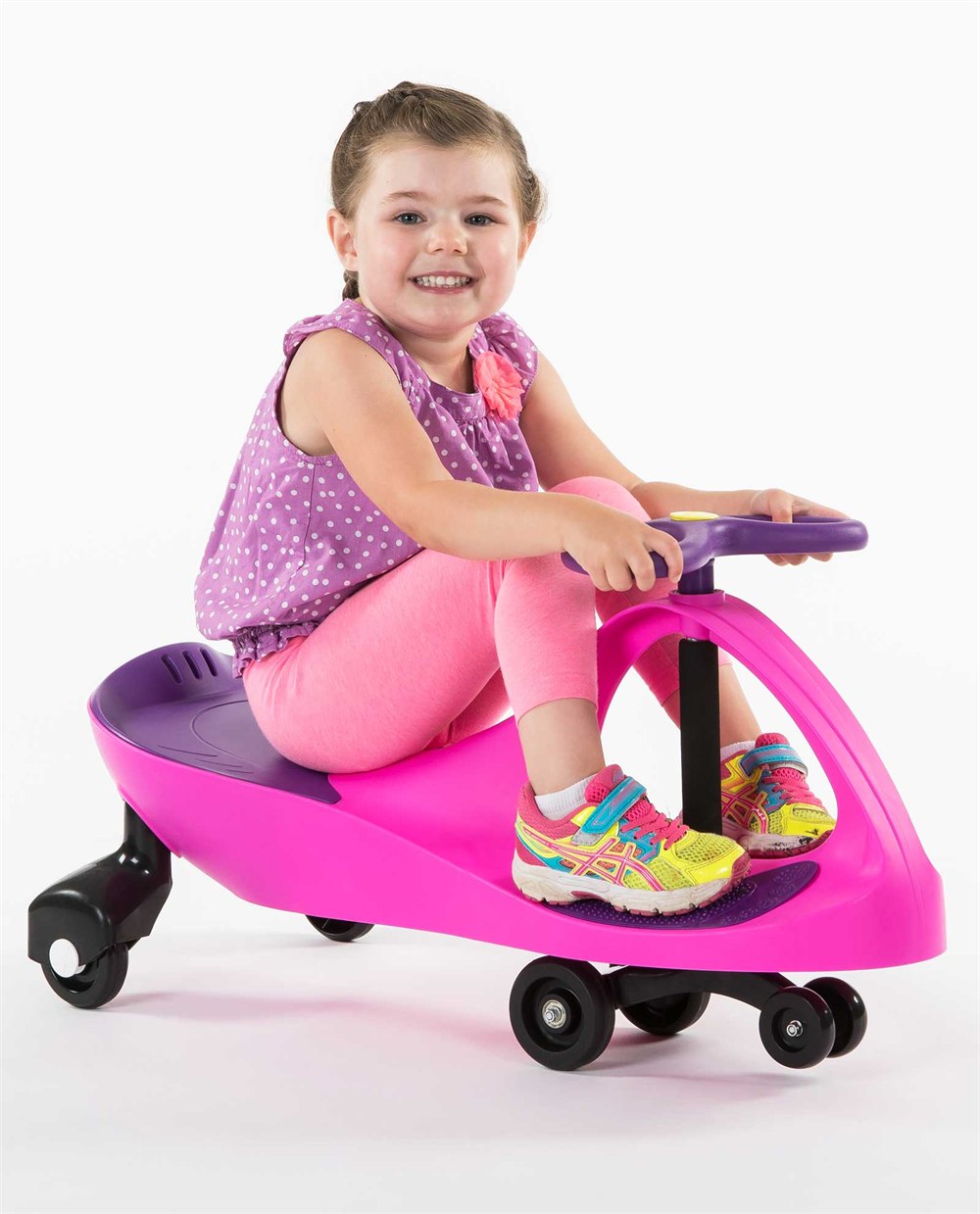
Other colors appear in the manufacturer’s gallery, including blue, pink, and green combinations. They are variations of the same basic idea, rather than a reason to assume every retailer has every version ready to ship. The linked Amazon listing here is the red body with black accents. The colorful gallery is useful for showing the shape and riding position without turning the article into a paint-swatch meeting.
There is something refreshingly direct about a toy whose controls are mostly the toy itself. It does not need to announce a mission, reward the rider with digital fireworks, or remind anybody to update an app. The motion provides the feedback. For a child who enjoys figuring out how things move, that can be more compelling than a long menu of preprogrammed noises.
A gift that also needs some floor space
The practical gift question is not only whether a child would enjoy it. It is whether the household has a suitable place to use and store it. A ride-on is a more substantial present than a small toy that disappears into a drawer. It should have a home that does not involve parking across a doorway and waiting for an adult carrying laundry.
Likewise, the absence of batteries does not eliminate maintenance or assembly checks. Wheels and steering still deserve attention, and replacement parts should follow the manufacturer’s guidance. Keep the booklet somewhere more memorable than the mysterious kitchen drawer. Every household has one, and its filing system is usually a loose collection of screws and expired enthusiasm.
The PlasmaCar’s oddness is mechanical, which is my favorite kind. It does one recognizable thing in a way that initially looks a little wrong, then makes sense as soon as you see it move. There is no claim here that it will transform a child’s development or solve an entire afternoon. It is a small rolling invitation to do something with all that available energy.
- Original PlasmaCar ride-on, shown in red and black plus other manufacturer gallery colors.
- Propelled by moving the steering wheel back and forth.
- No batteries, pedals, or motor.
- Rated for ages three and up; up to 220 pounds on smooth, flat surfaces.
- Adult assembly, supervision, suitable surfaces, and the official instructions remain essential.
The linked red-and-black PlasmaCar was listed at $109.99 on Amazon and marked in stock when checked. Pricing, sellers, colors, and delivery options can change. Product details and inline images come from the PlasmaCar Amazon gallery and PlaSmart’s official product page; consult the manufacturer’s instruction booklet before riding. Finally, a vehicle that runs on the one fuel children seem to produce in unlimited quantities.
| Pros | Cons and considerations |
|---|---|
| Unusual steering-powered movement. | Needs a suitable smooth, flat riding area. |
| No batteries to buy or recharge. | The rider provides all the power. |
| Simple physical controls. | Starting and stopping require learning and supervision. |
| Distinctive, colorful design. | It takes up more storage room than a small toy. |
| High stated weight limit on smooth surfaces. | Fit and safe conditions still matter. |
| Manufacturer instructions and parts guidance available. | Standard wheels can damage wooden floors. |
Save this find.
Thank yourself later.
Your next great gift idea. Your someday space. Your collection of wonderfully weird things.
Pick a board. Keep the inspiration.
This Wiggle Ride-On Car Moves When You Turn the Steering Wheel Back and Forth
Where to find This Wiggle Ride-On Car Moves When You Turn the Steering Wheel Back and Forth
OddityMall may earn a commission from qualifying purchases at no extra cost to you.