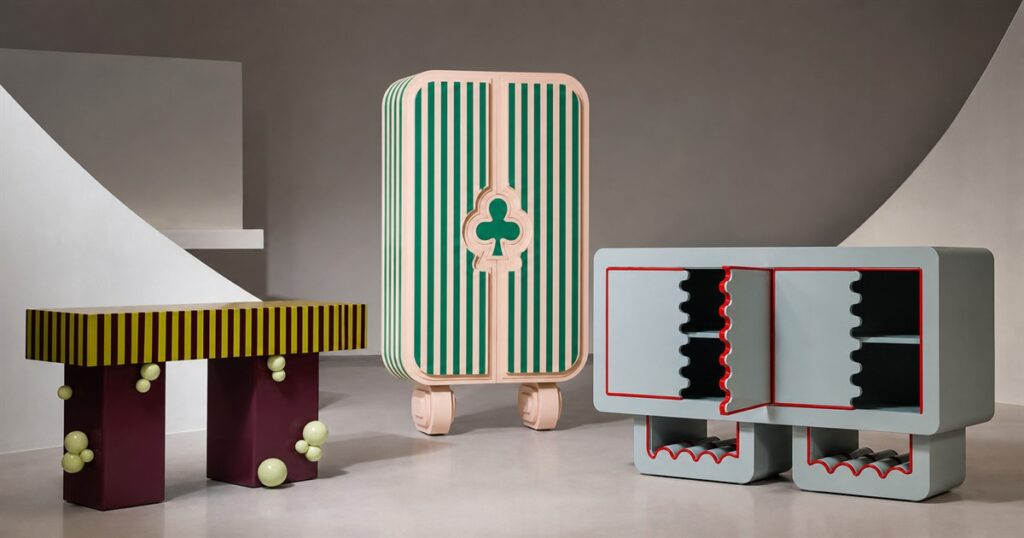
Card games are supposed to ruin a table for one evening, not become the table. But the Atelier Arunika Ramino Series looked at a perfectly normal game of Rummy and apparently decided the real problem was that our cabinets were not dramatic enough about drawing, discarding, bluffing, and pretending we definitely had a plan three turns ago.
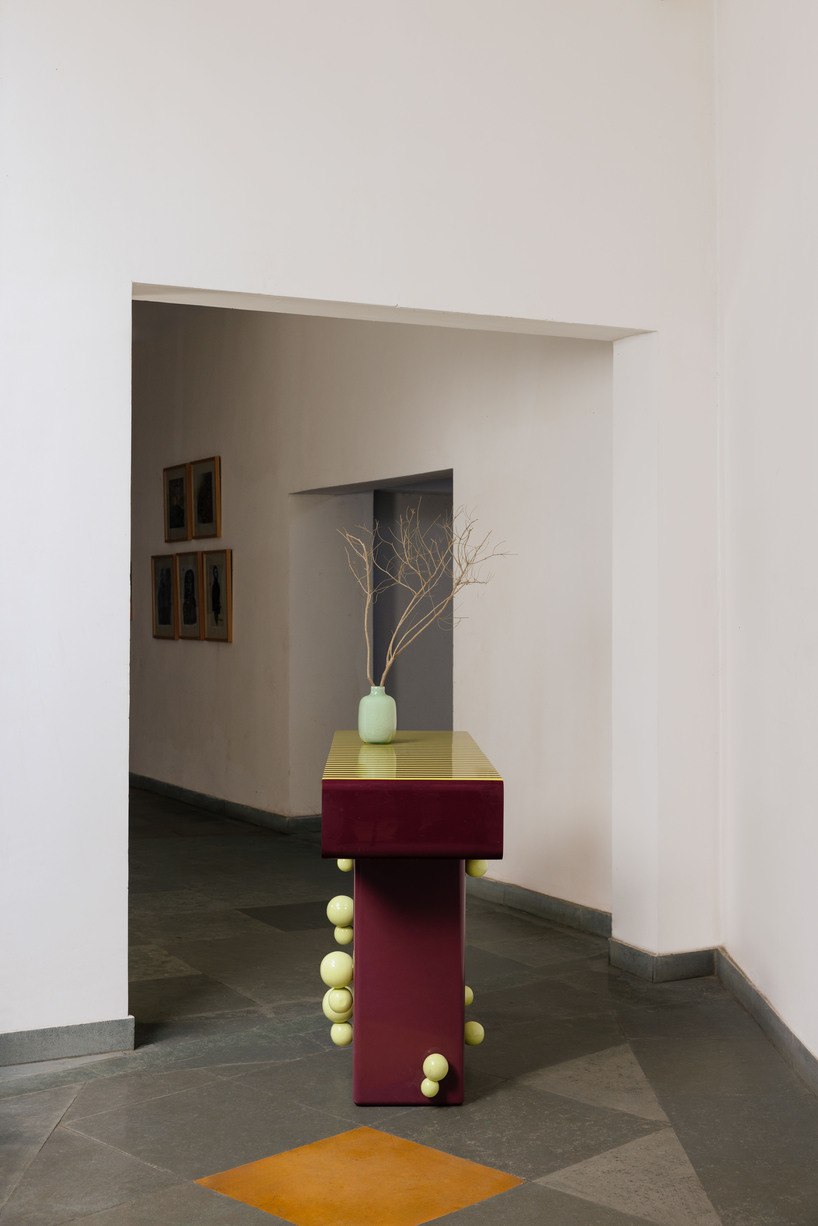
The result is a limited-edition sculptural furniture collection that turns the rituals and personalities of Rummy into functional cabinets, consoles, storage pieces, and drawers. It is collectible design with the mood of a card night that got a design-school scholarship, moved into a gallery, and started wearing excellent shoes.
The Ramino Series is the debut collection from Indian design studio Atelier Arunika, led by designer Arunika Sarkar. Instead of treating Rummy as a surface theme, the collection uses the game as a character system: chance, social tension, strategy, surprise, ceremony, and the tiny emotional weather system that forms around a table when everyone is trying to look casual while secretly counting cards in their head.
That may sound like the sort of design explanation that arrives wearing a black turtleneck and carrying a tiny espresso, but the furniture itself makes the idea very readable. These are not beige boxes with a playing-card sticker slapped on the side. The pieces are loud, rounded, striped, stacked, scalloped, club-shaped, heart-knobbed, and standing on spherical feet like they are waiting to gossip after the guests leave.
Furniture For People Who Want Their Storage To Have A Personality Disorder
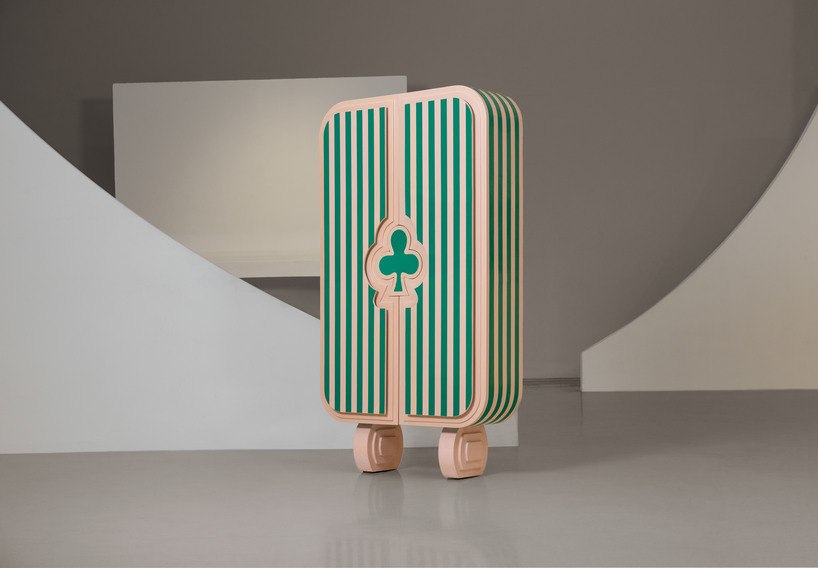
The collection includes five furniture characters: Canasta, Jolly, Fiore, Cuiro, and Picche. Together, they read like a domestic cast list rather than a product line. Canasta is described as the bar cabinet and acts as the social anchor of the collection, which makes sense, because every card game eventually migrates toward snacks, drinks, or someone announcing that they are “just watching” and then becoming the most competitive person in the room.
Related posts:


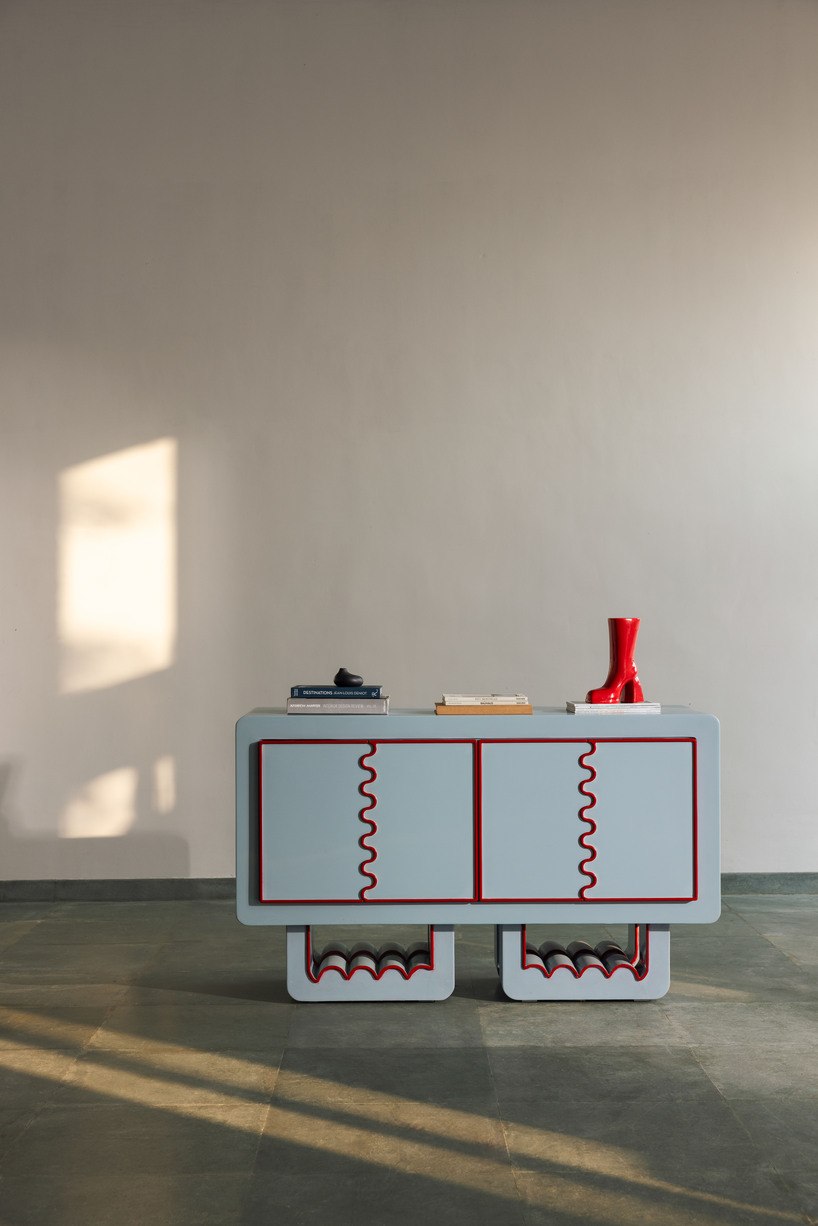
Jolly is the joker console, and it has exactly the kind of visual mischief you would expect from a piece named after the wild card. The red-trimmed, pale blue cabinet body has scalloped black openings and a low, blocky stance, giving it the expression of furniture that knows where the good coasters are hidden and refuses to tell you.
Fiore, shown by Isola Design as “Bloom Into Beautiful Living,” softens the group with clustered spherical forms that crawl across its surface like decorative bubbles. It still belongs to the same strange family, but it has a more ornamental, blooming rhythm. This is the one that looks as if it might politely hold your keys while silently judging your keychain.
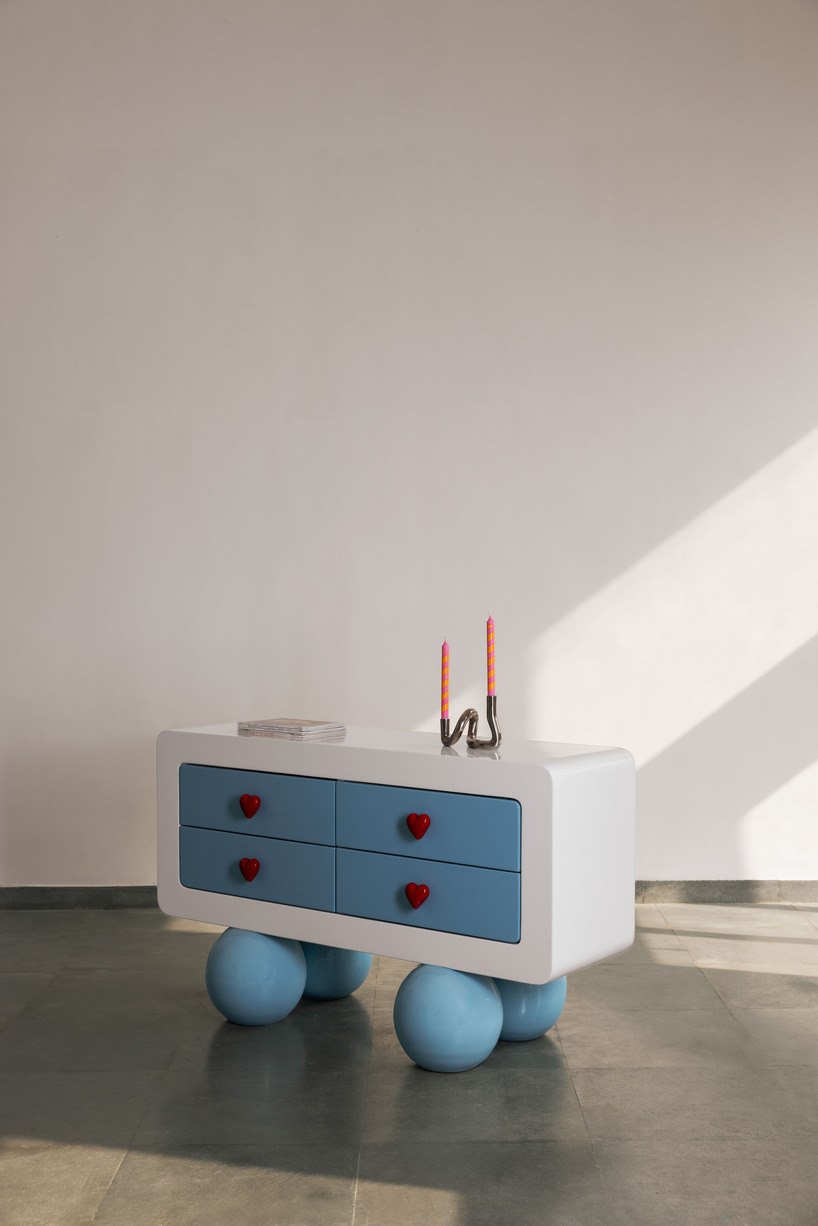
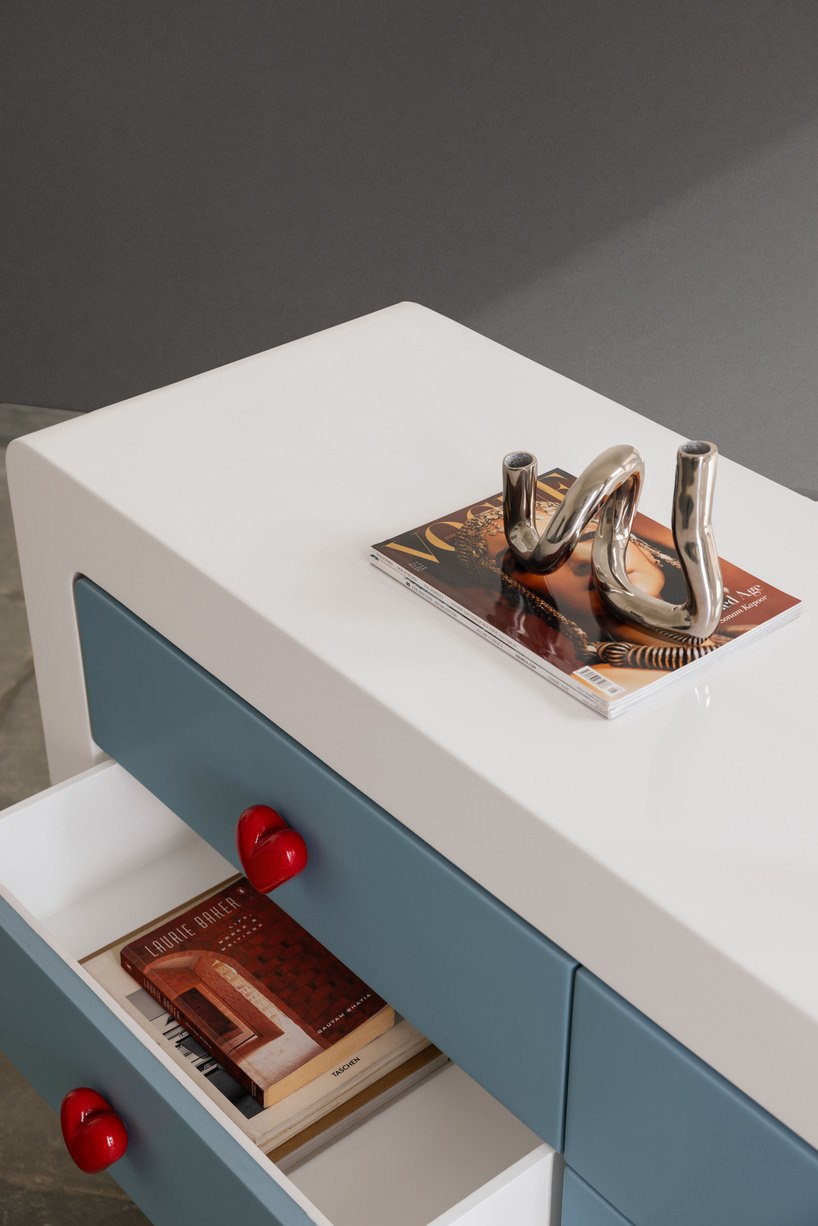
Cuiro is a storage console with spherical feet and heart-shaped hardware, which is dangerous because once furniture starts having cute little feet, adults begin saying things like “look at him” about a cabinet. Picche completes the group as a chest of drawers with layered curves and stacked volumes, taking one of the most familiar storage forms in the house and giving it the silhouette of a prop from a stylish alternate universe where chores are heavily art-directed.
What ties the collection together is not a single shape, but a shared design language. The pieces combine postmodern geometry, graphic color, strong symmetry, rounded interruptions, and theatrical proportion. They have real storage functions, but they are also meant to compose a room like characters in a scene.
- Canasta functions as the bar cabinet and social center of the collection.
- Jolly turns the joker-card idea into a sculptural console with bold graphic openings.
- Fiore uses clustered spherical forms to make the furniture feel blooming and playful.
- Cuiro brings in heart-shaped details and chunky rounded feet for a sweeter storage-console personality.
- Picche reworks the chest of drawers with layered curves and stacked volume.
The design also leans into cinematic composition, especially the kind of centered, color-blocked, quietly odd framing associated with Wes Anderson. That does not mean the furniture is a movie reference you have to decode. It means the collection understands that a room can be staged like a tiny emotional set, where a cabinet is not merely a box but a character with posture, costume, and unresolved feelings about where you put the napkins.
| Piece | Furniture Type | Design Hook |
|---|---|---|
| Canasta | Bar cabinet | Symmetrical anchor for gathering and storage |
| Jolly | Console | Joker-inspired form with expressive graphic openings |
| Fiore | Console or storage piece | Bloom-like clustered spherical details |
| Cuiro | Storage console | Heart-shaped hardware and rounded feet |
| Picche | Chest of drawers | Layered curves and stacked sculptural volumes |
The Rummy Theme Is Surprisingly Useful
The clever part is that Rummy is not treated as a flat visual gimmick. The collection pulls from the feeling of the game: the waiting, the swapping, the partial information, the social rituals, and the character types that show up around any table. There is the person who organizes the cards like a tax document. There is the person who plays on vibes. There is the person who says they forgot the rules and then immediately destroys everyone.
Ramino turns that human mess into furniture. Its cabinets conceal and reveal. Its drawers and openings suggest little moments of discovery. Its forms feel arranged, but not perfectly obedient. A lot of storage furniture tries to disappear. This collection arrives late, sits in the best chair, and asks why the room has no narrative arc.
That makes it a strong fit for people who like collectible furniture, unusual interiors, and functional objects with a sense of humor. It is not trying to be the invisible sideboard your landlord forgot to notice. It is furniture for someone who wants a room to feel curated, a little surreal, and very sure that ordinary rectangles had a good run but perhaps need supervision.
The pieces are also refreshingly physical. In a design world that keeps stuffing screens into everything from refrigerators to mirrors to questionable bathroom appliances, Ramino is weird without needing an app. Its trick is proportion, color, craft, storage, and symbolism. No firmware update. No subscription. No Bluetooth pairing ritual where a cabinet blinks angrily at you from across the living room.
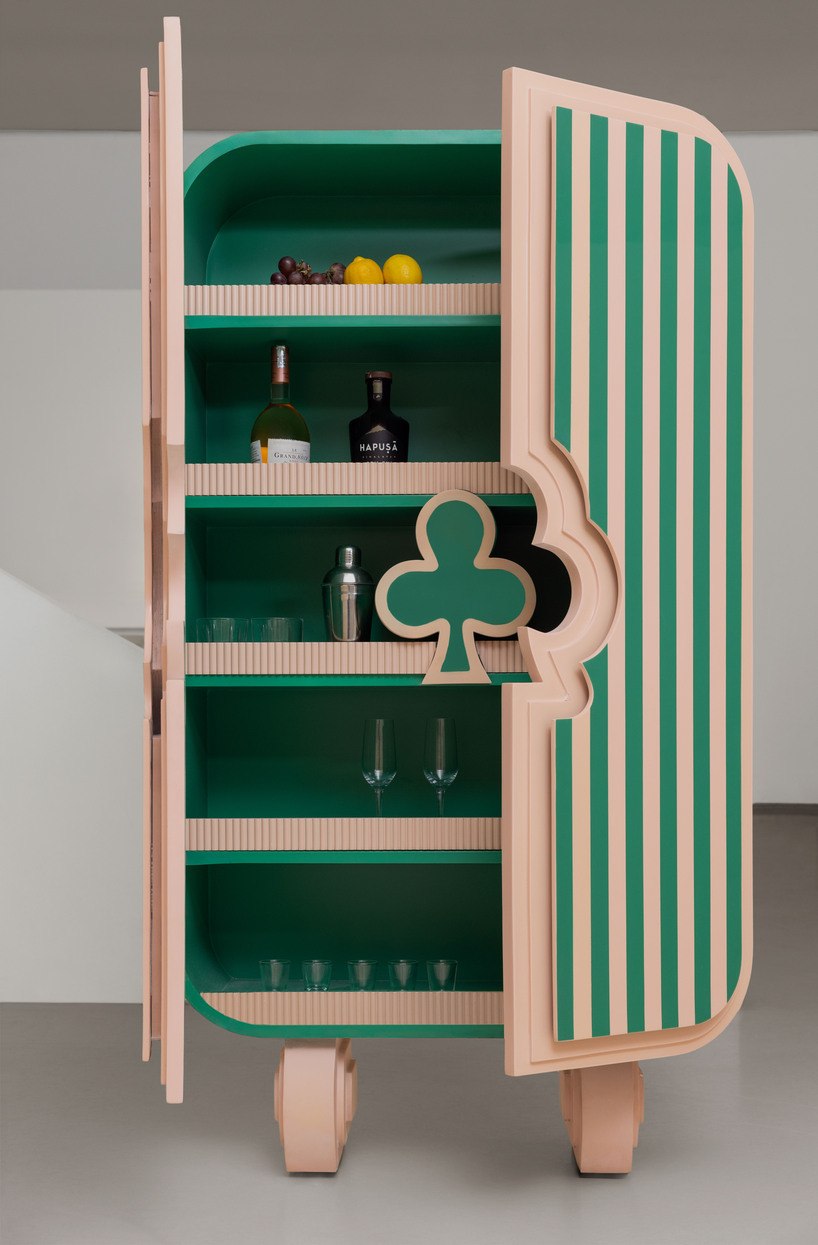
Because this is collectible design, the pieces are more gallery-grade than big-box practical. That is part of the appeal and part of the warning label. If your decorating style is “whatever survived the move,” Ramino may be emotionally overqualified for your apartment. But if your home already contains art objects, statement chairs, unusual lighting, or one chair nobody is allowed to sit in because it is “more of a piece,” this collection will understand the assignment immediately.
A Room That Looks Like It Knows A Secret
The Ramino Series works best when you imagine it not as a matching set, but as a group of characters spread through an interior. The striped cabinet could stand as a full-height focal point. The console pieces could sit under art, beside a dining area, or in an entry where guests can immediately realize they have entered a home where the furniture is funnier than most people at the party.
The collection’s strongest trick is balance. It is playful, but it is not flimsy. It is symbolic, but it still reads as furniture. It has enough color and shape to feel theatrical, but the silhouettes remain controlled enough that the pieces do not become theme-park props. That is a narrow little ledge to stand on, and Ramino seems quite comfortable there.
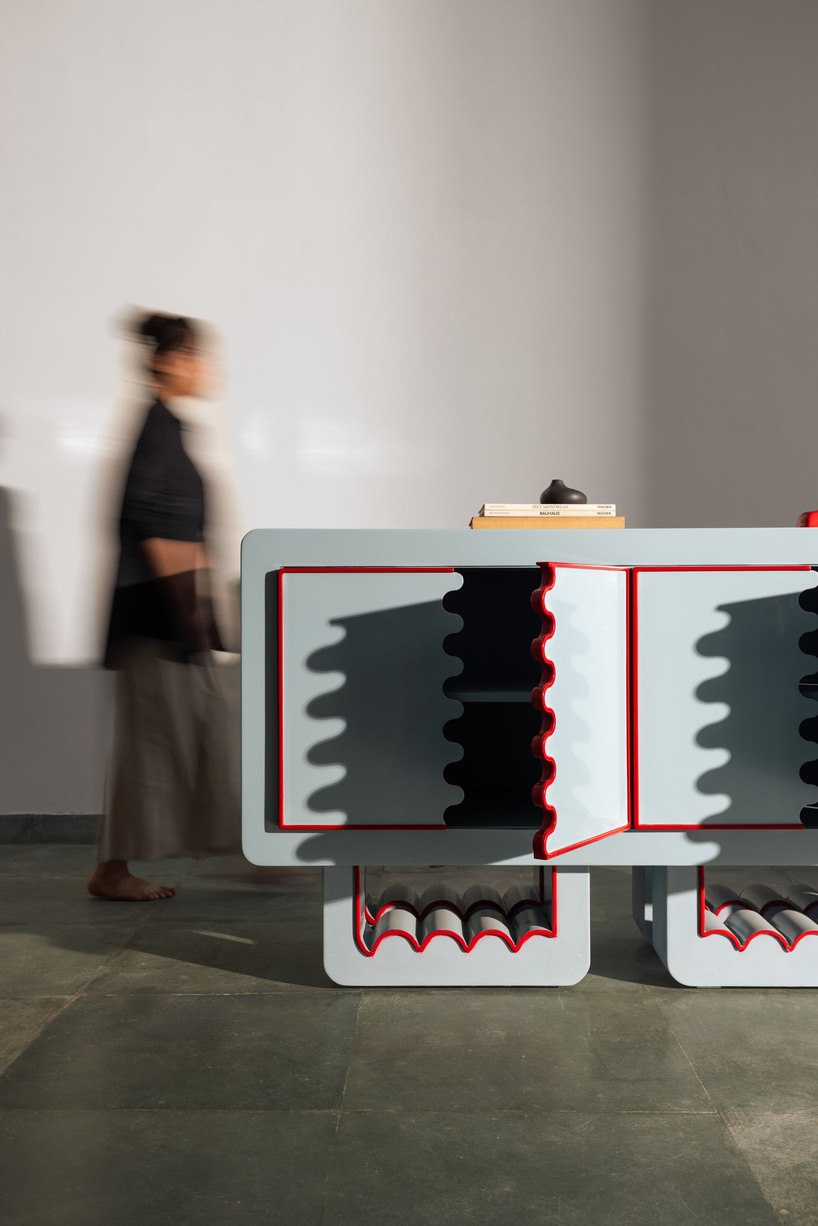
The Isola Design listing presents Fiore as part of the collectible Ramino universe, while Designboom’s July 25, 2026 coverage identifies the full series as Atelier Arunika’s debut furniture collection. The project information names Atelier Arunika and Arunika Sarkar as the designer, and the images are credited to Atelier Arunika, which is exactly the sort of source trail you want when furniture looks this ready to make your old sideboard feel underdressed.
If you are wondering where it goes, the answer is probably “somewhere it can be seen.” This is not background furniture. This is the object you build a room around, then pretend you are not building the room around, then eventually admit the cabinet is in charge now.
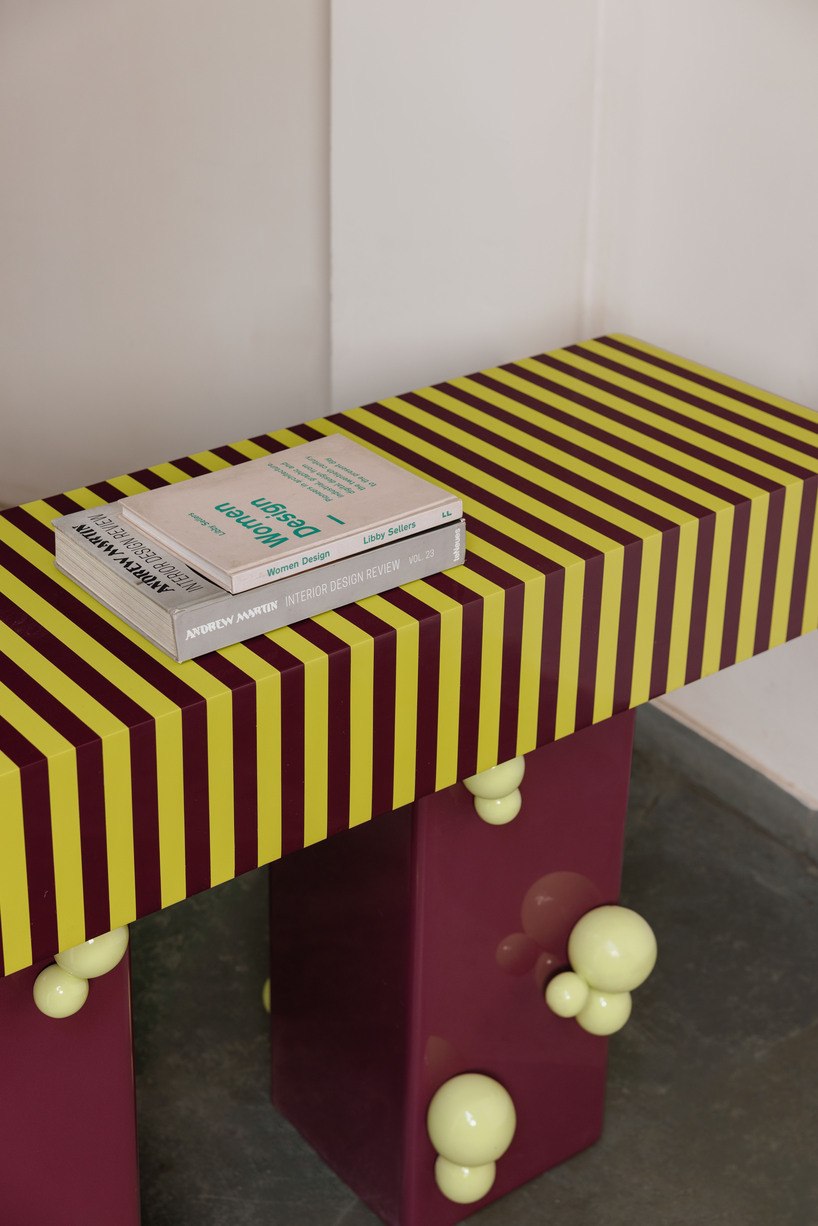
Price is listed as price on request for the limited-edition collection, so this is very much in the “contact the design platform and brace your wallet in a seated position” category rather than the “impulse buy while avoiding email” category. The product is shown through Atelier Arunika via Isola Design, with recent coverage from Designboom documenting the broader Ramino Series.
- Product: Atelier Arunika Ramino Series sculptural furniture collection
- Designer: Arunika Sarkar of Atelier Arunika
- Pieces: Canasta, Jolly, Fiore, Cuiro, and Picche
- Functions: bar cabinet, consoles, storage pieces, and chest of drawers
- Style: postmodern collectible furniture inspired by Rummy rituals and card-game personalities
- Availability: limited-edition collection through Atelier Arunika via Isola Design
- Price: price on request
| Pros | Cons |
|---|---|
| Turns storage furniture into genuinely memorable collectible design | Not aimed at budget furniture shoppers |
| Five-piece collection gives the concept more depth than a single novelty cabinet | Price-on-request availability means extra inquiry steps |
| Strong colors, curves, and symbolic details make the pieces instantly recognizable | Bold styling will not disappear quietly into a neutral room |
| Functional cabinet, console, storage, and drawer formats keep the idea usable | Limited-edition design may have restricted availability |
| Rummy inspiration is built into the forms rather than slapped on as decoration | Collectors may need enough space to let the pieces breathe |
| Works as a conversation-starting interior focal point | Probably too theatrical for minimalist spaces |
Where to find This Rummy-Inspired Sculptural Furniture Collection Turns Cabinets Into Card Game Characters
OddityMall may earn a commission from qualifying purchases at no extra cost to you.