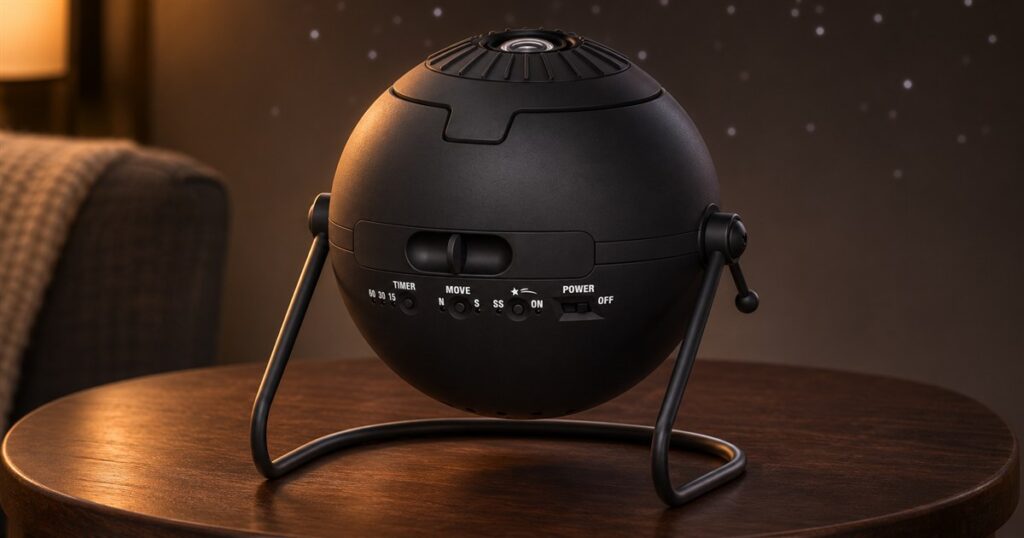
Your ceiling has been coasting for years. It holds the light fixture, occasionally hosts a spider, and otherwise contributes very little to the evening. The Homestar Flux home planetarium gives that underachieving rectangle a much bigger assignment: become a sky full of stars while everyone stays comfortably within reach of the snacks.
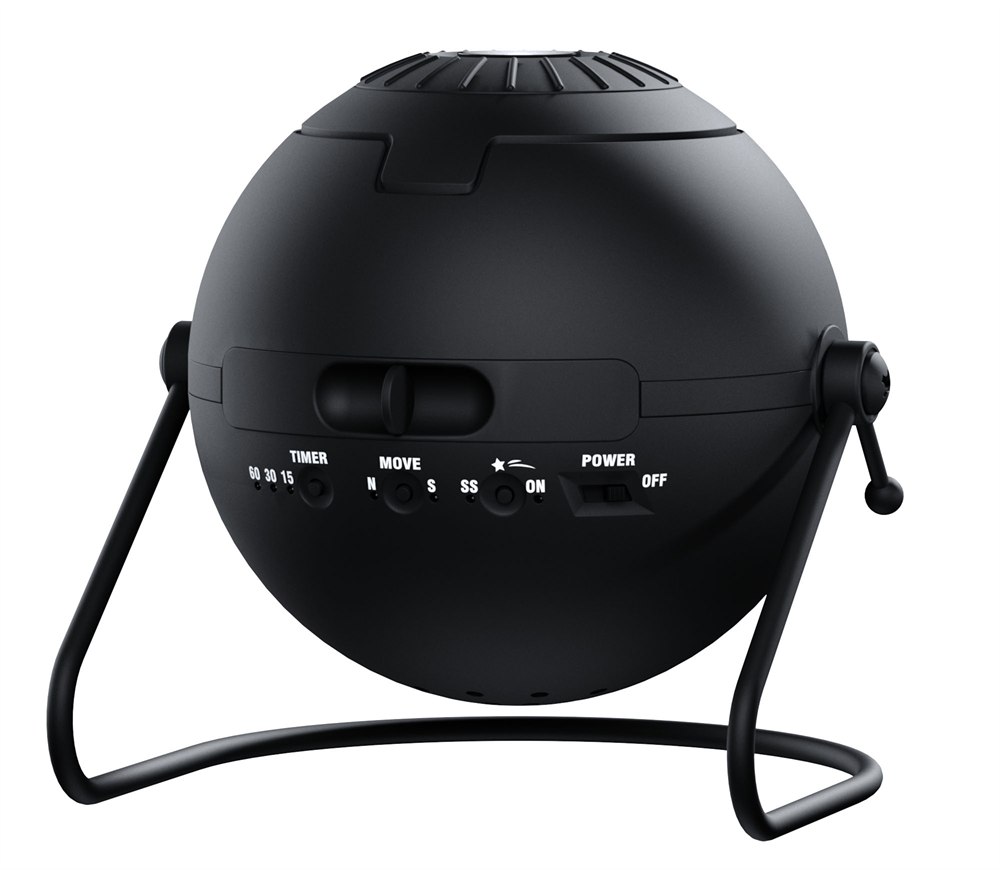
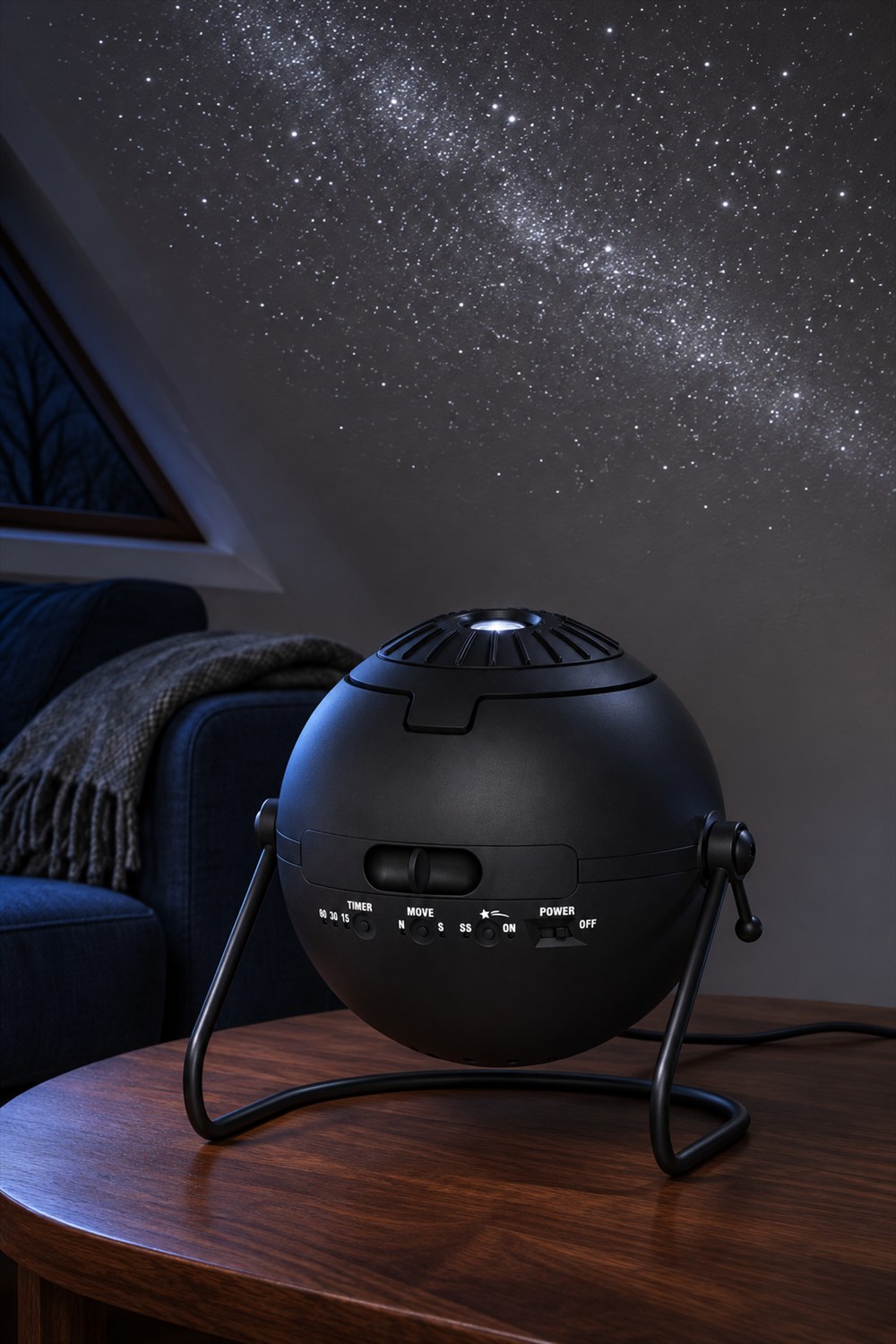
Made by Sega Toys, the Flux is a compact optical star projector with a satin-black, almost spherical body resting in a thin metal cradle. It looks like a little piece of observatory equipment that escaped the gift shop. There is a lens on top, a tray for interchangeable discs, and a row of controls around the front. The design makes its intentions fairly clear: this ball would like to do astronomy at your house.
The attraction is a projected night sky rather than a ceiling full of arbitrary party dots. The official distributor lists more than 60,000 stars, produced with a five-watt white LED and glass optics. You supply a suitable surface and the darkness. The projector supplies the reason people suddenly stop looking down at their phones.
A small planetarium with actual planetarium family connections
There is a proper astronomical connection behind the round black shell. The Homestar series was developed with Takayuki Ohira, the creator of MEGASTAR planetarium projectors. His company announced Flux as an international release back in 2018, so this is an established model, not a mysterious new gadget whose entire reputation consists of one dramatic video.
That history is part of its appeal. A good mechanism does not become less interesting because it has survived a few birthdays. Here, the interesting bit is the contrast between the modest object on the table and the much larger scene it puts above you. It is a very small box office for a very large subject.

Visually, the projector commits to the theme without turning into a plastic rocket. Raised details radiate around the lens, and the dark finish lets the body recede when the room lights go down. Even switched off, it has more personality than the average white rectangle with a power cable. Your bookshelf may briefly look as though it has hired a science adviser.
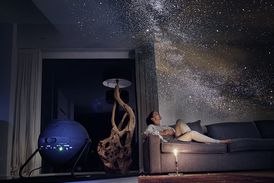
Give it darkness, then give it a little attention
The first practical consideration is the room. The manual recommends darkness and a white or light-colored projection surface. A bright television, a reading lamp pointed upward, or a ceiling with a lot going on will compete with the view. Before blaming the galaxy, turn off the kitchen light spilling through the doorway.
There is also a focus dial. The published working distance is 1.2 to 2.9 meters, so placement matters: this is not a promise that every shelf, wall, and cathedral-height ceiling will work equally well. Think about where the lens will sit and what it will face before deciding that the only available spot is behind the fern.
This little setup ritual feels appropriate for the object. You are arranging a viewing experience, not merely switching on a lamp. It is worth making a comfortable place to sit, clearing the sightline, and leaving the remote control somewhere you can find it later. Space is impressive; searching the sofa cushions in complete darkness is less so.
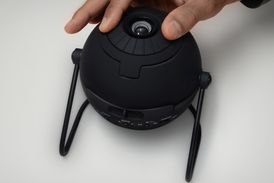
The controls and setup give you a few useful choices:
- Use the supplied plain northern-sky disc for a less annotated view, or its constellation-line companion when you want help following the patterns.
- Set the projection angle for the surface you intend to watch instead of aiming the whole table at it.
- Switch on the rotating-sky function when you want movement rather than a fixed scene.
- Try the shooting-star effect, then decide whether it belongs in your evening’s program.
- Choose a 15-, 30-, or 60-minute timer session when you would rather not appoint someone official keeper of the power switch.
The discs are the program
The interchangeable discs are a useful reminder of what this product actually is. You are choosing a prepared optical image, not connecting a telescope to a live feed from the backyard. An overcast evening does not cancel the show, but neither does the projector tell you that a particular satellite is passing over your address right now.
That makes it a different kind of purchase from binoculars or a telescope. Those tools send you out to observe something happening in the real sky. This one brings a representation indoors. There is room for both hobbies, particularly if your enthusiasm for astronomy becomes noticeably less heroic when the outdoor temperature drops.
| Decision before buying | What to account for |
|---|---|
| Where will it live? | A steady indoor surface with a clear path to the ceiling or wall |
| Can the room get dark? | Light from lamps, screens, and adjoining rooms affects the experience |
| Is there enough distance? | Check the lens-to-surface distance against the stated focusing range |
| What do you want to watch? | The supplied sky discs are a starting selection; other scenes cost extra |
| Who will set it up? | Someone willing to place it carefully and adjust the focus |
There is a nice social use here, too. A starry ceiling can give an otherwise ordinary evening a reason to pause. Put it on after dinner, let everyone claim they remember a constellation, and enjoy the inevitable confident disagreement. No one needs to deliver a lecture. Sometimes looking upward together is enough of an activity.

A gift for the person who already owns enough mugs
The best recipient is probably someone who likes both space and the idea of making a room feel different. That could be an astronomy enthusiast, a design-minded homebody, or the person who still gets genuinely excited when a science museum dims the lights. It asks for a little participation, which is part of what separates it from another decorative object gathering dust.
For a gift, think about the recipient’s home as well as their interests. Someone with blackout curtains and an uncluttered ceiling has a different starting point from someone whose bedroom is permanently illuminated by a streetlamp. The thoughtful present includes a plausible place to enjoy it, even if you do not wrap that part.
And keep expectations sensible. This is an indoor optical appliance, not a weatherproof camping accessory or a medical sleep treatment. Follow the supplied handling instructions, keep liquids away, and do not look directly into the illuminated lens. The exciting view belongs on the ceiling; your eyeball is not an alternative screen.
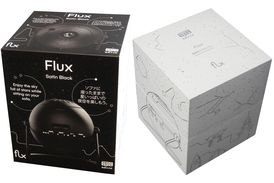
The gift presentation has some charm of its own: the official photographs show an illustrated outer sleeve and a patterned inner box. That suits something people may want to bring out for a particular evening and put away afterward. It also makes a considerably better reveal than handing over a loose black sphere and saying, “Trust me, this is recreational.”
Optional compatible discs broaden the possibilities beyond the starting pair. Check the individual disc’s subject and compatibility before ordering, rather than assuming every dramatic planet image in the marketing material arrives in the box. A small accessory collection can be fun, but it is still an accessory collection, with its own tiny gravitational pull on your wallet.
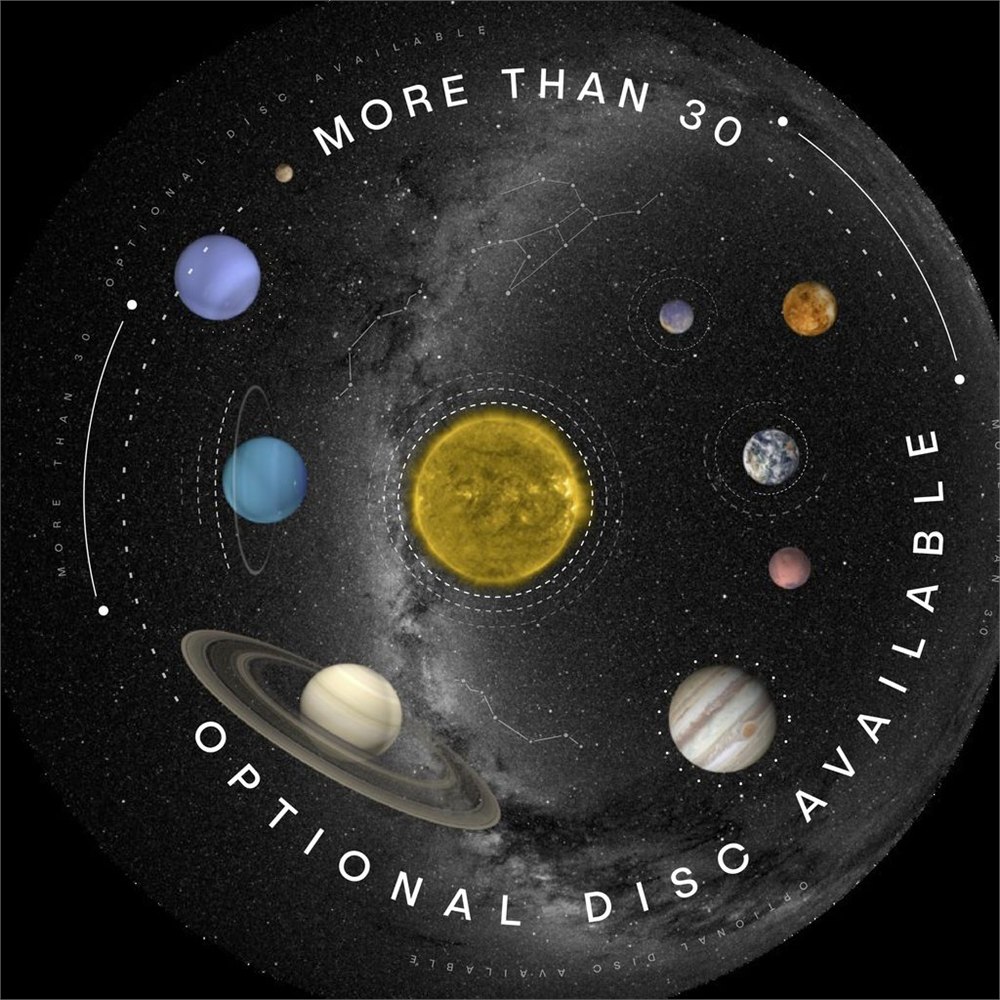
Product photographs and feature illustrations: the official Sega Toys Homestar distributor. The optional-disc illustration shows additional selections, not the contents of the standard package.
- Product: Sega Toys Homestar Flux home planetarium.
- Main appeal: a disc-based star show for a suitably dark indoor room.
- Look: satin-black rounded housing with an adjustable cradle.
- Starting package: projector, two northern-sky discs, power accessories, manual, and sky map.
- Best fit: curious adults and shared, supervised astronomy evenings.
- Before ordering: check room layout, the selected seller’s package, and any optional-disc costs.
The Homestar Flux was listed on Amazon for $259.00 with an in-stock purchase offer when checked. The official distributor also listed it at $229.00, so compare the final delivered totals and regional package before buying. Either way, the purchase is less about acquiring another light and more about giving your ceiling an unexpectedly ambitious second job.
| Pros | Cons |
|---|---|
| Turns a familiar room into an unusual viewing space | Room darkness and surface choice matter |
| Swappable discs offer different programs | Additional discs are separate purchases |
| Distinctive, compact-looking product design | Needs careful placement and manual focusing |
| Works for a quiet solo evening or a shared demonstration | Does not replace observing the actual sky |
| Offers motion and timed viewing options | Costs substantially more than a basic decorative light |
Save this find.
Thank yourself later.
Your next great gift idea. Your someday space. Your collection of wonderfully weird things.
Save to PinterestPick a board. Keep the inspiration.
This Home Planetarium Projects a Rotating Night Sky Across Your Ceiling
Where to find This Home Planetarium Projects a Rotating Night Sky Across Your Ceiling
OddityMall may earn a commission from qualifying purchases at no extra cost to you.