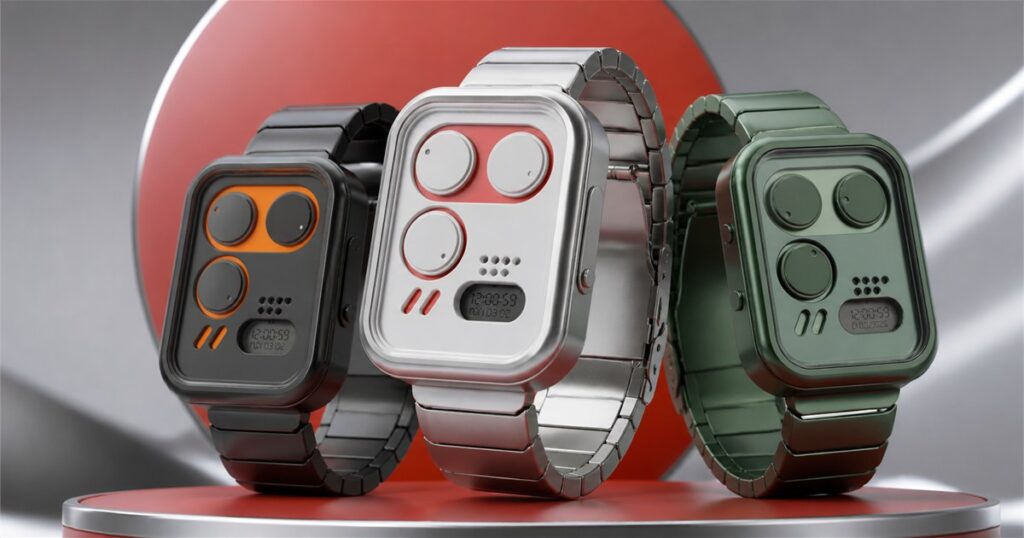
There are normal watches, and then there are watches that look like a tiny retro robot got trapped in an art museum and was forced to tell time as community service. The D1 Milano x Peter Tarka The Impossible Watch is very much the second kind, which is wonderful news for anyone whose wrist has been quietly begging for a small aluminum fever dream.

This is a real wristwatch built from an original 3D artwork by digital artist Peter Tarka and translated into wearable form by Milanese watchmaker D1 Milano. Instead of hands sweeping politely around a dial like every well-behaved watch at the office, this one uses three raised rotating discs for hours, minutes, and seconds, plus a small LCD readout for the moments when your brain refuses to decode sculpture before coffee.
The result is part fashion watch, part kinetic desk toy, part prop from a 1980s sci-fi movie where everyone owns brushed metal furniture and nobody has heard of ergonomics. It has the familiar rectangle-on-a-bracelet silhouette of a modern digital watch, but the face looks like a friendly control panel from a spaceship that only flies to tasteful cocktail lounges.
A Watch Face That Refuses To Behave
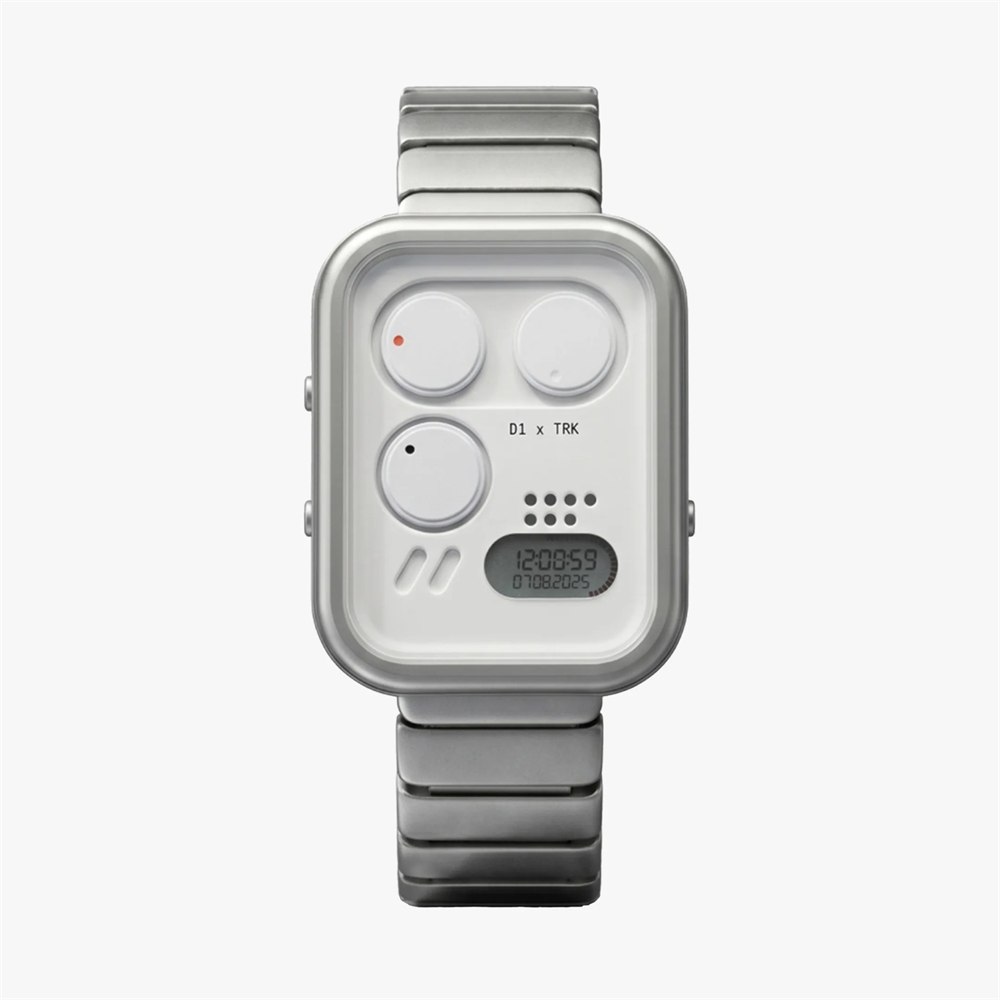
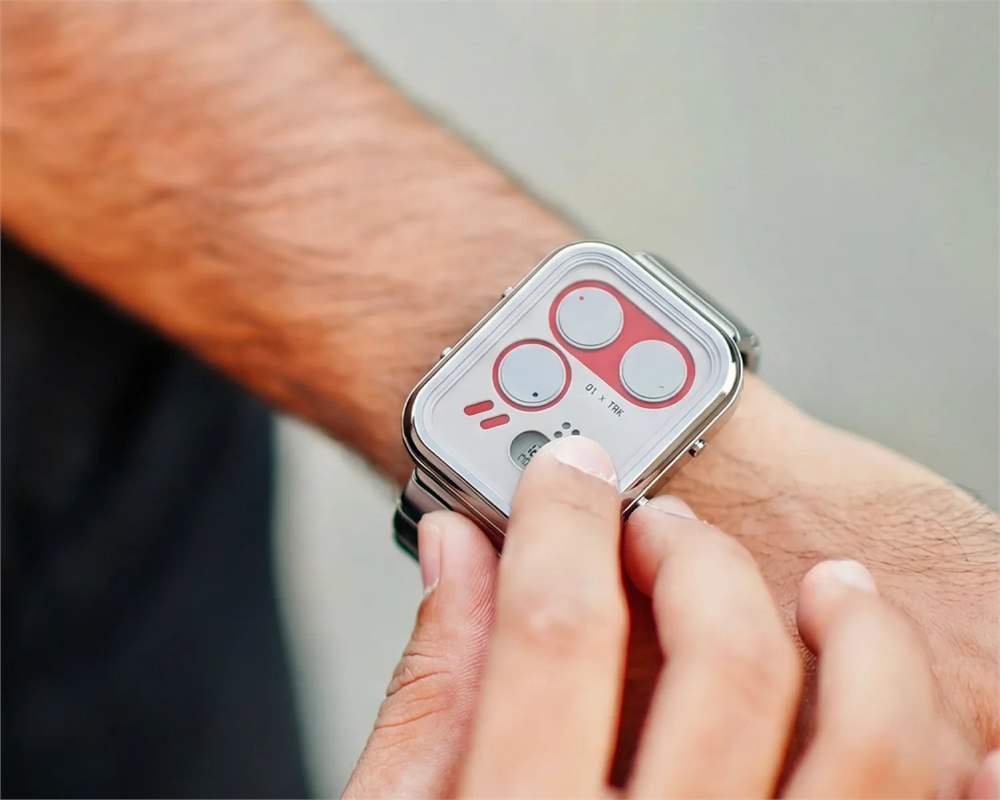
The main trick is the dial. Three circular discs sit across the face, each with a small dot that marks its reading. The upper-left disc tracks the hour, the upper-right disc tracks the minutes, and the lower-left disc tracks the seconds. It is technically still telling time, but it does so with the theatrical confidence of someone explaining a board game they invented during a power outage.
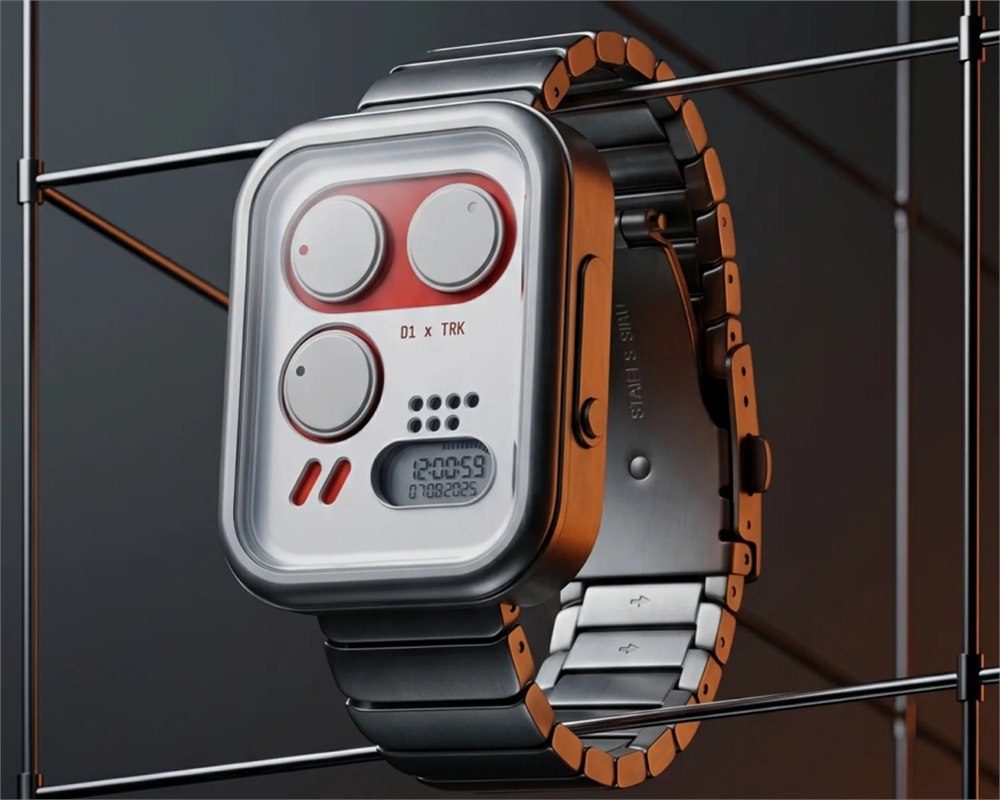
To the right of the lower disc is a seven-dot weekday indicator. The dots fill in sequence through the week, so Monday starts with one and Sunday ends with all seven. Beneath that, the small LCD screen shows the time and date in a more straightforward digital format, which is a practical concession to people who enjoy surrealism but still need to know whether they are late to the dentist.
Related posts:
 QBracelet is a Bracelet That Charges Your Phone
 This Sun Monitor Bracelet Detects Your UV Intake, Notifies You When You’ve Had Too Much Sun
 Incredible Rotating Circle Kitchen Is a Perfect Space-Saver For Tiny Homes
 Incredible Rotating NASA-Inspired Indoor Garden Provides Full Garden In Just 1.7 Feet
The watch began as Tarka’s digital concept, where gravity, moving parts, wrist comfort, and other annoying laws of physical reality were not invited to the meeting. D1 Milano reworked that visual idea into a compact production-ready object, changing the original stainless-steel direction to aluminum after prototypes proved too heavy. That change matters because the watch is not just a dial slapped into a stock case; the case and integrated bracelet are part of the whole sculptural object.
- Three independent rotating discs handle hours, minutes, and seconds.
- A small LCD display gives the time and date in plain digital form.
- Seven small dial dots act as a weekday indicator.
- The case and bracelet are aluminum to reduce weight.
- Color options include White Space, Orange Pulse, Black Orbit, and Green Dimension.
- The watch uses an AR-coated sapphire crystal and is listed with 50 meters of water resistance.
Why It Looks Like That
Peter Tarka is known for glossy, impossible-feeling 3D compositions where shapes stack, float, bend, and generally behave like furniture from a dream someone had after staring too long at a design magazine. The watch tries to keep that same spirit without becoming a completely unwearable cube of decorative metal. It is still recognizably a watch, but only after it has been through some sort of stylish interdimensional paperwork.
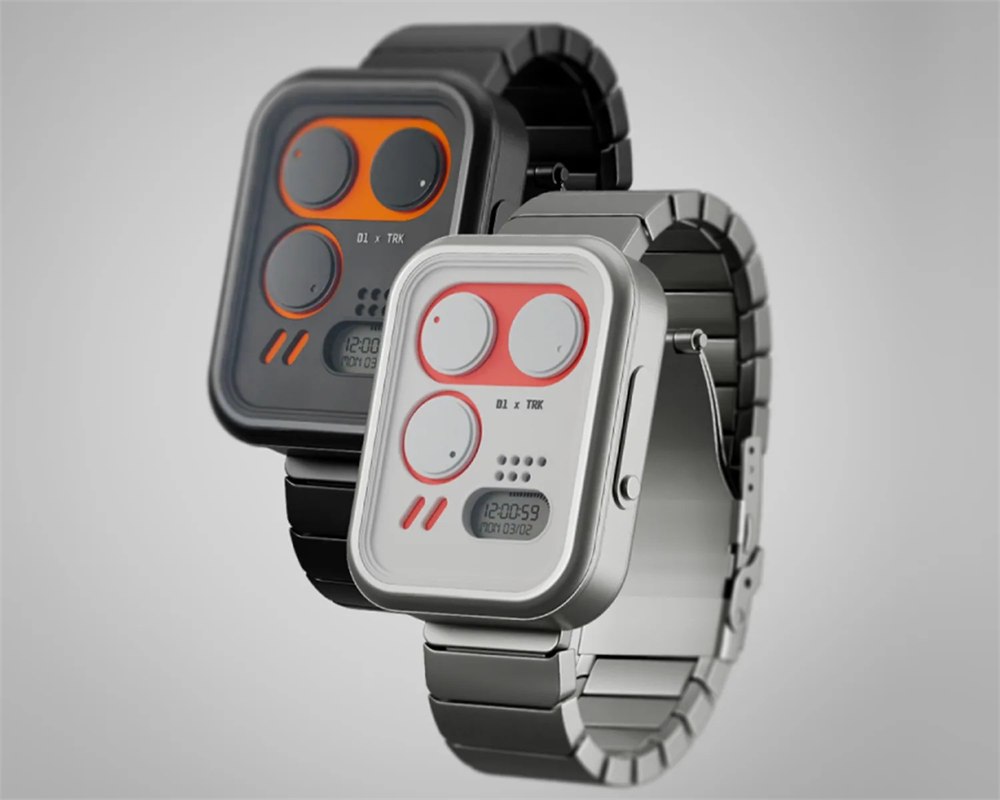
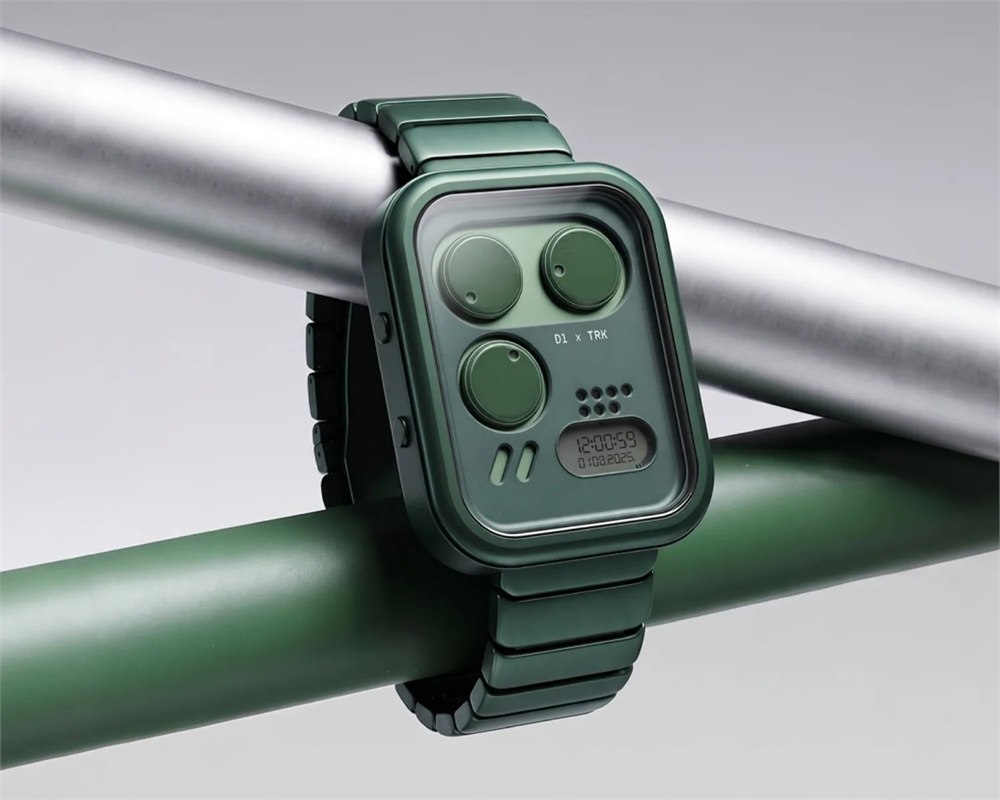
D1 Milano gives the design a soft rectangular case with rounded edges, an integrated aluminum bracelet, raised discs, small cutout details, and a little digital screen tucked into the lower right of the dial. The white and red version looks clean and gallery-like, the black and orange version looks like it belongs to someone who owns at least one mysterious matte-black notebook, and the green version is for people who believe a wristwatch should look expensive and mildly radioactive.
| Feature | What It Means |
|---|---|
| Case size | 36mm wide by 46mm long, with a 12.5mm thickness reported in watch coverage |
| Case and bracelet | Aluminum construction for a lighter sculptural build |
| Crystal | AR-coated sapphire crystal over the dial |
| Movement | Customized multifunction quartz movement |
| Water resistance | Listed at 50 meters |
| Display system | Rotating hour, minute, and second discs plus a digital time/date display |
The day-to-day appeal is less about maximum efficiency and more about delight. You could absolutely read the time faster on a plain digital watch, just like you could eat dinner faster from a measuring cup over the sink. That is not always the point. Sometimes the point is letting a tiny mechanical object make your afternoon 12 percent weirder in a classy way.
It Is Art, But It Still Has To Survive Your Wrist
There is a useful tension here: the watch is deliberately odd, but not useless. The LCD readout gives it a normal fallback, the sapphire crystal is a serious material choice, and the aluminum case keeps the sculptural build from becoming a wrist dumbbell. The 50-meter water-resistance rating also suggests it can handle ordinary splashes and daily wear, though this is clearly more gallery-opening accessory than rugged field instrument.
That makes it an interesting fit for people who like watches but are tired of yet another round case with vaguely vintage numerals and a story about aviation. This is not pretending to be a dive watch, a military watch, a moon watch, or a watch discovered in a dusty Italian workshop by a man named Lorenzo who only speaks in patina. It is a collaborative design object that happens to tell time.
The four colorways give the design different personalities without changing the core layout. White Space is the cleanest and probably the easiest to wear with normal clothing. Orange Pulse keeps the silver body but adds a louder accent. Black Orbit leans into the gadgety robot-face look with black and orange. Green Dimension goes full monochrome green, which sounds ridiculous until you see it and realize it has the confidence of a tiny spaceship dashboard.
Because the display uses rotating discs, the reading experience is part of the object. You glance, decode, maybe use the LCD, and move on with your life feeling briefly like you have joined a secret society for people who alphabetize their chargers. It is not trying to disappear under a shirt cuff. It wants to be noticed, questioned, and possibly accused of being a smartwatch by someone who has not looked closely enough.
Who This Wrist-Based Art Project Is For
The obvious audience is watch collectors who already own enough clean daily drivers and want something that starts conversations without needing a tourbillon budget. It also makes sense for design people, digital-art fans, retro-futurism enjoyers, and anyone who has ever looked at a normal watch and thought, yes, but what if it looked more like a highly organized control panel?
It is probably not the right pick for someone who wants the most legible timepiece possible, or for anyone who considers novelty an illness. The dots and discs are charming, but they are still dots and discs. The LCD helps, but the main display is built for visual interest first. That is the trade: you get a watch that looks like no ordinary quartz rectangle, and in return you agree to let your wrist host a little design experiment.
The Kickstarter campaign was reported as launched in July 2026, and independent campaign trackers showed it funded successfully with 943 backers and more than $415,000 pledged against a $15,000 goal. That does not erase normal crowdfunding risk, but it does show that plenty of people saw this aluminum time puzzle and immediately said, yes, please put the tiny impossible rectangle on me.
- Product: D1 Milano x Peter Tarka The Impossible Watch
- Core idea: a wearable version of Tarka’s surreal digital-watch concept
- Time display: three rotating discs for hours, minutes, and seconds
- Extra display: small LCD screen for digital time and date
- Case: aluminum soft-rectangular case with integrated bracelet
- Colorways: White Space, Orange Pulse, Black Orbit, and Green Dimension
- Launch path: Kickstarter campaign from D1 Milano
Pricing for the Kickstarter campaign started at $379 for early-bird backers, with the project presented through D1 Milano’s Kickstarter page. As with any crowdfunded watch, shipping timing and final availability depend on the campaign’s fulfillment process, so this is one for people comfortable with the preorder side of product collecting rather than a normal add-to-cart retail purchase.
Images courtesy of D1 Milano via Gear Patrol.
| Pros | Cons |
|---|---|
| Genuinely unusual rotating-disc display | Less instantly legible than a simple digital watch |
| Strong wearable-art appeal | Crowdfunding availability is not the same as normal retail |
| Aluminum case and bracelet help manage weight | The bold shape will not suit minimal-watch purists |
| LCD readout keeps the design practical | Novelty display may require a learning curve |
| Four distinct colorways | Some variants or pledge tiers may sell out |
| Sapphire crystal and 50m water resistance add real watch specs | It is more style object than tool watch |
Where to find This Rotating-Disc Watch Turns Time Into Wearable Digital Art
OddityMall may earn a commission from qualifying purchases at no extra cost to you.
Related posts:
QBracelet is a Bracelet That Charges Your Phone
This Sun Monitor Bracelet Detects Your UV Intake, Notifies You When You’ve Had Too Much Sun
Incredible Rotating Circle Kitchen Is a Perfect Space-Saver For Tiny Homes
Incredible Rotating NASA-Inspired Indoor Garden Provides Full Garden In Just 1.7 Feet