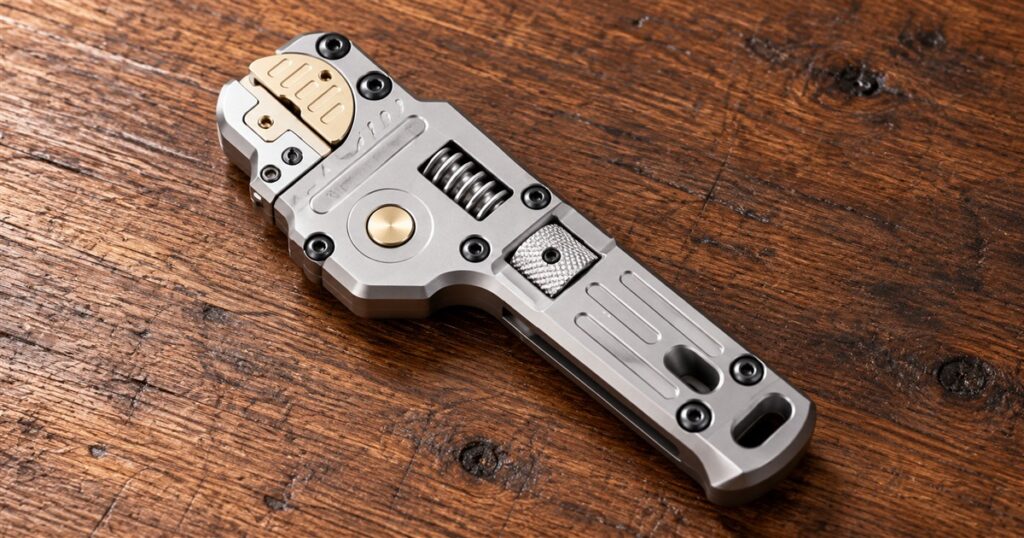
Every small repair eventually reaches the same awkward stage: you need one hand to hold the part, one hand to work on it, and a third hand you apparently forgot to grow. The MakerPi Tiwrench is a locking adjustable wrench that doubles as a compact fractal vise, giving tiny workshop projects somewhere to sit while your actual hands get on with the job.
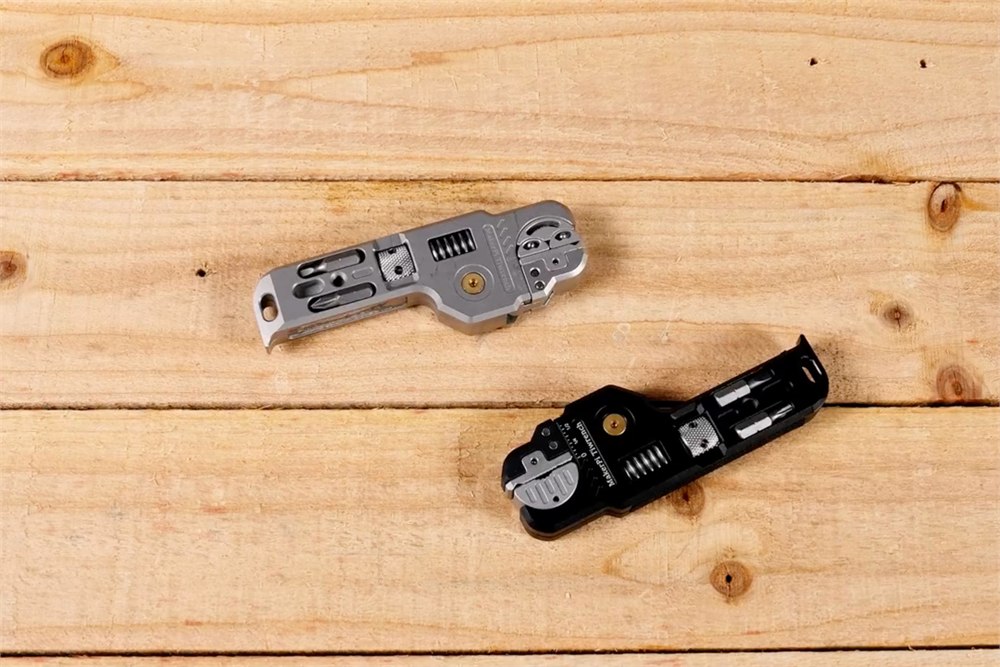
It looks like a pocket tool that has been promoted to management. There is a chunky metal body, an exposed mechanical adjustment system, and a set of interchangeable jaws at the business end. The whole arrangement is built around gripping things, whether that means turning a nut or keeping a slippery little component from launching itself under the bench.
MakerPi is offering it through Kickstarter in aluminum and titanium versions. Both share the central idea: combine ordinary wrenching with small-part workholding, then make the contact surfaces changeable so the tool can suit the thing being held. Your miscellaneous hardware finally gets a more thoughtful reception than being pinched between two fingers and optimism.
A wrench that wants to remember its setting
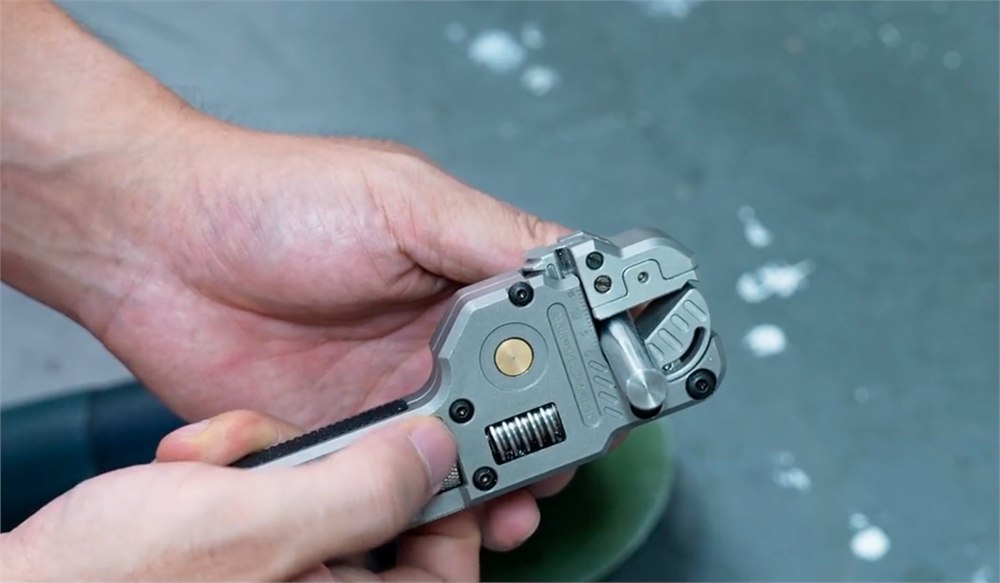
The core mechanism is an Archimedean worm drive. MakerPi says its resistance to being driven backward helps the jaws stay at the opening you selected, reducing the familiar need to keep fiddling with an adjustable wrench between turns. That is a pleasantly specific problem to address. Nobody has ever finished a repair and wished they had spent more time readjusting the same tool.
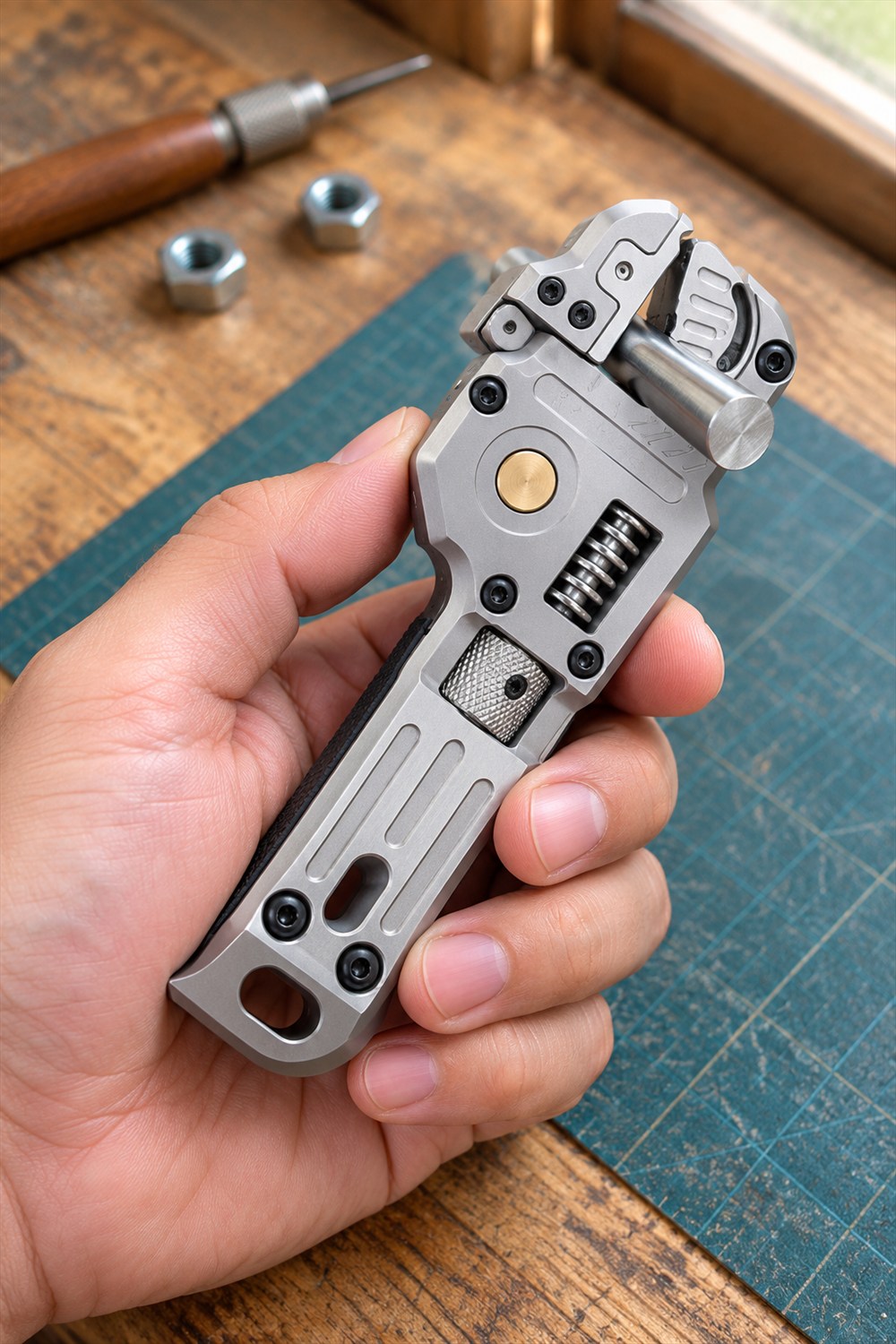
The adjustment area has a knurled surface for thumb control. Rather than treating clamping as an on-or-off event, the mechanism allows small changes in jaw position. For a little model component or a piece you are trying to align, that extra control is the interesting part. The goal is a deliberate grip, not a tiny metal handshake with anger issues.
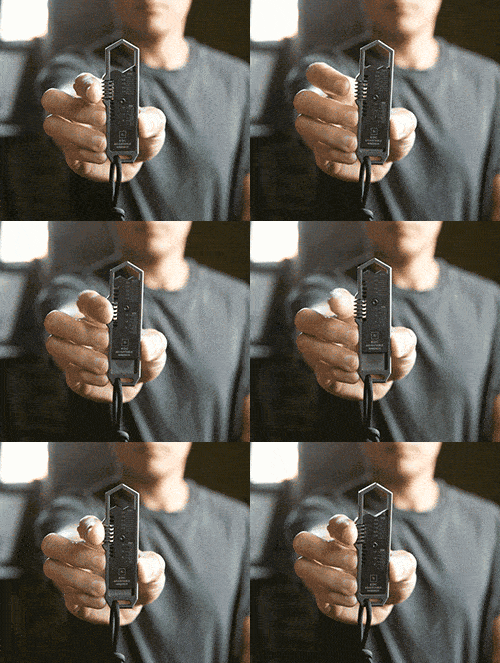
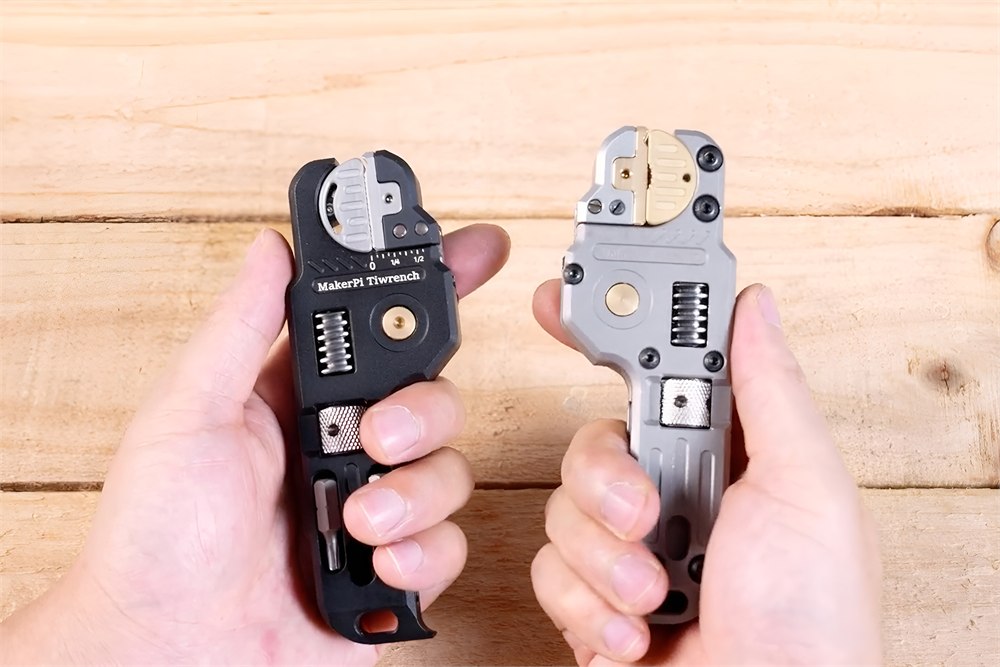
The maker also describes holes in the adjustment mechanism for inserting a small rod when extra leverage is needed. That is a feature to use thoughtfully around the workpiece and the tool’s intended limits. More clamping force is not automatically better when the object in question is a delicate printed bracket you spent all evening making.
With the flat jaw configuration, Tiwrench still handles familiar wrench jobs involving nuts, bolts, square stock, and flat parts. Its second career as a vise does not erase the first one. It is more of a workshop moonlighting arrangement.
The jaws are where things get interesting
The interchangeable system uses ball detents to retain the jaw attachments. MakerPi makes a useful distinction here: those little retaining balls hold the attachments in position; they are not the components carrying the clamping load. The point is to make switching jaws straightforward without making every change a separate miniature repair project.
There are three jaw structures. Flat contact surfaces suit regular shapes. A single-level adaptive jaw can adjust its contact angle around cylindrical or slightly irregular pieces. The dual-level version takes the idea further, using a fractal arrangement with more contact points to accommodate small objects that are less cooperative about being rectangular.
That last option supplies much of the visual charm. Watching a tool meet an awkward shape on its own terms is oddly satisfying. It feels like a committee of tiny jaws has finally agreed on how to hold the thing, which is more consensus than most real committees manage.
- Flat fixed jaws are intended for nuts, bolts, square stock, and other regular surfaces.
- Single-level adaptive jaws suit cylindrical parts and shapes with uneven contact angles.
- Dual-level adaptive jaws add contact points for more complicated small shapes.
- Interchangeable contact materials let the user consider surface finish as well as geometry.
- A side mounting thread allows the tool to become a small fixture on a suitable support.
The attachment selection matters when choosing a reward. MakerPi offers additional jaws and bundles, so the full collection shown around the tool should not be mistaken for everything automatically included with every version. Buy the configuration that suits your projects, rather than the one that merely makes the most impressive little metal family portrait.
Different parts deserve different contact surfaces
A steel nut and a freshly finished plastic model do not need the same treatment. MakerPi offers stainless steel jaws alongside brass, nylon, and silicone contact-face options. The campaign describes the softer choices as ways to match different finishes and friction needs, rather than pretending one surface is perfect for every job.
| Contact option | MakerPi’s intended use |
|---|---|
| Stainless steel | Harder parts, including steel hardware and metal components. |
| Brass | Metal parts needing gentler contact than hardened steel. |
| Nylon | Plastic, model, printed, and anodized parts where scratching is a concern. |
| Silicone | Smooth or slippery pieces that benefit from softer, higher-friction contact. |
For a hobby bench, that flexibility is more compelling than a heroic list of unrelated functions. A useful holding tool lets you think about the work instead of continually negotiating with the workpiece. You can concentrate on fitting two parts together without one of them attempting a floor-based escape room.
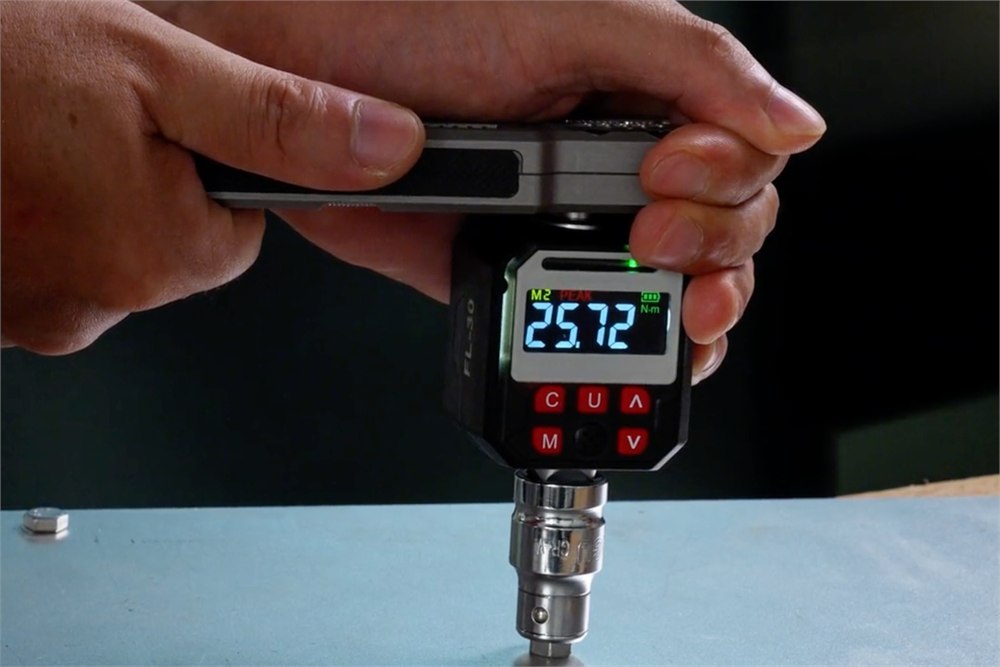
MakerPi demonstrates wrenching loads with a torque meter, but that demonstration should not be confused with a promise that a compact tool replaces every wrench in a mechanic’s drawer. Its role is small repairs and controlled workholding. The maker explicitly says it is not intended to replace a full-size bench vise.
A tiny fixture for the hobby bench
The quarter-inch mounting thread on the side is a useful addition. With a compatible support arm or bench mount, Tiwrench can hold lightweight parts while you glue, paint, assemble, or work on them. The mount becomes part of the setup, so its stability matters as much as the grip at the jaws.
That is particularly appealing for model builders and 3D-printing enthusiasts. Small parts have a talent for being just large enough to need finishing and just small enough to make finishing annoying. A compact holder can give you somewhere to position them without dedicating half the bench to a heavy fixture.
The body also carries two short bits in magnetic storage slots: a PH0 Phillips bit and a 3 mm hex bit. There are silicone grip pads on the handle and metric and imperial reference markings near the jaw area. These are sensible supporting details, the tool equivalent of remembering to bring a pen to a meeting.
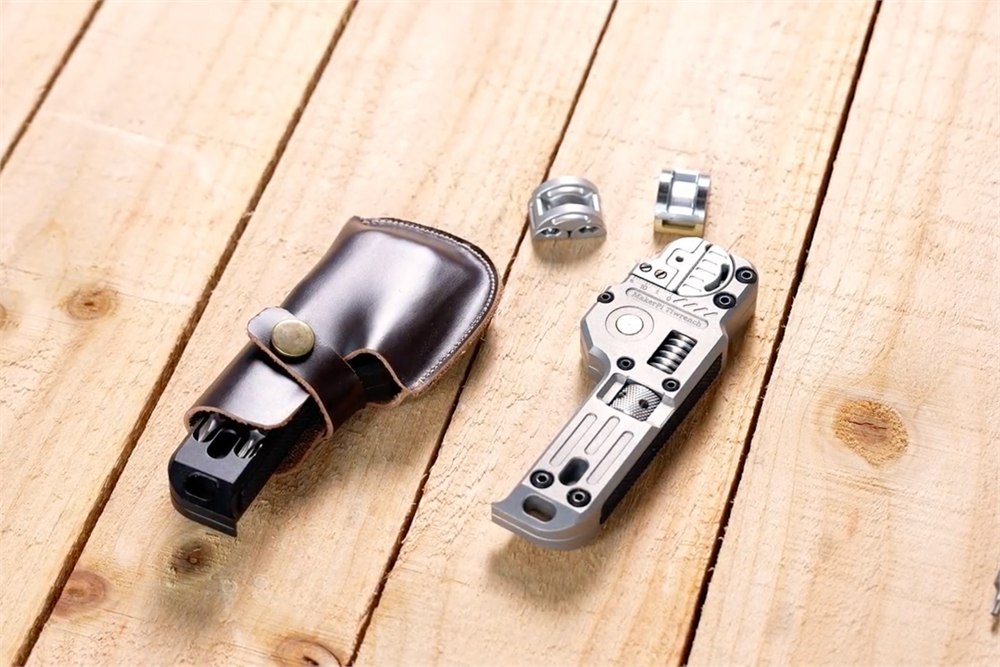
An optional leather sheath offers another way to carry the tool, and custom engraving is available as an add-on. That makes it an interesting gift for the person who already owns several perfectly adequate tools but still enjoys explaining why this particular mechanism is different. You know the person. They have a drawer organization system and opinions about it.
Aluminum or titanium, with the same central trick
The black version uses a 7075 aluminum body, while the silver version uses Grade 5 titanium. Both use stainless-steel jaw components and retain the same interchangeable-jaw concept. The decision is about material preference and the chosen package, rather than unlocking the basic clamping idea by picking the more premium body.
Before backing, think about the work you actually do. Someone regularly assembling models or finishing small printed pieces has an obvious use case. Someone trying to replace a large garage vise has a different shopping list. The charm is the compact, adaptable arrangement, not an ability to ignore scale.
Keep these details in mind:
- Product: MakerPi Tiwrench locking adjustable wrench and compact workholding tool.
- Main feature: Worm-drive adjustment designed to resist unwanted jaw movement.
- Jaw choices: Flat, single-level adaptive, and dual-level adaptive structures, with accessories varying by package.
- Body choices: Black 7075 aluminum or Grade 5 titanium.
- Useful extras: Quarter-inch mounting thread, two magnetically stored bits, grip pads, and measurement markings.
- Availability: A Kickstarter project with estimated delivery in February 2027.
At the time of writing, the campaign displays aluminum rewards from approximately US$119 and titanium rewards from approximately US$189, with planned retail prices of US$188 and US$268 respectively. Reward availability, shipping, add-ons, and currency conversion can change the total. February 2027 is an estimated delivery date, and backing a crowdfunding project carries production and delivery risk rather than the certainty of buying an in-stock tool.
Product details come from MakerPi’s campaign. Inline product photos are credited to MakerPi via New Atlas. Your third hand still has not grown, but at least your workshop can start interviewing mechanical substitutes.
| Pros | Cons and considerations |
|---|---|
| Combines wrenching and compact workholding. | Does not replace a full-size bench vise. |
| Adjustable jaws address several small-part shapes. | Extra jaw types and contact materials depend on the package. |
| Worm drive is designed to resist back-driving. | Performance claims come from the maker, not our hands-on testing. |
| Mounting thread supports fixture setups. | A suitable stable support is needed for mounted use. |
| Two body materials and optional accessories. | Crowdfunding delivery remains an estimate. |
Save this find.
Thank yourself later.
Your next great gift idea. Your someday space. Your collection of wonderfully weird things.
Save to PinterestPick a board. Keep the inspiration.
This Locking Adjustable Wrench Doubles as a Tiny Fractal Vise
Where to find This Locking Adjustable Wrench Doubles as a Tiny Fractal Vise
OddityMall may earn a commission from qualifying purchases at no extra cost to you.