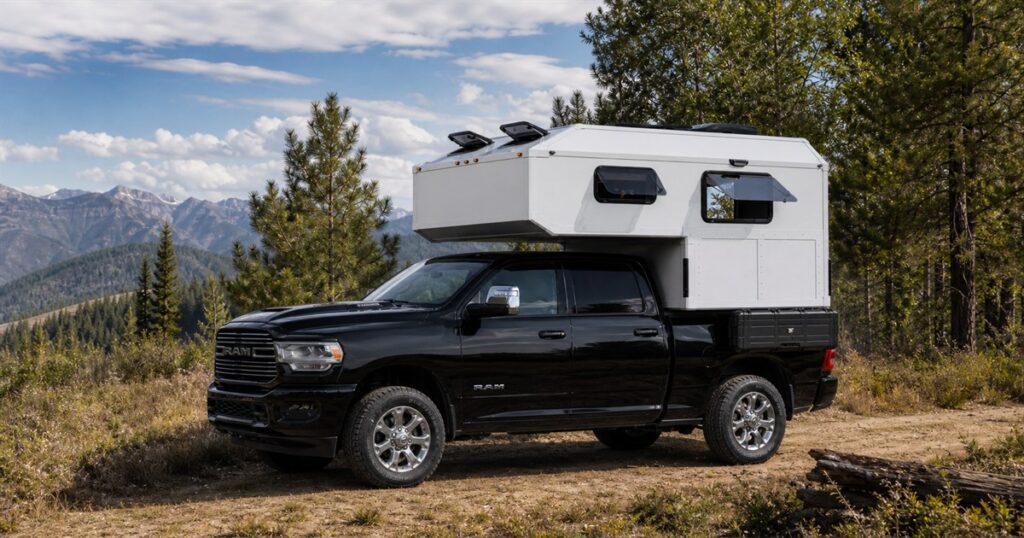
There are two kinds of people in this world: people who pack for a weekend trip in one duffel bag, and people who look at a pickup truck and think, yes, that could become a legally mobile bedroom with walls, windows, heat, water, and just enough cabinetry to start arguing about mugs.
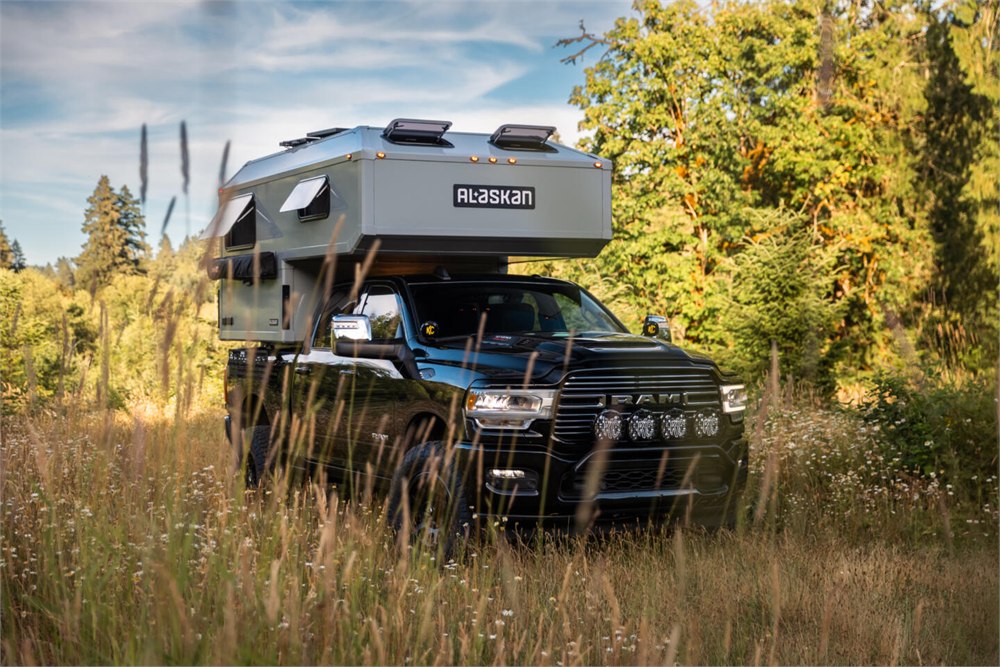
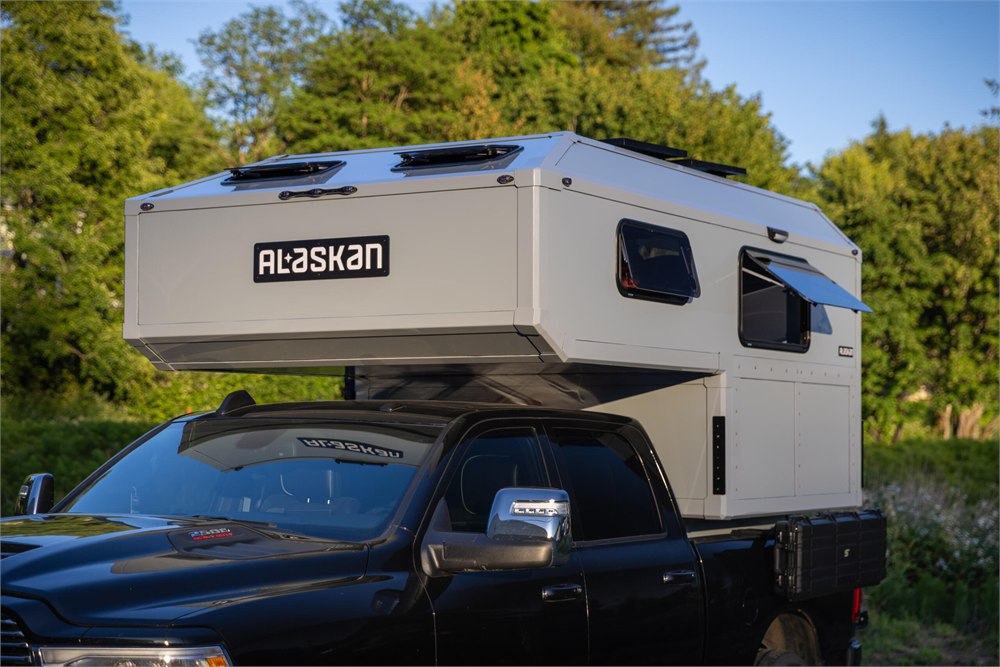
The Alaskan HS 640 is a lightweight composite hard-side truck camper made for anyone who wants the snug little-cabin feeling of a fixed-wall camper without immediately graduating to a giant heavy-duty truck and a driveway full of financial weather patterns. It is Alaskan Campers’ first fixed hard-side camper in decades, and it is built as a new platform rather than a remix of the brand’s classic pop-up campers.
That matters because truck campers usually come with a very specific personality: charming, capable, and one spec sheet away from making you discover the word payload at 1:00 a.m. The HS 640 is Alaskan’s attempt to keep the part everyone wants, the go-anywhere little house in the bed of a truck, while shaving down the weight and complexity that can push half-ton pickup owners out of the conversation.
Instead of wood-framed nostalgia wearing a new hat, the HS 640 uses structural composite panels and a patent-pending aluminum and PVC hybrid frame. The walls use 1.5-inch structural insulated panels with high-density PIR foam and fiberglass skins, giving the shell R-11 thermal performance while keeping the build largely non-organic and rot-resistant. In plain human language: it is trying very hard not to become a soggy sandwich after a few seasons of weather.
A hard-side camper for people who still want their truck to be a truck
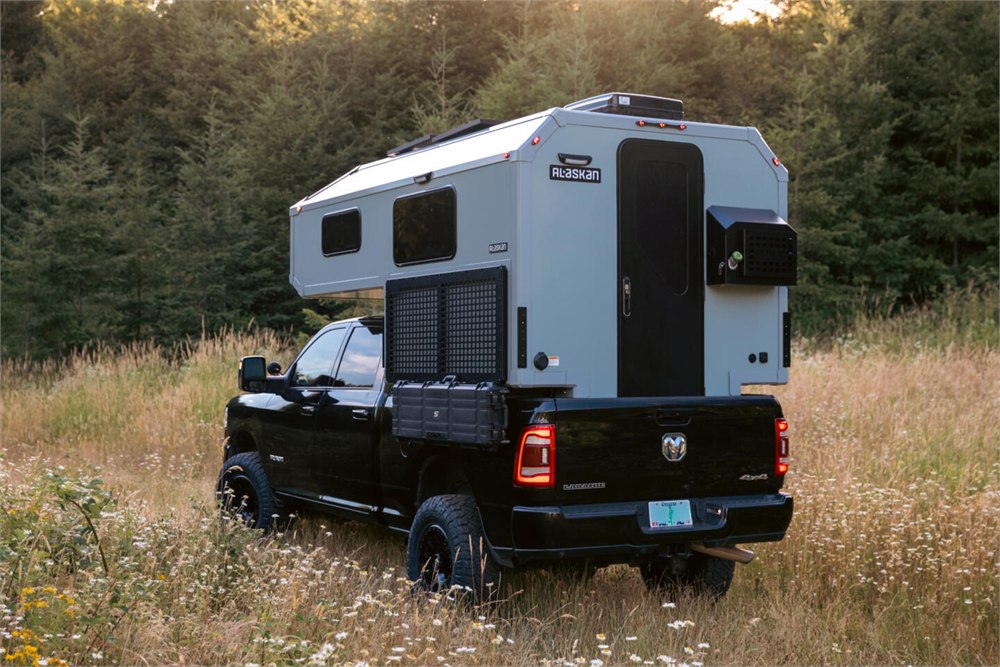
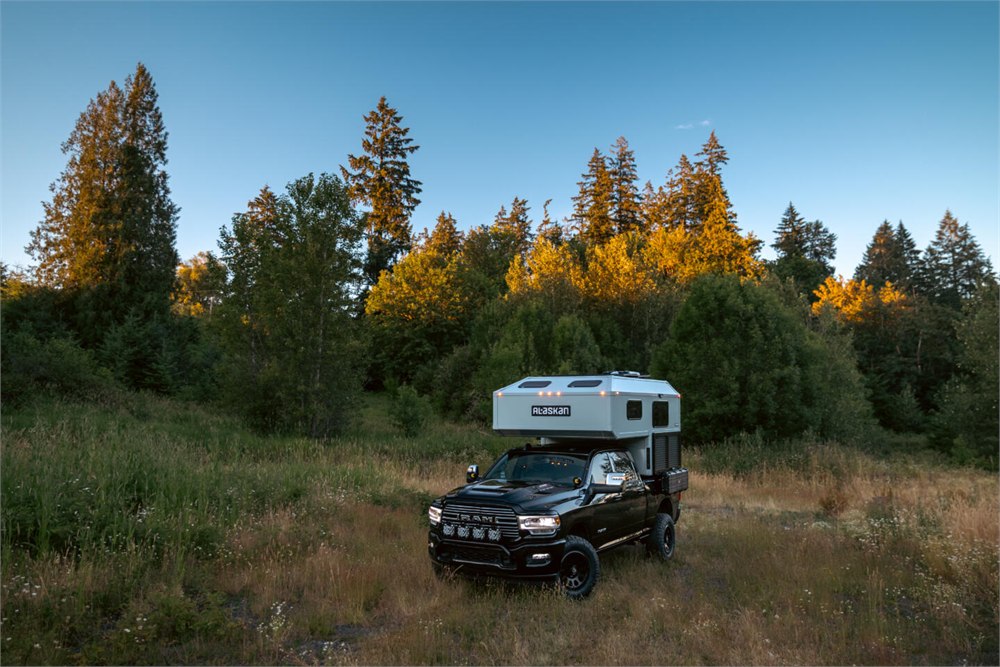
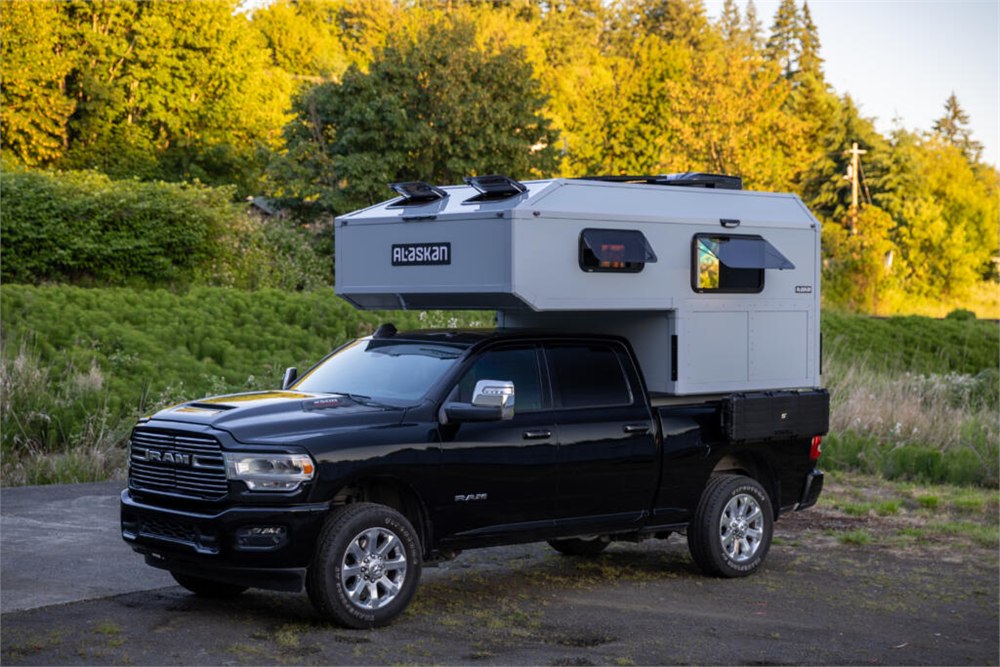
Alaskan says the HS 640 is designed to fit a wider range of trucks, including many half-ton pickups, and to allow the tailgate to close on many standard 6.5-foot beds from Toyota, Ford, Ram, and Chevy models. That last detail is not just a packaging flex. A closed tailgate means the whole setup looks more finished, more compact, and less like your truck is permanently sticking its tongue out.
The camper is a non-slide hard-side model for short-bed trucks, with an interior floor length of 5 feet 8 inches, interior height of 6 feet 5 inches, and a center of gravity about 24 inches behind the front wall. Truck Camper Magazine reports a loaded Layout 2 weight of 1,976 pounds, which puts the HS 640 in that tantalizing zone where the conversation becomes less about whether a camper is theoretically wonderful and more about which truck can realistically carry it.
The HS 640 also goes propane-free, which is a tidy little plot twist in a category that often treats propane as a sacred campground candle. Instead, the setup can include systems such as a diesel heater, tankless water heater, induction cooktop, solar, lithium batteries, and other off-grid options through Alaskan’s configurator.
In actual use, the appeal is simple: hard walls when the weather gets rude, a compact footprint when trails and parking lots get judgmental, and enough interior structure that you can make coffee without balancing your entire breakfast plan on a sleeping bag.
- Composite-panel shell: built around lightweight, fire-resistant structural panels with R-11 wall performance.
- Short-bed focus: designed for many standard 6.5-foot pickup beds, with the tailgate closed in many compatible setups.
- Two layouts: Layout 1 emphasizes seating, while Layout 2 adds a full-height cabinet for more storage.
- Propane-free direction: available equipment centers around diesel heat, induction cooking, lithium power, and water-system options.
- Small-cabin energy: it keeps the truck camper fantasy compact instead of turning every grocery run into a convoy.
The cabin is compact, but not punishment-based
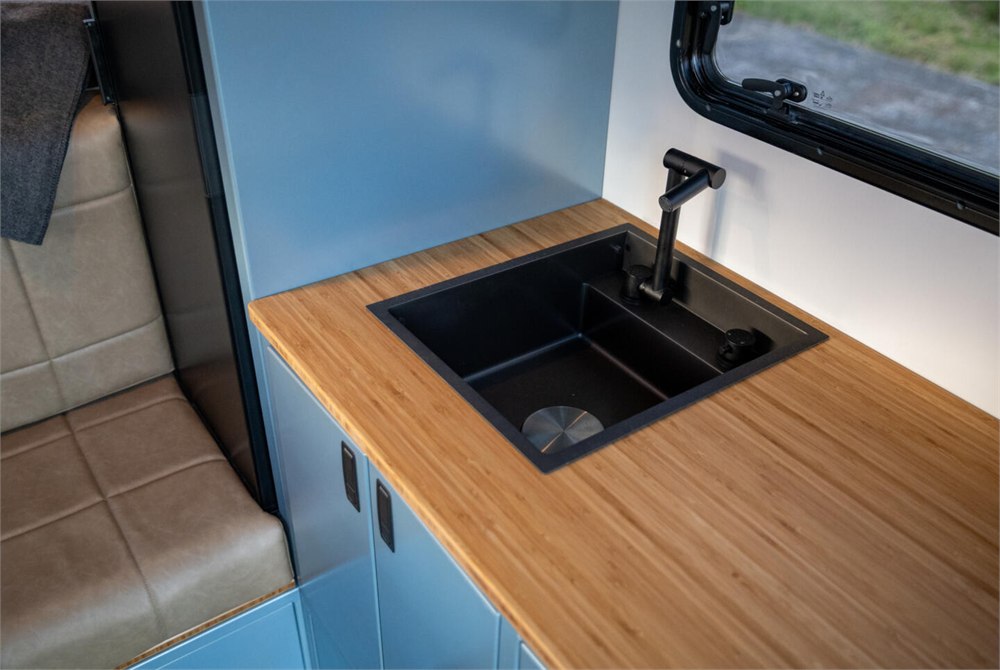
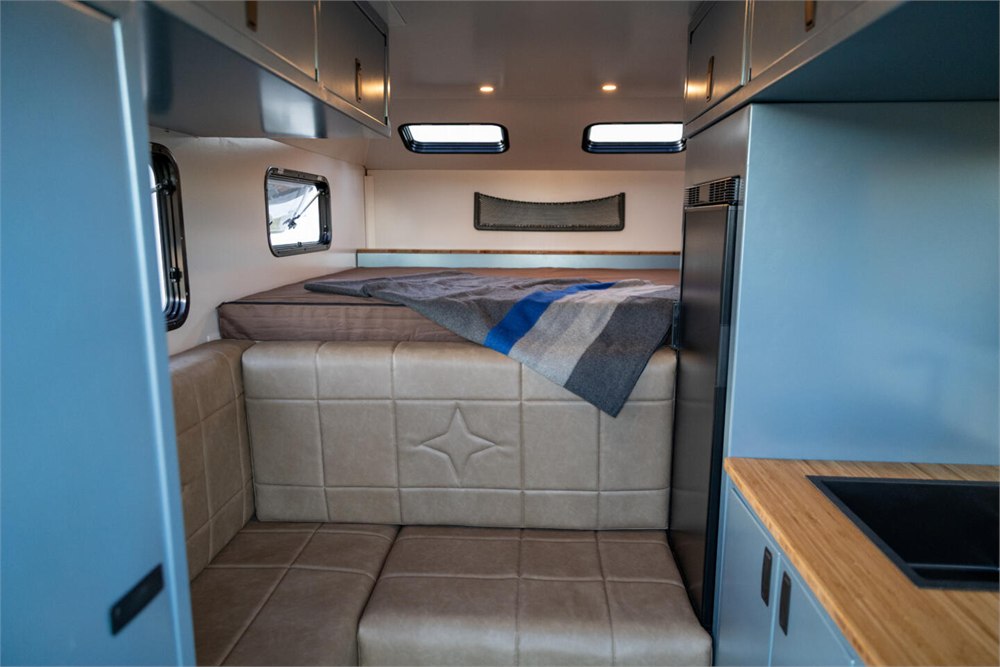
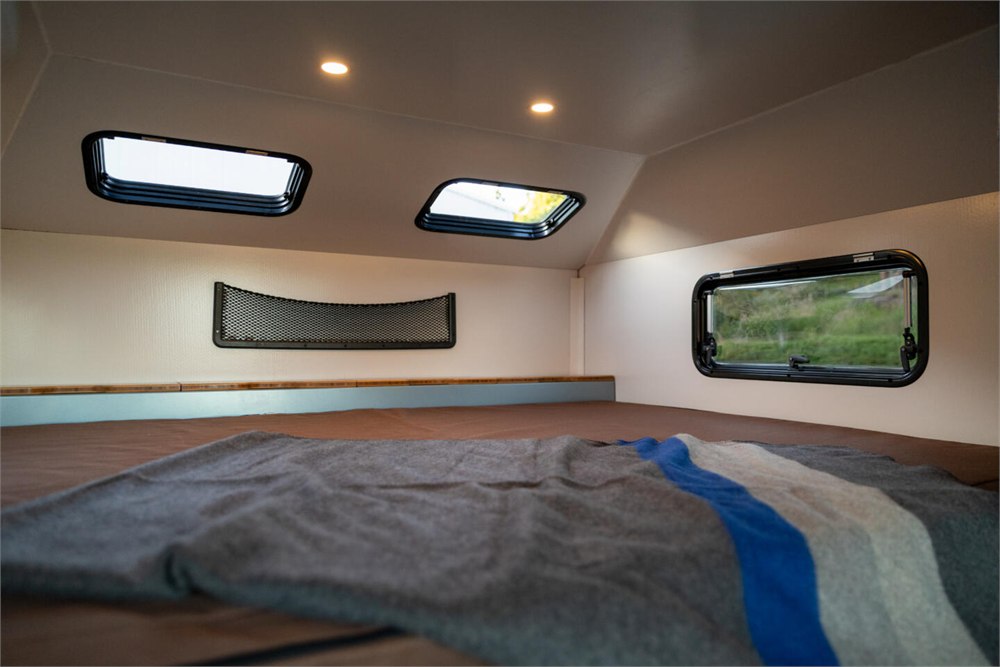
The interior is where the HS 640 starts to feel less like a rugged storage box and more like a tiny off-grid room that has seen an adult use a tape measure. Layout 2, the version shown in many of the first production photos, includes a cabover bed, seating, a galley counter, cabinetry, windows, roof hatches, and space for the kind of little routines that make camping feel less like voluntary inconvenience.
| Detail | Verified HS 640 information |
|---|---|
| Camper type | Hard-side, non-slide truck camper for short-bed pickups |
| Interior floor length | 5 feet 8 inches |
| Interior height | 6 feet 5 inches |
| Fresh water | 15-gallon fresh tank |
| Construction | Composite panels with fiberglass skins and high-density PIR foam |
| Reported Layout 2 loaded weight | 1,976 pounds |
The galley can be configured with an induction cooktop, sink, water filtration, tankless water heater, and indoor/outdoor shower options. There is also an optional portable toilet, because the difference between a charming remote campsite and a survival documentary is often one private bathroom solution.
Alaskan also lists roof-mounted and portable solar options, extra battery choices, air conditioning wiring and equipment options, MOLLE panels, a ladder, awning, fridge, and other add-ons. This is where the camper becomes a choose-your-own-adventure book written by someone who owns a torque wrench and has opinions about amp-hours.
Why this is more than a box in a truck bed
The HS 640 is interesting because it is not chasing the largest possible camper. It is chasing a very specific sweet spot: fixed walls, four-season-minded construction, lighter materials, and enough civilized interior function to make short trips feel comfortable without requiring a massive truck build.
That also explains why the product feels so OddityMall-adjacent. It is a tiny house that refuses to be a tiny house. It is a camper that knows some of us want adventure, but only after establishing where the sink is. It is for people who like the outdoors but still believe sleeping inside an insulated rectangle is one of humanity’s finer achievements.
There are practical limits, of course. A truck camper still has to match the payload, bed size, center of gravity, tie-down setup, and real-world loading of the truck beneath it. Nobody should buy one on vibes and then ask the suspension to participate in a miracle. The HS 640 broadens the target, but it does not delete math.
Still, the fixed hard-side format gives it a different kind of personality than a soft pop-up. It looks more like a miniature expedition cabin and less like a tent doing paperwork. For cold mornings, gusty campsites, and people who want to wake up without folding their house before breakfast, that is a very persuasive shape.
Key details before you start measuring your truck bed with suspicious excitement
Alaskan Campers lists the HS 640 through its official site and configurator. The base setup starts at ,495 for Layout 1, while Layout 2 is listed at ,995. Options can raise the total depending on power, heat, solar, water, bathroom, fridge, and exterior equipment choices. Truck Camper Magazine reported the production debut on July 7, 2026, with orders open for September deliveries.
- Product: Alaskan HS 640 composite hard-side truck camper
- Maker: Alaskan Campers
- Best for: short-bed pickup owners who want fixed camper walls in a lighter package
- Notable construction: composite insulated panels, fiberglass skins, and hybrid thermal-break frame
- Power/comfort direction: propane-free setup with lithium, solar, diesel heat, and induction options
- Listed price: ,495 for Layout 1 and ,995 for Layout 2 before options
- Availability: listed by Alaskan Campers with orders open for September deliveries
If your dream weekend involves disappearing into the woods while still having a real bed, hard walls, a sink, and a camper that does not look like it was sized by committee, the HS 640 is worth a long stare. It is basically a compact cabin that rides in the truck bed, which is a deeply reasonable idea wrapped in a slightly unreasonable amount of want.
| Pros | Cons |
|---|---|
| Composite hard-side shell is lighter than traditional heavy camper construction. | Still requires careful payload and truck compatibility checks. |
| Designed for many short-bed pickups with the tailgate closed. | Options can push the final cost well beyond the base layout prices. |
| Propane-free approach supports modern off-grid power and heating setups. | Small camper footprint means every storage choice still matters. |
| Interior includes real sleeping, seating, galley, window, and hatch function. | Not a replacement for a large RV if you want roomy full-time living space. |
| Fixed walls should feel more weather-ready than soft-sided camping. | Availability depends on Alaskan’s production schedule and chosen layout. |
| Classic truck-camper idea gets a modern material rethink. | Truck camper ownership still involves tie-downs, loading, and weight math. |
Where to find This Lightweight Hard-Side Truck Camper Brings Four-Season Walls To Half-Ton Pickups
OddityMall may earn a commission from qualifying purchases at no extra cost to you.