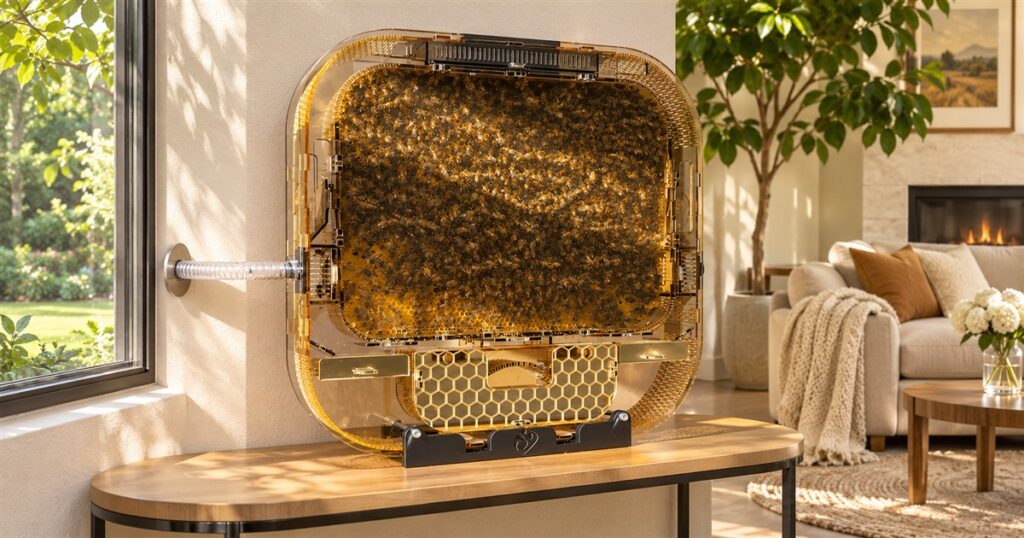
Most wall decorations sit there quietly while you pay the mortgage. This one contains several thousand tenants with wings, a queen, and a work ethic that makes your afternoon nap look deeply questionable. The Symbiotic 3026 is an indoor observation beehive designed to put a living colony behind a sealed viewing face, with a tube connecting its tiny society to the outdoors.
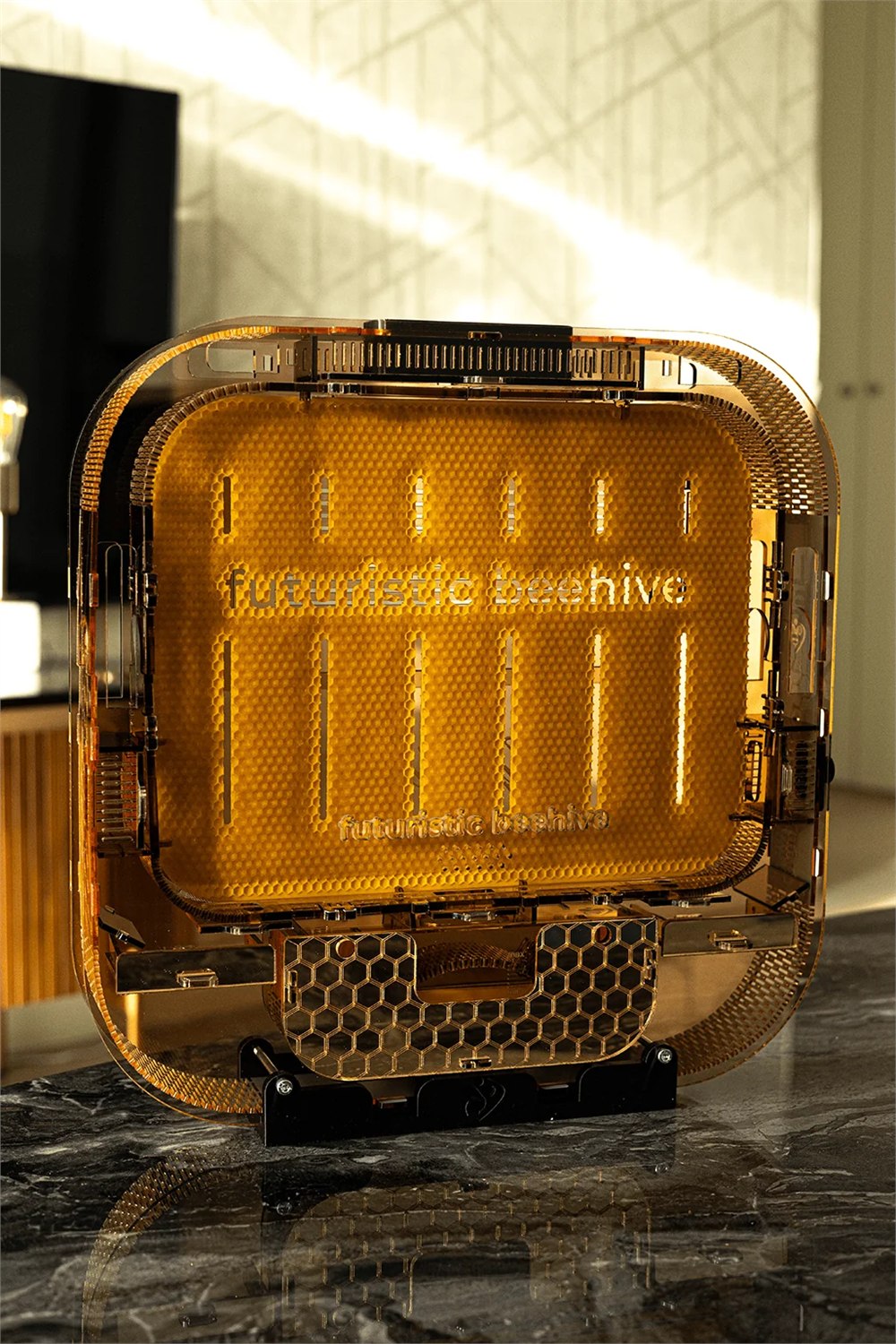
Made by Futuristic Beehive, the rounded square enclosure looks a little like a gold record awarded for outstanding service to flowers. Inside is space for a nucleus colony. Outside is your home, where you can watch the bees without turning the entire room into their departure lounge.
The distinction matters. These are real bees, with real care needs and an outdoor foraging route. You are buying a hive, then arranging the colony separately. It is an unusual way to bring beekeeping closer to everyday life, but it is still beekeeping. Your new wall art has responsibilities attached.
A living display with its own entrance
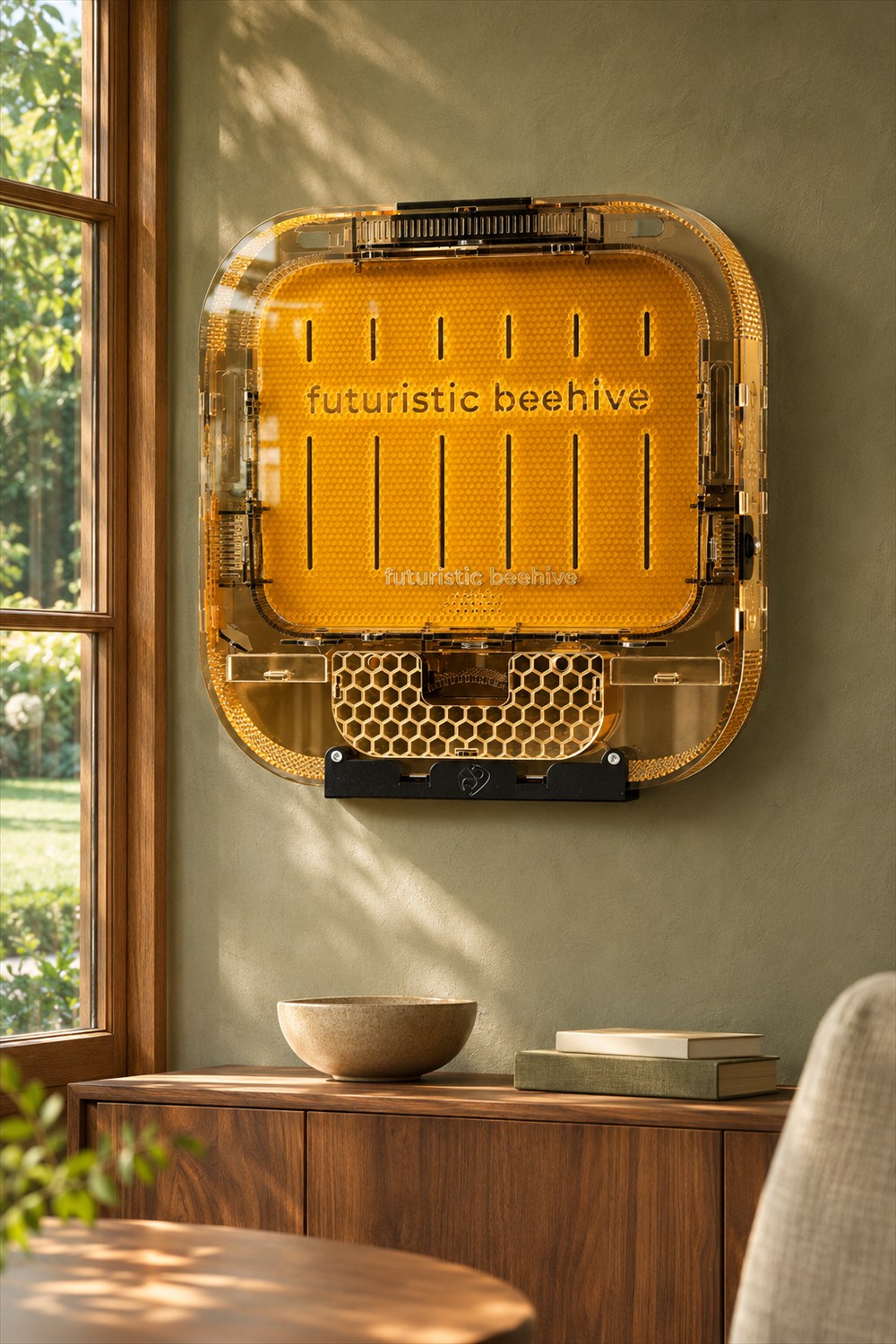
The basic layout is easy to understand. The hive mounts on an interior wall that has an exterior side. A 20 mm opening accommodates the entrance tube, letting the bees leave and return without using the room as their flight path. The viewing face stays sealed from the living space.
That makes watching the colony the central attraction. Instead of seeing a wooden box outside and imagining all the activity within it, you get a view of the inhabitants going about their business. There is something wonderfully humbling about eating toast while a whole other civilization is already halfway through its morning.
Related posts:
 This Indoor Beehive Connects To Any Window With a Tube, Offers Incredible Views
 These Innovative Bee Bricks Install On Your Home, Provide a Safe Environment For Bees To Nest
 This Spilt Honey Pot Cat Bed Is The Perfect Napping Spot For Your Kitty
 Your Cat Probably Needs This Wall-Mounted Bubble Window Bed
The seller describes a foraging range of up to five kilometers. That is a description of the bees’ potential travels, not a boundary fence or a promise about where they will find flowers. Their doorway may be in your wall, but their working day happens beyond it.
Gold, honeycomb, and a surprisingly slim profile
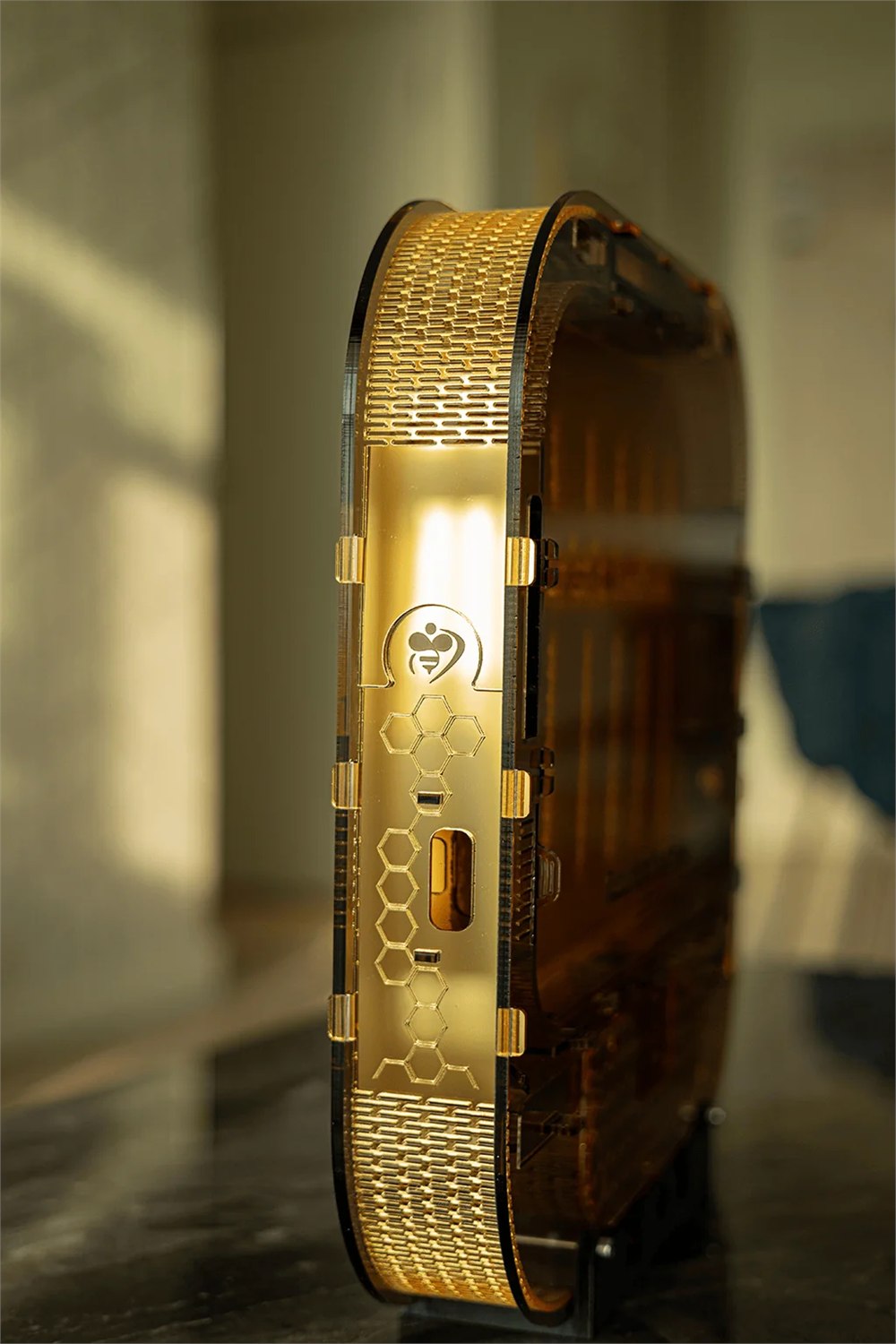
The enclosure measures 43 by 43 by 8 centimeters. Its broad face gives you something substantial to look at, while the shallow depth keeps it from resembling a cupboard full of insects. Rounded corners, translucent amber tones, and honeycomb details give the housing a deliberate decorative presence.
Futuristic Beehive lists gold and dim bronze finishes. The gold version in its photographs catches light across the layered edges and patterned lower section. It is conspicuous in exactly the way a conventional observation hive usually is not. Nobody is going to mistake this for the thermostat.
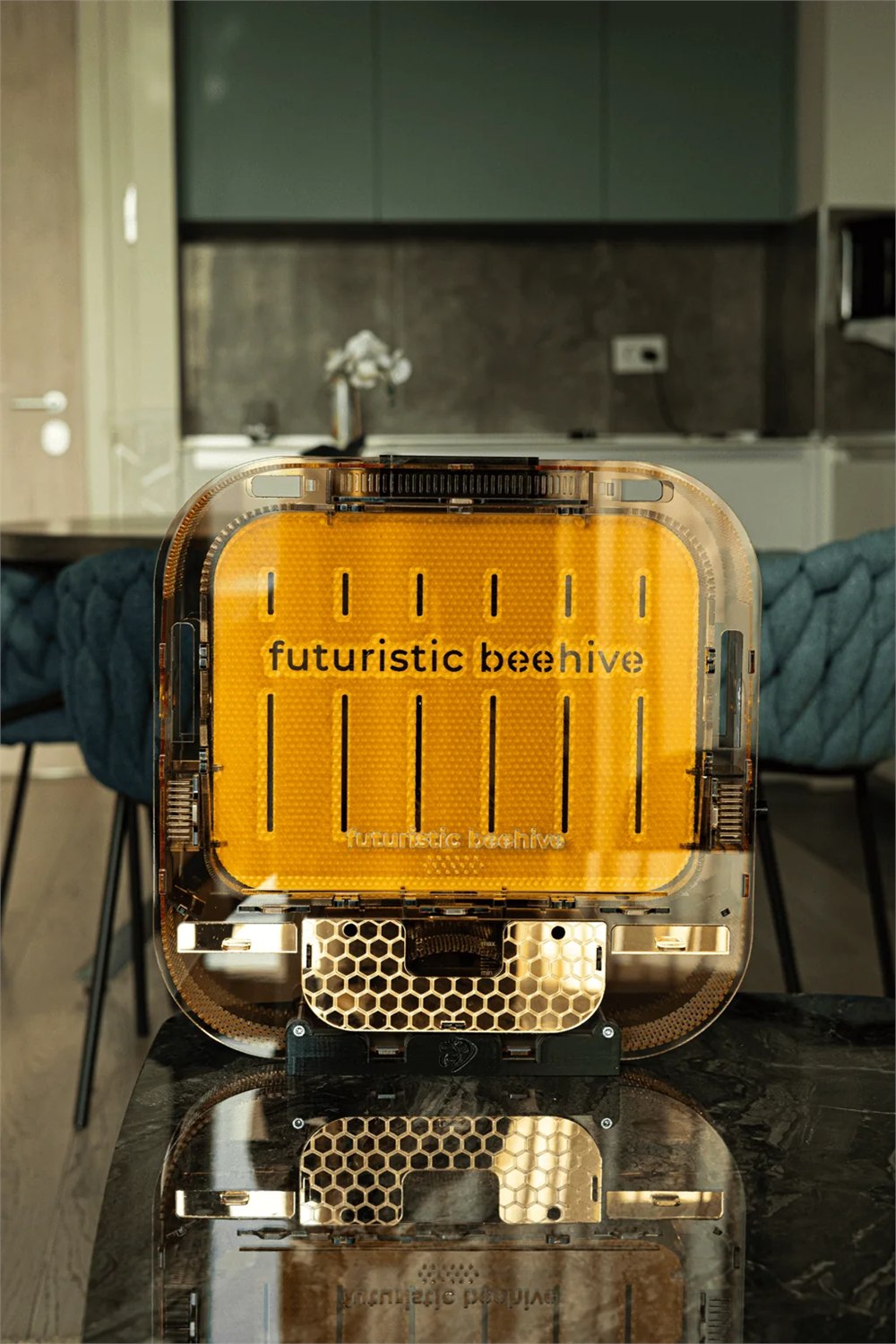
The official photographs also show the empty enclosure, which is useful for understanding the construction before the residents move in. Once a colony is installed, the visual appeal changes: the hardware becomes a frame for living activity rather than the entire show. Think less static ornament, more very specialized nature channel.
What the setup actually involves
The company estimates about 20 minutes for mounting, but that estimate covers the physical installation, not the whole process of becoming responsible for a colony. Choosing the location, arranging the bees, and getting help with their introduction are separate parts of the project.
- Choose an appropriate wall: the indoor location needs an outdoor route for the entrance tube.
- Plan the opening: the stated tube opening is 20 mm, and the maker recommends sealing around it.
- Arrange the colony separately: a local beekeeper introduces the bees; they do not arrive in the hive shipment.
- Allow for ongoing care: the seller describes feeder refills, periodic checks, and seasonal steps.
- Consider access and placement: the maker advises keeping the installation out of small children’s reach.
This is the point where an impulse purchase becomes a conversation with someone who knows bees. A local beekeeper can help you understand what the colony will need in your setting. That is a much better starting point than assuming a handsome enclosure makes the inhabitants self-managing.

Renters also have a practical issue to settle before drilling. A small hole is still a hole, and a dedicated outdoor entrance is a permanent enough detail to discuss with the property owner. The product’s footprint is compact; the decision deserves a little more space.
| Detail | What the maker lists |
|---|---|
| Enclosure dimensions | 43 × 43 × 8 cm |
| Outdoor connection | Tube through a 20 mm wall opening |
| Finish choices | Gold or dim bronze |
| Colony type | Nucleus colony, arranged separately |
| Honey collection | Funnel, removable tray, and jar arrangement |
| Routine involvement | Feeding, checks, and seasonal care |
The funnel is interesting; the bees set the schedule
The 3026’s headline addition is its honey collection system. The maker describes a funnel that directs honey toward a removable tray. You slide the tray out and put a jar in its place. It is a tidy concept, and considerably more interesting than another kitchen container that promises to organize your other containers.
What it does not establish is a guaranteed supply of honey. Futuristic Beehive explicitly says the amount depends on climate, season, and colony strength. There is no fixed yield to build your breakfast budget around. A jar is a collection vessel, not a subscription agreement signed by the queen.
It makes sense to appreciate the observation side first. Watching the colony is the feature that gives the hive its unusual place in a room. Honey collection adds another dimension, but the care of the living colony remains part of the arrangement regardless of what reaches the jar.
For the person who watches the garden more than the television
This has an obvious audience among people fascinated by bees, design, and the workings of small living systems. It could be an absorbing addition to a home where someone actually wants to take on that interest. It is a less convincing surprise gift for a person whose preferred relationship with insects is through a closed window.
The sealed viewing face and outdoor tube are important design features, but they should not be treated as a universal safety guarantee. Choosing a suitable location and understanding the installation belong in the buying decision. The maker also advises checking local requirements before setting up a hive.
Nor is this the kind of decor you can forget about for six months and rediscover during spring cleaning. The seller describes an accessible entry point for beginners, with support available, while still specifying feeding and seasonal care. Beginner-friendly and responsibility-free are very different things, particularly when the decoration is alive.

Product photography: Futuristic Beehive.
The key details before the bees move in
- Indoor observation hive with a sealed viewing face and an outdoor entrance tube.
- 43 × 43 × 8 cm housing offered in gold or dim bronze.
- A 20 mm wall opening connects the colony to the outdoors.
- Bees are purchased separately and introduced by a local beekeeper.
- The 3026 includes a funnel and removable-tray honey collection arrangement.
- Honey yield varies, and feeding, checks, and seasonal care remain necessary.
The Symbiotic 3026 is listed at $599 through Futuristic Beehive’s official store at the time of writing. Shipping is calculated at checkout, and applicable import duties are separate. The company advertises tracked DHL Express delivery, with a stated transit estimate of three to five working days. Confirm the details for your destination before ordering.
The bees are not included in that price. That is probably the most important fine print in the entire purchase, because this is one parcel you do not want to open while wondering whether the contents have already elected a monarch. Plan the colony and its care first, then decide where your household’s busiest new neighbors should live.
| Pros | Cons and considerations |
|---|---|
| Lets you observe a living colony indoors | Requires ongoing care and suitable placement |
| Dedicated tube connects bees to the outdoors | Needs an exterior wall opening |
| Distinctive gold or bronze display housing | Its conspicuous style will not suit every room |
| Funnel and tray provide a honey collection arrangement | Honey output is variable, not guaranteed |
| Local beekeeper introduces the colony | Bees cost extra and must be arranged separately |
| Compact 8 cm enclosure depth | Location and local requirements still need checking |
Save this find.
Thank yourself later.
Your next great gift idea. Your someday space. Your collection of wonderfully weird things.
Save to PinterestPick a board. Keep the inspiration.
This Indoor Beehive Puts a Living Colony on Your Wall
At a glance
Product snapshot
- Listed price
- $599.00Prices and availability can change. Check the seller for current details.
- Where to find it
- Futuristic Beehive
- Category
- Home & Kitchen
Related posts:
This Indoor Beehive Connects To Any Window With a Tube, Offers Incredible Views
These Innovative Bee Bricks Install On Your Home, Provide a Safe Environment For Bees To Nest
This Spilt Honey Pot Cat Bed Is The Perfect Napping Spot For Your Kitty
Your Cat Probably Needs This Wall-Mounted Bubble Window Bed