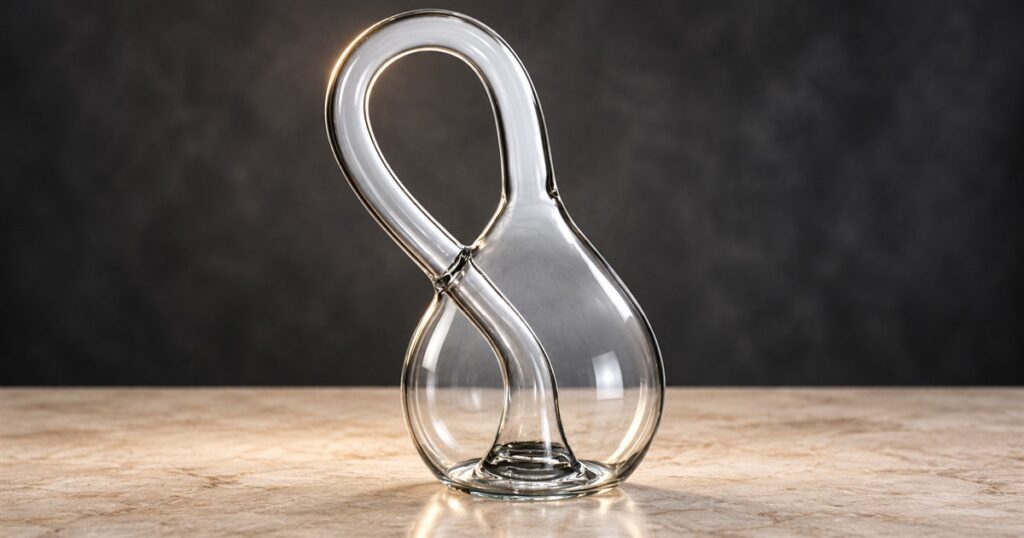
Most bottles have one job: keep the inside stuff from becoming outside stuff. This handmade glass Klein bottle has read the assignment, disputed the terminology, and requested a meeting with the mathematics department. Its neck loops around and dives through its own side, leaving you staring at a clear glass object that seems to have taken a wrong turn somewhere inside itself. Finally, a desk ornament that can make you feel underqualified without opening your email.
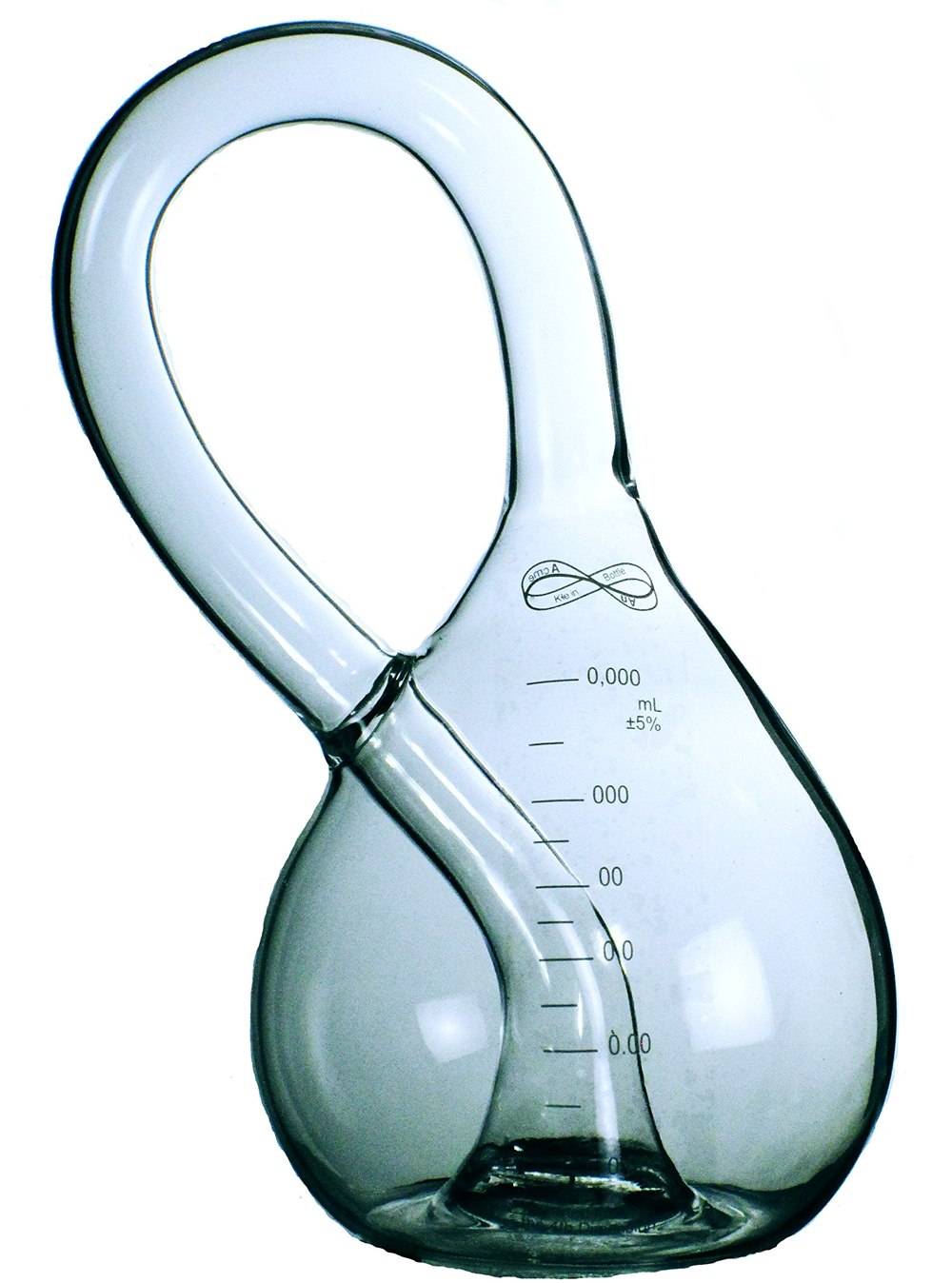
The piece comes from Acme Klein Bottle, Cliff Stoll’s wonderfully specific business devoted to putting mathematical weirdness on shelves. It is a physical glass model of a Klein bottle, a surface famous for refusing the ordinary distinction between inside and outside. You can enjoy the looping silhouette immediately. Understanding the topology may take longer, particularly if your most recent encounter with advanced mathematics involved splitting a restaurant bill.
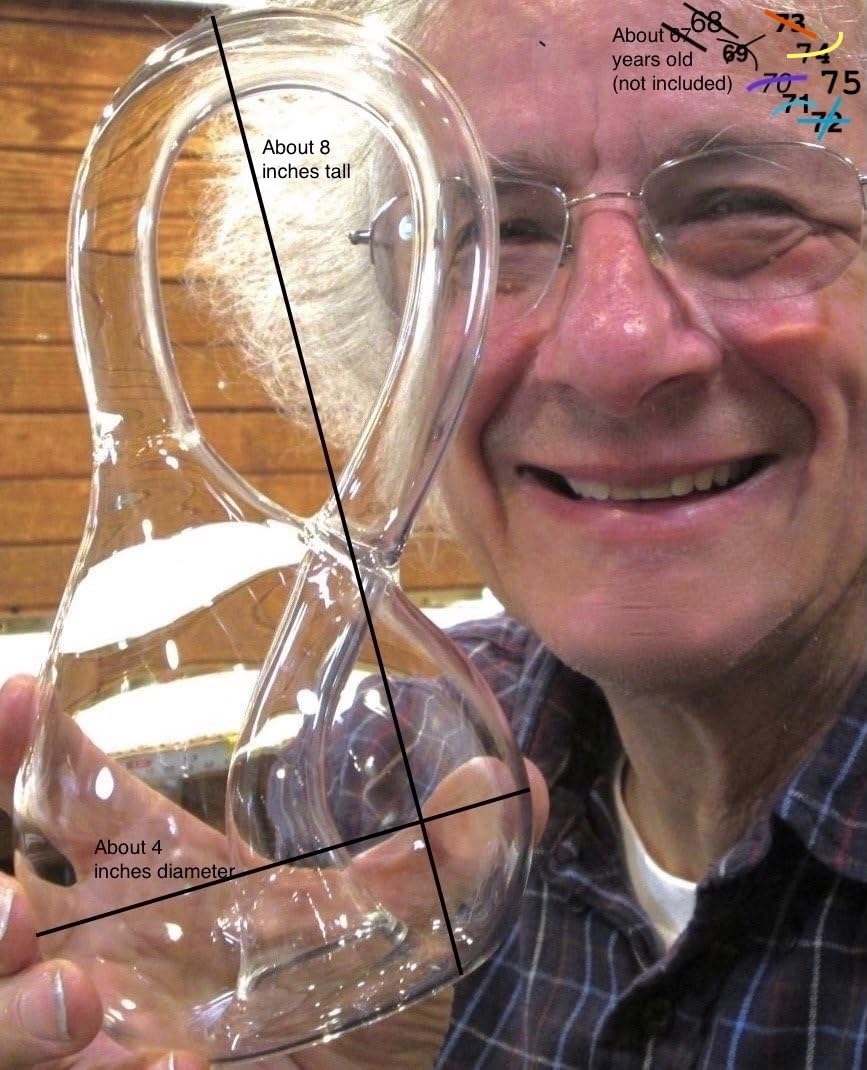
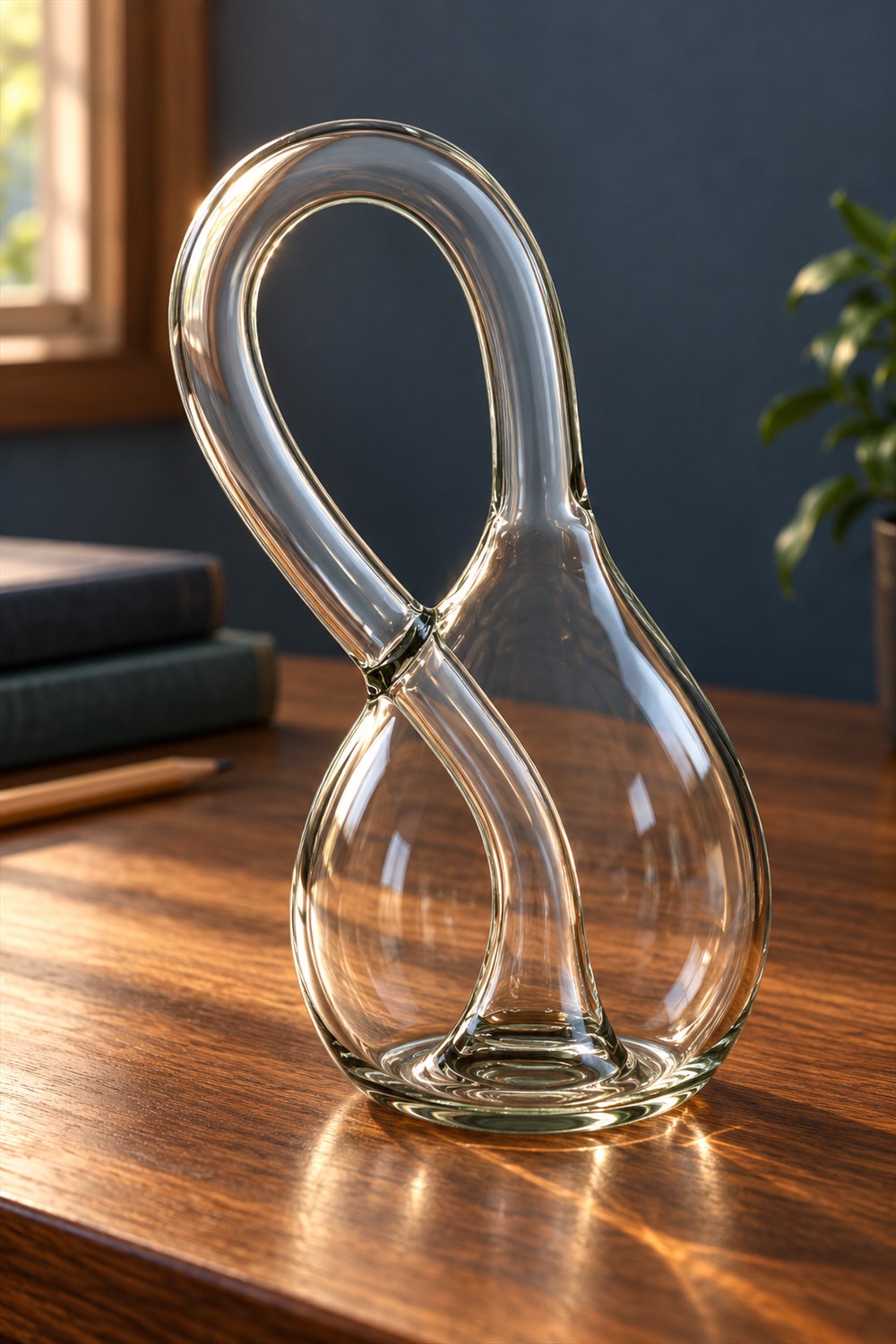
Visually, it lands somewhere between scientific glassware and a swan that has become entangled in a philosophical argument. The bulbous lower section gives it a grounded, sculptural presence, while the tall loop creates a big open space above it. Look through the clear body and you can follow the tube continuing down toward the base. That is the satisfying part: the apparent impossibility is right there in view, without a hidden motor or an app asking for permission to access your contacts.
The bottle is real. The fourth dimension is not included.
There is an important distinction behind the party trick. The mathematical Klein bottle is a two-dimensional, non-orientable surface without a boundary. It can be embedded without self-intersection in four-dimensional space, but not in ordinary three-dimensional space. Acme’s explanation of the shape describes its glass version as a three-dimensional representation. Where the neck meets the side, real glass has to make a physical connection. Your shelf has not secretly acquired another dimension.
That limitation actually gives you something useful to talk about. The sculpture shows how far a familiar material can take an unfamiliar idea, and exactly where the model needs a compromise. You do not need to pretend you understand every equation to appreciate it. Start by following the neck with your eyes. Then ask why a normal bottle needs a rim and this arrangement looks so different. Suddenly your decorative purchase has become a small seminar, and nobody has supplied biscuits.
Related posts:

A proper glass object with an improper sense of humor
The Amazon listing describes clear borosilicate glass, hand-blown construction, and approximate dimensions of eight inches tall by four inches across, with a weight around eight ounces. Handmade variation is part of the deal. Those measurements put it firmly in desk-display territory: substantial enough to notice, small enough that you do not need to reclassify the spare bedroom as a museum wing.
Acme is also unusually candid about the people behind the glass. On the company’s own site, Stoll explains that professional glassblowing shops now handle the hot-glass work, while he handles the rest of the business, from design to packing. So this is an Acme design sold by Stoll, not a promise that he personally blew your particular bottle between answering messages. That distinction is useful, and the finished shape does not become any less entertaining because somebody with proper equipment made it.
Where would it earn its shelf space? A few obvious places come to mind:
- A mathematics teacher’s desk, where it gives an abstract topic a visible starting point.
- A programmer’s bookshelf, beside all the books they absolutely intend to finish.
- A home office that needs something more interesting than another motivational plaque.
- A science-minded friend’s gift pile, especially if ordinary novelty mugs have exhausted their appeal.
It also works for people who simply like unusual glass. You can appreciate the negative space, the curved neck, and the reflections without defending a thesis. Not every guest needs the full explanation. Some will say, “That’s a strange bottle,” and move on. Others will remain in front of it for ten minutes, tracing imaginary routes and slowly forgetting why they entered the room.
What you are actually putting on the shelf
| Detail | What to expect |
|---|---|
| Material | Clear borosilicate glass |
| Approximate size | 8 inches tall, 4 inches diameter |
| Approximate weight | 8 ounces / 230 grams |
| Construction | Hand-blown; individual shape and dimensions vary |
| Included extras | Printed documentation and a removable calibration decal |
| Best role | Mathematical display, conversation piece, or gift |
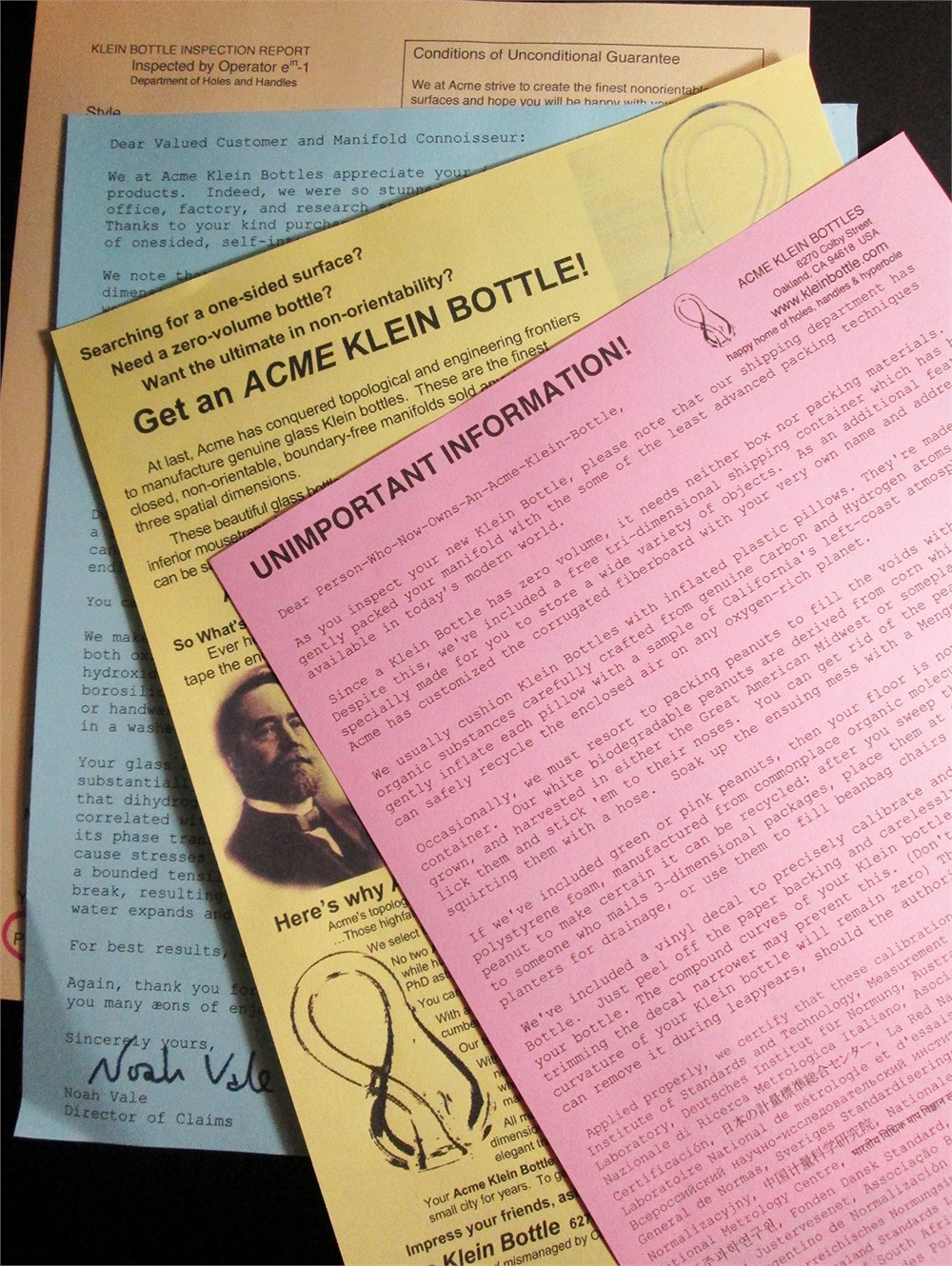
The printed material is part of the charm. A gift like this benefits from a little explanation, because otherwise the recipient may reasonably assume you have bought a severely confused decanter. The listing’s photographs show a collection of colorful accompanying pages. It is the sort of present that encourages someone to stop unwrapping, read something, and then return to examining the object with a more suspicious expression.
The maker’s glassworking description is satisfying in its own right. It describes shaping the reservoir from heated tubing on a scientific glass lathe, making the internal horn and outer loop, joining the sections, and annealing the finished piece. Seeing a tidy loop is one thing; thinking about the sequence of hot-glass operations required to build it is another. This is a strange shape that somebody has to make in the right order, not a drawing that can conveniently ignore its awkward joints.
Resist the urge to turn it into a drinks project
The “zero volume” language associated with Klein bottles belongs to the mathematical discussion, not a claim that this physical glass object cannot get wet. Acme explicitly says its model can hold water, while recommending that you keep it dry. Its care page explains that the limited air circulation can make drying frustratingly slow. Admiring the curves is the low-maintenance option. Creating a tiny trapped-water situation is the optional extracurricular activity.
That seems like sensible advice for a decorative object whose main talent is making ordinary spatial reasoning wobble. There are plenty of uncomplicated vessels available for juice, flowers, and the other things people normally put into glass containers. Let this one specialize. A clean, dry display also leaves the internal tube easier to see, which is the whole reason you invited this mathematical troublemaker into the house.
Placement deserves a little thought, too. This is still glass, regardless of how sophisticated its geometry sounds. Give it a stable spot away from a desk edge or an enthusiastic pet’s preferred launchpad. A plain background helps the outline show up, and a little side lighting makes the internal curves more legible. You are aiming for “interesting object worth examining,” not “transparent obstacle beside the coffee mug.”
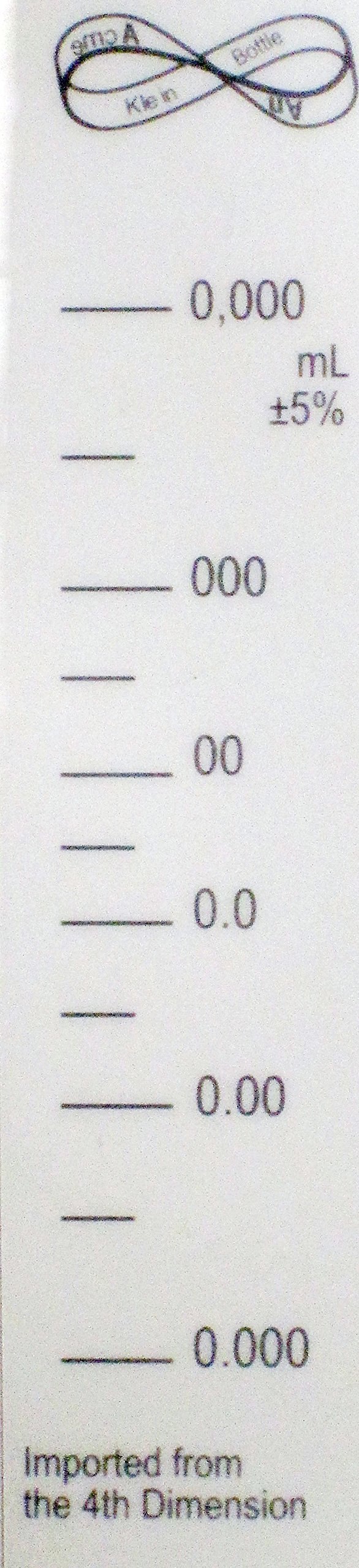
The removable calibration decal adds one more visual joke. Treat it as part of the presentation, not a reason to promote the bottle into laboratory measuring duty. The shape already invites enough questions on its own. With the decal removed, it can read more like a glass sculpture; with it attached, it leans harder into the mischievous science-gift personality. Either approach gives your visitors something better to discuss than the weather.
Images: Acme Klein Bottle’s Amazon product gallery.
The details before you adopt a mathematical oddity
- Acme’s handmade glass model makes a Klein bottle’s unusual form visible in three dimensions.
- The looped neck and internal tube are the central visual attraction.
- It is a display piece for curious adults, science enthusiasts, and classrooms.
- Keeping it dry avoids the awkward cleaning and drying problem.
- The model illustrates the idea; it does not reproduce a self-intersection-free four-dimensional embedding.
The Amazon listing showed an offer at $94.00 at the time of writing, with availability and seller options subject to change. That makes it a considered science gift rather than a throw-in stocking filler. For someone who loves beautiful objects with a difficult question attached, though, this has a strong case. Most ornaments just sit there. This one sits there and quietly challenges your entire understanding of “in there.”
| Pros | Cons |
|---|---|
| Distinctive looping glass sculpture | Breakable, so placement matters |
| Invites a hands-on discussion of an abstract idea | The three-dimensional model has a physical compromise at the side junction |
| Documentation helps explain the gift | Not everyone wants mathematics with their decor |
| Interesting display without power or electronics | Water inside can be awkward to clean and dry |
| Handmade character | Exact proportions vary between pieces |
Save this find.
Thank yourself later.
Your next great gift idea. Your someday space. Your collection of wonderfully weird things.
Save to PinterestPick a board. Keep the inspiration.
This Handmade Glass Klein Bottle Turns a Mathematical Puzzle Into Desk Art
Where to find This Handmade Glass Klein Bottle Turns a Mathematical Puzzle Into Desk Art
OddityMall may earn a commission from qualifying purchases at no extra cost to you.