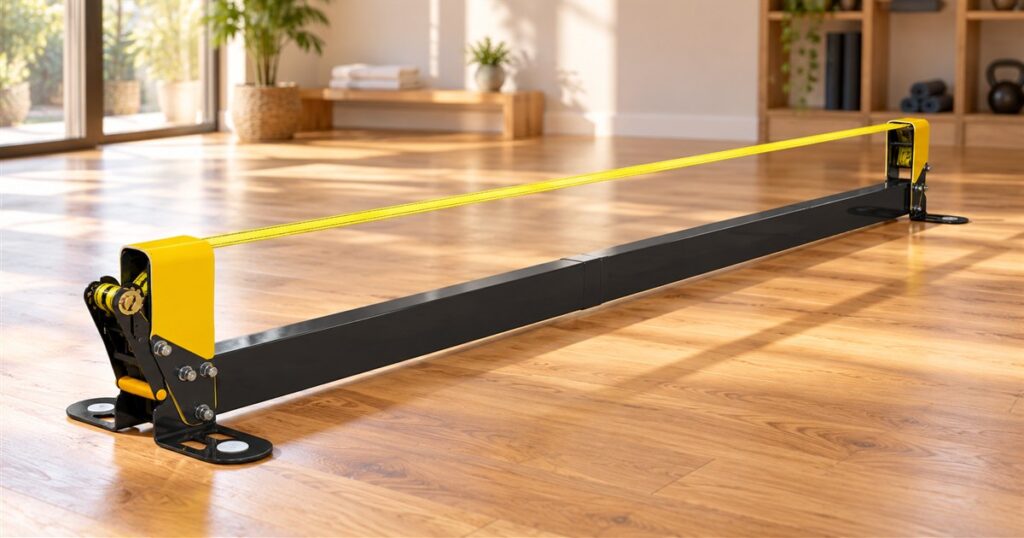
Walking across your living room is usually a pretty low-stakes activity. You avoid a charging cable, negotiate with a dog, and arrive at the couch feeling reasonably qualified to have legs. The GIBBON Slackrack Classic would like to reopen that assessment. It puts a narrow, wobbly walking line on its own metal frame, giving your feet a tiny obstacle course without requiring two trees to grow through the floor.
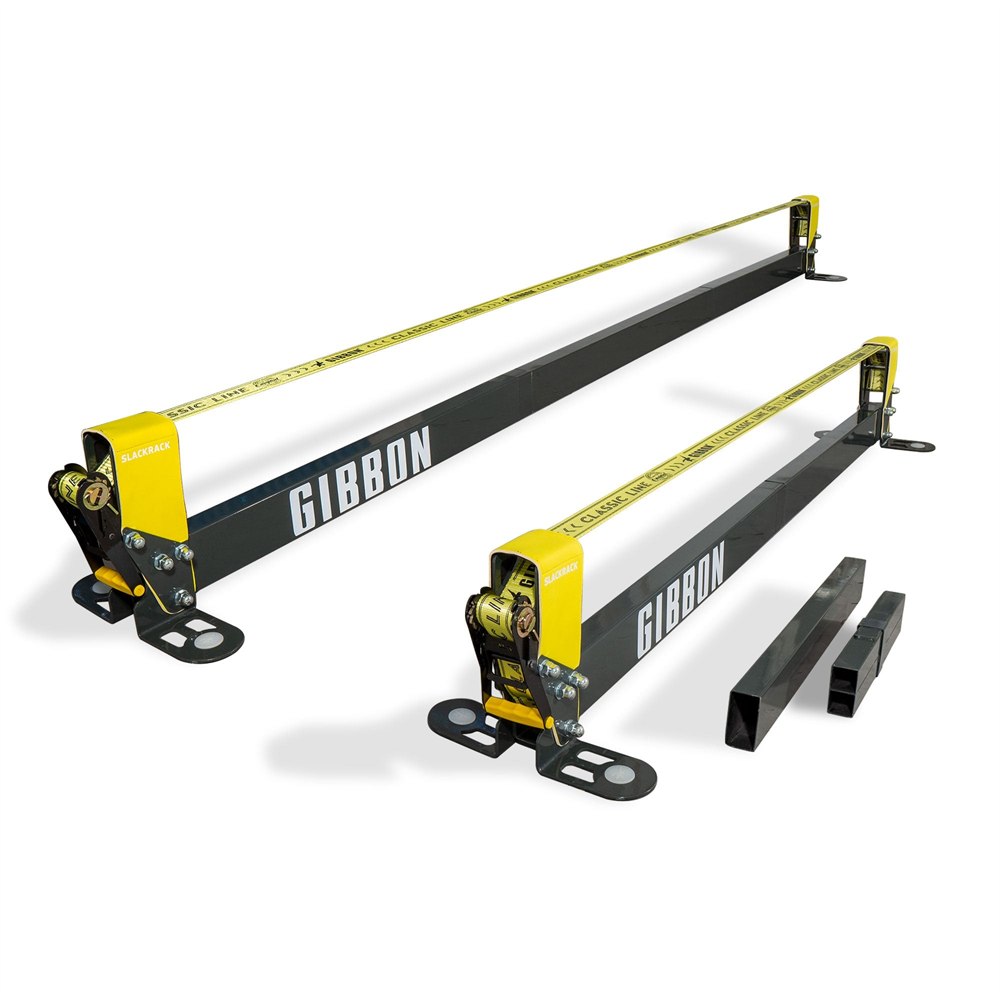
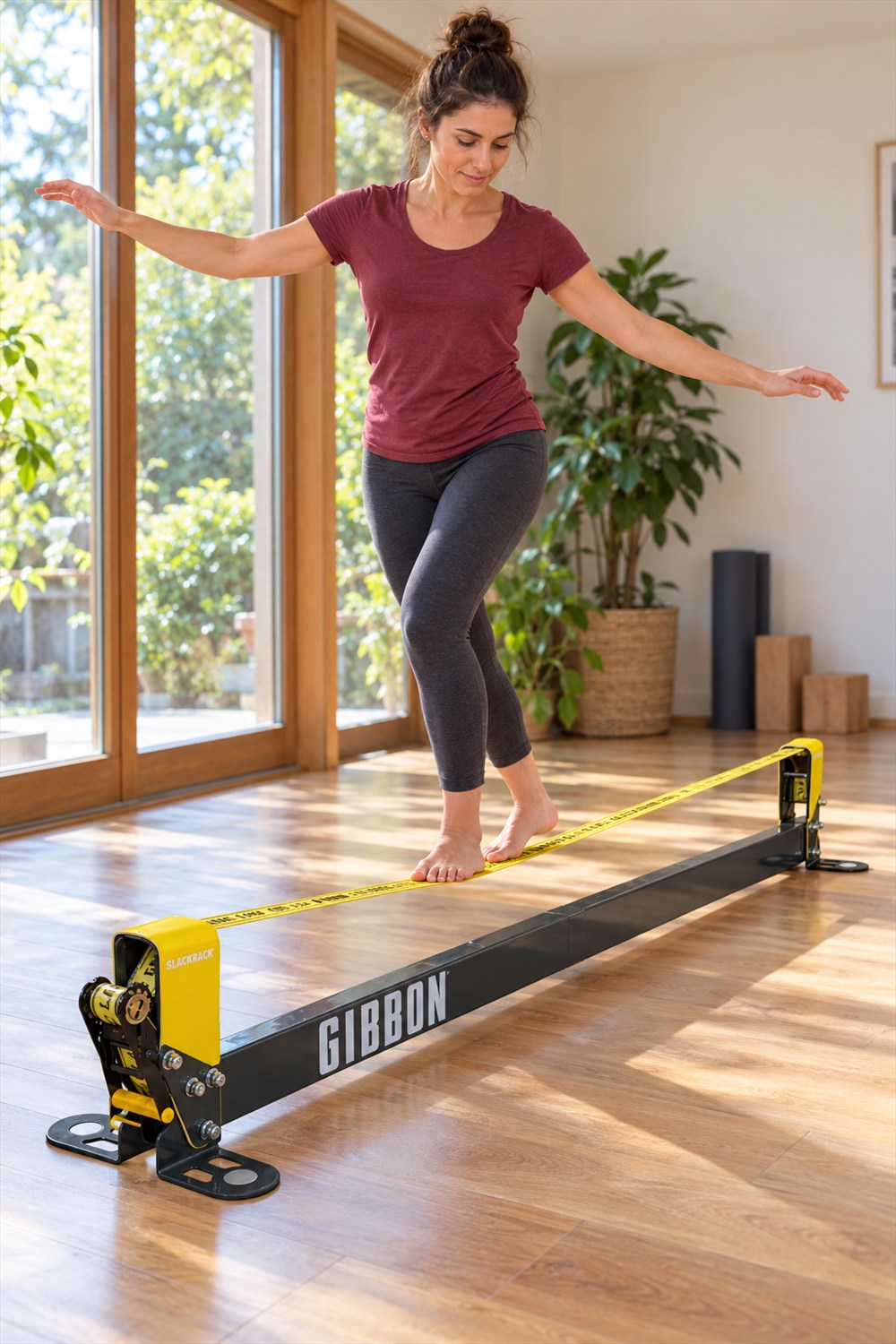
This freestanding slackline rack brings the balancing part of slacklining indoors, with the anchors already built into the structure. A yellow strip of flat webbing stretches between two raised ends above a long black beam. You step onto the line, try to remain upright, and discover that standing still can become an extremely absorbing hobby.
The appeal is refreshingly physical. There is no screen to stare at while pretending to exercise, no imaginary mountain to unlock, and no leaderboard announcing that someone named Gary has already completed seventeen sessions before breakfast. There is a line. There are your feet. Negotiations begin immediately.
A slackline that brings its own anchors
A conventional slackline needs somewhere suitable to attach it. That can make a casual practice session depend on your yard, the park, or the availability of two appropriately placed trees. The Slackrack solves that particular problem with a self-contained metal base. The frame holds the tensioned webbing, so the room does not need to audition as a forest.
GIBBON offers two setup lengths within the three-part structure: 2 meters or 3 meters. The Amazon listing rounds those to 7 and 10 feet. The shorter arrangement is useful when space is limited, while the longer arrangement gives you more line to work with. Neither configuration is something you tuck between the coffee table and a pile of shoes without measuring first.
Related posts:
 This Over The Sink Dish Drying Rack and Storage Area Is Perfect For Tiny Homes
 This Cute Baby Activity Chair Helps Them Learn About Space And The Solar System
 You Can Now Prepare For Valentine’s Day Properly With a Creepy Practice Make Out Pillow
 This Reclining Gravity Balance Chair Lets You Lay Down Or Kneel Forward To Work
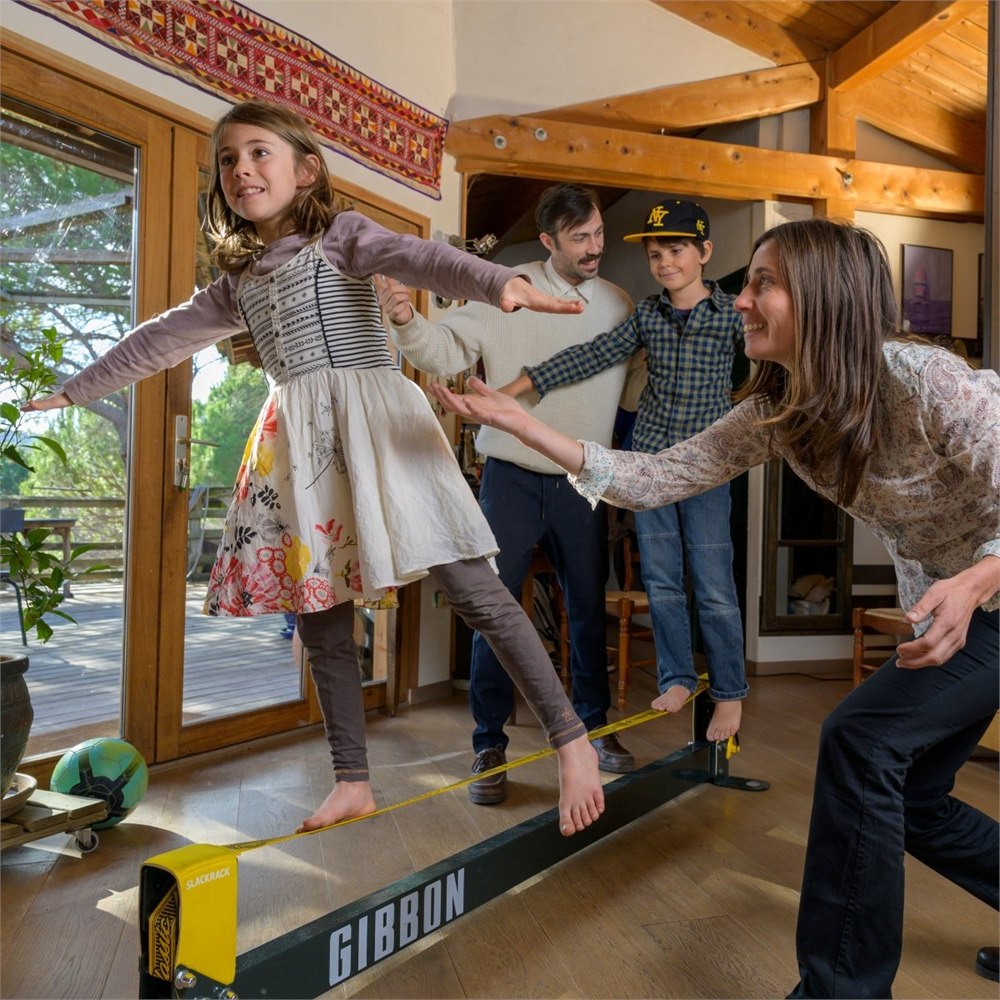
Think of it as a small activity zone rather than another piece of shelf equipment. The rack itself occupies a long, narrow footprint, but the person wobbling on it needs room around it. Elbows do not always respect the dimensions printed on a product listing. Clear space matters just as much as finding a place where the beam fits.
The same basic arrangement can be used indoors or outdoors. That makes it interesting for a home exercise room, a suitable recreation space, or a backyard practice spot. It also means a rainy day does not automatically cancel the activity. Your balance, unfortunately, will have to find a different excuse.
Simple-looking equipment, surprisingly busy feet
The line is flat webbing rather than a rigid balance beam. GIBBON specifies a width of 50 millimeters, or about 2 inches, and a rack height of 30 centimeters. That low setup makes the whole thing look approachable, but it does not turn the line into a sidewalk. The movement underfoot is the point.
For somebody new to slacklining, even a brief attempt at standing can be its own challenge. There is something satisfyingly direct about equipment that makes progress visible in small moments: a steadier stance, a more controlled step, or simply less frantic arm windmilling. You do not need a heroic athletic backstory to understand what you are trying to do.
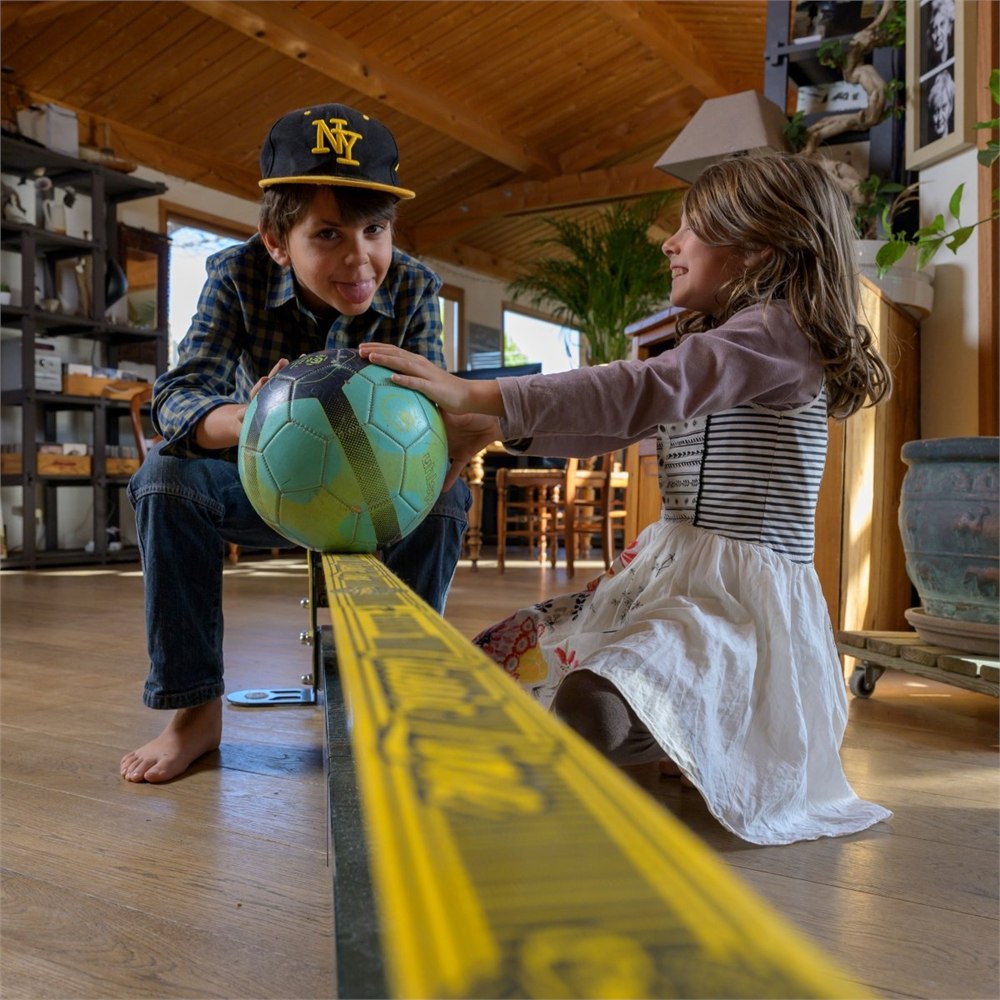
The format also suits people who enjoy learning a physical skill in short sessions. Having the rack assembled in a suitable space removes the need to find anchors each time you want to practice. That convenience is the main attraction. It cannot promise you will become coordinated, but it can make the opportunity to practice considerably harder to blame on logistics.
- Home practice: A freestanding frame creates a slackline spot without wall fixtures or trees.
- Two configurations: Choose the 2-meter or 3-meter setup to suit the available space.
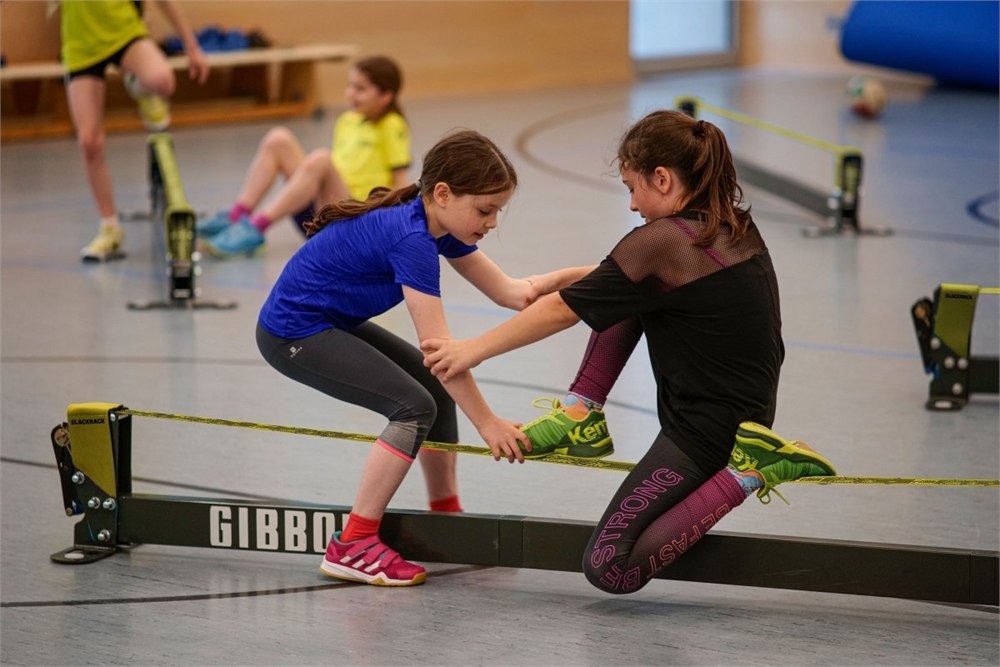
- Shared activity: The product is marketed for kids and adults, with appropriate supervision and use of the instructions.
- Indoor or outdoor placement: Pick a suitable clear area rather than organizing the session around natural anchors.
- Repeat attempts: An assembled rack can make short practice sessions easier to fit into the day.
The frame does the practical work
The rack uses powder-coated metal, with a black base and yellow ends that make the actual line easy to spot. GIBBON describes a setup that uses one type of screw and estimates assembly at about 15 minutes. Treat that as the maker’s estimate, not a timed challenge against the person holding the instruction sheet.
Underneath, rubber feet are intended to reduce shifting and protect the floor from scratches. The manufacturer describes the stands as replaceable. Those are useful details on a product that is meant to live in actual rooms, where the flooring may be considerably more precious than your current personal record.
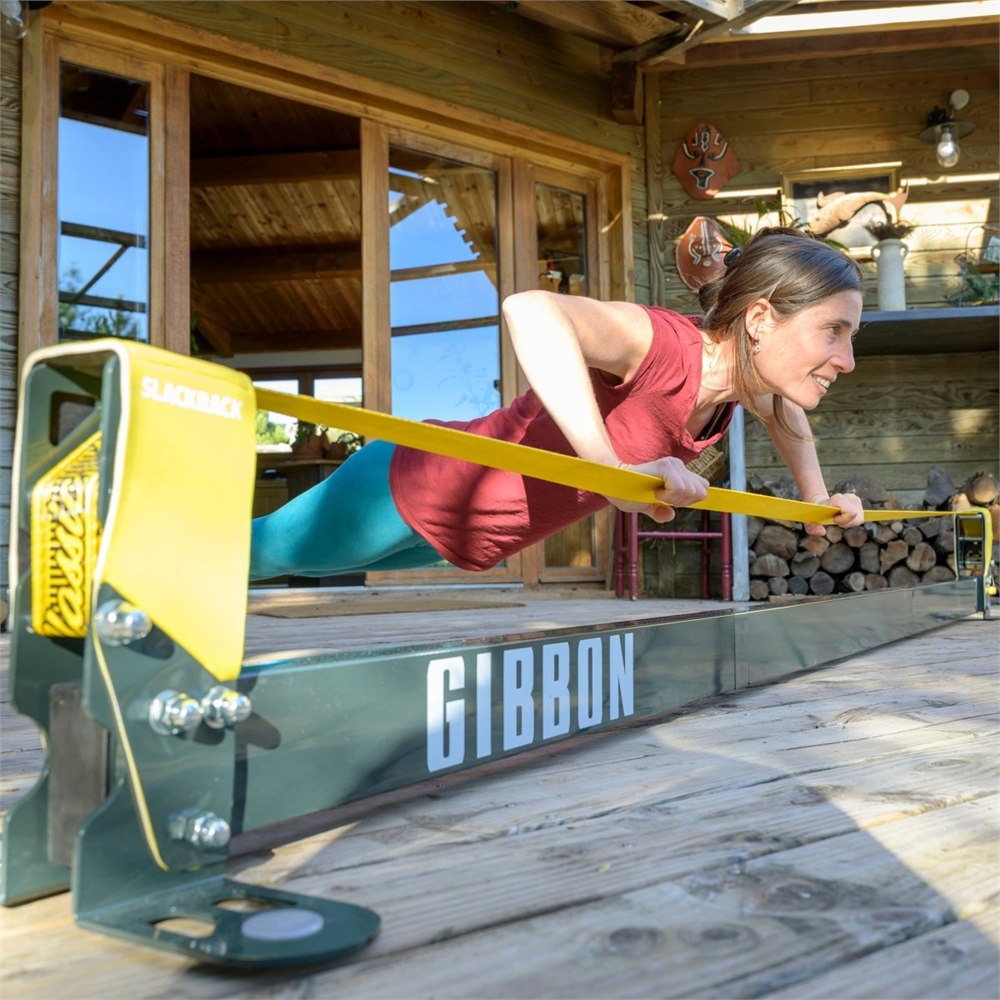
Tension comes from a ratchet, with a safety lock and marked touch-safe areas. The set also uses neoprene protective pads. These are reasons to read and follow the setup instructions carefully, not reasons to treat the mechanism casually. A tensioned line is working equipment, even if its ultimate purpose is making your family cheer when you manage a few steps.
| Detail | Slackrack Classic specification |
|---|---|
| Structure | Freestanding, three-part metal frame |
| Setup length | 2 m or 3 m; Amazon lists approximately 7 ft or 10 ft |
| Line width | 50 mm / approximately 2 inches |
| Rack height | 30 cm |
| Materials | Powder-coated metal, polyester webbing, neoprene pads |
| Floor contact | Rubber feet intended to limit shifting and scratching |
| Assembly estimate | About 15 minutes, according to GIBBON |
Who has room for a miniature balance mission?
This is an appealing idea for somebody who wants a dedicated slackline setup and does not have convenient outdoor anchors. It could also suit a household that likes activity equipment people can take turns trying. The entertainment is fairly self-explanatory, and the learning curve supplies plenty of material without anyone having to invent complicated rules.
It is less convincing as an impulse purchase for a cramped apartment. Even the shorter configuration needs a real section of floor, and an assembled rack will remain an object you must walk around when you are not walking on it. Measure the intended spot, think about storage, and account for the people who still expect to cross the room normally.
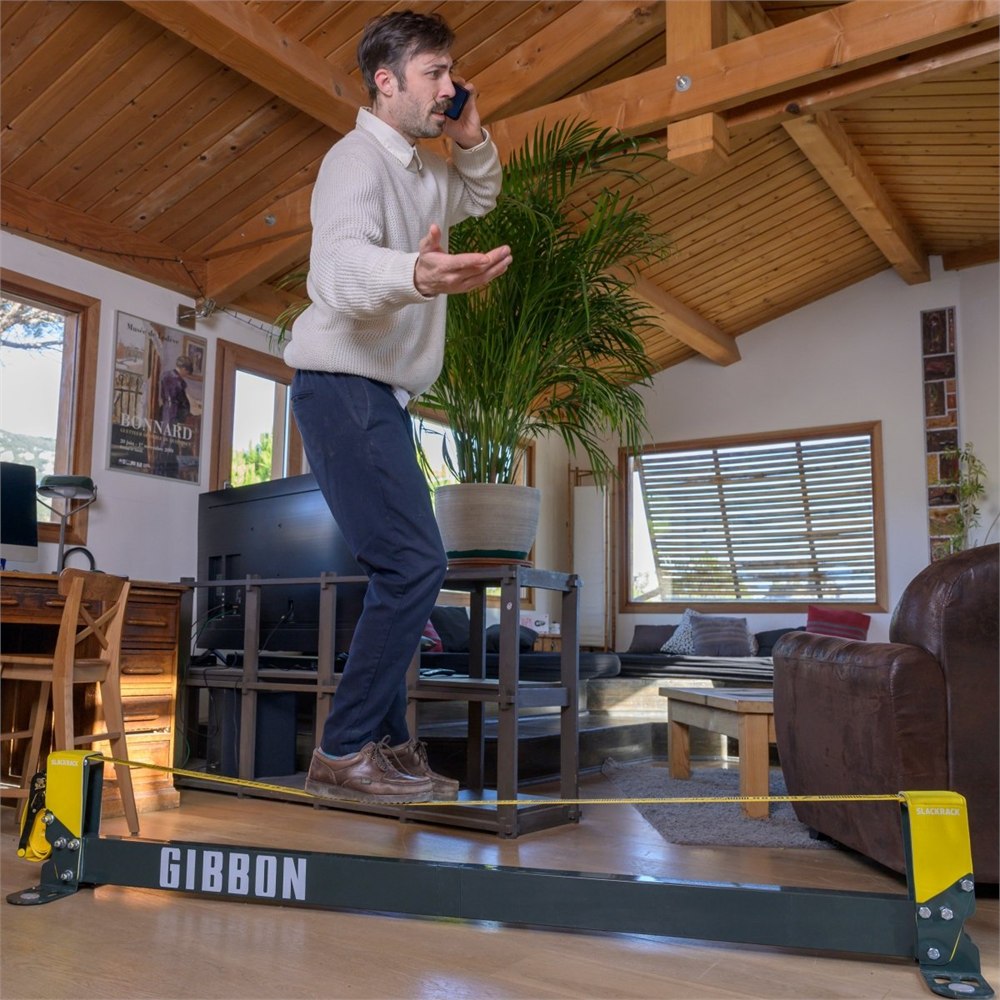
It is also worth being clear about what kind of experience this is. A short freestanding line is a compact place to practice, not a substitute for every outdoor slacklining setup. Someone who specifically wants long traverses will have different priorities. The Classic’s charm is that it takes one focused activity and makes a self-contained place for it.
For family use, keep the space clear and follow the manufacturer’s guidance on setup, supervision, and suitable use. The low height does not eliminate the possibility of losing balance. You can enjoy the comedy of your arms suddenly becoming helicopter blades without arranging a coffee-table landing zone beside them.
The key details before you clear the floor
- Product: GIBBON Slackrack Classic freestanding slackline.
- Main advantage: It supplies its own frame, so no trees or external anchors are needed.
- Setup choices: 2-meter and 3-meter configurations.
- Walking surface: Approximately 2-inch-wide flat webbing.
- Construction: Powder-coated metal with rubber feet and protective pads.
- Best fit: A suitable home, recreation, or exercise space with clearance around the rack.
- Main compromise: A substantial footprint for a short practice line.
The Slackrack Classic was listed at $499.99 on Amazon at the time of writing, with GIBBON shown as the seller and shipper and an in-stock offer available. Price and availability can change. Make sure you are selecting the Classic rack rather than a standalone slackline kit or one of the brand’s other balance products.
Product images courtesy of GIBBON. The overall proposition is wonderfully straightforward: buy your own tiny stretch of uncertain footing, set it up properly, and give ordinary standing the difficulty setting it apparently lacked.
| Pros | Cons |
|---|---|
| Freestanding design needs no trees or external anchors | The frame takes up dedicated floor space |
| Two setup lengths offer useful flexibility | Even the shorter version needs clearance around it |
| Suitable for indoor or outdoor practice | Placement still needs a suitable, clear area |
| Rubber feet and protective pads address practical details | Correct assembly and supervision still matter |
| Creates a convenient place for repeated balance practice | Short line is not a long outdoor traverse |
Save this find.
Thank yourself later.
Your next great gift idea. Your someday space. Your collection of wonderfully weird things.
Save to PinterestPick a board. Keep the inspiration.
This Freestanding Slackline Rack Lets You Practice Balance Without Trees
Where to find This Freestanding Slackline Rack Lets You Practice Balance Without Trees
OddityMall may earn a commission from qualifying purchases at no extra cost to you.
Related posts:
This Over The Sink Dish Drying Rack and Storage Area Is Perfect For Tiny Homes
This Cute Baby Activity Chair Helps Them Learn About Space And The Solar System
You Can Now Prepare For Valentine’s Day Properly With a Creepy Practice Make Out Pillow
This Reclining Gravity Balance Chair Lets You Lay Down Or Kneel Forward To Work