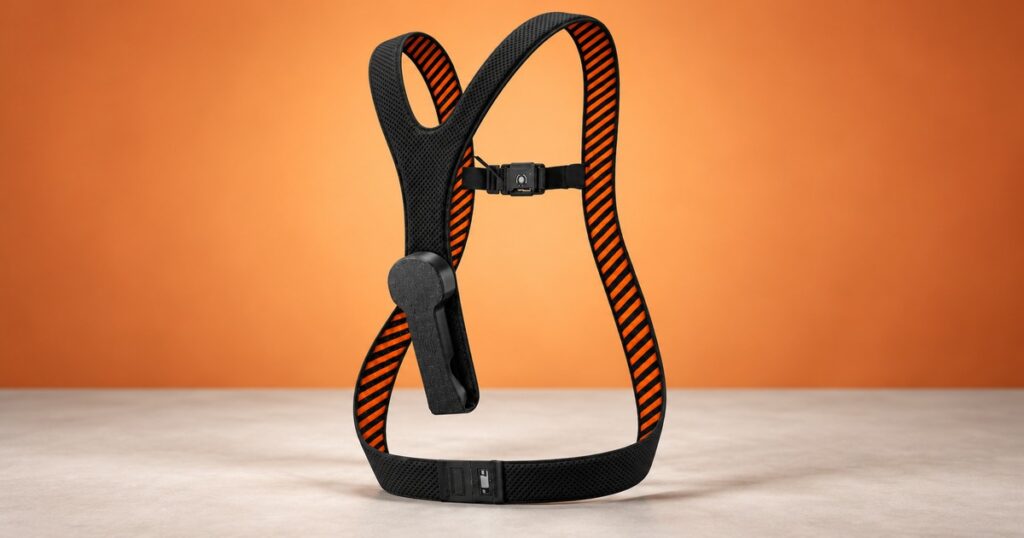
Cyclists will debate the weight of a bottle cage with the intensity of a courtroom drama, then ride downhill wearing what is essentially a very determined swimsuit. Aerobag has a different proposal: give the cycling kit an airbag. Your bib shorts have apparently been promoted to a position with actual responsibilities.
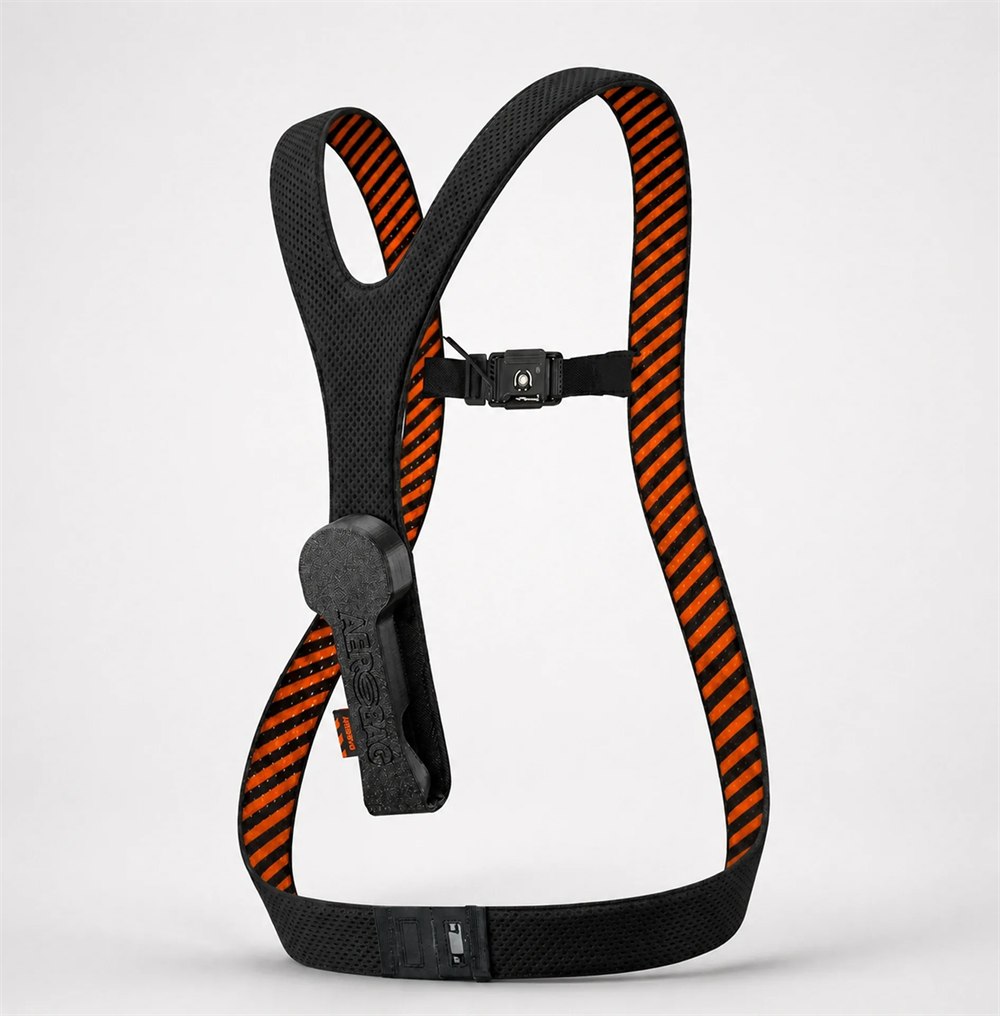
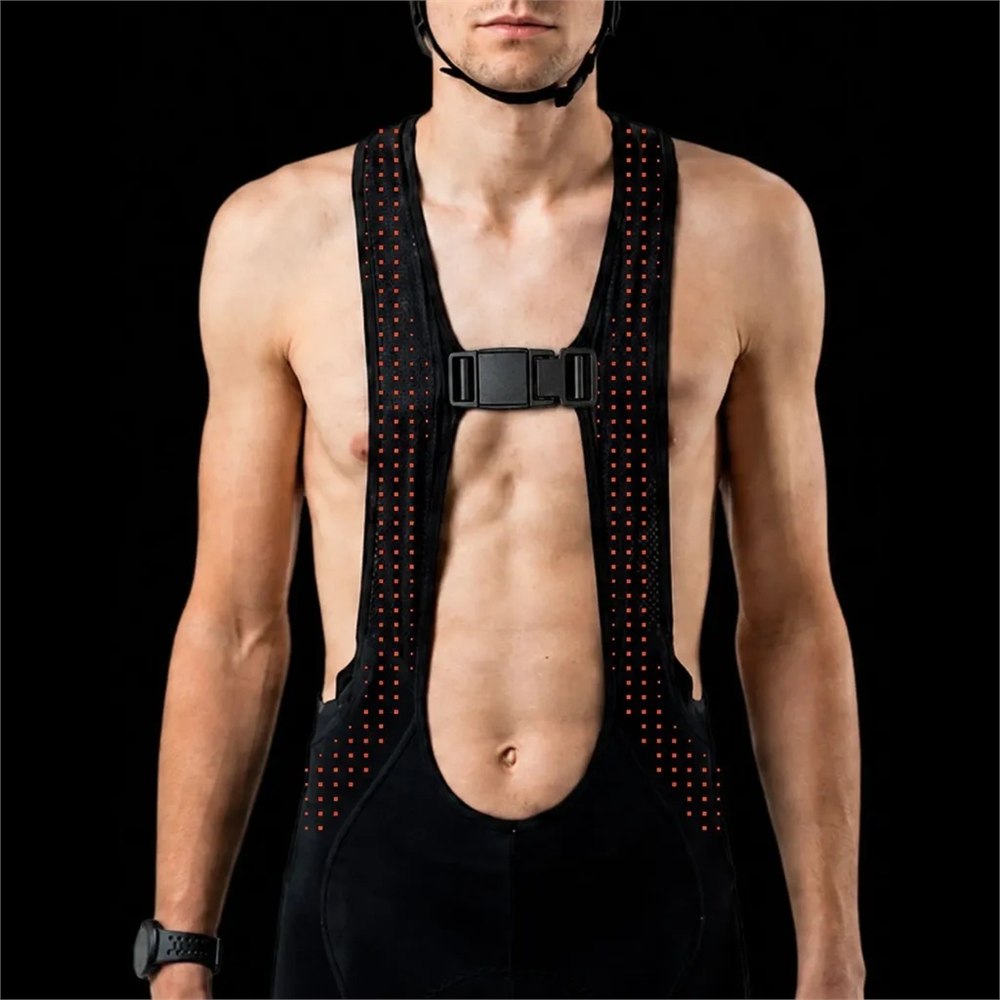
The AEROBAG Plug-In is a wearable cycling airbag designed to integrate with compatible technical riding apparel. The Belgian company’s approach puts a compact protective system into the clothing setup riders already use, rather than asking everyone to dress like a sofa before leaving the driveway.
That is the interesting idea here. Protective equipment has to coexist with pedaling, heat, movement, and the particular personality of someone who owns three nearly identical black cycling jerseys. A system that stays relatively unobtrusive has an appealing starting point, even before anyone gets into the electronics.
A cycling airbag tucked into your riding kit
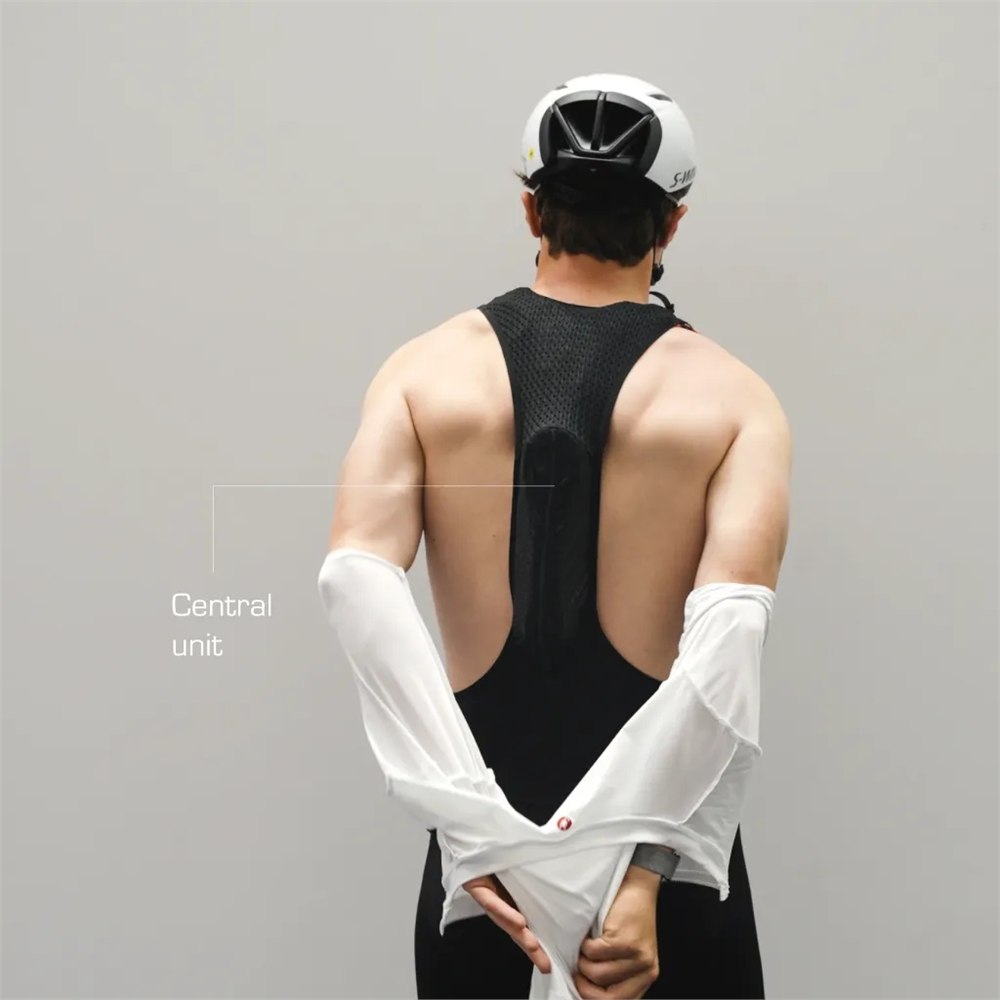
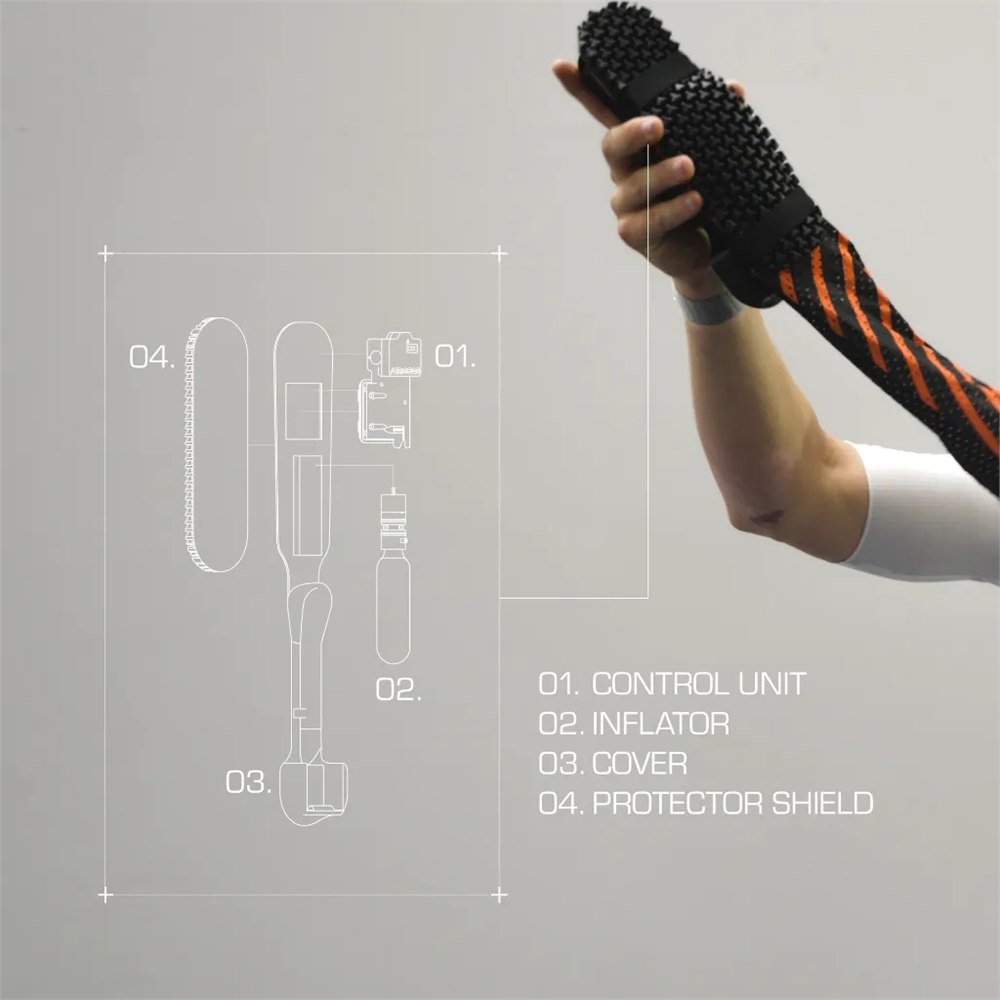
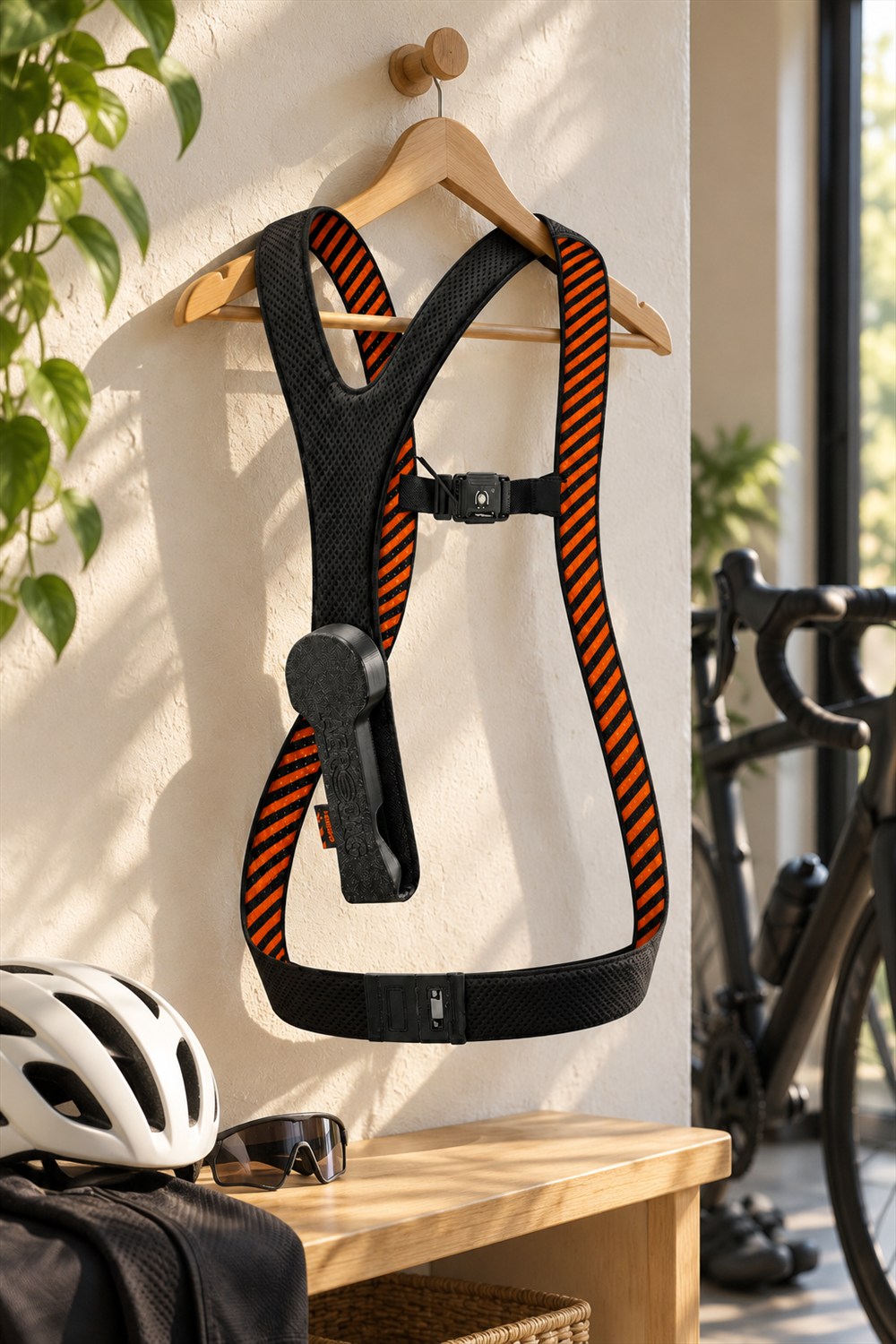
Aerobag describes the Plug-In as a roughly 500-gram system for road, gravel, and mountain-bike riding. Its folded airbag runs through the shoulder-strap area of compatible clothing, with a control and inflator assembly positioned at the back. The intention is to keep the hardware close to the body and out of the rider’s way.
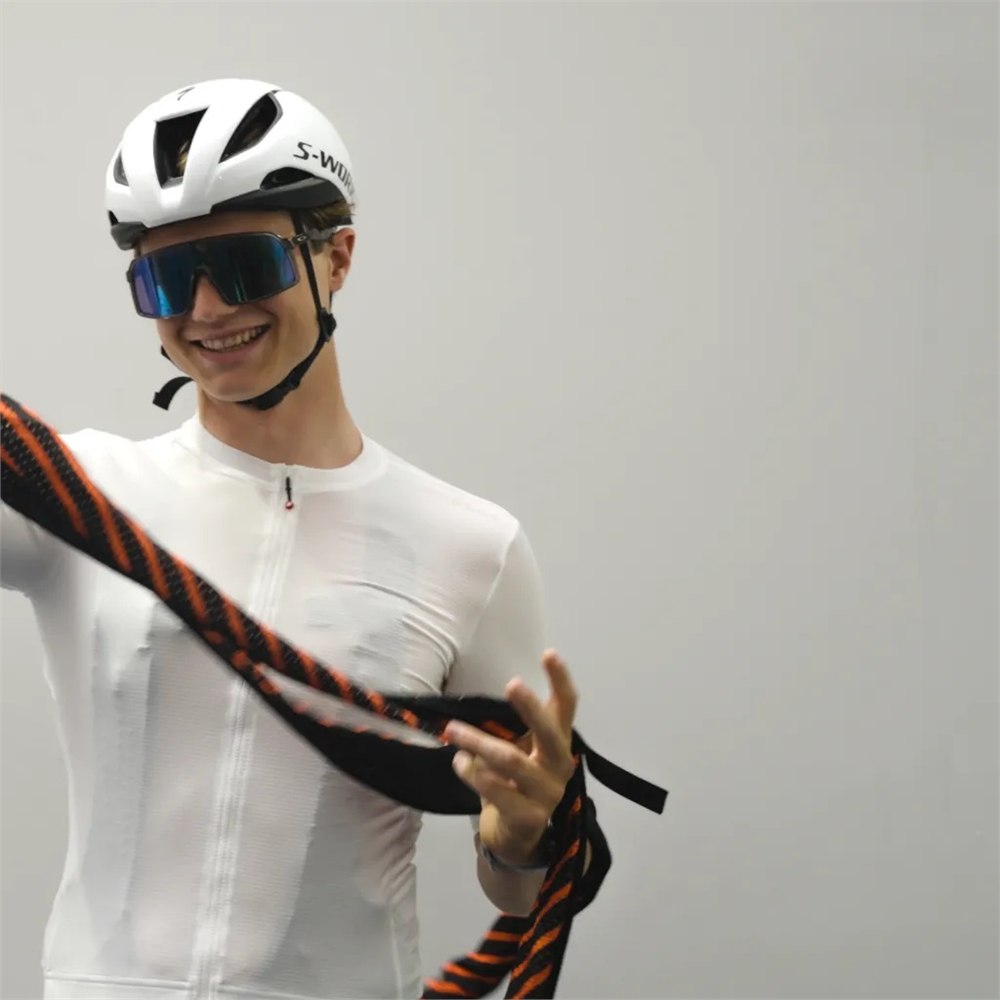
In the official photographs, the black structure looks more like purposeful sports equipment than a bulky vest. There are narrow sections, open areas, and a distinctive orange-and-black interior. It has the visual energy of something that takes the ride seriously without needing a full set of shoulder pads.


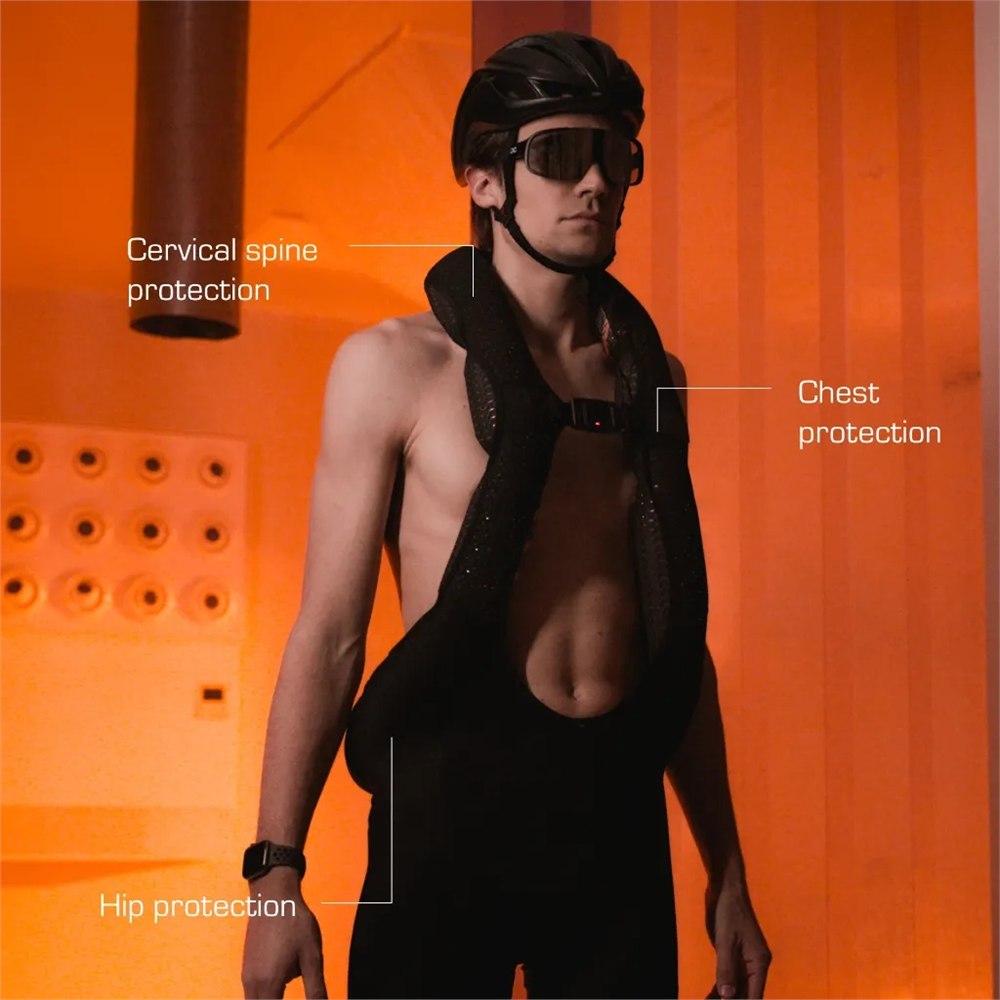
The company describes coverage extending from the neck toward the hips, including the chest and back. Those are design intentions and manufacturer claims, not a promise that every fall will have a happy ending. An airbag is still one piece of equipment in a much bigger riding situation.
There is an immediate practical distinction worth making: this particular listing is for the Plug-In device and one inflator. Compatible bib shorts are not included. The photographs help explain how the system sits on a rider, but they should not be read as an inventory of everything arriving in the box.
Small sensors, a very serious assignment
According to Aerobag, nine sensors monitor movement at 200 Hz, tracking body dynamics so an algorithm can identify patterns consistent with a crash. The basic concept is familiar from other wearable safety equipment: recognize the unusual movement and deploy the airbag when the system’s criteria are met.
That is quite a job description for something sharing space with a sweaty jersey. Your cycling computer can spend the afternoon judging your average speed; this system is watching for a very different kind of event.
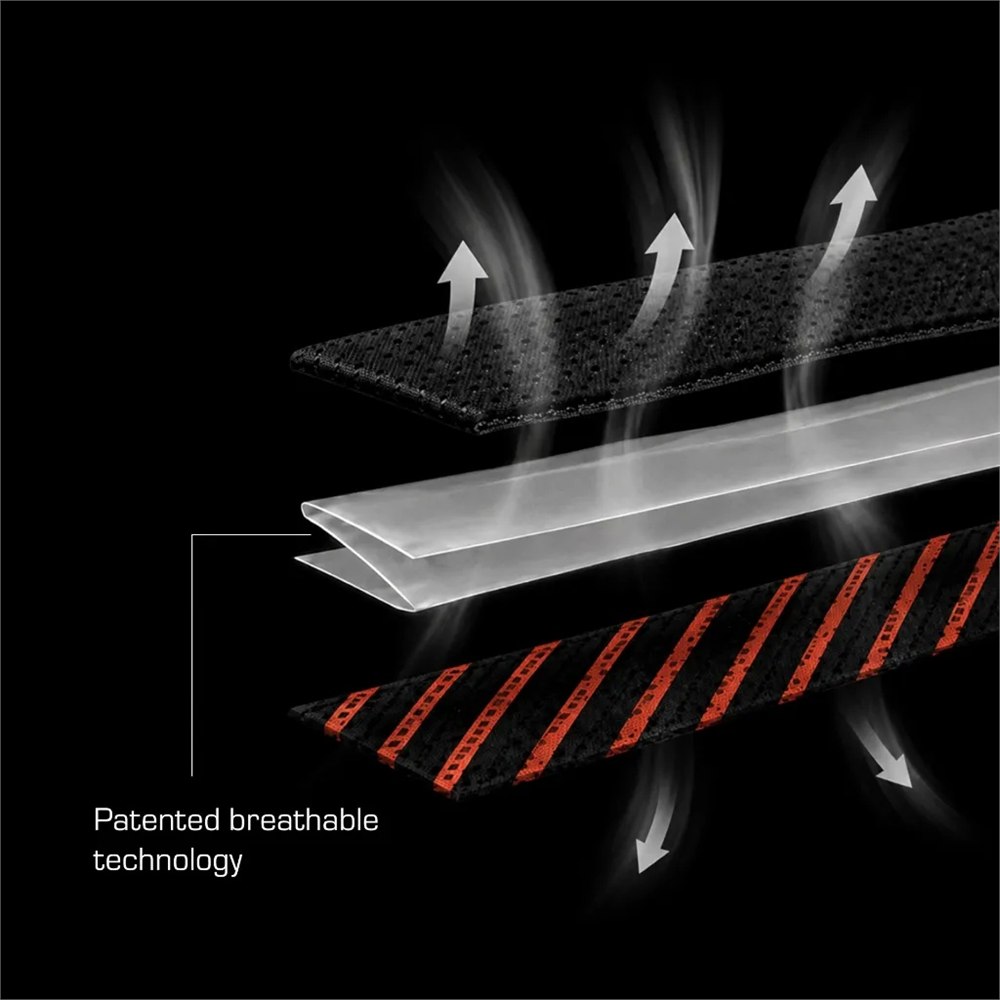
The appeal is the possibility of carrying additional protection without wrapping your whole torso in a thick, rigid shell. Aerobag emphasizes low bulk and airflow in its design. How a particular rider experiences the fit and comfort still depends on their body, clothing, and setup, so the product deserves a proper fitting rather than a hopeful glance at a size label.
This also is not a replacement for a helmet or a reason to ride beyond your abilities. It is an additional system with its own instructions, operating conditions, and inspection needs. The clever mechanism is the headline; correct use is the part that makes the purchase worth considering.
- Check your clothing: the Plug-In is made for compatible Aerobag-ready riding gear, not arbitrary bib shorts.
- Choose the correct size: there are two Plug-In sizes, with torso measurements in the maker’s sizing guide.
- Plan for the complete setup: the device listing includes one inflator, while bib shorts are separate.
- Keep the instructions handy: setup, care, inspection, and reuse are part of owning the system.
The fitting details are more useful than guesswork
Aerobag’s sizing chart gives Size 1 a torso-length range of 38–47 cm and Size 2 a range of 48–56 cm. It also provides height guidance of 150–175 cm and 175–200 cm respectively. These are the company’s published ranges, so consult the full guide and ask the maker about borderline measurements or your specific clothing combination.
Buying fitted equipment as a surprise gift gets complicated quickly. You can guess someone’s favorite snack with reasonable confidence. Their torso measurement is a less charming thing to estimate across the dinner table. For this one, involving the recipient is probably the better kind of surprise.
| Detail | What Aerobag lists |
|---|---|
| Product format | Plug-in cycling airbag system |
| Stated weight | Approximately 500 grams |
| Size 1 torso range | 38–47 cm |
| Size 2 torso range | 48–56 cm |
| Included hardware | Plug-In device and one CO2 inflator |
| Clothing | Compatible bib shorts sold separately |
The size chart separately describes Aerobag’s belt-based commuter arrangement. That is useful context if you encounter both options while shopping, but it is a different purchasing setup. Make sure the device, garment, and any additional components in your cart match the arrangement you intend to wear.
This is where the word “compatible” earns its keep. A drawer full of expensive cycling clothing is not automatically a drawer full of airbag-ready clothing. Confirm the actual garment before assuming a favorite pair can join the project.
Reusable does not mean maintenance-free
Aerobag says the airbag can be reused following deployment if it is undamaged and has been inspected, with a replacement inflator installed. The company’s quick-reset pitch is appealing, but the condition of the equipment and the rider matters more than getting moving again quickly.
Think of reuse as a maintenance process, not an automatic invitation to carry on. A cartridge change cannot tell you whether the rest of a crash has been adequately assessed. Follow the manufacturer’s instructions and do not treat the reset feature as a race against a stopwatch.
There is a less dramatic household rule, too: remove the Plug-In before washing the compatible bib shorts. The device itself must not go into the washing machine. It is easy to imagine the post-ride laundry routine becoming a little more deliberate once one garment contains something with this much going on.
A small storage routine would make sense here: somewhere clean and consistent to place the device while the clothing is being washed, with the instructions accessible. That is hardly glamorous, but neither is searching the laundry basket while explaining that the expensive part was supposed to come out first.
Who will appreciate the idea?
The likely audience is a cyclist interested in adding protective technology without abandoning the fit and movement of technical riding clothes. It is particularly intriguing if you already think carefully about equipment and are willing to learn the setup instead of expecting an accessory that asks nothing of you.
For a more casual buyer, the first conversation should be about fit, compatible clothing, and everyday use. The best-looking piece of kit on a product page is not necessarily the right piece for your particular ride. That is especially true when the mechanism has a safety role rather than merely holding your keys.
The system received fresh attention in October 2026 when Cyclingnews reported its inclusion in TIME’s Best Inventions list. Recognition makes it an interesting product to investigate; it does not substitute for understanding how it works or establish that it prevents a particular injury.
Key details before adding it to your kit
- AEROBAG Plug-In is an airbag system intended for compatible cycling apparel.
- Aerobag lists approximately 500 grams and two device sizes.
- Nine sensors and a crash-detection algorithm form the electronic system.
- The package includes one inflator; compatible bib shorts are separate.
- Reuse requires inspection and a new inflator, and the device must be removed before laundry.
The official Aerobag store lists the Plug-In at €685 and shows an add-to-cart option with a current delivery estimate of five working days. Confirm the final regional total and the cost of compatible clothing before ordering. Replacement inflators are another ownership detail to discuss with the seller.
It is an unusually ambitious addition to a wardrobe category normally concerned with padding, pockets, and whether the jersey zipper has trapped your chest hair. An airbag in your cycling kit is a compelling idea. The sensible way to enjoy that idea is to give the fit and instructions as much attention as the exciting bit.
Product details and original inline images: Aerobag Plug-In. See the maker’s system explanation, sizing guide, and user manuals. Recent coverage: Cyclingnews.
| Pros | Cons and considerations |
|---|---|
| Integrates with technical cycling apparel | Requires compatible clothing, sold separately |
| Compact design with a stated 500-gram weight | Still adds equipment and setup to the ride |
| Two sizes with published measurement guidance | Correct fit needs checking before purchase |
| Designed for reuse after deployment | Inspection and a replacement inflator are required |
| Removable device for garment care | Must be taken out before washing the clothing |
| Adds a protective system to riding kit | Cannot guarantee protection in every crash |
Save this find.
Thank yourself later.
Your next great gift idea. Your someday space. Your collection of wonderfully weird things.
Save to PinterestPick a board. Keep the inspiration.
This Cycling Airbag Fits Into Your Riding Kit to Add Crash Protection
Where to find This Cycling Airbag Fits Into Your Riding Kit to Add Crash Protection
OddityMall may earn a commission from qualifying purchases at no extra cost to you.