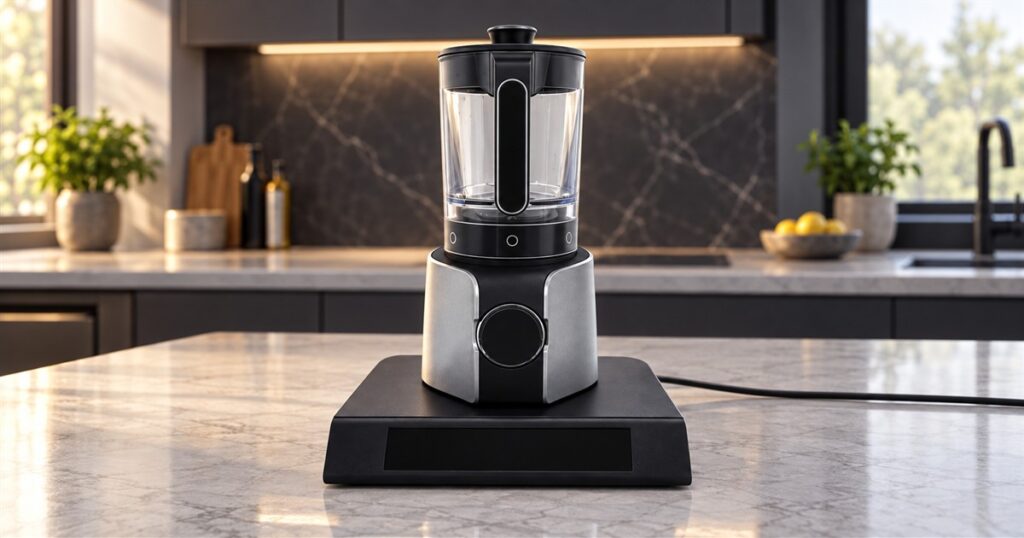
The space behind a kitchen blender is where crumbs go to become archaeology. There is a cable, another cable, a mysterious twist tie, and enough accumulated breakfast dust to suggest a small civilization once lived there. Kitchenery wants to simplify that situation with a cordless kitchen system built around one shared power pad. Your smoothie still requires ingredients. Your countertop may require fewer negotiations.
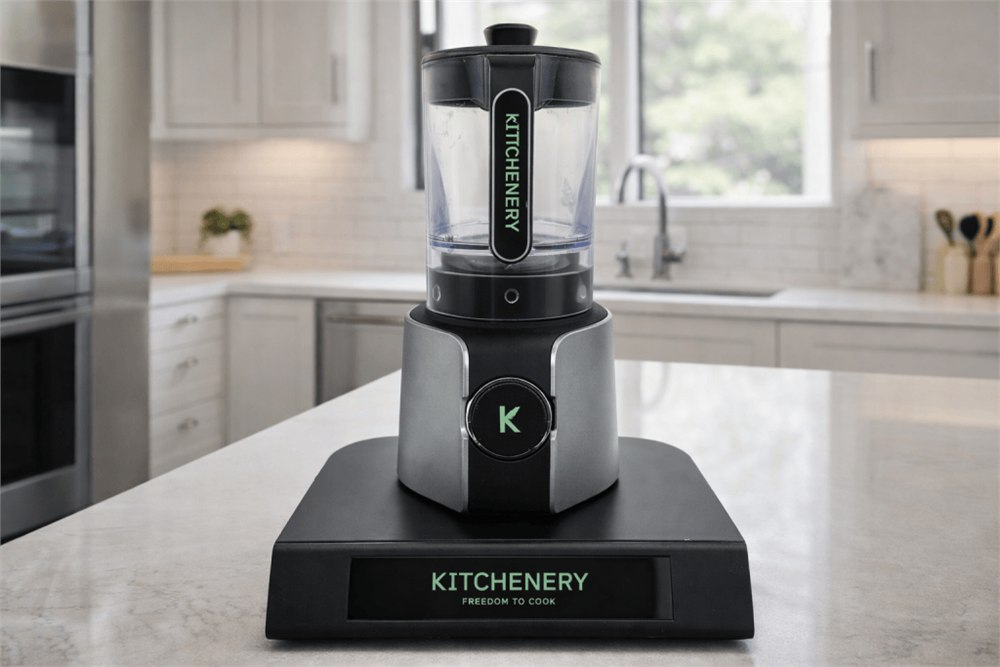
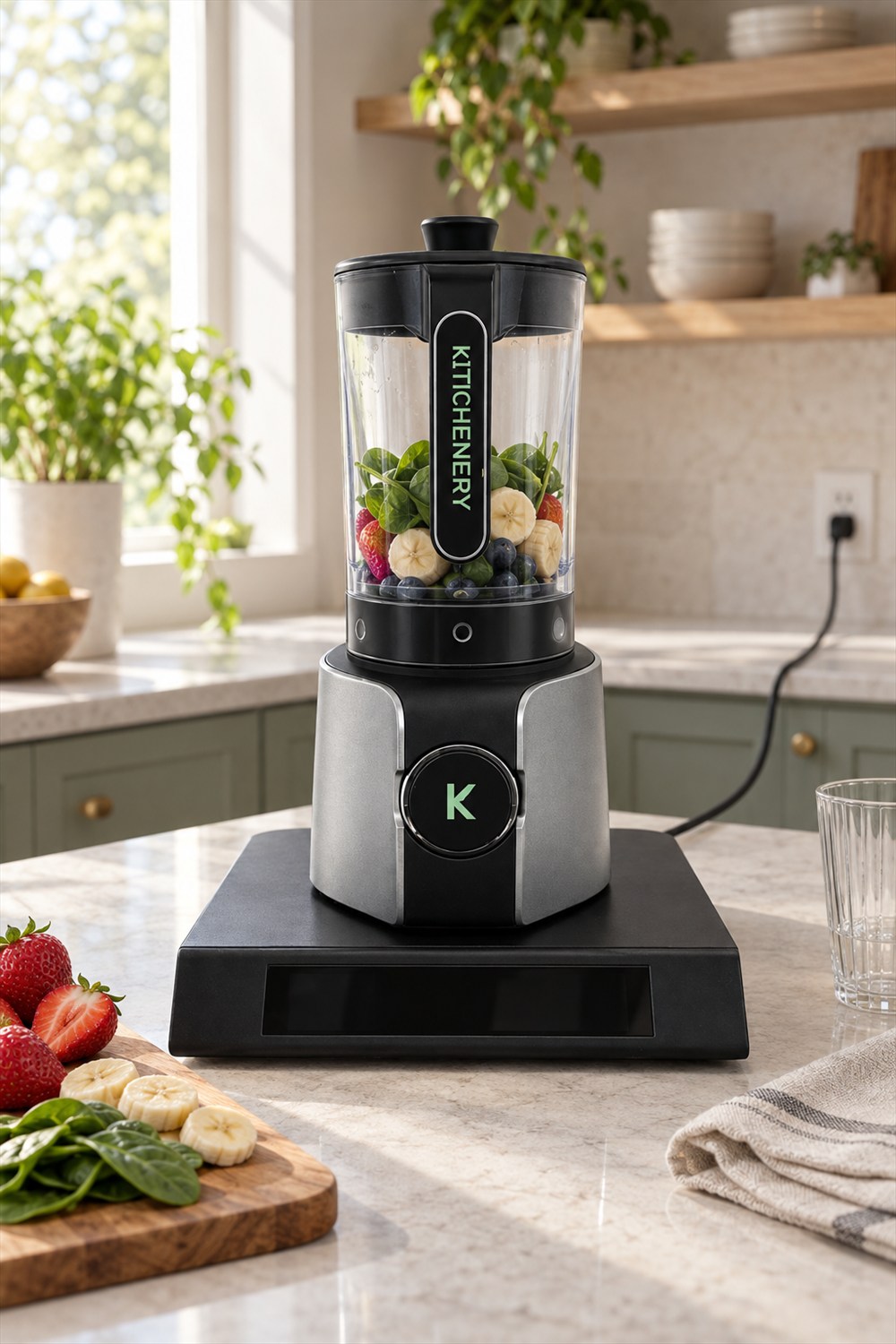
The system pairs Kitchenery’s Quantum Energy Pad with compatible appliances, starting with the Perfect Pour Kettle and Silent Blender. Rather than giving each appliance its own power cord or rechargeable battery, the company puts the power connection in the pad. Set a compatible appliance on its active area, use it, then lift it away when you are finished.
There is one crucial detail hiding behind that wonderfully tidy idea: the pad itself plugs into household power. This is not a blender you take into the wilderness to pulverize berries through sheer optimism. It is a different way to organize powered appliances on a counter.
One plug gets promoted to management
The Quantum Energy Pad is the central piece of the setup. Kitchenery describes it as a shared platform that transfers operating power through controlled magnetic coupling to receiver technology inside a compatible appliance. The pad and appliance communicate so the system recognizes what has been placed on the surface.
That recognition matters. Putting your existing blender on the pad will not give it a wireless personality. The appliances need the appropriate receiver and controls built into them. Your old coffee machine cannot simply wander into this ecosystem wearing a convincing disguise.


The company is also developing the pad to support induction-compatible cookware. That gives the surface a second proposed role beyond running its own kettle and blender. Final cookware compatibility, operating instructions, and certification remain part of the finished product requirements, so this is not an invitation to set down every pan you own and hope for dinner.
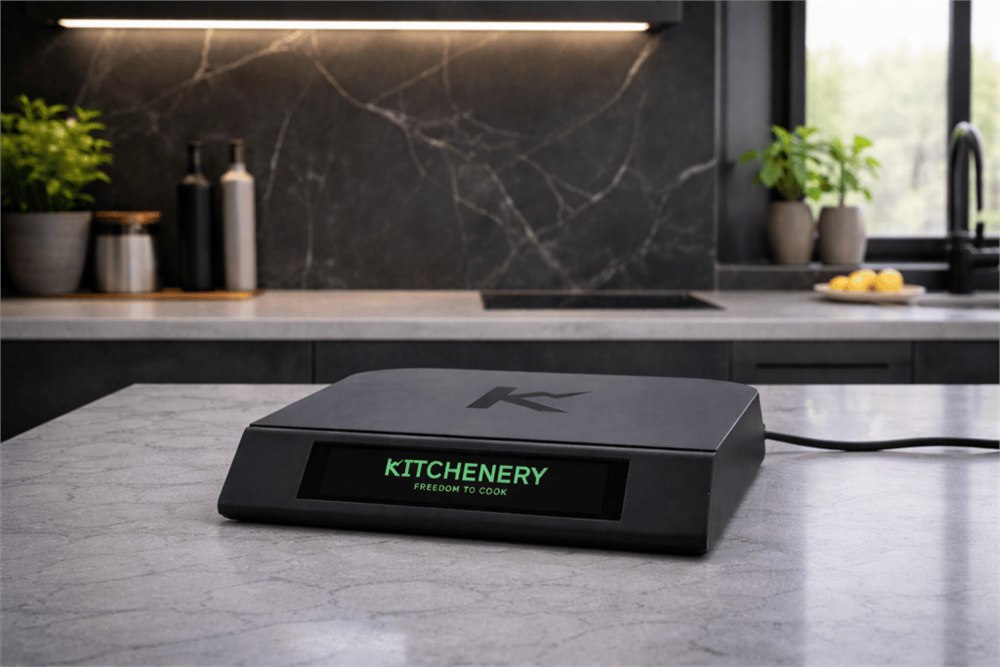
The intended interface changes with the appliance in use. Kitchenery’s prototype control experience includes induction, kettle, and blender modes. In practical terms, the goal is to bring the relevant controls to the same place instead of making you learn a separate panel for every countertop resident.
It is an appealing idea for a small kitchen, where the nearest outlet often determines the entire morning routine. A shared power surface still occupies space, but the kettle does not need its own permanent powered base alongside a separate blender station. Appliances can be put away without the customary cord-wrapping ceremony.
The kettle wants a calmer morning
The Perfect Pour Kettle is designed around temperature selection, real-time temperature feedback, and a controlled stream of water. Those are sensible priorities for anyone who has ever tried to pour carefully while a kettle behaved like a tiny municipal water main.
Kitchenery places temperature selection within the shared QEP control experience, with feedback visible on the kettle. The point is repeatability: choose an appropriate target for your drink instead of boiling everything and standing nearby, trying to calculate cooling time with a sleepy expression.
The kettle is battery-free and designed for the Kitchenery platform. It receives operating power on the pad and can be lifted away for pouring. It does not keep drawing power once removed, and Kitchenery’s current product guidance says it requires the compatible Quantum Energy Pad. Treat it as part of this system, rather than a standalone kettle that will work with any induction surface.
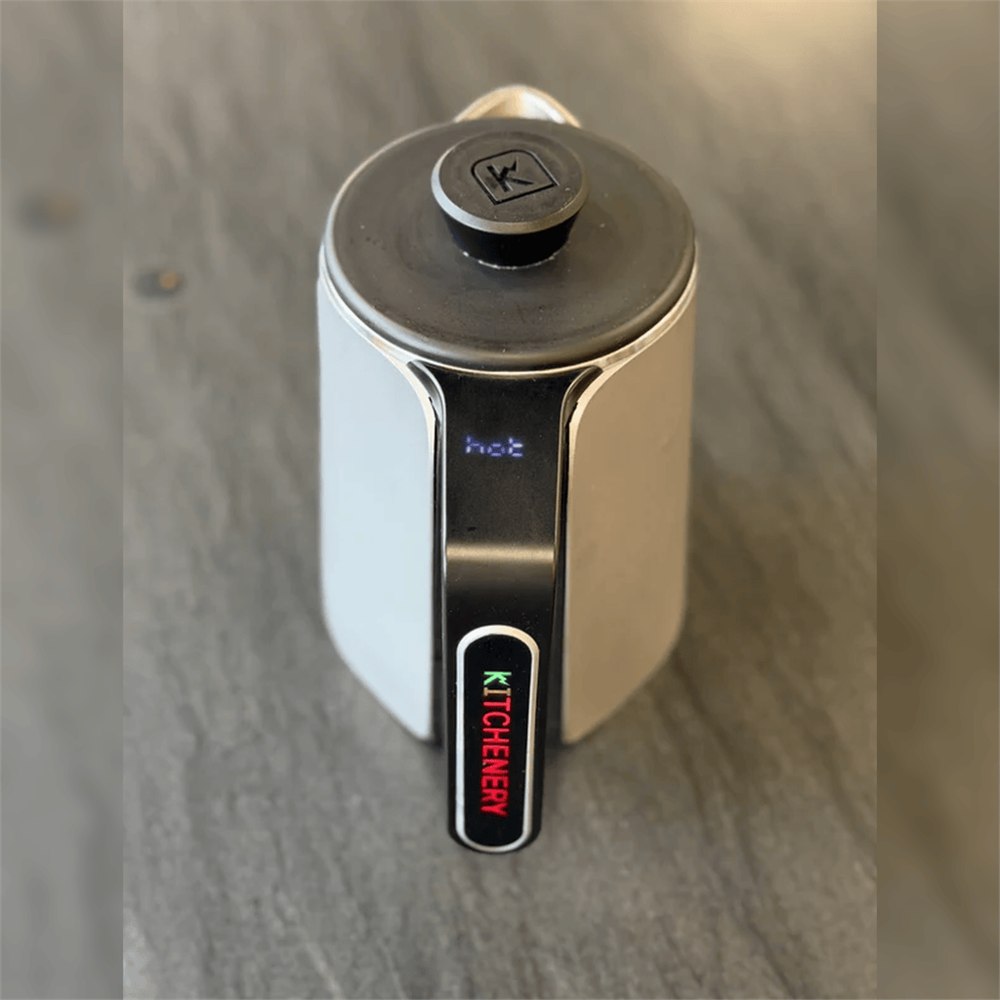
That distinction separates an interesting product from a very expensive misunderstanding. Cordless describes the appliance connection during use; it does not mean unlimited freedom from the pad. The kitchen still follows the laws of electricity, which have been annoyingly resistant to branding.
- Shared power: one household connection feeds the Quantum Energy Pad.
- Compatible appliances: the kettle and blender need Kitchenery receiver technology.
- No appliance battery: operating power arrives while the product is on the active surface.
- Different controls: the prototype interface supports kettle, blender, and induction experiences.
- Easier storage: removing an appliance does not involve gathering its trailing power cable.
A blender with an ambitious name
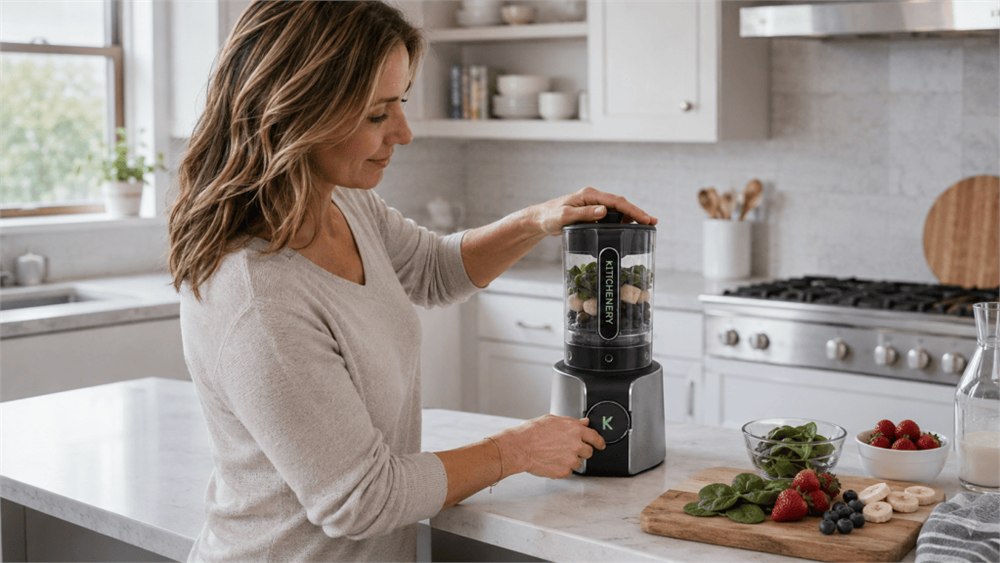
The Silent Blender is being developed as a full-size countertop appliance for familiar jobs such as smoothies, soups, sauces, and everyday ingredient preparation. It is not a miniature rechargeable travel blender pretending it can host Thanksgiving.
Kitchenery is aiming for quieter operation, but the product name does not mean literal silence. Motors, blades, ingredients, and vibration still make sound. Final acoustic performance needs production testing, so nobody should plan a recording studio around this blender just yet.
Its power arrangement follows the same pattern as the kettle: place it on the active area, let the system identify it, and use the controls suited to the appliance. When the job is finished, lift and store it. The absence of a separate appliance cord is especially easy to appreciate when the counter also serves as your desk, dining room, and temporary mail archive.
| Part of the system | Intended job | Important boundary |
|---|---|---|
| Quantum Energy Pad | Shared wireless appliance power surface | Needs a household power connection |
| Perfect Pour Kettle | Controlled pouring and temperature selection | Requires a compatible QEP |
| Silent Blender | Full-size blending with quieter operation as a goal | Requires QEP; not soundless |
| Induction cookware mode | Cooking with suitable cookware | Final compatibility and certification apply |
Less cable clutter, with a few strings attached
The obvious audience is someone who cares about the look and daily feel of a kitchen. If you already tuck every cable neatly out of sight and enjoy your current appliances, the appeal may be limited. If your countertop resembles the back of a television cabinet, the pitch lands rather differently.
Kitchenery also discusses compact kitchens, tiny homes, RVs, and yacht galleys as potential settings. The space-saving argument is understandable, but these remain powered appliances. Removing cords from the individual products does not remove the need for a suitable electrical supply, adequate counter space, or the finished product’s operating requirements.
There is also an ecosystem tradeoff. A shared platform makes the products feel coordinated, but it ties their operation to the same central pad. Compatibility is part of the purchase decision, not a footnote to discover after you have enthusiastically reorganized every cabinet.
Kitchenery says it has working prototypes and ongoing beta testing. Final validation, certification, manufacturing, and fulfillment still matter. A working demonstration is encouraging; a finished appliance that behaves consistently over years of breakfasts is the next assignment.
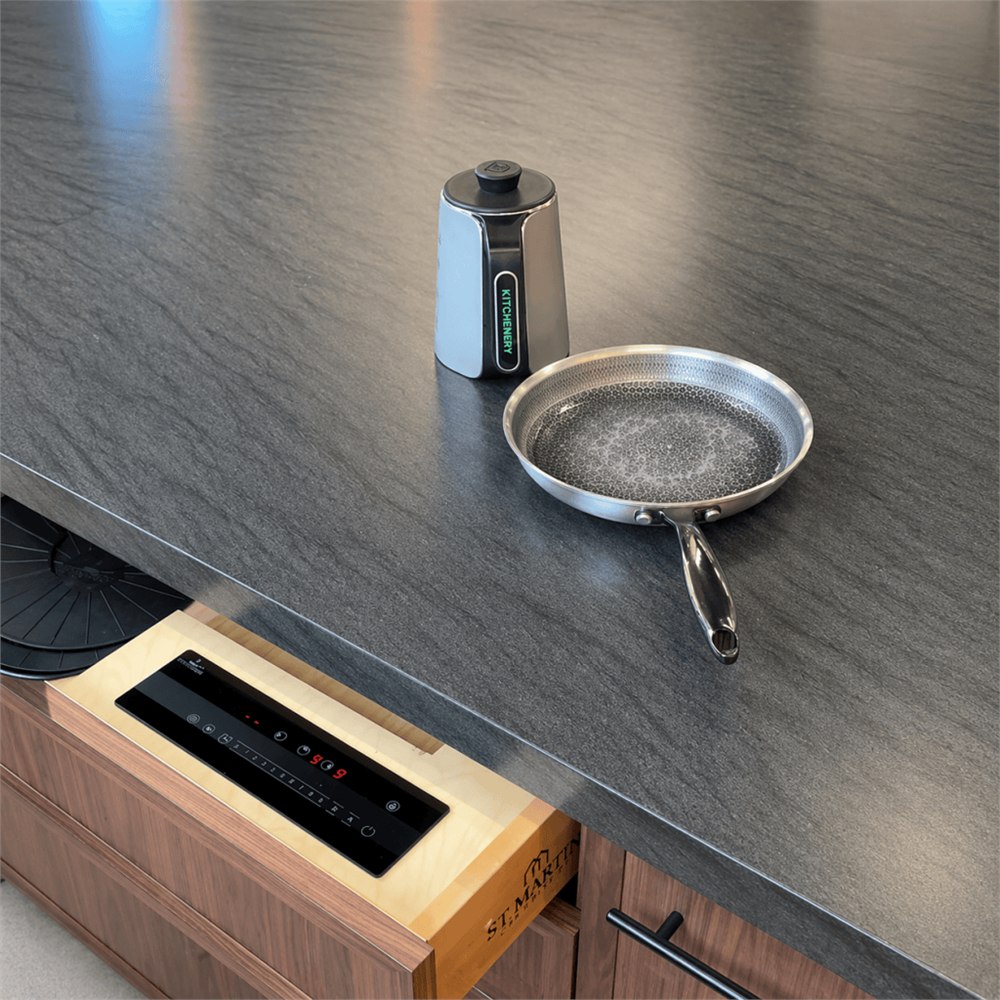
Images: Kitchenery. Product and prototype imagery illustrates the developing system; final production details may change.
The useful details before breakfast gets futuristic
- Product: Kitchenery cordless kitchen ecosystem.
- Core component: Quantum Energy Pad with one household power connection.
- Launch appliances: Perfect Pour Kettle and Silent Blender.
- Power approach: compatible appliances receive operating power on the pad without rechargeable appliance batteries.
- Bundle options: Starter includes the kettle; Smooth includes the blender; Trio includes both, with a QEP and Honeycomb silicone mat in each bundle.
- Development status: crowdfunded hardware with testing and production work still ahead.
Kitchenery’s current early-access page lists public launch pricing of $1,499 for Starter, $1,699 for Smooth, and $2,026 for Trio. It also promotes lower Super Early Bird offers, whose availability should be checked on the campaign. Those figures describe the maker’s listed launch bundles, not a promise that a particular reward is available at checkout.
The manufacturer currently estimates December 2026 delivery. That is a crowdfunding estimate, not a guaranteed holiday arrival, and final reward terms, shipping costs, and timing should be confirmed before backing. The system is presented through Kitchenery’s Kickstarter campaign and early-access program rather than as ordinary in-stock retail hardware.
For the right kitchen, the attraction is clear: fewer individual power connections, coordinated appliances, and a counter that looks slightly less like it is supporting a server rack. Whether that earns a permanent place beside the toaster depends on the finished hardware. The crumbs, unfortunately, will still find somewhere to live.
| Pros | Cons |
|---|---|
| One shared power surface for compatible appliances | The pad still needs household power |
| No rechargeable appliance batteries to maintain | Appliances need the pad during operation |
| Kettle and blender bundles support different routines | Existing appliances are not automatically compatible |
| Designed to support induction-compatible cookware | Final compatibility and certification still matter |
| Quieter blending is a development goal | Sound performance is not a promise of silence |
| Less individual appliance cord clutter | Premium pricing and crowdfunding delivery uncertainty |
Save this find.
Thank yourself later.
Your next great gift idea. Your someday space. Your collection of wonderfully weird things.
Save to PinterestPick a board. Keep the inspiration.
This Cordless Kitchen System Powers a Kettle and Blender From One Pad
Where to find This Cordless Kitchen System Powers a Kettle and Blender From One Pad
OddityMall may earn a commission from qualifying purchases at no extra cost to you.