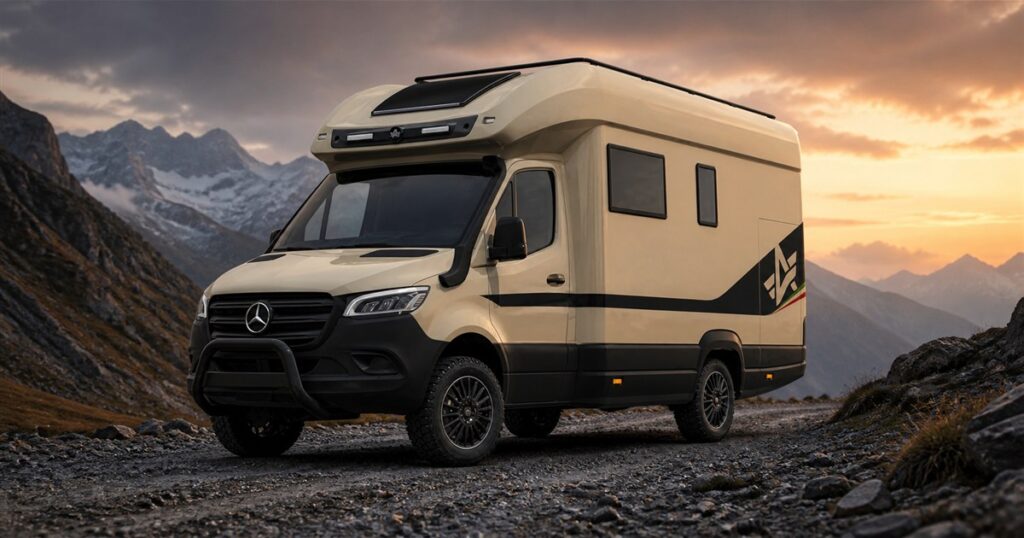
There are people who look at a road ending and see a sensible place to turn around. Then there are people who look at that same road ending and immediately begin wondering whether the house they brought with them has enough ground clearance to continue the argument.
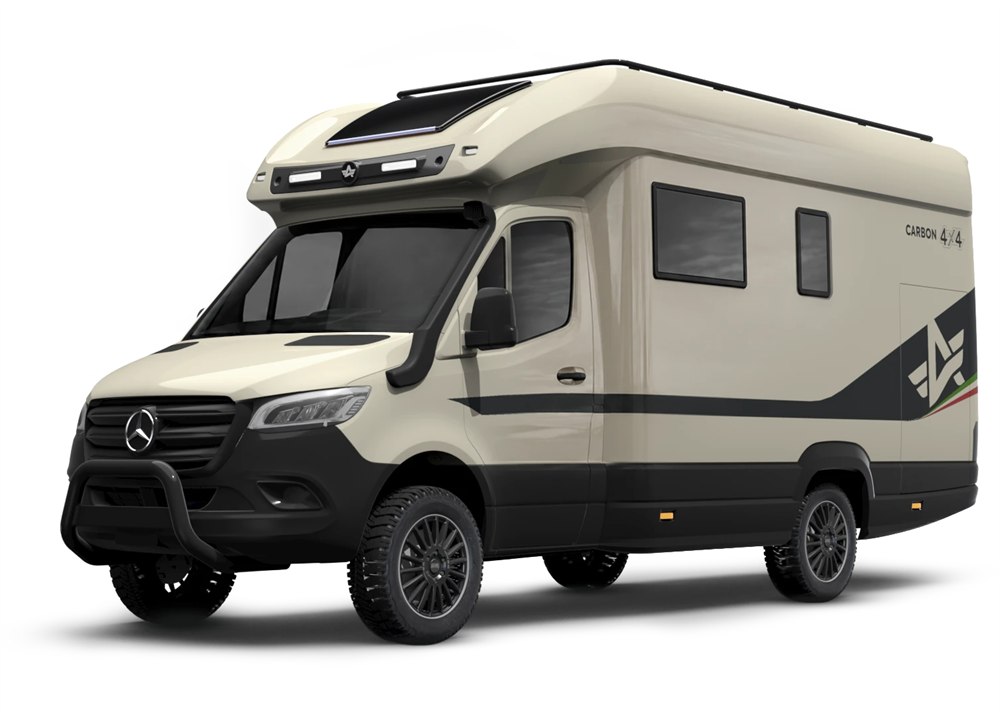
The Atlantis Carbon 4×4 is a carbon-fiber off-road motorhome for the second group. It is not a van with a few rugged accessories and a social media manager whispering the word “adventure” into a mud puddle. Atlantis Camper built this thing around a full carbon-fiber monocoque living cell on a Mercedes-Benz Sprinter 419 CDI 4×4 chassis, which is a very elaborate way of saying the camper body is meant to handle the twisting, leaning, bouncing nonsense that happens when vacation stops being paved.
That is the hook here. Four-wheel drive is useful, obviously, but Atlantis is making the case that the living area needs to be engineered for the same abuse as the chassis. The Carbon 4×4 uses a one-piece carbon-fiber body shell without seams, with high thermal insulation, a double floor, and a structure Atlantis describes as lightweight, rigid, strong, and purpose-built for off-road travel.
This is the kind of motorhome that makes a regular campground feel like a dentist’s waiting room. It wants alpine gravel, wet grass, snow, remote pull-offs, and those dirt roads that begin with charm and end with everyone in the vehicle quietly pretending they are not concerned.
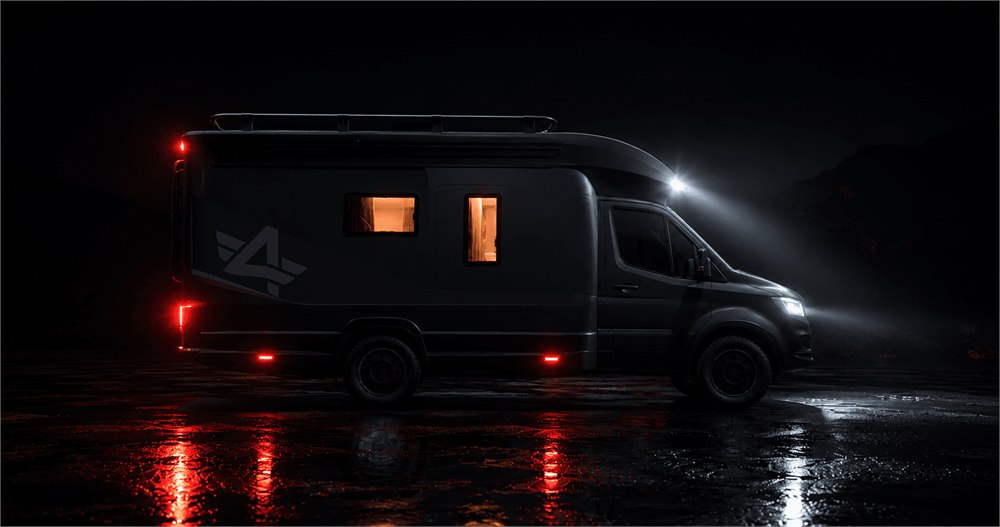
A Carbon-Fiber Camper Body For When The Trail Has Opinions
The Carbon 4×4 measures 6,750 mm long, 2,150 mm wide, and 3,100 mm high, so it is not trying to be a cute little weekender van that fits under every parking garage. It is a proper expedition-style motorhome, but with the cleaner, sculpted look of a carbon-fiber coach body instead of the bolt-on panic closet vibe that some off-road campers accidentally achieve.
Atlantis pairs that body with the Mercedes-Benz Sprinter 419 CDI 4×4, using a 190-hp 2.0-liter turbodiesel engine, 9G-TRONIC automatic transmission, and AWD torque-on-demand all-wheel-drive system. The company says electronic torque distribution adapts to traction conditions like snow, gravel, wet grass, and other low-grip surfaces. In normal human language, it is built for the situations where your tires are having a committee meeting about whether they still believe in the ground.
Inside, Atlantis is aiming for long-range comfort rather than “sleeping bag inside a tool shed.” The product page describes premium materials, refined finishes, thermal insulation, high-autonomy systems, and two available layout approaches: transverse bed or twin beds. The Carbon 4×4 can carry 4 traveling seats depending on configuration and offers 2+2 berths, so it is prepared for the classic family road trip scenario where everyone claims they pack light and then a small mountain of shoes appears.
Some of the practical highlights include:
- A full carbon-fiber monocoque bodyshell made as a one-piece shell without seams.
- A gas-free energy setup with lithium batteries, photovoltaic solar panels, and an inverter.
- A double floor, high thermal insulation, and insulated/heated/illuminated garage storage.
- Two available interior layout styles, including transverse bed and twin bed configurations.
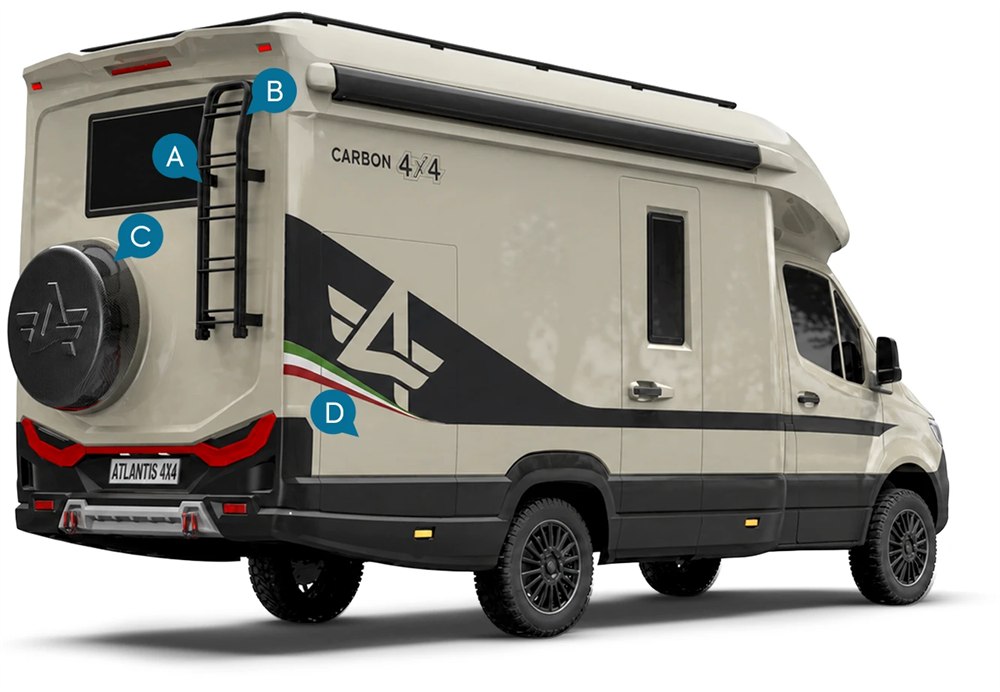
- Off-road pack hardware such as recovery boards, rear ladder, all-terrain spare wheel, and air compressor listed as standard, with extras like snorkel, LED light bar, bull bar, skid plate, winch, and air suspension shown as optional.
The Specs Read Like A Cabin That Got Serious About Cardio
The best part of a vehicle like this is that it treats comfort systems and trail hardware as part of the same conversation. A camper that can reach remote places but then forces you to live like damp luggage in a metal box is not freedom; it is just expensive weather exposure. Atlantis seems aware of this, because the Carbon 4×4 spec sheet leans hard into livability.
| Feature | Atlantis Carbon 4×4 Detail |
|---|---|
| Body structure | Full carbon-fiber monocoque, one-piece shell without seams |
| Base vehicle | Mercedes-Benz Sprinter 419 CDI 4×4 |
| Powertrain | 190-hp 2.0-liter turbodiesel with 9G-TRONIC automatic transmission |
| Dimensions | 6,750 mm long, 2,150 mm wide, 3,100 mm high |
| Water | 180-liter fresh and grey water tanks with electric drain valve |
| Energy | Gas-free system with lithium batteries, solar panels, and inverter |
The kitchen and comfort systems are also more civilized than the phrase “off-road motorhome” usually suggests. Atlantis lists an induction hob, a 100- or 140-liter compressor refrigerator depending on configuration, USB and 12/220 V sockets, TV socket, Truma Combi D E heating, Truma Saphir Compact air conditioning, and a Garmin SERV+ 10-inch control display. This is not roughing it so much as politely dragging a tiny luxury apartment toward the horizon.
The entry door measures 600 x 1,870 mm and includes an opening window, integrated flyscreen, and blackout blind. Storage compartment doors measure 1,200 x 800 mm with a damped opening system. The garage is insulated, heated, and illuminated, which is the kind of detail that makes you realize this camper was designed by people who understand that outdoor gear has a habit of multiplying in the dark.
The off-road side is where the Carbon 4×4 starts flexing. The standard off-road pack shown by Atlantis includes recovery boards, a rear ladder, all-terrain spare wheel, and air compressor. Optional equipment shown includes a snorkel, LED light bar, bull bar, skid plate, winch, and air suspension. In other words, it can be configured somewhere between “responsible overland traveler” and “my vacation has a recovery plan.”
A Gas-Free Living System For Wandering Farther From Outlets
Atlantis describes the Carbon 4×4 as using gas-free technology, with an integrated energy management system built around high-capacity lithium batteries, photovoltaic solar panels, and a latest-generation inverter. Heating is supplied either by the vehicle’s diesel fuel system or by mains electric power when available.
That matters because remote travel has a way of turning small dependencies into giant chores. If your whole beautiful escape requires constant access to hookups, cylinders, and civilized infrastructure, the vehicle is less an explorer and more a hotel room with a steering wheel. The Carbon 4×4’s power setup is designed to give it more autonomy, though actual range and off-grid duration will depend on configuration, weather, driving, and how aggressively everyone treats the refrigerator like a community snack cave.
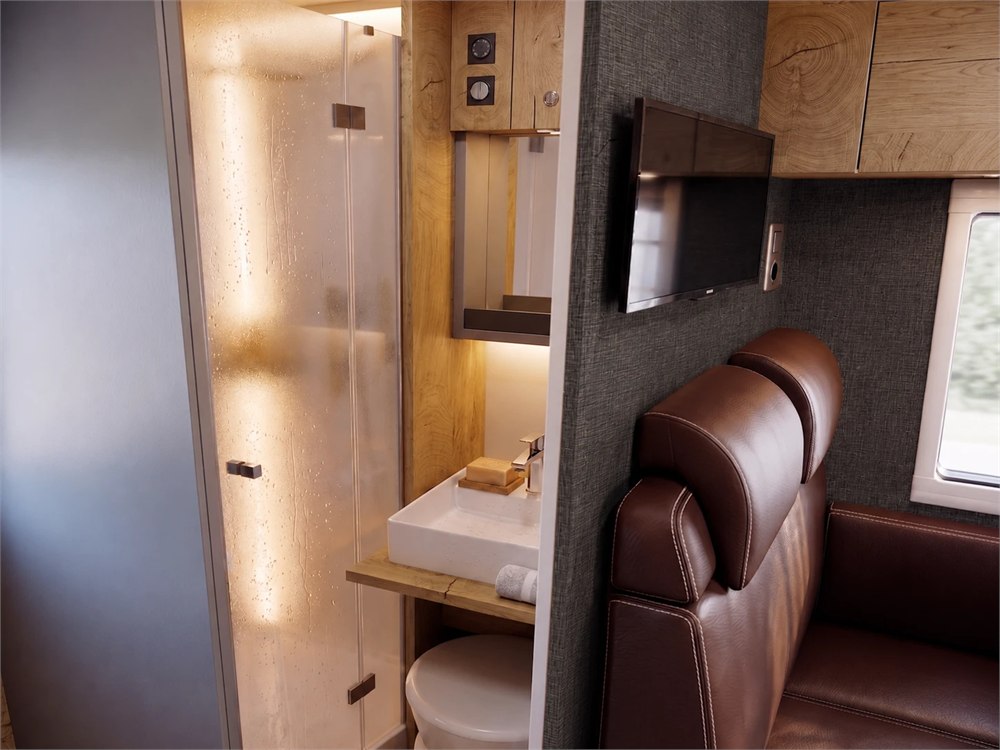
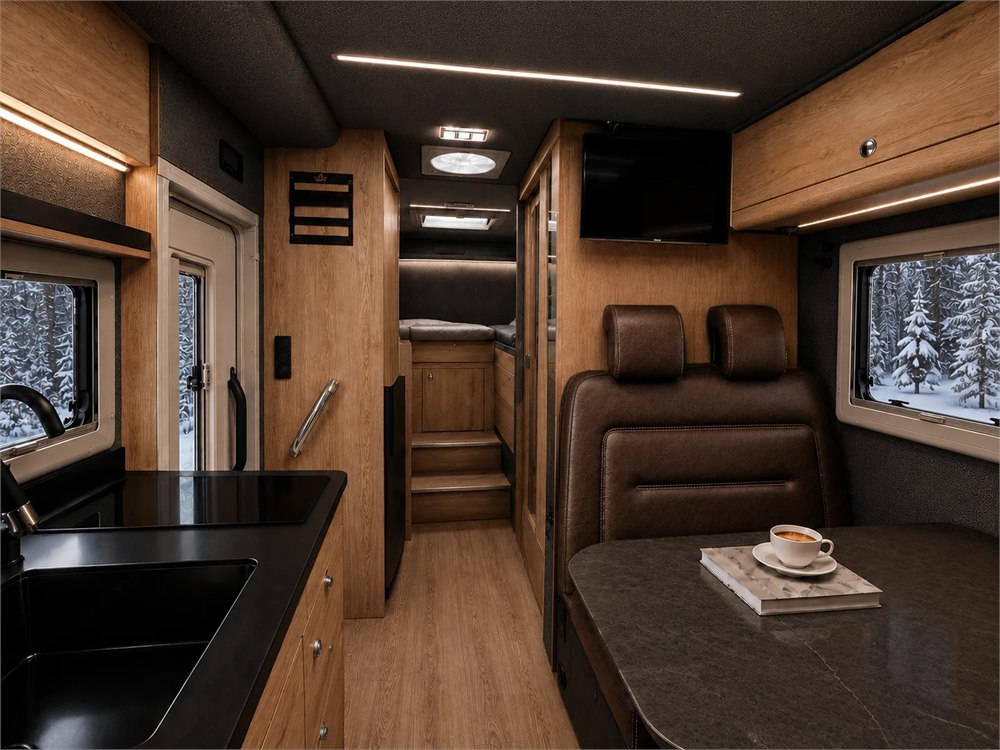
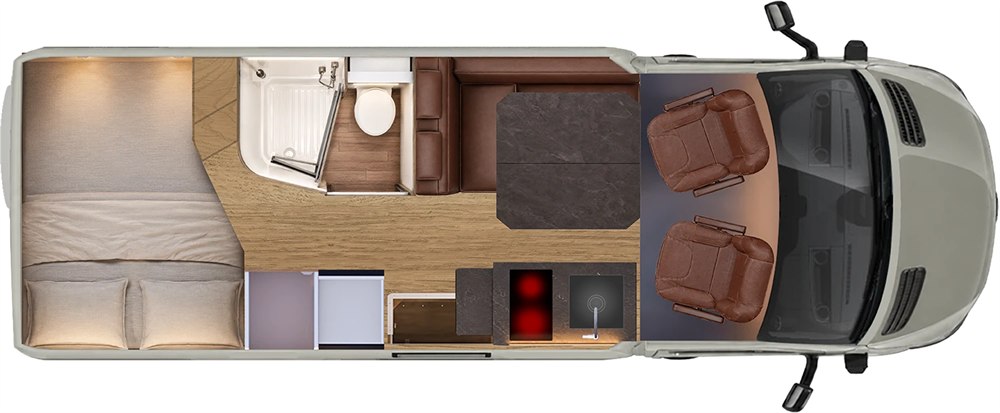
The interior renderings show warm wood tones, dark counters, integrated lighting, a compact kitchen area, seating, and sleeping arrangements that look more boutique cabin than emergency bunker. The available layouts include transverse bed and twin bed configurations, so buyers can choose between a more traditional camper sleeping arrangement or a setup that may work better for separate sleepers, guests, or anyone who does not want to reenact a midnight blanket treaty.
There is also a certain comedy in the idea of sipping coffee inside a heated carbon-fiber monocoque cabin while the outside world is doing its best dramatic wilderness routine. You are still “out there,” technically. You are just out there with an induction hob, a safe box, a Garmin control panel, and enough insulation to make nature knock politely before entering.
Who This Carbon 4×4 Motorhome Is Really For
This is not a sensible first camper for someone whose outdoor ambitions top out at tailgating with a folding chair. The Atlantis Carbon 4×4 is aimed at travelers who want a serious off-road-capable motorhome, have the budget for a highly specialized build, and care about construction technology as much as floor plans.
It also feels like a product for people who hate compromise but have made peace with very large invoices. Atlantis lists the price as available on request, and the product page positions the Carbon 4×4 as open for people to start designing their own configuration. The earlier announcement invited preorders, while the current product page keeps the focus on customization and contact.
For anyone trying to keep the spec pile from turning into a beautiful swamp, here are the key details worth remembering:
- Product: Atlantis Carbon 4×4 off-road motorhome.
- Core idea: a full carbon-fiber monocoque living cell engineered for off-road travel.
- Base chassis: Mercedes-Benz Sprinter 419 CDI 4×4.
- Length: 6,750 mm, with 2,150 mm width and 3,100 mm height.
- Layouts: transverse bed or twin beds, with 2+2 berths depending on configuration.
- Energy system: gas-free setup with lithium batteries, solar panels, and inverter.
- Price: listed by Atlantis as price on request, with configuration and preorder/contact handled through Atlantis Camper.
The Atlantis Carbon 4×4 is available through Atlantis Camper, where interested buyers can contact the company and configure the motorhome around their travel style. It is wildly overqualified for a grocery run, but that is sort of the point. This is a carbon-fiber, gas-free, off-road-ready house for people who believe a perfectly good road is merely a polite suggestion.
| Pros | Cons |
|---|---|
| Full carbon-fiber monocoque body is the rare, genuinely unusual hook. | Price is not publicly listed, so buyers need to contact Atlantis. |
| Built on a Mercedes-Benz Sprinter 4×4 platform with AWD torque-on-demand. | Large 6.75-meter size will not suit casual city parking or tiny campsites. |
| Gas-free energy system supports more independent travel. | Real-world autonomy depends heavily on configuration and usage. |
| Interior looks more premium cabin than stripped-down expedition box. | Highly specialized build likely means serious wait, planning, and budget. |
| Off-road pack and optional recovery hardware match the vehicle’s mission. | Overkill for buyers who mostly stay on paved campground loops. |
Where to find This Carbon-Fiber Off-Road Motorhome Lets Your Camper Leave The Road Too
OddityMall may earn a commission from qualifying purchases at no extra cost to you.