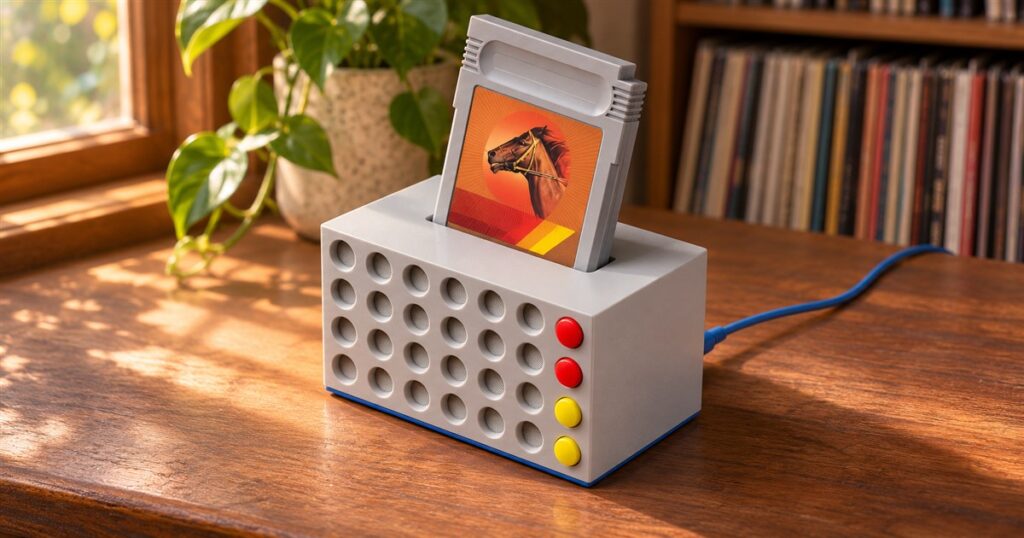
Somewhere in a drawer, a Game Boy cartridge is waiting for you to remember it contains more than a save file and the emotional residue of a very difficult boss fight. It also contains an album. Retro Song Bird is a cartridge music player that wants to put that album on your desk, where it can finally compete with the sound of incoming emails.
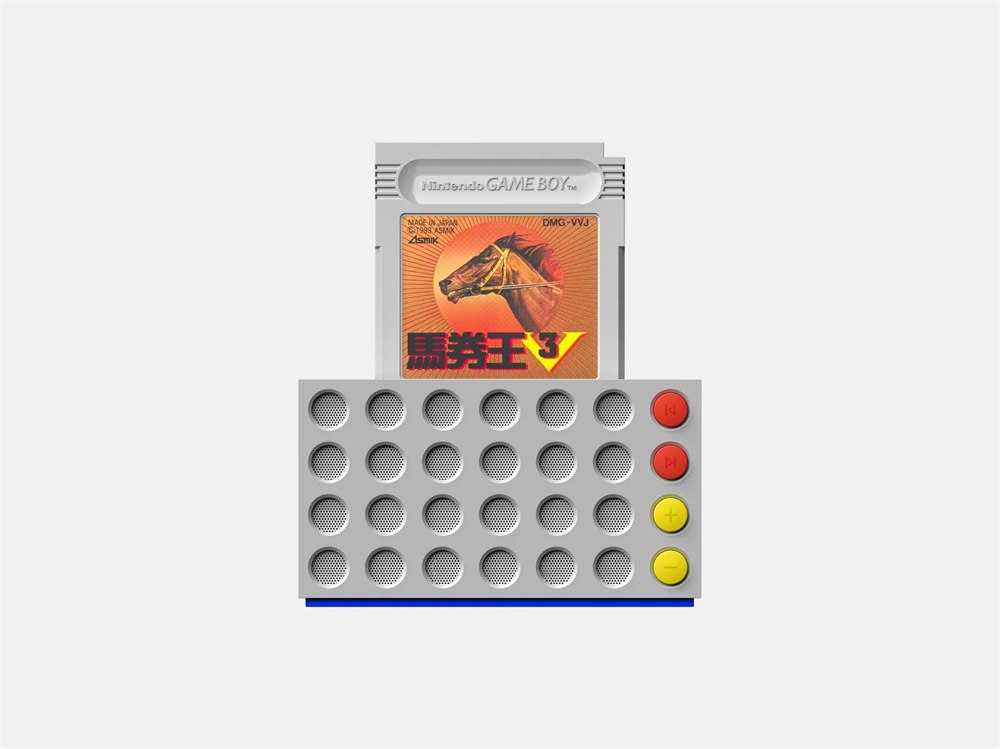
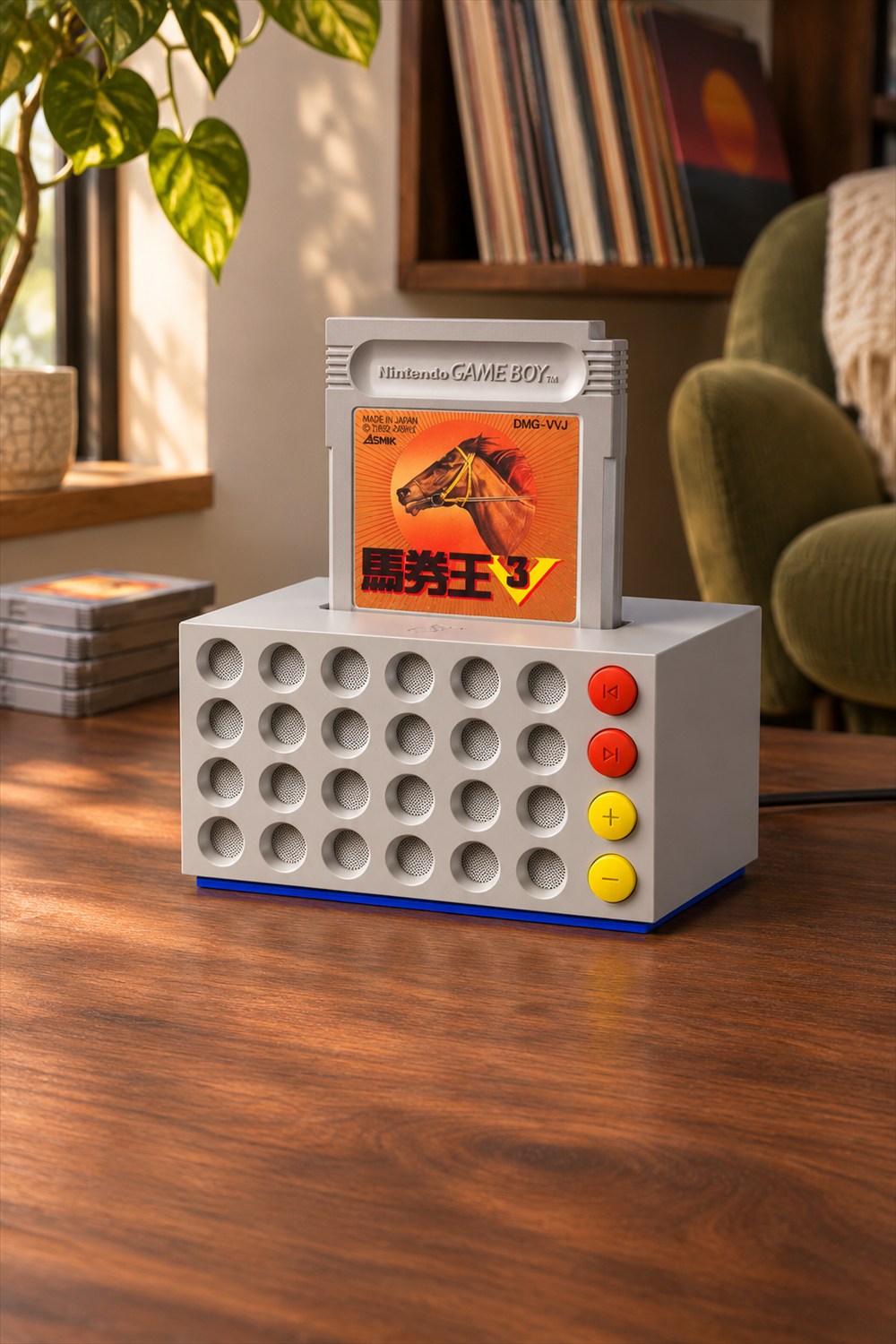
Made by Bird Cartel, this little speaker accepts Game Boy and Game Boy Color cartridges and plays their music. You insert a game into the slot on top, then use the front controls to move through tracks and adjust the volume. Your childhood collection gets a second career as a miniature record shelf.
The appeal is wonderfully specific. Plenty of people can remember a game melody more readily than their current passwords. Here, the physical cartridge becomes the thing you choose when you want to hear it again. There is a small ritual involved, and the ritual mercifully does not require beating the water level.
A soundtrack player with a cartridge slot
Bird Cartel lists support for more than 1,900 games. The player reads relevant portions of a cartridge’s ROM and uses register-level emulation of the Game Boy sound engine to produce the music. That matters because this is more involved than a speaker with a decorative cartridge holder stuck on top.
The maker describes access to tracks and sound effects, plus support for homebrew soundtracks made with GB Studio. There are previous, next, and volume controls on the front, so the basic listening experience has the pleasing simplicity of actual buttons. Nobody needs another everyday object whose volume adjustment requires a tiny committee meeting.
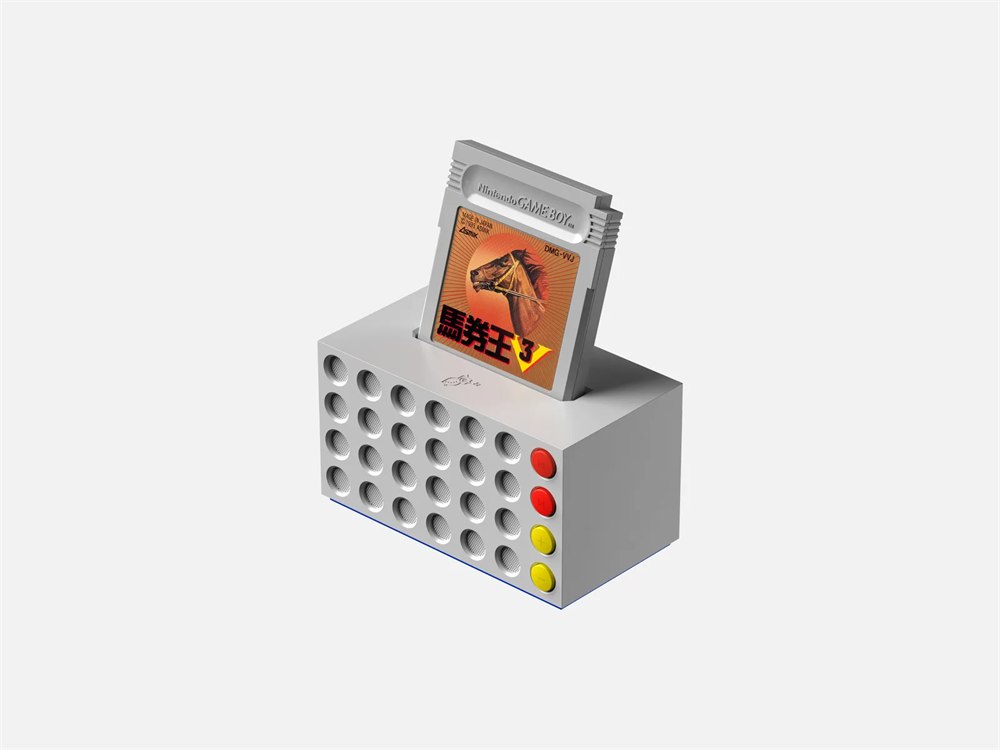
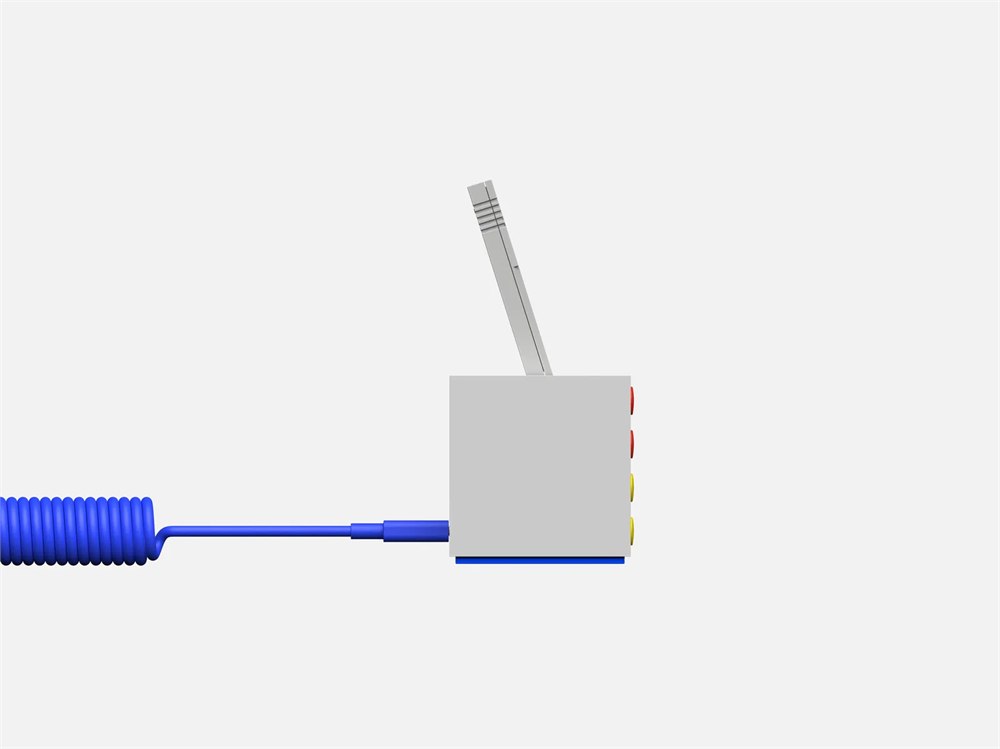
The design is similarly direct: a gray rectangular body, a grid of circular openings across the speaker face, a blue base, and a vertical line of red and yellow controls. With a cartridge standing above it, the whole arrangement looks like a tiny stereo that has found its preferred format and refuses to discuss streaming subscriptions.
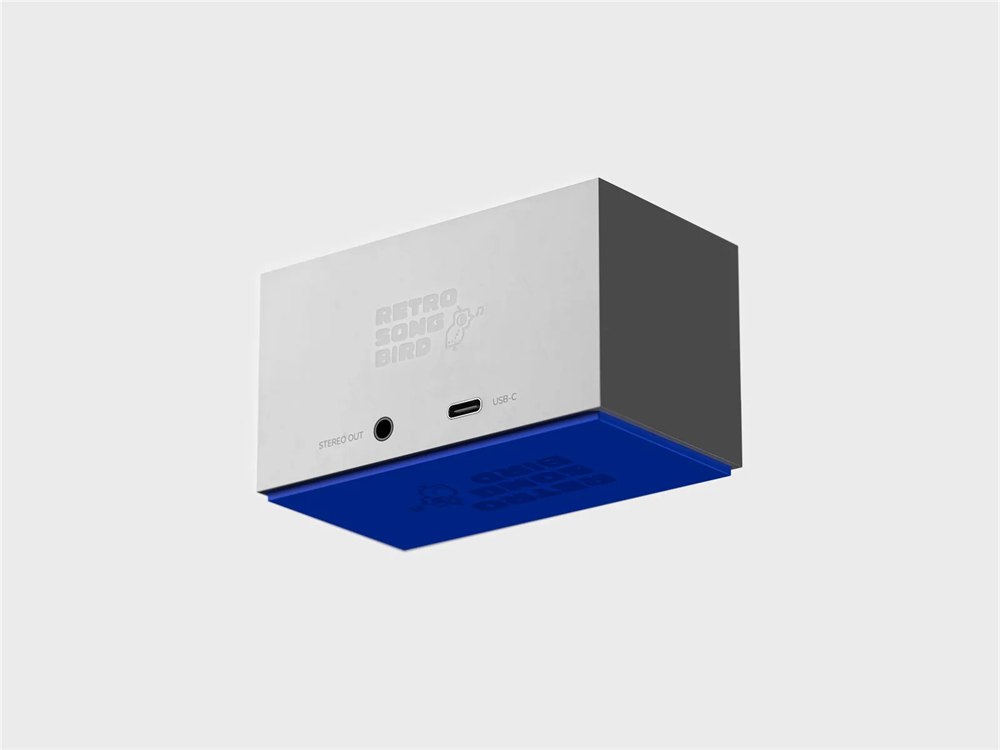
A stereo line output gives it a route into a larger listening setup. You can keep the cartridge ritual while letting other audio equipment handle playback. The maker’s product images also show the USB-C connection on the rear, away from the colorful front buttons.
Four channels for people who hear the parts
The more surprising side of Retro Song Bird is its music-making toolkit. Bird Cartel describes four separate USB audio streams corresponding to the Game Boy’s two square channels, wave channel, and noise channel. Those can feed a digital audio workstation, giving an interested musician separate parts to explore.
That is a different kind of nostalgia from simply pressing play. You can listen for how a melody, bass part, and percussion-like sounds interact inside a very limited sound system. A busy game soundtrack starts to feel less like a familiar blur and more like an impressively packed little musical suitcase.
- Play cartridge soundtracks and sound effects using physical track and volume controls.
- Connect the stereo line output to a separate audio setup.
- Send four individual sound channels over USB to a digital audio workstation.
- Export soundtracks as WAV files using the maker’s software features.
- Play saved songs from an LSDj cartridge.
The maker also describes synchronizing two Retro Song Bird units over MIDI and adjusting tempo for a DJ setup. Two players are required for that arrangement. Your old cartridge collection could become the world’s most compact crate of records, although selecting the next game still requires musical judgment rather than childhood loyalty.
For people making their own music, Bird Cartel points to its GBAlbum tool, which turns an album into a ROM playable on real hardware and Retro Song Bird. That puts the format in an interesting place: it can revisit old game music, but it can also be a way of presenting something new.
The useful bits behind the nostalgia
Cartridges are physical objects with data worth caring about. Retro Song Bird’s listed archival tools include backing up and restoring save files, backing up ROMs, and flashing writable cartridges. These are maker-described capabilities, with the practical details depending on the cartridge and the operation involved.
| Feature | What Bird Cartel describes |
|---|---|
| Music support | More than 1,900 Game Boy and Game Boy Color games |
| Audio engine | Register-level Game Boy sound emulation |
| Connections | Stereo line output and USB-C |
| USB audio | Two square channels, wave, and noise as separate streams |
| Archiving | Save backup and restore, ROM backup, writable cartridge flashing |
| Camera mode | Game Boy Camera used as a USB webcam |
Save backups may be the least flashy item on that list and the one that most interests someone with a long-running game tucked away. A cartridge can represent a surprising amount of time. It is understandable to want something more reassuring than a drawer and a hopeful expression protecting that history.
The software feature list also includes a history of inserted cartridges, mixtape creation for writable carts, and browser-based play with Game Genie and GameShark code support. Those extras broaden its role beyond a listening box. They also make it sensible to look through the current software details if one particular secondary feature is your main reason for backing it.
A webcam with absolutely no ambition to flatter you
Insert a Game Boy Camera and the player can become a USB webcam, according to Bird Cartel. The promised image is 128 by 112 pixels in four shades, with the maker jokingly describing roughly five frames per second. This is a creative bonus, rather than an attempt to win a modern video-quality contest.
For a retro visual experiment, that sounds delightful. For showing someone a detailed spreadsheet, it sounds like a very elaborate misunderstanding. The camera cartridge is a separate piece of hardware, so this feature is relevant to people who have one or plan to obtain one.
There is an alarm mode, too. Bird Cartel says you can wake to a cartridge, press a button to snooze, or pull the cartridge to stop the alarm. Physically removing a game to end the morning noise has a certain satisfying finality. It is probably the most dramatic use a sleepy person can find for a cartridge before breakfast.
An open API and over-the-air updates are also part of the maker’s plans. Developers can work with functions such as cartridge reading, flashing, backups, and camera frames through web requests. These features give curious owners room to experiment, while ordinary listeners can remain focused on the much simpler pleasure of choosing a game and hearing its music.
Who this little speaker makes sense for
Retro Song Bird is most interesting for someone who already loves the physical collection. The cartridge is part of the attraction, rather than an obstacle to remove. Collectors, chiptune enthusiasts, and people who enjoy unusual music hardware all have an obvious reason to pay attention.
It is also still a crowdfunding project. The official gallery identifies its images as product renderings subject to change, and the finished hardware should be judged with that development stage in mind. The design shown here is charming, but a campaign is a commitment to a proposed product rather than a ready-to-ship retail purchase.
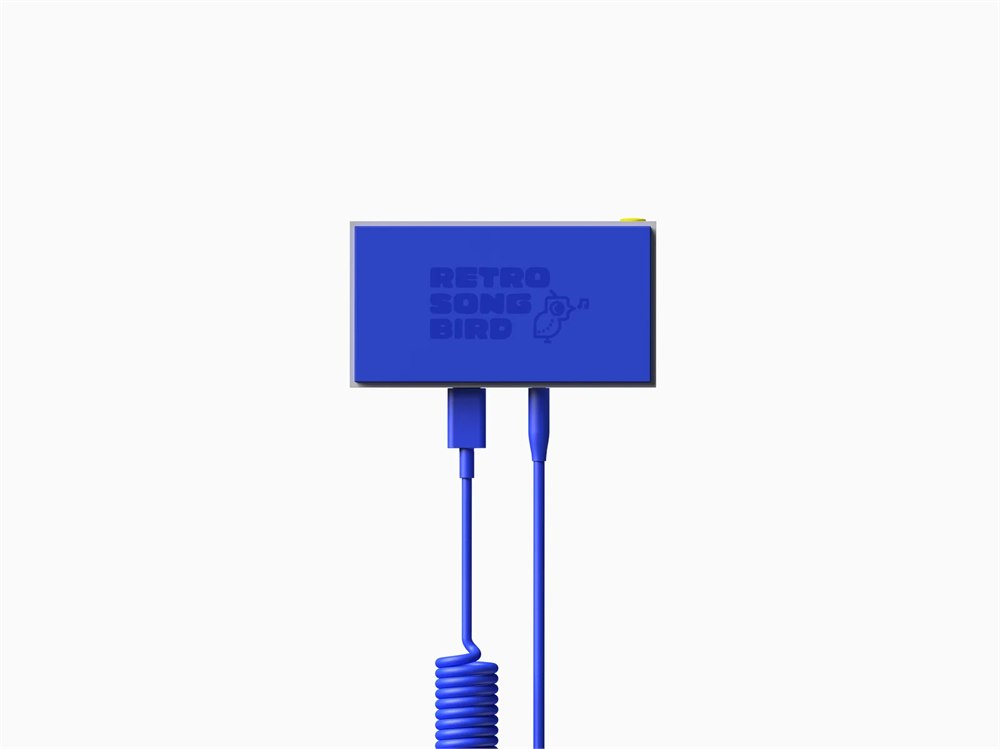
Images: Bird Cartel / Retro Song Bird. Official product renderings; final design may change.
- Standalone cartridge music player for supported Game Boy and Game Boy Color games.
- Maker lists more than 1,900 supported games and physical playback controls.
- Stereo line output, four-channel USB audio, and WAV export are listed features.
- Additional tools cover saves, ROM backups, writable cartridges, and developer access.
- Game Boy Camera webcam mode requires the separate camera cartridge.
- No game ROMs ship with the player; playback comes from your own cartridges.
The standard Retro Song Bird pledge is listed at $79 on Kickstarter, with shipping and applicable taxes extra. The campaign lists estimated delivery for April 2027; crowdfunding schedules and final specifications can change. Bird Cartel is independent of Nintendo and says the product is neither affiliated with nor endorsed by Nintendo.
For the right collector, the proposition is simple: let those cartridges do something between gaming sessions. They have been holding excellent little soundtracks for years. A dedicated seat on the desk seems like a reasonable promotion.
| Pros | Cons / considerations |
|---|---|
| Physical cartridges become a hands-on music library | You supply the cartridges; no game ROMs are included |
| Four separate USB audio channels for creative use | Advanced workflows require compatible software and setup |
| Save and cartridge backup tools add utility | Check support for your particular cartridges and needs |
| Distinctive desktop design and simple front controls | Published gallery shows renderings subject to change |
| Playful camera and alarm extras | Camera mode needs a separate Game Boy Camera |
| Active crowdfunding campaign | Delivery is estimated, rather than guaranteed |
Save this find.
Thank yourself later.
Your next great gift idea. Your someday space. Your collection of wonderfully weird things.
Save to PinterestPick a board. Keep the inspiration.
This Game Boy Cartridge Music Player Turns Your Games Into Albums
At a glance
Product snapshot
- Listed price
- $79Prices and availability can change. Check the seller for current details.
- Where to find it
- Kickstarter
- Category
- Gadgets