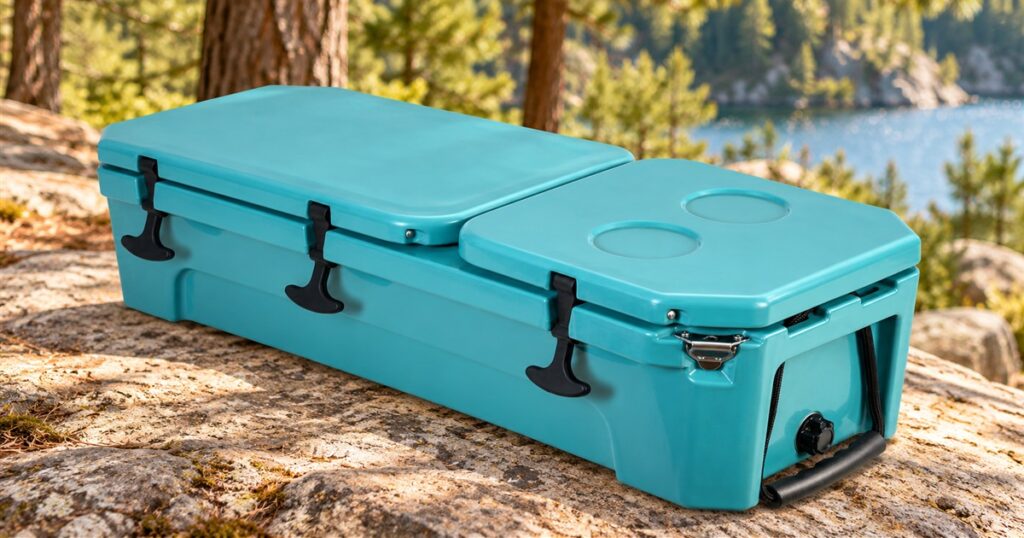
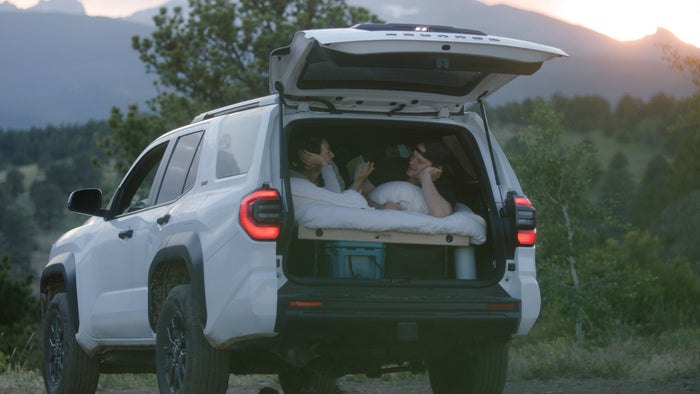
Car camping is a relaxing outdoor activity in which two adults spend forty minutes deciding where to put a box of cheese. The sleeping platform fits. The pillows fit. Your heroic collection of emergency hoodies fits. Then the cooler arrives, shaped like it has booked its own seat and would prefer the window.
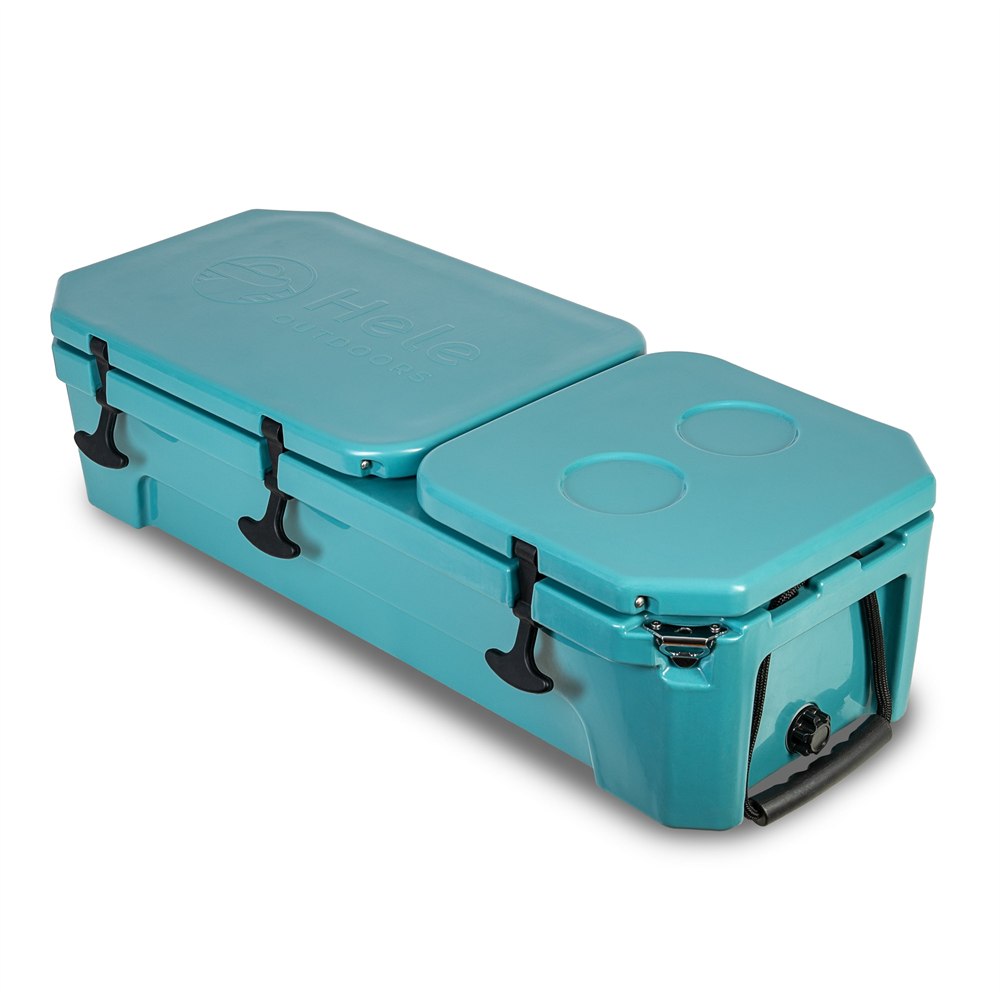
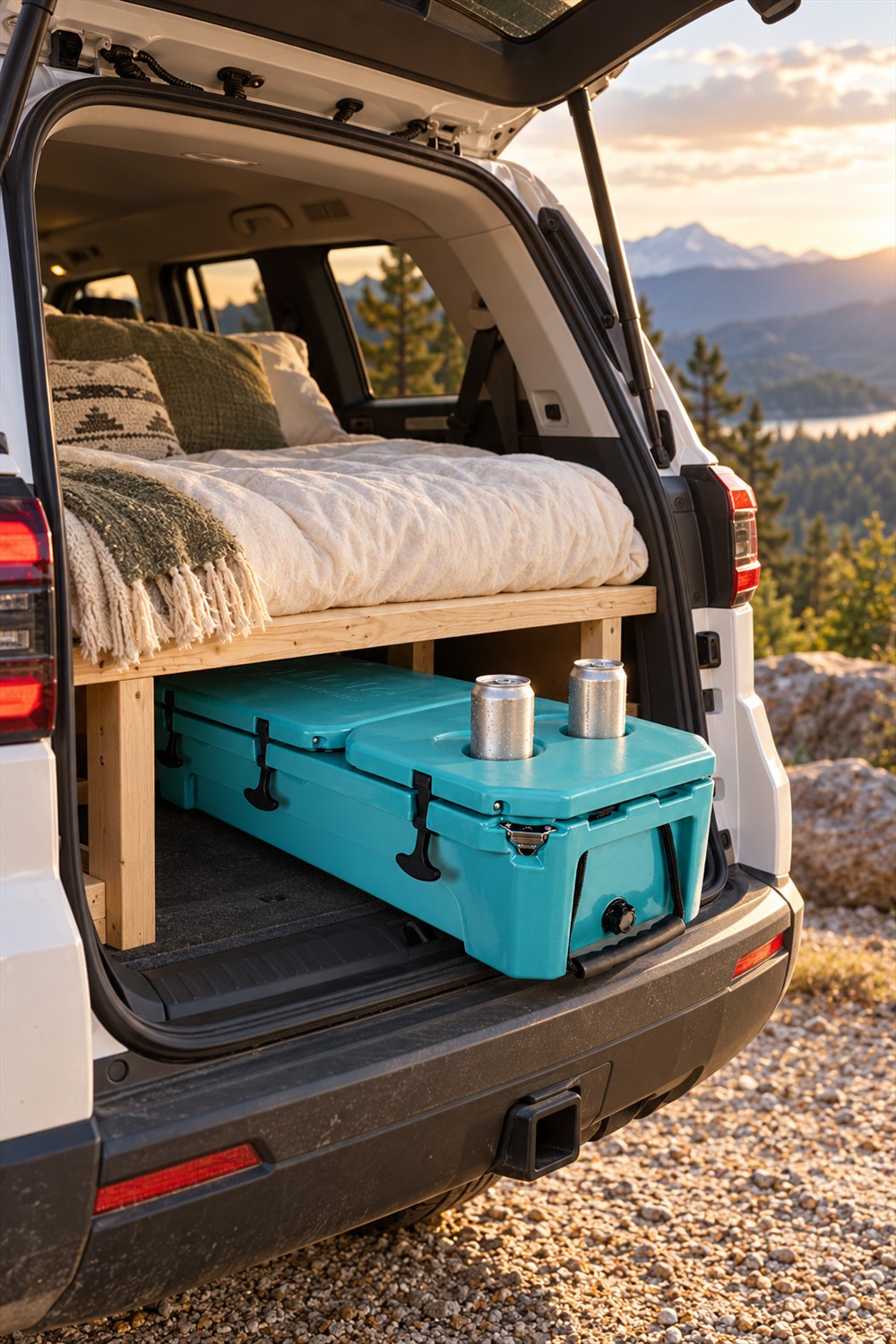
The Hele Outdoors Ice Box takes a refreshingly literal approach to that problem: make the cooler shorter. Much shorter. This low-profile car-camping cooler stretches out into a long, shallow shape designed to slide beneath a sleeping platform, giving dinner somewhere to live without making you sleep diagonally around it.
It’s still an ice cooler. There is no compressor to wire up, no temperature app to pair, and no reason for your lunch to request a firmware update. The interesting part is the arrangement: two separate compartments, two lids, and an unusually flat footprint that acknowledges people also need space inside the vehicle.
A cooler that understands the bed gets priority
Hele already makes sleeping platforms for vehicles, so the Ice Box is aimed at a particularly specific packing headache. A normal tall cooler can occupy the exact space your mattress needs. Raising the bed to clear it can mean sacrificing headroom, and suddenly sitting up becomes a negotiation with the roof liner.
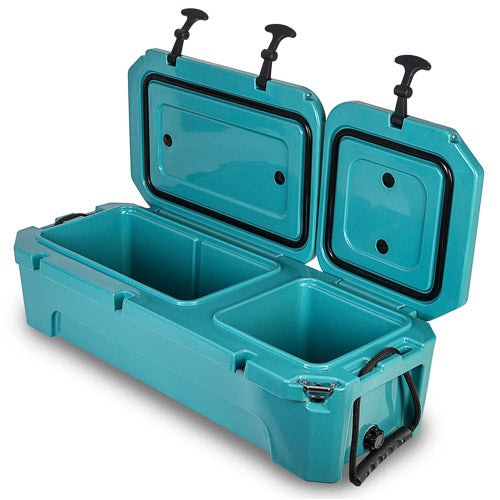
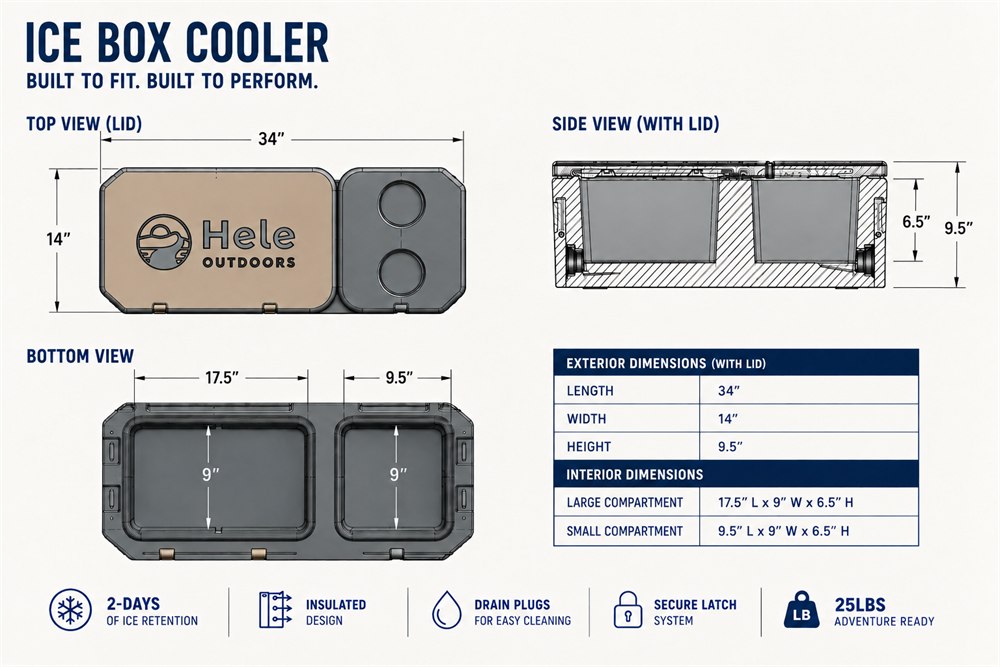
The Ice Box measures 34 inches long, 14 inches wide, and 9.5 inches high with its lids closed. Think long and low rather than short and chunky. Hele designed it to fit beneath its own sleeping platform, and also suggests it for homemade platforms with suitable clearance.
Related posts:
That last part matters. A low cooler isn’t a universal-fit cooler. Before picturing your beautifully organized weekend setup, measure the space beneath the bed, the distance between its supports, and the opening you’ll actually slide the cooler through. A tape measure is considerably cheaper than discovering your trunk has a personality conflict with your new gear.
Also allow room to reach the handles and open a lid once the cooler slides out. The closed dimensions tell you whether it can stow away; your platform and cargo layout determine whether getting a drink feels effortless or like removing a drawer from an antique dresser.
Two compartments, fewer snack-related disturbances
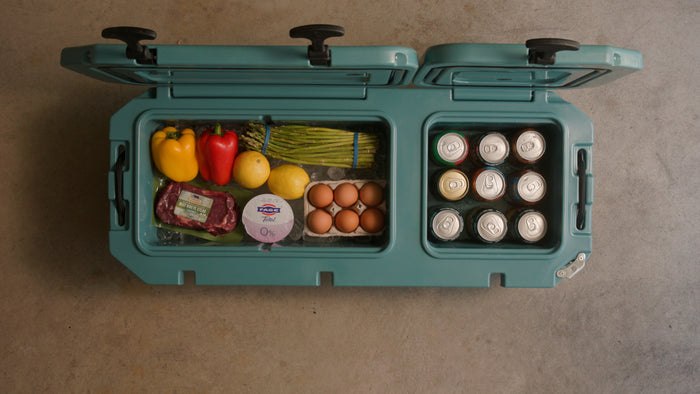
Inside, the cooler separates a larger food compartment from a smaller quick-access section. The idea is to keep frequently retrieved drinks and snacks in the small end, leaving the larger lid closed more often. Anyone who has watched a friend open the cooler repeatedly while deciding whether they’re hungry can appreciate the diplomacy involved.
These are separate storage compartments, not independently controlled refrigerator zones. Both depend on how you pack them and the ice you bring. The split gives you a way to organize access; it doesn’t turn one end into a freezer or provide a temperature setting for particularly demanding yogurt.
The division also means you need to think about container shape. A long casserole dish won’t magically pass through a solid divider, however persuasive your camping itinerary may be. Smaller food containers and a deliberate packing plan make more sense here than attempting to recreate the entire refrigerator drawer by drawer.
- Keep drinks and frequently grabbed items in the smaller compartment.
- Use the larger section for food you expect to retrieve less often.
- Measure your under-platform space and the route the cooler takes out of the vehicle.
- Account for ice alongside food, rather than filling every inch with provisions.
- Choose containers that fit the individual compartments, especially their shallow height.
Hele estimates that conscious packing can support a couple for two to three nights or a solo camper for two to four. That’s a packing estimate, not a promise about your particular menu. A person who considers six beverages and a sandwich sufficient will have a different experience from someone planning a three-course wilderness brunch.
The measurements behind the unusual shape
The maker’s dimension diagram is more useful than guessing capacity from photographs. It shows a shallow interior and a substantial divider, which explain both the cooler’s neat organization and its limits. Hele’s imagery can demonstrate a grocery load, but your containers still need to fit alongside whatever keeps them cold.
| Detail | Hele’s listed specification |
|---|---|
| Exterior with lids closed | 34 × 14 × 9.5 inches |
| Larger compartment interior | 17.5 × 9 × 6.5 inches |
| Smaller compartment interior | 9.5 × 9 × 6.5 inches |
| Listed weight | 25 pounds |
| Ice retention | 48 hours claimed by Hele |
| Layout | Two separate compartments with individual lids |
The listed 25-pound weight is worth noticing before you add supplies. This is a hard cooler designed around a storage problem, not a tiny soft lunch bag. Plan how you’ll move it when loaded, especially if your cargo floor sits high or you expect to lift it repeatedly during a trip.
A small tailgate without unpacking the campsite
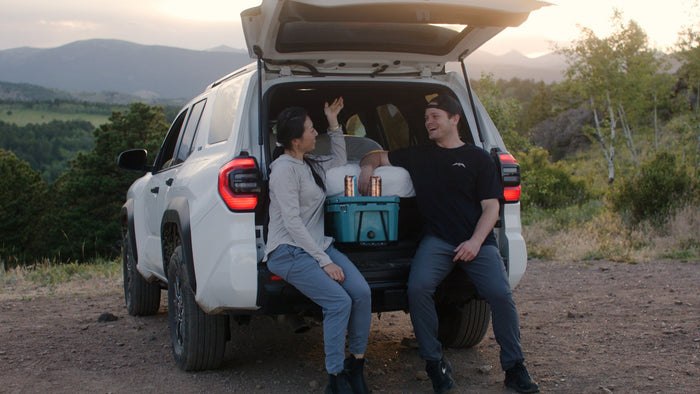
Hele calls another feature tailgate mode. Slide the smaller end partly out of the vehicle and its closed lid becomes a little surface for drinks. The larger section remains inside, where the weight of its contents helps balance the extended end. It is an appealingly simple use of a cooler that was already taking up space.
The smaller lid includes two molded cup recesses, and a bottle opener sits at a corner. Your drink gets a designated parking spot, and the opener has less opportunity to disappear into the miscellaneous camping bag that also contains three tent pegs and a charging cable from 2014.
The balance depends on the load and the vehicle setup. Follow Hele’s intended arrangement and keep the main body properly supported; the little overhang is a drink surface, not an invitation to sit on the cooler’s unsupported end. Practical convenience is the appeal here, rather than replacing every piece of camp furniture.
Quick access is useful even when you aren’t lingering at the hatch. Being able to expose just the small compartment could make a roadside snack stop less disruptive. You can leave the broader sleeping setup in place instead of dismantling your bedroom to retrieve something wrapped in foil.
A weekend-oriented design with real tradeoffs
Hele claims 48 hours of ice retention and recommends pre-chilling the cooler before loading it for a trip. That is a manufacturer claim, not a hands-on result from us. Weather, starting temperature, packing, and how often the lids open will affect your own experience.
The compact height is the whole reason to consider this design, but it also puts a ceiling on what fits inside. Tall containers need checking. The separate compartments impose their own dimensions. If your usual packing strategy is to drop everything into one enormous cold cavern and hope, this cooler asks you to develop a modest amount of administration.
For someone building a tidy sleeping setup inside a vehicle, that may be a welcome trade. The goal is to keep the bed usable, the food organized, and the cooler reachable. For a big gathering where maximum drink storage is the priority, Hele itself says this isn’t the party cooler to choose.
Images: Hele Outdoors.
Key details before planning the next trip
- Low-profile ice cooler designed for storage beneath a car-camping sleeping platform.
- Exterior dimensions of 34 inches long, 14 inches wide, and 9.5 inches high.
- Separate large and small compartments with independently opening lids.
- Quick-access end with two molded cup holders and a corner bottle opener.
- Partial-slide tailgate arrangement supported by the larger section inside the vehicle.
- Listed weight of 25 pounds and manufacturer-claimed 48-hour ice retention.
- Best considered for carefully packed road trips, rather than large-party capacity.
Hele Outdoors lists the Ice Box at a $199 USD preorder price, alongside a $249 reference price. However, its product page currently says coming soon and invites visitors to sign up for official preorder and in-stock launch dates. Treat it as an upcoming product rather than something ready to ship for this weekend’s escape.
If the space beneath your camping bed has been waiting for a cooler that understands the assignment, this is a clever shape to keep an eye on. Your cheese gets a room. Your pillows keep theirs. At last, a camping arrangement with reasonably clear boundaries.
| Pros | Cons and considerations |
|---|---|
| Low shape targets otherwise awkward under-bed space. | Platform clearance and access still need measuring. |
| Separate lids allow quick access to frequently used items. | Divider and shallow compartments limit container sizes. |
| Small lid adds cup holders and a useful tailgate surface. | Partial extension relies on proper support and load balance. |
| Ice cooling avoids a powered refrigerator installation. | Ice needs space and replenishment; retention varies. |
| Purposeful design for compact vehicle camping. | Listed at 25 pounds; not aimed at large-party storage. |
| Pricing is posted by the maker. | Coming-soon status; immediate shipping is not established. |
Save this find.
Thank yourself later.
Your next great gift idea. Your someday space. Your collection of wonderfully weird things.
Save to PinterestPick a board. Keep the inspiration.
This Low-Profile Camping Cooler Slides Under Your Car Bed
Where to find This Low-Profile Camping Cooler Slides Under Your Car Bed
OddityMall may earn a commission from qualifying purchases at no extra cost to you.