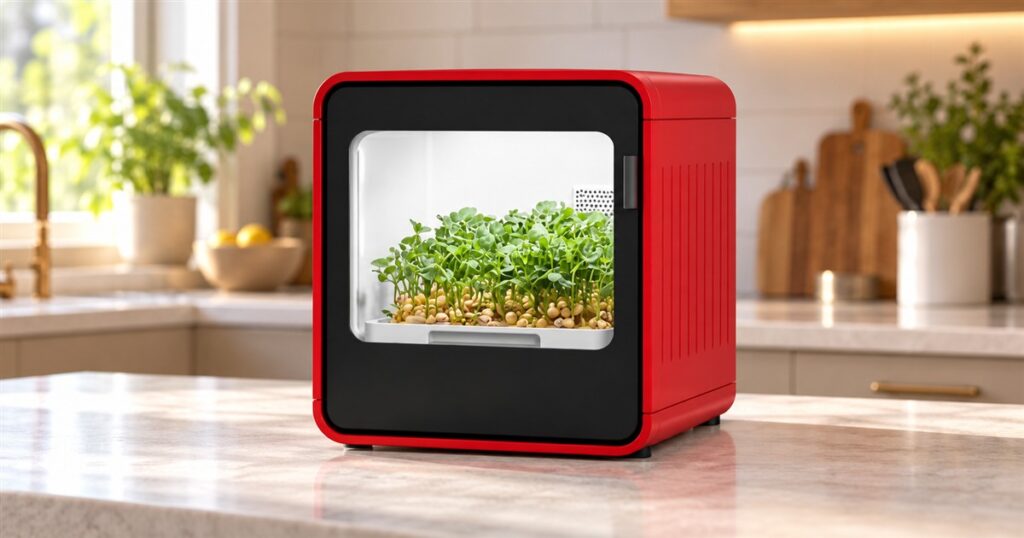
Your refrigerator has a drawer where good intentions go to become suspicious green water. Home Harvest proposes a different arrangement: keep the greens alive in a little climate-controlled cabinet until dinner actually happens. Its indoor smart farm grows microgreens, herbs, and salad leaves on trays, giving your kitchen a tiny agricultural department without requiring anyone to purchase a tractor.
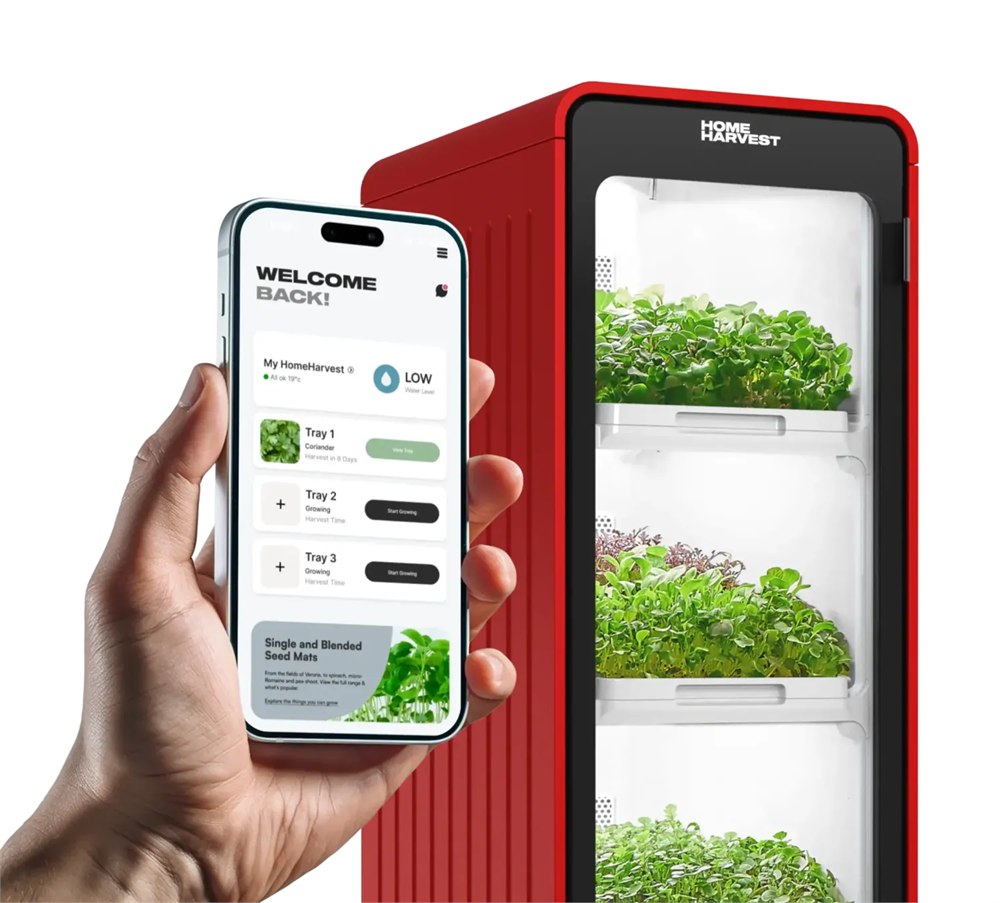
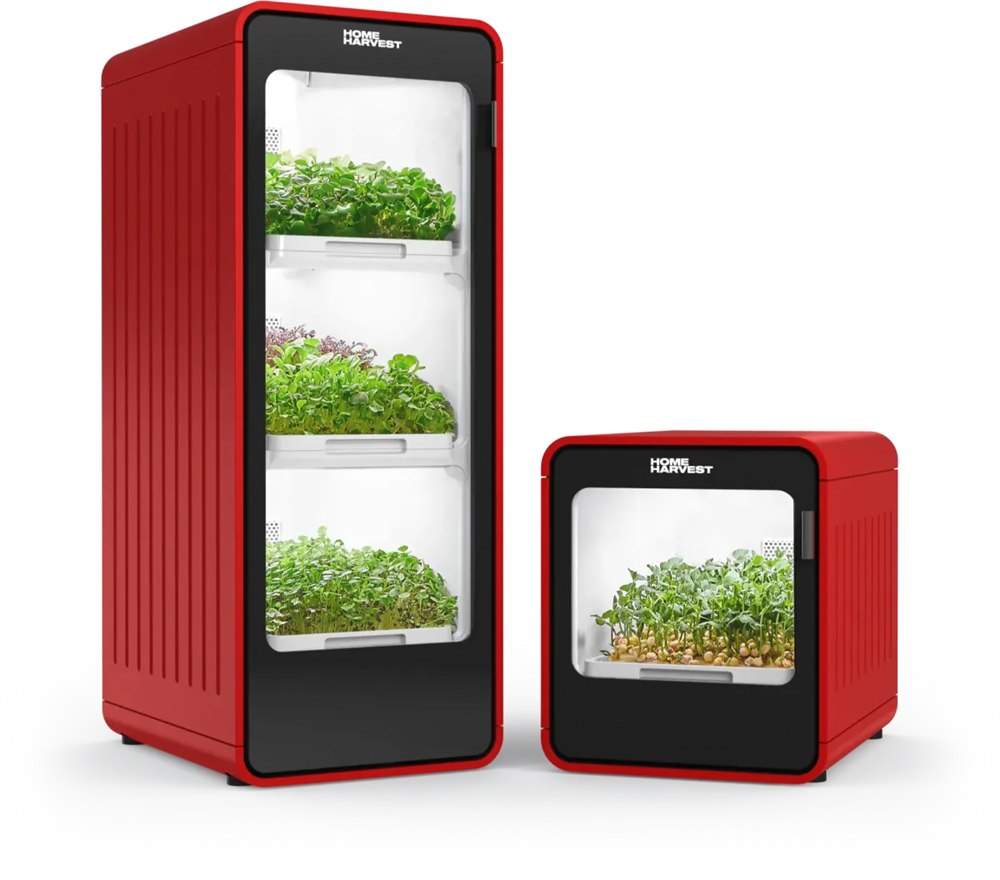
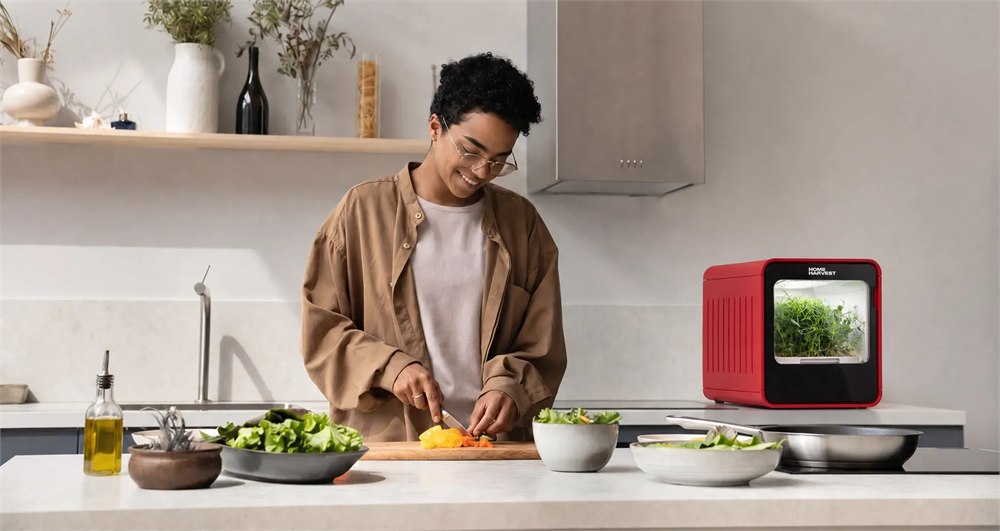
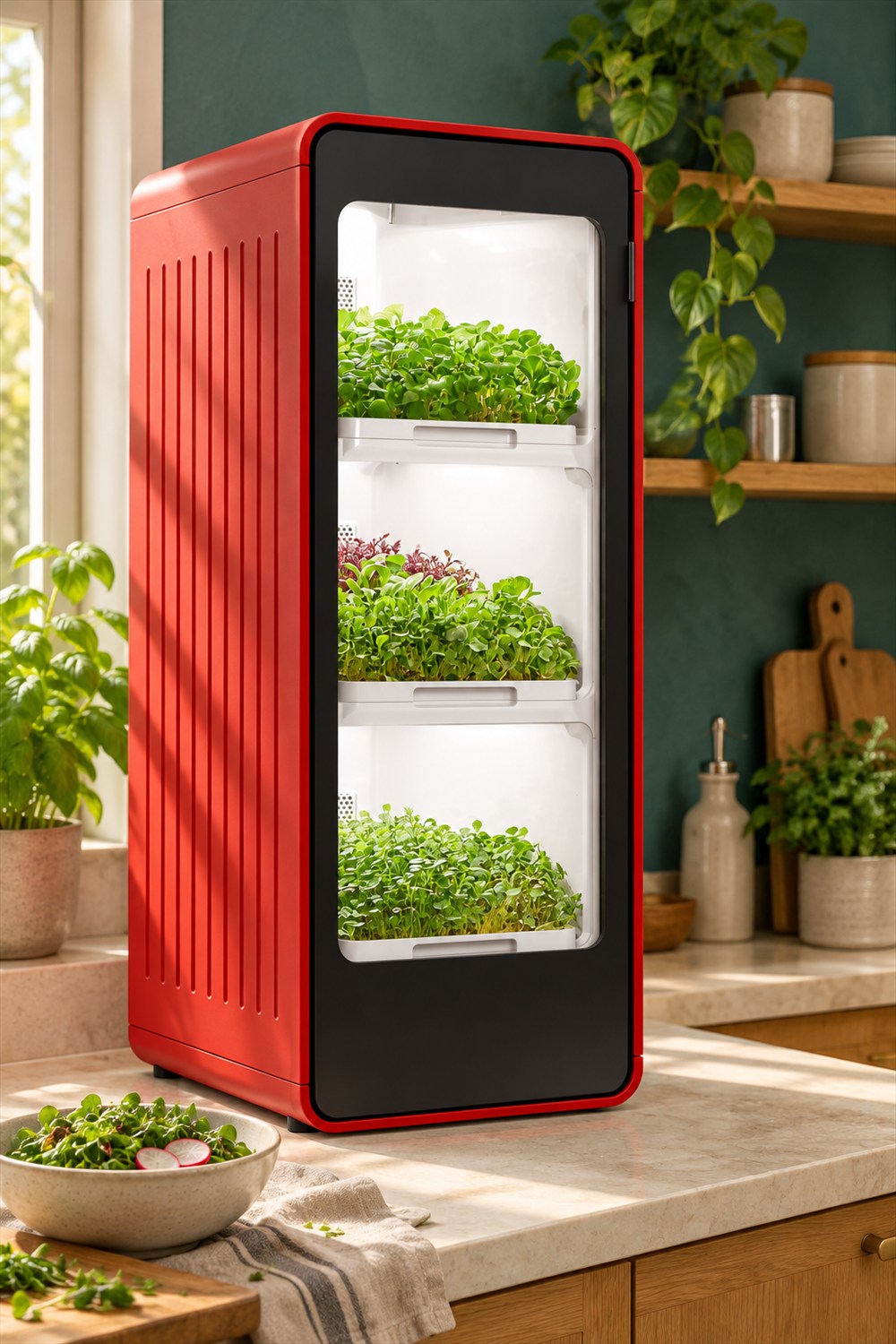
The UK company’s Harvest One and Harvest Three are enclosed growing appliances with clear front windows, bright interiors, and colorful housings. They look a bit like miniature display refrigerators, except the contents are still busy becoming lunch. The One holds a single growing tray; the Three stacks three trays vertically for people whose relationship with salad has progressed beyond the occasional apologetic side dish.
Both are being offered through a Kickstarter campaign. That matters: this is a look at a proposed consumer product and the maker’s advertised capabilities, rather than a hands-on test of something already living on our countertop. The concept is appealing, but a campaign pledge and a box arriving at your door are two separate milestones.
A seed mat gets its own tiny growing room
The basic routine starts with a pre-seeded mat. Put it in the growing tray, add water, select or scan the crop in the app, and shut the door. Home Harvest says the system handles lighting, watering, temperature, humidity, and airflow. You supply the appetite. Ideally, you also remember that you bought a vegetable-growing appliance before ordering another pizza.

The mats are soil-free, so there is no bag of potting mix waiting to spill across the kitchen floor. That is a meaningful distinction for anyone who wants fresh herbs but does not want their food-prep area to double as a garden center. The growing tray provides a defined space for the crop, rather than a collection of mismatched pots negotiating for room beside the sink.

According to the campaign FAQ, many crops take about 10 to 15 days, while some can be ready in as little as eight. Read that last number as a best-case crop-dependent timetable, not a universal countdown. Plants do not all share a calendar, even when they have better climate control than your spare bedroom.
The appeal is small, frequent harvests. A handful of greens for a sandwich is a different job from producing an entire household’s food. This is a way to bring a little growing into everyday cooking, with the crop close enough that using it does not require remembering what is happening at the far end of a backyard.
The app is there to mind the leaves
Inside the cabinet, the advertised hardware includes full-spectrum LEDs, an HD camera, a ceramic heater, a circulation fan, and sensors for humidity, temperature, and water level. Those are practical components for managing a contained growing space. The camera also gives you something considerably less alarming to check on your phone than the news.
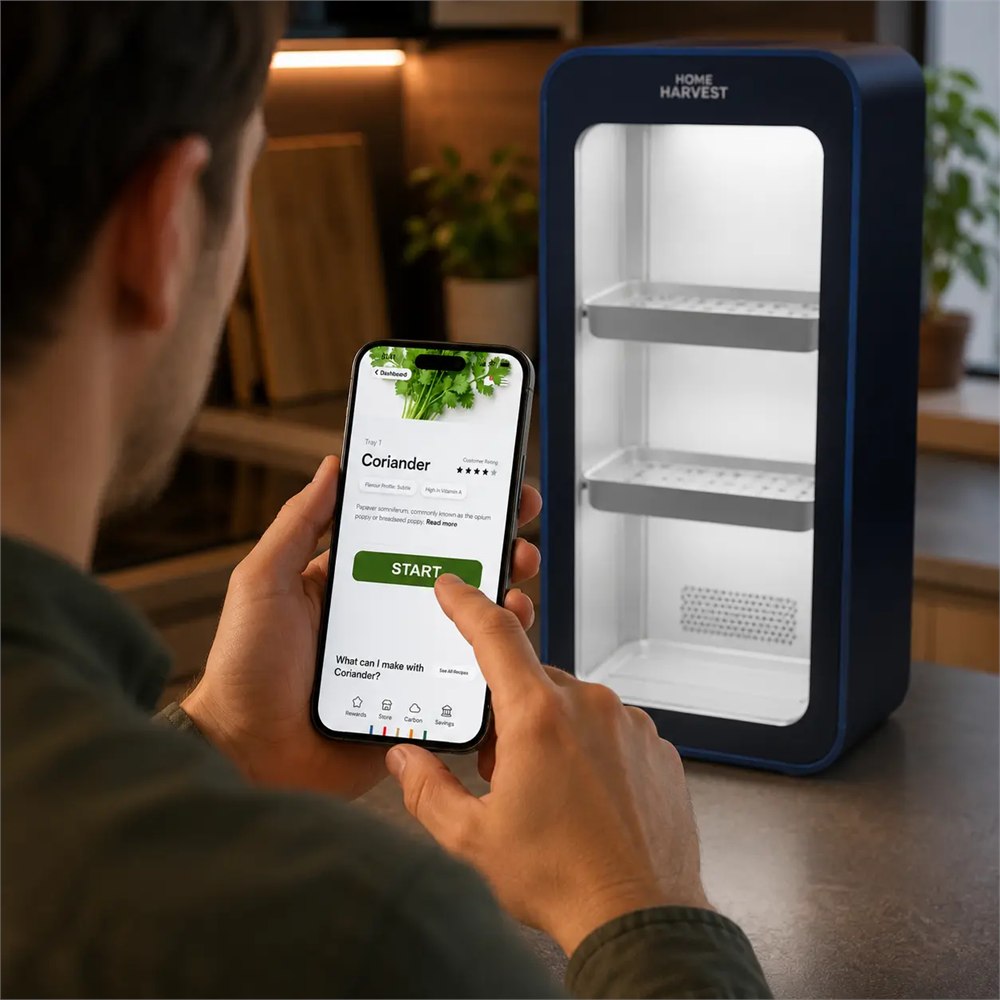
The companion app offers monitoring, harvest reminders, recipe discovery, and a Holiday Mode. Think of the notifications as a nudge that the thing you planted is ready to eat, rather than another app demanding a daily streak. You can still take the traditional approach and look through the window, a surprisingly underrated feature in the smart-device universe.
- Pre-seeded mats simplify the planting step without loose soil.
- The enclosed cabinet manages the growing environment around the trays.
- A built-in camera and sensors support monitoring through the app.
- Harvest reminders help connect the growing schedule with actual meals.
- One-tray and three-tray models offer different capacities with the same listed base dimensions.
Home Harvest also advertises recipe suggestions tied to what you grow. That may be especially useful after the first triumphant harvest, when you discover that owning fresh herbs and knowing what to cook with them are separate personality traits. A modest sprinkle on eggs is a perfectly respectable start. Nobody is grading your pesto.
One shelf of salad, or the upstairs-downstairs version
The key buying decision is capacity and height. Harvest One is the shorter single-tray machine. Harvest Three uses the same listed width and depth, but stretches upward to hold three trays. It is the difference between assigning your microgreens a studio apartment and giving them an entire small apartment building.
| Maker-listed detail | Harvest One | Harvest Three |
|---|---|---|
| Growing trays | 1 | 3 |
| Height | 36.4 cm | 81.3 cm |
| Width | 31.3 cm | 31.3 cm |
| Depth | 42 cm | 42 cm |
| Listed power | Approximately 25 W | Approximately 65 W |
| Suggested household | 1-2 people | 3-5 people |
Those household suggestions are the manufacturer’s positioning, not a promise that every person gets all the greens they could possibly eat. A household that uses herbs for garnishes has different needs from someone who treats a salad bowl as a competitive sport. Tray count is the more concrete comparison; choose around the amount you would realistically harvest and use.
Measure the intended spot before falling in love with the larger model. At 81.3 cm tall, Harvest Three deserves a proper home rather than a vague promise that it will fit somewhere. Width and depth are only part of the puzzle: you also need to reach the door, handle the trays, and carry out normal care without performing countertop gymnastics.
A little more dinner, a little less produce guilt
The maker shows microgreens and leafy crops being harvested in portions, with the rest left growing. That is the appealing everyday scenario: snip what you need now, then come back when tomorrow’s sandwich requests a promotion. A tray of living greens has a different rhythm from a sealed bag that you open, forget, and eventually approach with tongs.
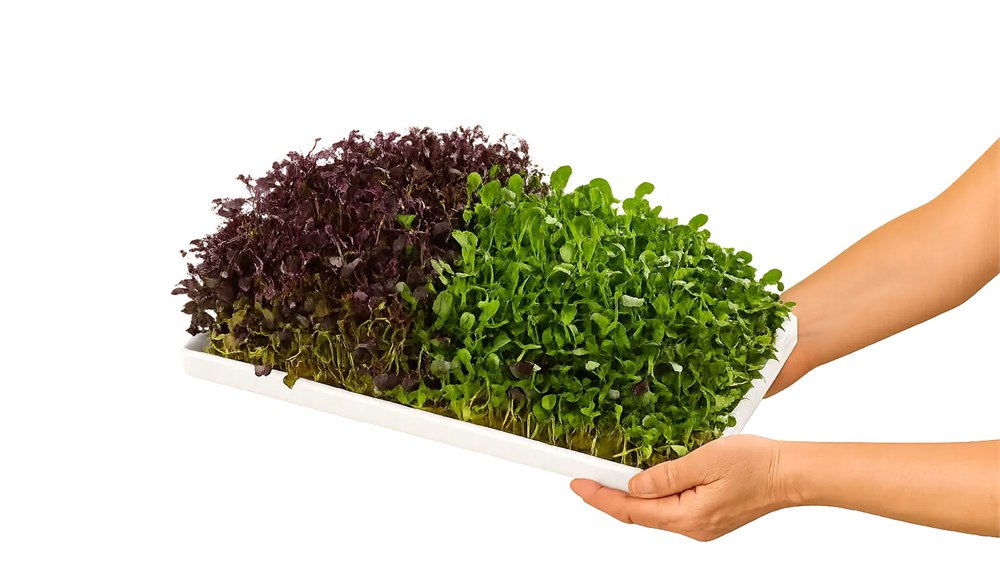
This setup is especially easy to understand if your available growing space currently consists of one windowsill and a basil plant that has lost confidence in you. A contained appliance trades outdoor space and some daily guesswork for equipment, electricity, and replacement growing supplies. Whether that trade is worthwhile depends on how often you cook with fresh greens.
It also helps to keep expectations appropriately small. The attraction is convenience, proximity, and the pleasure of growing something edible. It is not a reason to cancel every grocery trip or announce that you now operate a self-sufficient farm. The cereal still comes from somewhere else, and nobody has successfully harvested a croissant from this tray.
There will still be care involved. Automated growing does not mean an appliance never needs attention, water, or cleaning between uses. Before pledging, look at the maker’s care information and the consumables you expect to buy. The least glamorous part of an indoor garden is often the part that determines whether you keep using it.
The details before you reserve counter space
- Product: Home Harvest enclosed indoor smart farm.
- Models: single-tray Harvest One and three-tray Harvest Three.
- Crops: microgreens, herbs, and salad leaves using soil-free growing mats.
- Controls: automatic growing conditions with app monitoring and reminders.
- Timing: campaign guidance says roughly 10-15 days for many crops, with some as quick as eight.
- Availability: Kickstarter crowdfunding preorder, rather than ordinary in-stock retail.
At the time of writing, Home Harvest’s official website lists preorder pricing of US$349 for Harvest One and US$449 for Harvest Three. Its displayed reference prices are US$499 and US$649 respectively. The linked Kickstarter campaign has its own reward tiers and bundles, so check the selected reward, shipping, and final charges before pledging.
Seed mats are a continuing consideration, although the campaign FAQ says a subscription is optional. Crowdfunding delivery estimates can change, and backing is not the same as purchasing an appliance already on a store shelf. If you are comfortable with that, the pitch is delightfully concrete: fresh greens behind a little door, waiting for you to become the kind of person who adds a garnish on a Tuesday.
Product images courtesy of Home Harvest.
| Pros | Cons and considerations |
|---|---|
| Enclosed growing space with automatic environmental controls | Still needs water, care, and cleaning |
| Soil-free mats simplify planting | Growing supplies remain an ongoing expense |
| Two capacities share the same listed footprint | The three-tray model needs substantially more height |
| Monitoring and reminders support small regular harvests | App features add a connected-device dependency |
| Designed for fresh greens close to the kitchen | Crowdfunding fulfillment and final performance remain to be proven |
Save this find.
Thank yourself later.
Your next great gift idea. Your someday space. Your collection of wonderfully weird things.
Save to PinterestPick a board. Keep the inspiration.
This Countertop Smart Farm Grows Fresh Greens Inside a Climate-Controlled Cabinet
Where to find This Countertop Smart Farm Grows Fresh Greens Inside a Climate-Controlled Cabinet
OddityMall may earn a commission from qualifying purchases at no extra cost to you.