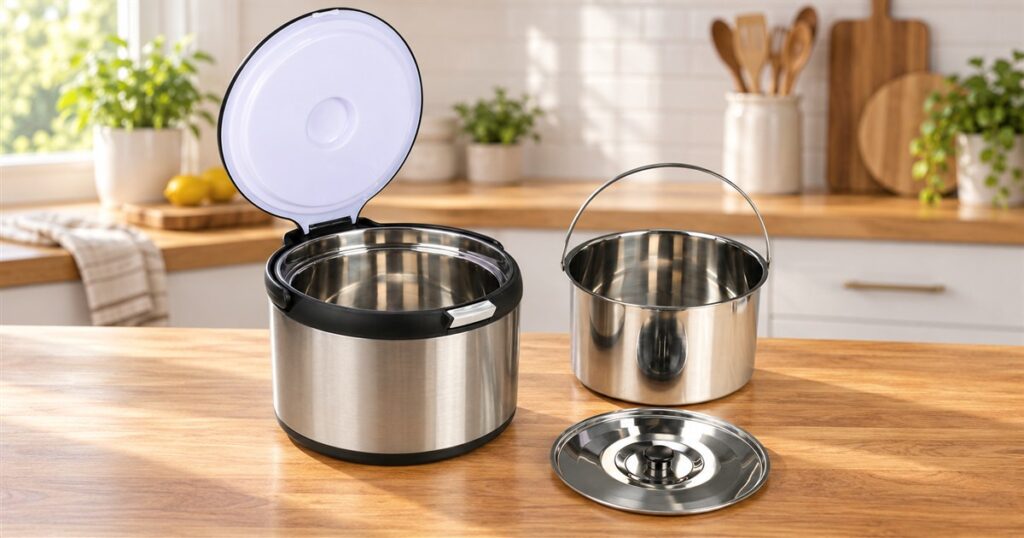
Most kitchen appliances want a permanent relationship with an outlet. This thermal cooker would prefer a brief encounter with your stove and then some time alone. The TAYAMA TXM-50CF nests a hot cooking pot inside an insulated shell, allowing stored heat to keep working after the burner is off. Your stew gets a cozy little apartment. Your stove gets the afternoon back.
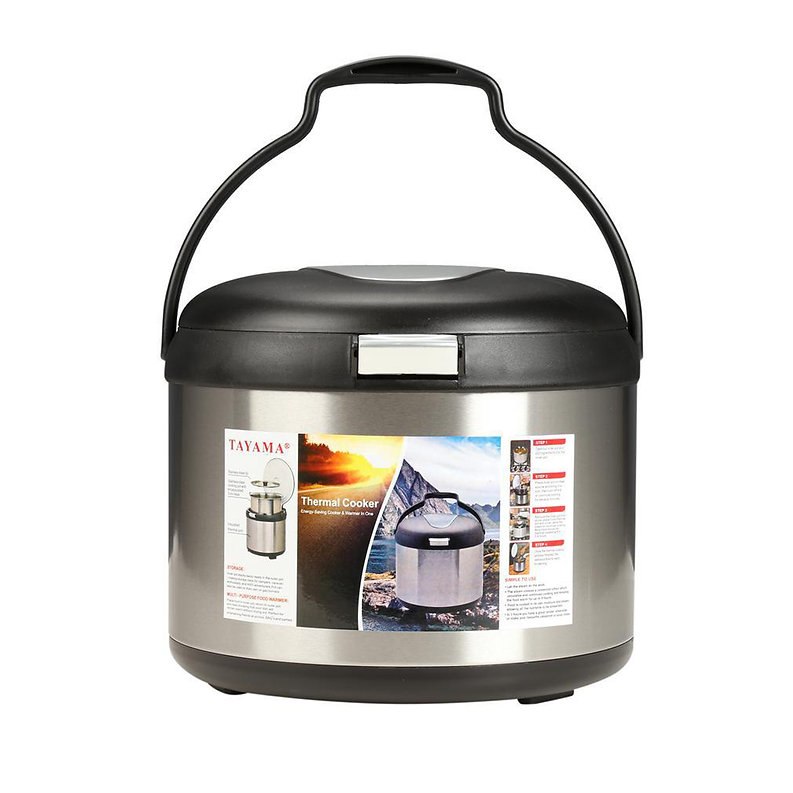
The idea is wonderfully straightforward: heat the food first, then slow down how quickly that heat escapes. There is no mysterious second source of energy hiding in the handle. Think of the outer container as a very serious winter coat for the inner pot, with the important difference that nobody has to convince the soup to put its sleeves on.
TAYAMA sells the TXM-50CF as an energy-saving thermal cooker for meals that benefit from prolonged simmering. It is especially easy to understand if you already make soups or stews. You still do the preparation, and you still need the initial heat. The change happens afterward, when the pot can leave the stove instead of occupying a burner throughout the remaining cooking period.
A cooking pot with its own insulated hiding place
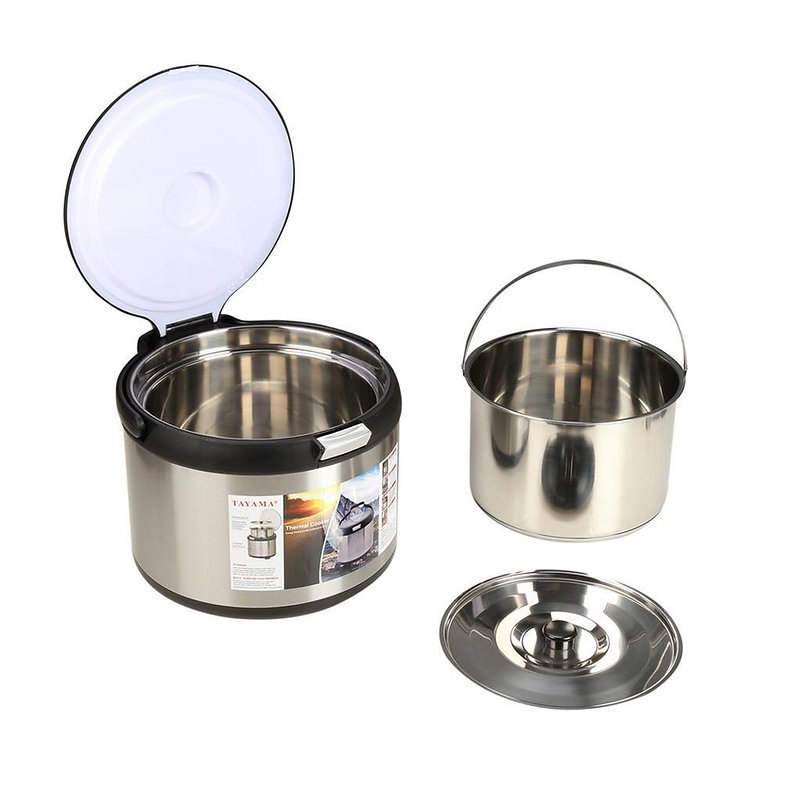
Open the black hinged lid and the nesting arrangement becomes obvious. A removable stainless steel cooking vessel sits inside the wider insulated body. The inner pot has its own lid and a wire handle; the outer cooker has a larger carrying handle and a front latch. It looks pleasantly practical, like something that arrived at the picnic with both a meal and a clipboard.
That removable insert matters. The cooking vessel goes on the stove; the insulated outer container does not. After heating, the inner pot returns to its shell, and the outer lid closes. You are moving one hot vessel, not pouring a large batch of dinner into another container while negotiating with gravity.
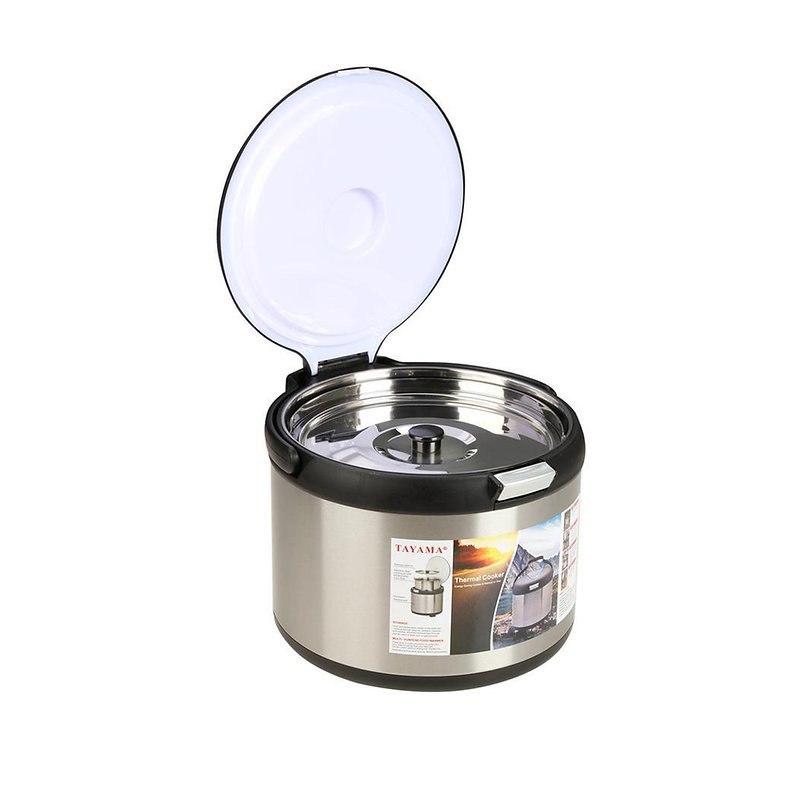
The shell is there to reduce heat loss. It does not supply fresh heat, and it cannot take a cold pot of ingredients and magically turn it into dinner. This is the distinction that makes the whole product useful rather than baffling. Charge the meal with heat first, then give that heat fewer opportunities to leave.
It also changes the kind of attention dinner demands. Instead of hovering near a simmering burner, you plan the heating stage and the insulated cooking period. That could be appealing during a crowded kitchen afternoon, when every burner already has a job and one saucepan is somehow doing unpaid overtime.
Where this makes practical sense
The attraction is strongest when the food and the schedule cooperate. A dish that needs a long, moist cooking period is a more natural match than something you want crisp, browned, or reduced at the last minute. An insulated pot is not going to produce a crunchy crust through positive thinking.
- Busy kitchens: move the thermal stage off the stove and free a burner for another dish.
- Camping meals: do the initial heating with a suitable stove, then use the insulated vessel for the next stage.
- Picnics and gatherings: the carrying handle and closed outer shell suit taking a prepared dish along.
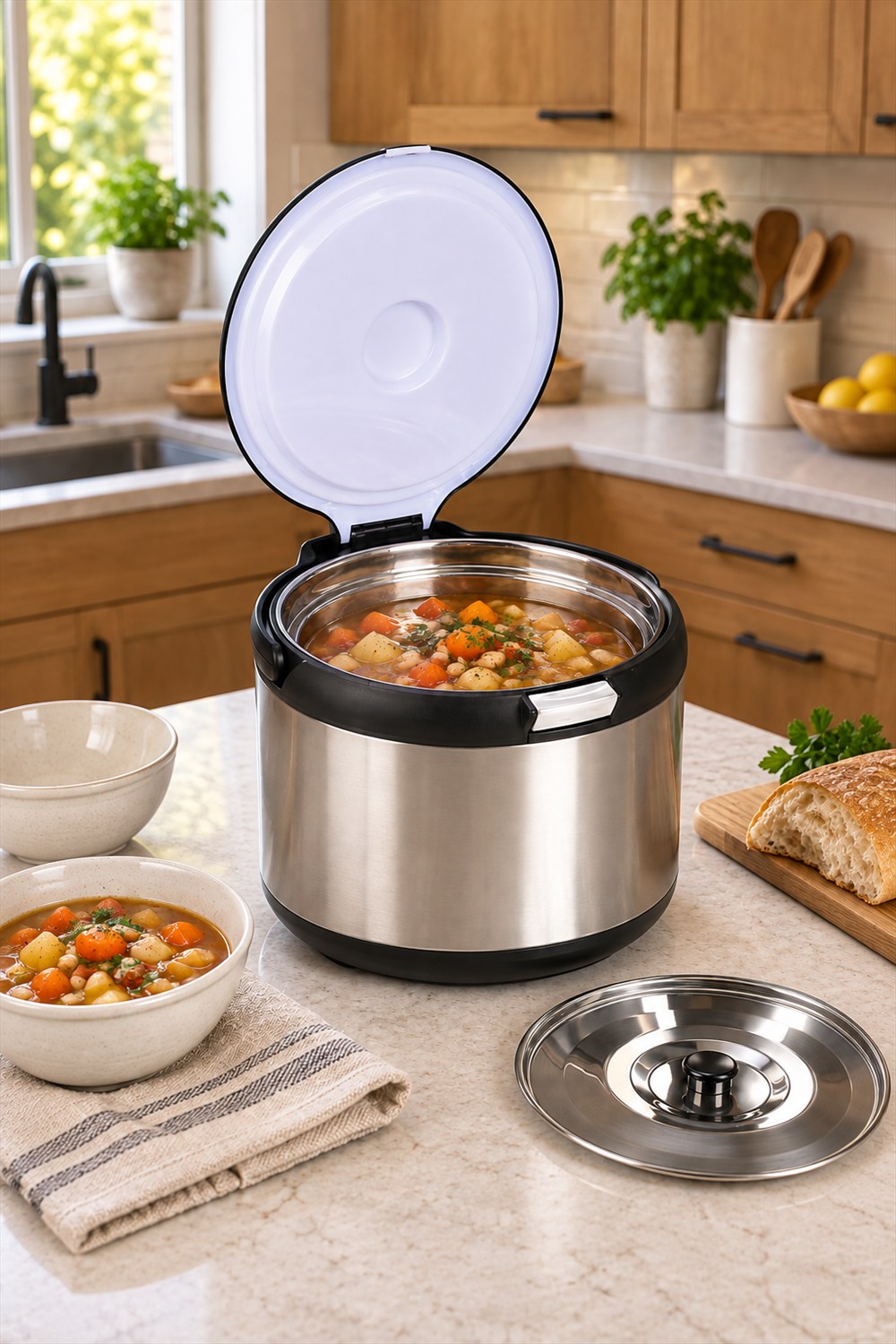
- Soups and stews: these fit the slow, moist cooking approach better than food that needs continued frying.
- Planned meals: decide the recipe and timing before starting, rather than treating the pot as an unlimited hot-food parking space.
There is something satisfying about a kitchen tool whose main trick is restraint. It does not need to announce that it has connected to your network. It does not have a screen asking you to choose between fourteen versions of “soup.” You bring the recipe and the heat; it brings the insulation.
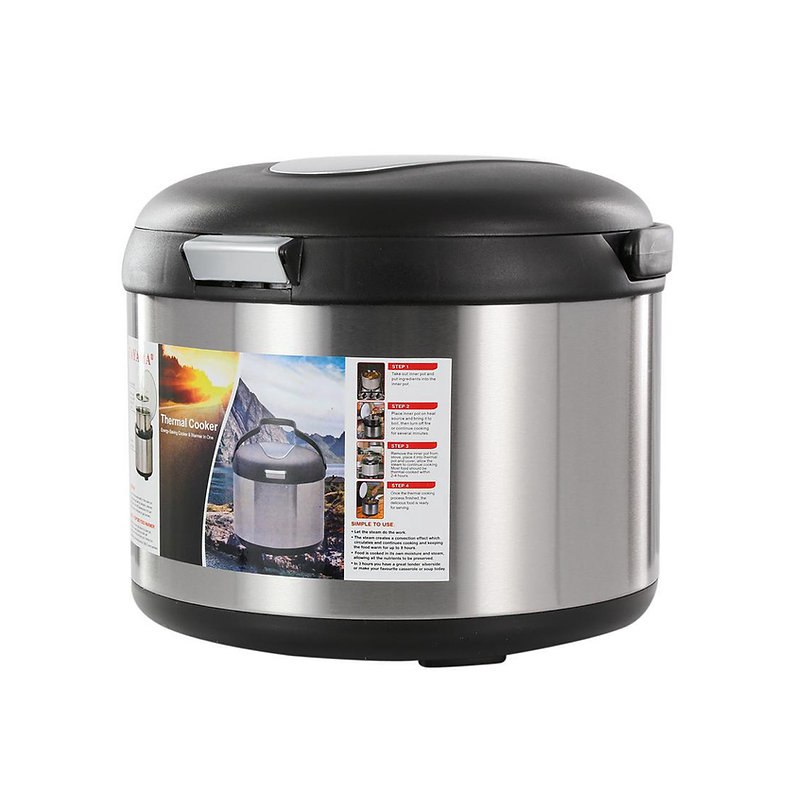
For travel, the appeal is having fewer things tethered to a socket during the thermal stage. That does not make initial cooking optional, and it does not turn the carrier into a spill-proof stunt prop. Keep a hot loaded pot secure and upright. Nobody wants the road trip to acquire a surprise gravy component.
The details that matter before dinner
The Amazon listing identifies this model as a 5-liter cooker, while TAYAMA’s current product page labels it 5 quarts. Those units are not identical, so match the TXM-50CF model and check the supplied specifications if an exact capacity is important. It is better to notice that distinction before assigning the pot responsibility for an entire reunion.
| Detail | What to know |
|---|---|
| Model | TAYAMA TXM-50CF |
| Listed capacity | Amazon: 5 liters; manufacturer page: 5 quarts |
| Cooking arrangement | Removable stainless inner pot inside an insulated outer shell |
| Heat source | Stove heating first; retained heat afterward |
| Transport features | Outer carrying handle and closing lid |
| Best-fit approach | Moist dishes with a planned insulated cooking period |
The timing deserves the same attention. TAYAMA’s product page promotes a short initial stovetop phase, while its shared instruction booklet describes approximately 20 minutes of boiling and simmering before transfer. Take that as a reason to follow the instructions for your dish, not to give every ingredient the same hurried ten-minute farewell.
A thick stew and a thinner soup do not behave identically just because both fit under a lid. Starting temperature, quantity, ingredients, and time all matter. The sensible approach is to use a suitable thermal-cooking recipe, follow the supplied instructions, and check that the meal is properly cooked before serving.
Keep the heat in, keep expectations reasonable
Lifting the lid repeatedly works against the reason for buying an insulated cooker. Every investigative peek lets heat out. This may be the hardest feature for anyone who considers checking dinner a hobby. The pot’s ideal customer can leave a closed lid alone without demanding a progress report from a carrot.
TAYAMA advertises heat retention over several hours, but that is not permission to forget a meal indefinitely. The manual specifically says not to leave food in the thermal pot overnight and to refrigerate leftovers. Treat temperature and storage seriously, just as you would with any other cooked meal.
The energy-saving appeal is easy to follow without promising a particular reduction on your bill: the burner is off during the insulated stage. Actual savings depend on what you make and what cooking method it replaces. The useful feature is the mechanism itself, not an imaginary universal discount code for your gas meter.
Cleaning has a similar division of labor. The stainless inner vessel handles the food, while the insulated housing needs more careful treatment. The manual directs users to wipe the outer body with a damp cloth rather than immerse it or put it in a dishwasher. Check the care instructions supplied with your unit before washing its components.
A small checklist before taking the pot home
This is a compelling fit for someone who likes making a meal ahead and understands that slow cooking involves actual time. It is less compelling for someone whose dinner plan begins with “I am hungry now” and ends six minutes later. The insulated stage may free your stove, but it does not negotiate with your appetite.
- Product: TAYAMA TXM-50CF energy-saving thermal cooker.
- Main feature: the heated inner pot nests inside an insulated carrier.
- Power during the thermal stage: no electrical connection required.
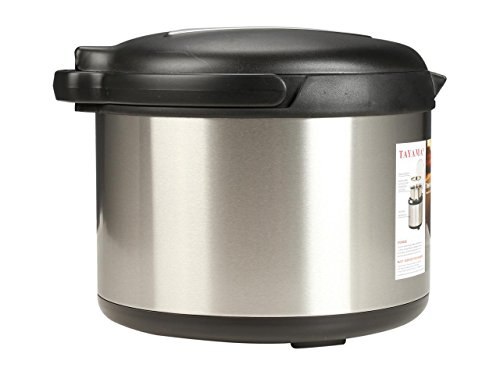
- Construction: stainless steel inner vessel with a black-and-steel outer body.
- Useful occasions: planned soups, stews, camping meals, and gatherings.
- Key limitations: initial stove heating is required, recipes need appropriate timing, and leftovers need refrigeration.
The Amazon offer checked for this article was $82.99, sold and shipped by VLPS, with limited stock showing. Pricing and seller availability can change. For someone who wants dinner to continue without keeping a burner occupied, this is an appealingly low-drama bit of kitchen engineering. It is basically a retirement plan for heat that still has work to do.
Product photos: TAYAMA and the Amazon product listing.
| Pros | Cons |
|---|---|
| Continues the thermal stage without a running burner | Requires initial stovetop heating |
| Removable inner pot simplifies the two-stage process | Hot-pot transfer still needs care |
| Carrying handle suits meals away from home | A loaded cooker must stay secure and upright |
| No electrical connection during insulated cooking | Cannot actively reheat a cooling meal |
| Useful for planned moist-cooking dishes | Not a substitute for frying or browning |
| Insulated shell slows heat loss | Not suitable for overnight food storage |
Save this find.
Thank yourself later.
Your next great gift idea. Your someday space. Your collection of wonderfully weird things.
Save to PinterestPick a board. Keep the inspiration.
This Thermal Cooker Keeps Dinner Cooking After You Turn Off the Stove
Where to find This Thermal Cooker Keeps Dinner Cooking After You Turn Off the Stove
OddityMall may earn a commission from qualifying purchases at no extra cost to you.