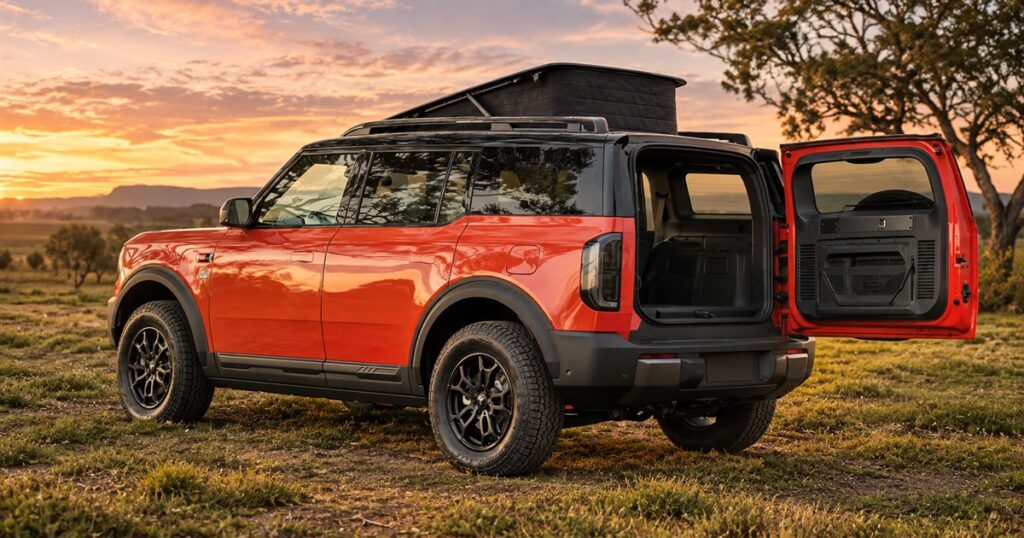
Camping has a way of turning a relaxing weekend into a part-time job assembling your bedroom. Ford’s Bronco Basecamp proposes a more civilized arrangement: bring the bedroom in the same vehicle that brought the snacks. This pop-top SUV camper has the sort of built-in camping tricks that make a regular trunk full of tangled tent poles look a little underqualified.
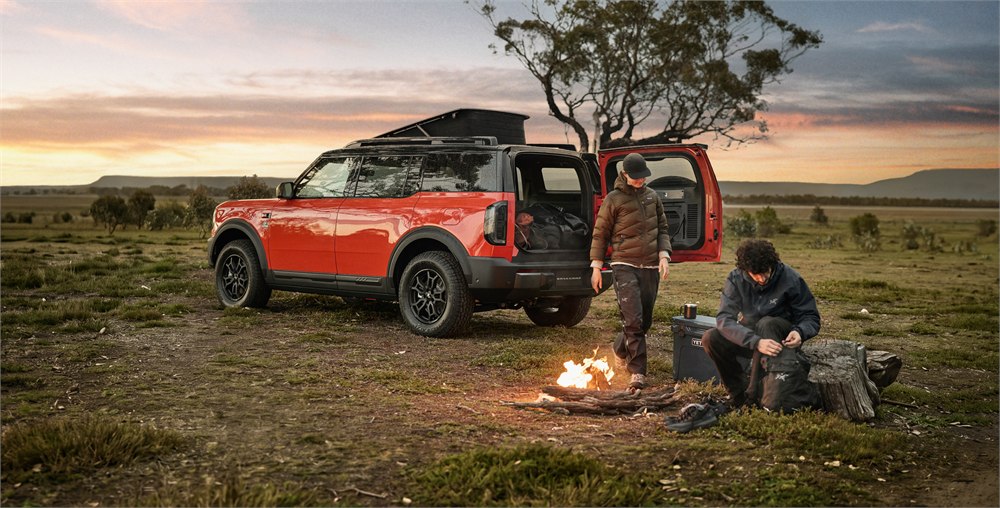
The newly announced Basecamp is a five-seat, all-wheel-drive SUV headed for Australia and New Zealand, with arrivals expected from mid-2027. It combines an extended-range electric powertrain with a cabin that can become a sleeping space. The especially camp-friendly Outer Banks version adds a powered lifting roof.
Think about the moment you arrive somewhere beautiful and immediately have to become a furniture installer. There are bags to unzip, poles to identify, and one person insisting the instructions are unnecessary. A vehicle designed around staying overnight has obvious appeal to anyone who would prefer to spend that time staring at a lake.
This is an announced future model, and Ford’s pictures include prototypes and digital renderings. Final equipment and appearance can change. The sunset may be aspirational; the need to locate your socks in the morning remains extremely real.
A roof that gives the cabin room to breathe
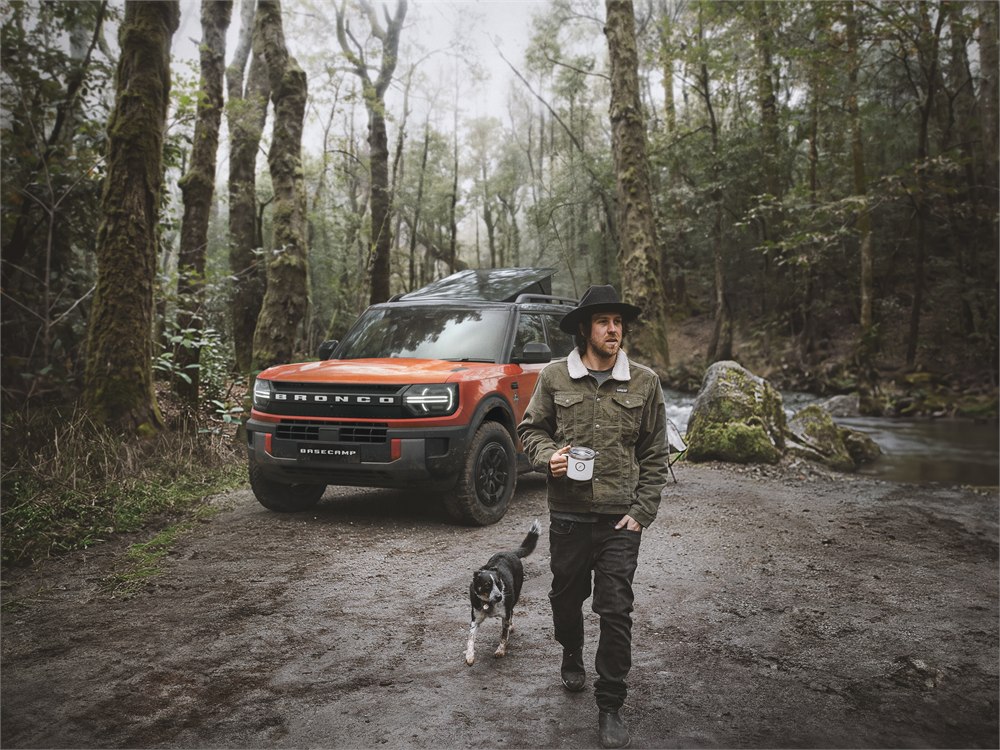
On Outer Banks, the pop-up roof raises electrically, with an unzippable fabric section for ventilation. Ford also describes rain sensing and automatic closing. It is a low, integrated lift roof, rather than a separate tent perched on roof bars.
Related posts:
 This Giant Ford F-650 RV Truck Gives You The Ultimate Off-Road Camping Experience
 The TailVeil Is a Tailgate Tent That Attaches To The Back of Your SUV or Minivan
 These Retro Campers Are Made With a Functioning Row Boat That Doubles as The Roof
 You Can Now Get a Mini Camper Trailer That’s Towed With Your Bicycle
That distinction makes the whole vehicle feel pleasantly self-contained. There is something satisfying about a machine that changes modes without requiring a second machine, three storage bags, and a garage shelf labeled “miscellaneous camping consequences.”
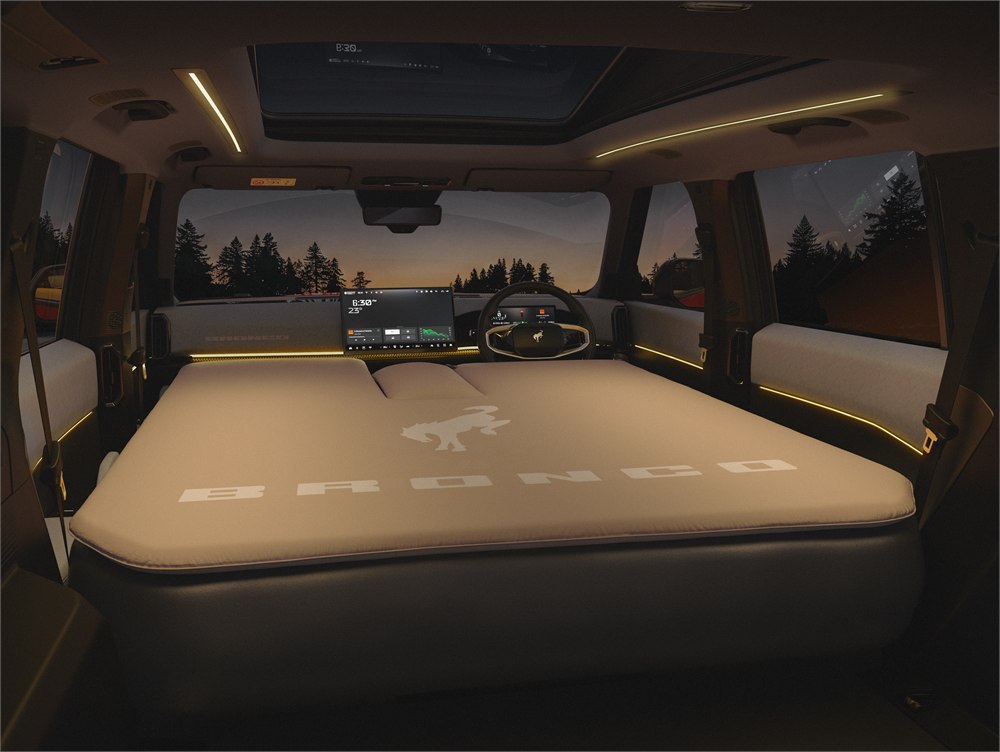
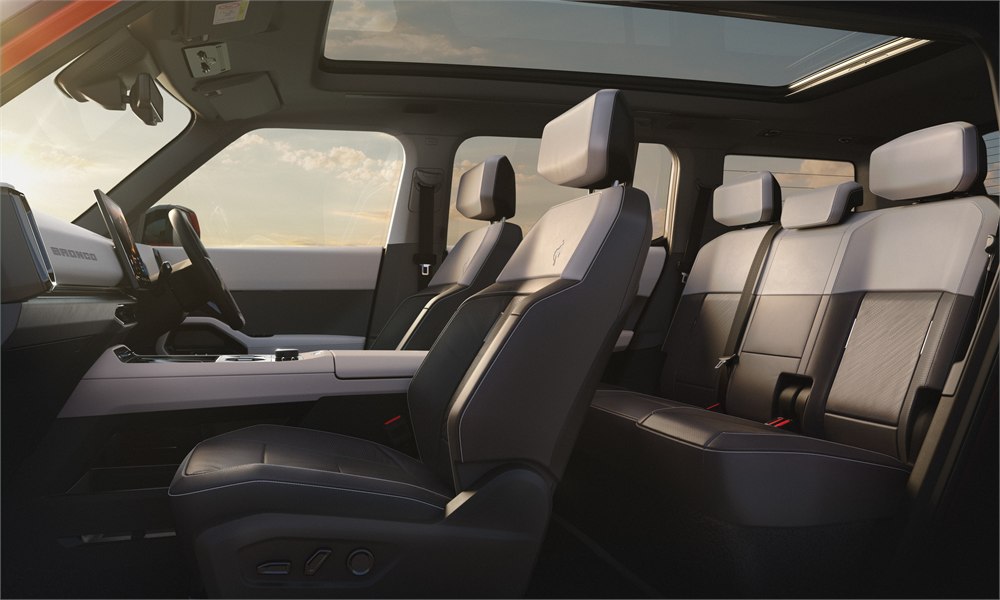
The sleeping arrangement uses folded front and rear seats with a custom inflatable mattress available separately. The bed is inside the cabin; the raised roof should not be mistaken for an additional upstairs bedroom.
For an overnight stop, that approach has a different appeal from a full camper conversion. You are still buying an SUV, with the ability to use its interior differently once parked. Anyone comparing it with a campervan should think about their actual evening routine: changing clothes, storing wet shoes, finding a flashlight, and negotiating which bag is apparently allowed to sleep beside them.
The camping features worth looking at
The roof gets the attention, but the smaller conveniences could matter just as much on an ordinary weekend. A practical camp setup is often less about heroic expedition equipment and more about having somewhere sensible to put lunch.
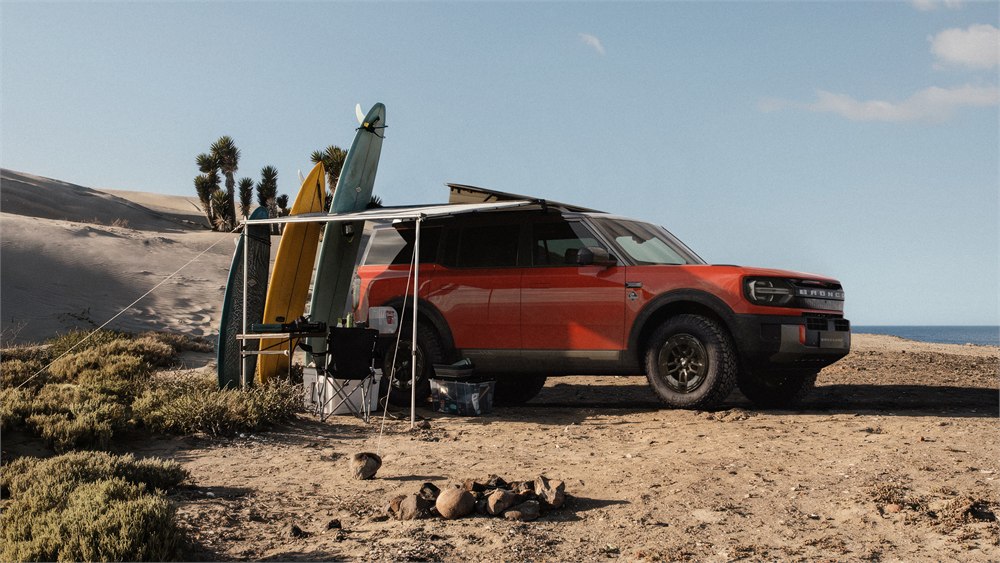
- A rear-door utility table provides an outdoor meal-preparation surface.
- The 7.5-liter thermal console can warm or cool its contents; it is standard on Outer Banks and optional on certain other versions.
- Pro Power Onboard supplies electricity for compatible equipment at camp.
- The full-length mattress is an extra-cost accessory, rather than included bedding.
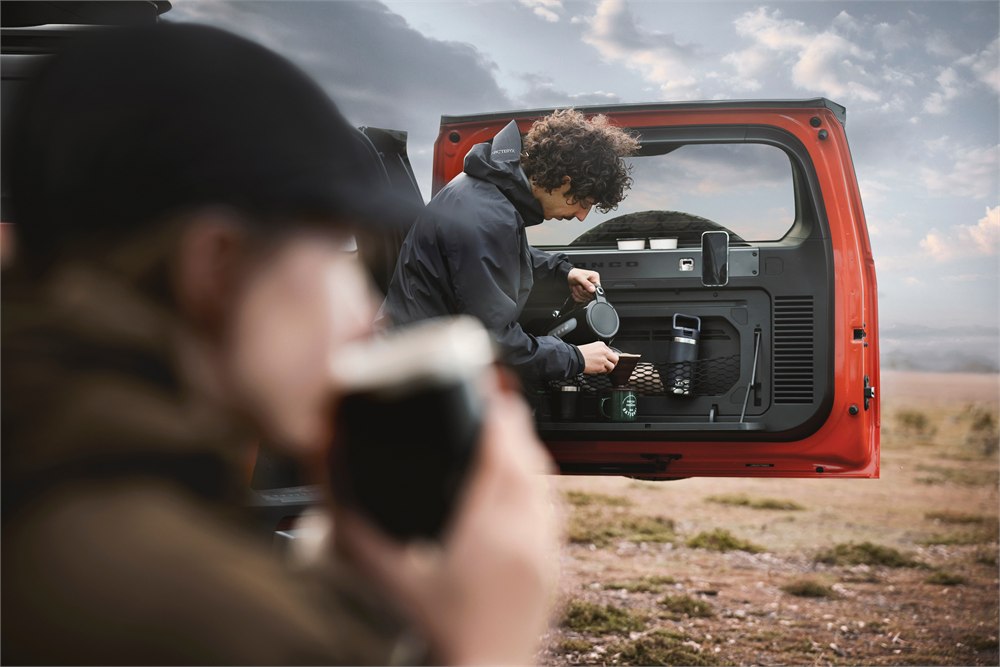
A table attached to the vehicle also has a small psychological advantage: it has an assigned home. A freestanding camping table can spend eleven months hiding behind a bicycle, then reveal a missing foot at exactly the wrong moment.
Still, a prep surface is a prep surface. The existence of a convenient table does not mean a complete fitted kitchen comes with the vehicle. Bring the actual cooking equipment you intend to use, and check what the final local package includes.
What Ford has announced so far
| Detail | Announced configuration |
|---|---|
| Seats and drive | Five seats; all-wheel drive |
| Electric system | Two drive motors; 49 kWh usable battery |
| Range extender | 1.5-liter turbocharged petrol engine |
| Lift roof | Outer Banks only |
| Thermal storage | 7.5 liters; operates while vehicle is running |
| Launch markets | Australia and New Zealand; expected mid-2027 |
The range-extender layout means electric motors handle driving while the petrol engine supplies additional energy. It is a different proposition from simply assuming this is the familiar American Bronco with a camping option fitted.
For the prospective buyer, the useful question is how it fits the trips they actually take. A regular weekend escape, a long holiday, and a quick night away after work all put different demands on packing, sleeping comfort, and energy use. The most impressive brochure number cannot answer whether your favorite pillow fits.
Campsite electricity, with some fine print
Ford lists a maximum combined output of 6.6 kW. The interior outlet is limited to 2.3 kW; the exterior can provide up to 6.6 kW when the interior is unused, or 4.3 kW while it is in use. An extra-cost external adapter is required.
That is a reason to check appliance requirements, rather than treating every socket as an invitation to open a mobile café. Electricity used at camp consumes battery charge, and not every appliance will be suitable. Your espresso ambitions still have to coexist with the drive home.
The thermal console has its own practical limitation: Ford says it operates only while the vehicle is running. A buyer should understand its operating conditions before planning food storage around it. It is a clever convenience, but the word “cool” is not a complete camping itinerary.
Who would enjoy this kind of SUV camper?
The most convincing audience is someone who wants camping capability built into an everyday vehicle and is willing to work within an SUV-sized space. You might love the idea of a short coastal escape but have no desire to own, store, and maintain a separate recreational vehicle.
There is also the person whose camping ambitions are sincere but whose tolerance for setting things up is not. They like the outdoors. They like birds. They would simply prefer the sleeping arrangements to require fewer structural engineering decisions after dinner.
Before buying, try the seating and sleeping positions yourself when production vehicles become available. Think through luggage placement and how you would switch between the two arrangements. A clever folding trick is most useful when it works with your body, your bags, and the person who insists on bringing an enormous duvet.
The details to keep handy
- Product: Ford Bronco Basecamp SUV with integrated camping features.
- Standout option: powered pop-up roof on Outer Banks.
- Sleeping setup: folding seat rows plus a separately purchased inflatable mattress.
- Camp conveniences: rear utility table, thermal console on applicable models, and onboard power.
- Launch status: future Australia/New Zealand model; final specifications remain subject to change.
Pricing has not been announced. Ford says further specifications, variants, prices, and timing will follow closer to arrival. Its current announcement covers Australia and New Zealand; it does not establish U.S. availability. Interested readers can find the announcement and registration-of-interest link through Ford’s Basecamp announcement.
Inline images: Ford. They show prototypes and digital renderings, including accessories; final production vehicles may differ. New Atlas’s Basecamp coverage also discusses the vehicle’s distinct platform and camping layout. For now, it is an intriguing invitation to spend less of your weekend constructing somewhere to sleep.
| Pros | Cons / things to consider |
|---|---|
| Camping features integrated into an SUV | Production specification is not yet final |
| Powered lift roof on Outer Banks | Roof is limited to that model |
| Cabin converts for sleeping | Custom mattress costs extra |
| Onboard power for compatible equipment | Output limits, adapter cost, and battery use apply |
| Useful thermal console and rear table | Console operates only while vehicle is running |
| Planned Australia/New Zealand release | No announced price or confirmed U.S. availability |
Where to find This Pop-Top SUV Camper Turns Its Cabin Into a Place to Sleep
OddityMall may earn a commission from qualifying purchases at no extra cost to you.
Related posts:
This Giant Ford F-650 RV Truck Gives You The Ultimate Off-Road Camping Experience
The TailVeil Is a Tailgate Tent That Attaches To The Back of Your SUV or Minivan
These Retro Campers Are Made With a Functioning Row Boat That Doubles as The Roof
You Can Now Get a Mini Camper Trailer That’s Towed With Your Bicycle