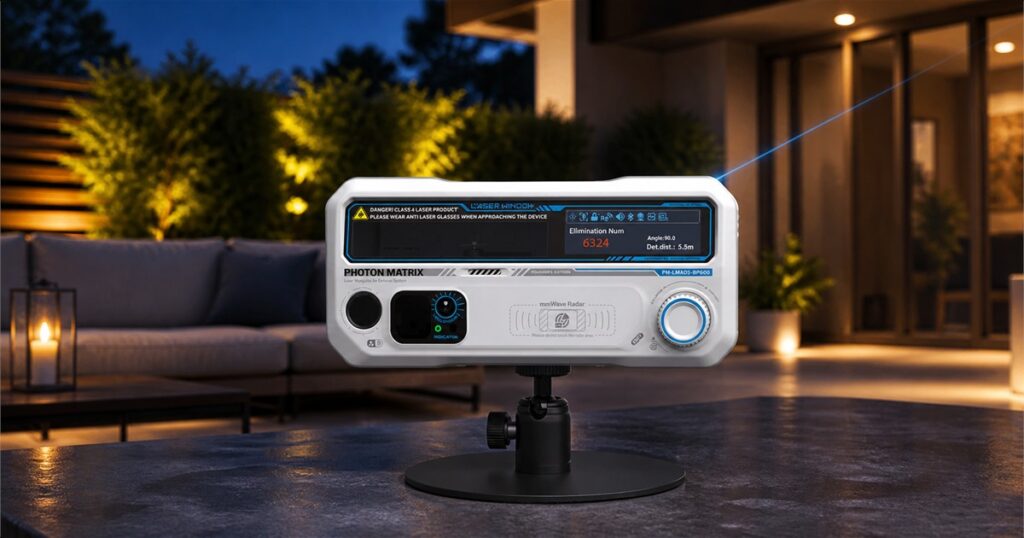
Mosquitoes have spent centuries treating the backyard like an all-you-can-eat buffet with terrible lighting and no consequences. Humans responded with candles, coils, sprays, nets, electric rackets, and the ancient defensive maneuver known as slapping yourself in the neck. Photon Matrix has proposed a slightly more dramatic escalation: give the patio its own laser-guided mosquito defense system.
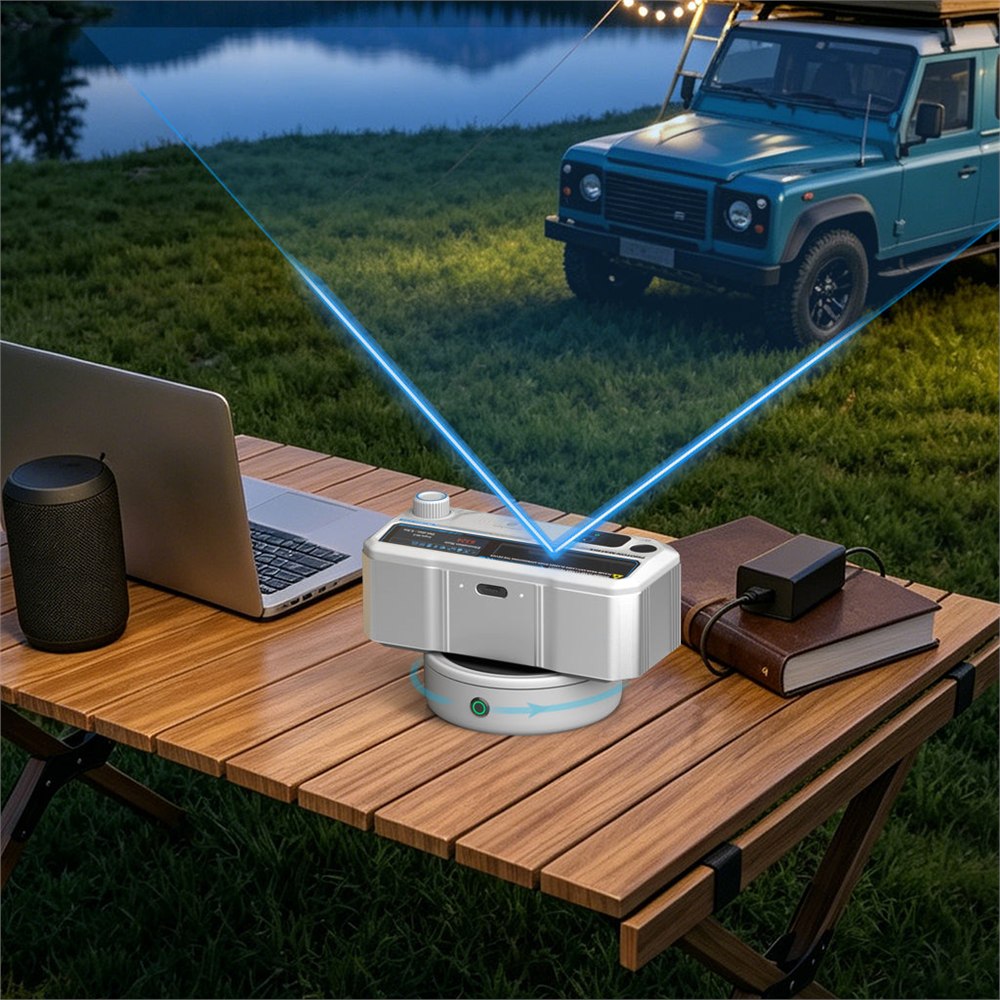
The Photon Matrix Blue Laser Mosquito Air Defense is a compact outdoor unit that combines LiDAR, millimeter-wave radar, an AI vision module, and a visible blue laser. It is designed to detect small flying insects, aim along the measured optical path, and use a brief laser strike to disable their wings. In other words, the mosquito arrives expecting a casual Tuesday and discovers that your deck has acquired aerospace ambitions.
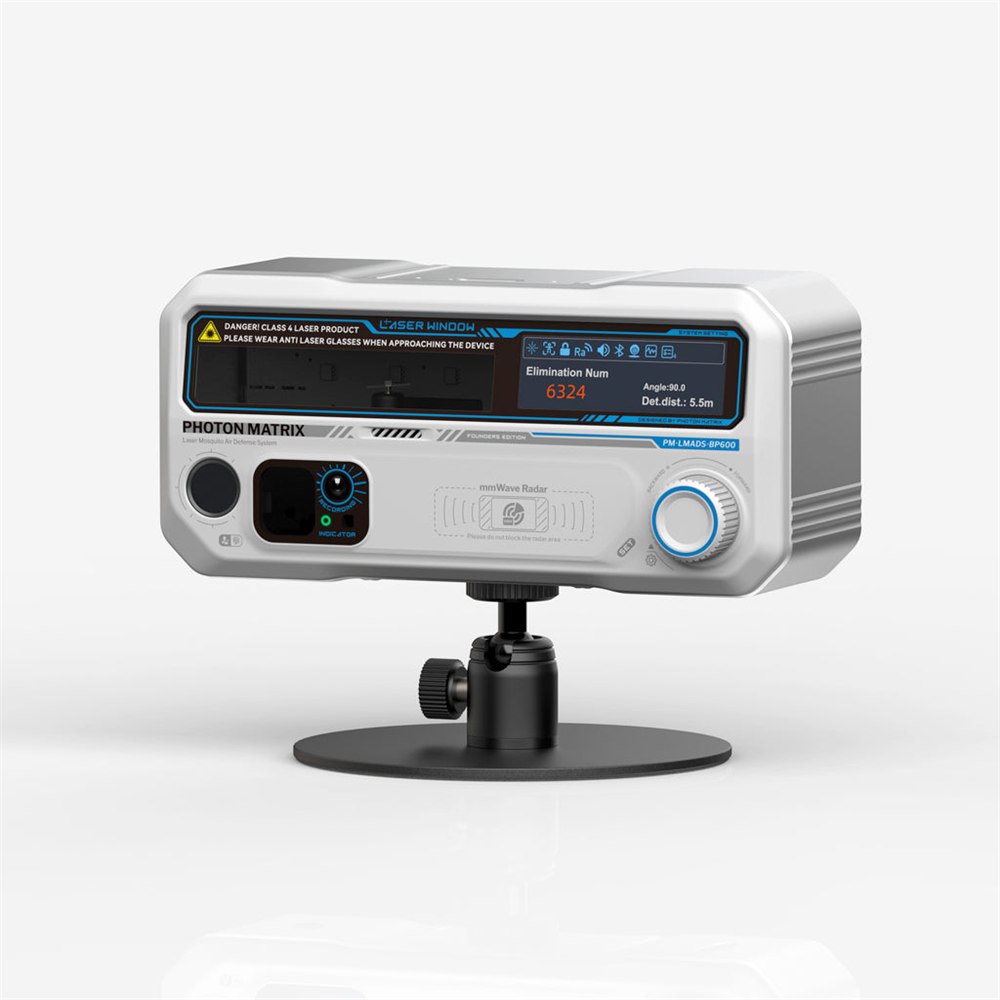
The device looks more like a chunky silver desktop instrument than a bug zapper. Its rectangular housing sits on a fixed desktop base or an optional rotating base, while the front panel carries the sensors, controls, and a display. The blue version produces a visible flash during a strike, which is the sort of feedback people apparently want when spending four figures to make the air above a patio less bitey.
How This Laser Mosquito Defense System Tracks a Target
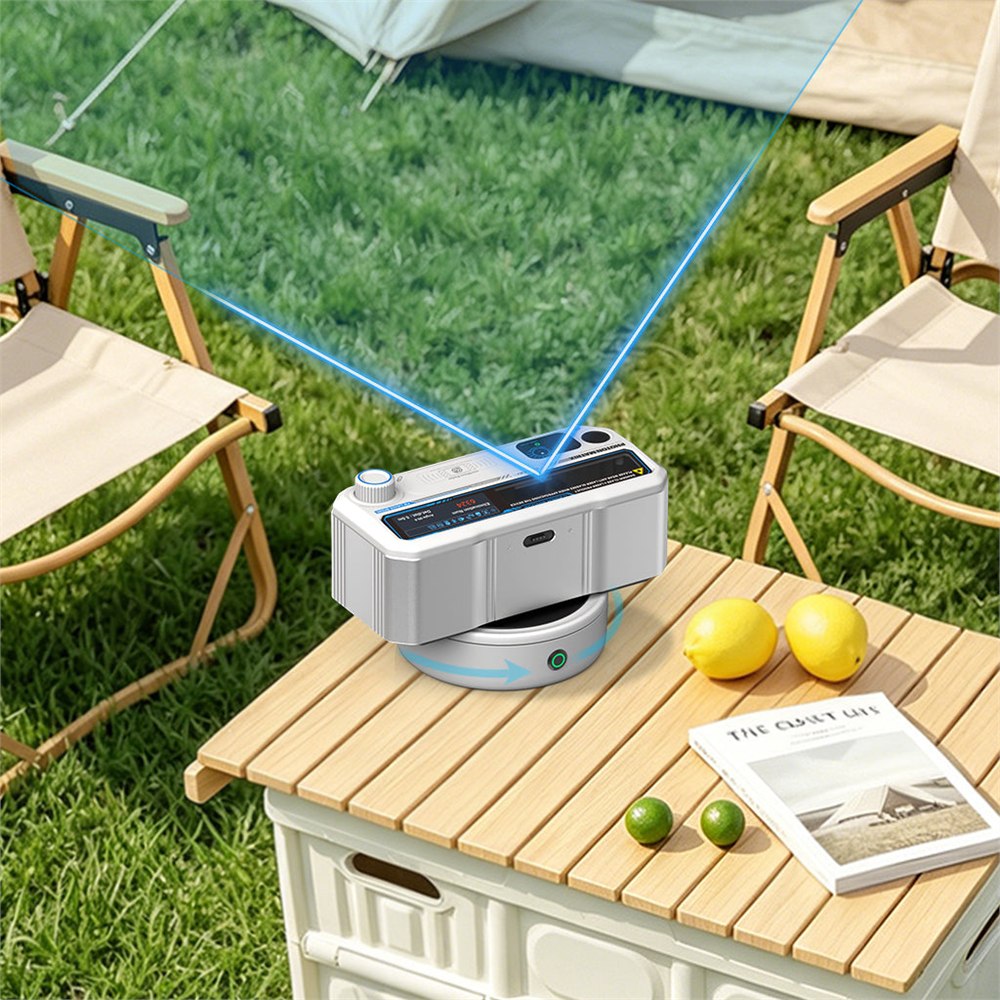
Photon Matrix says the system begins by using LiDAR to scan the space and measure the distance to the background. When a small object enters that measured plane, the sensors evaluate its size and movement. The internal galvo mechanism then directs the laser toward the target position. The maker describes the final strike as a straight beam that disables the insect’s wings rather than producing smoke, odor, or the tiny barbecue atmosphere of a traditional electric zapper.
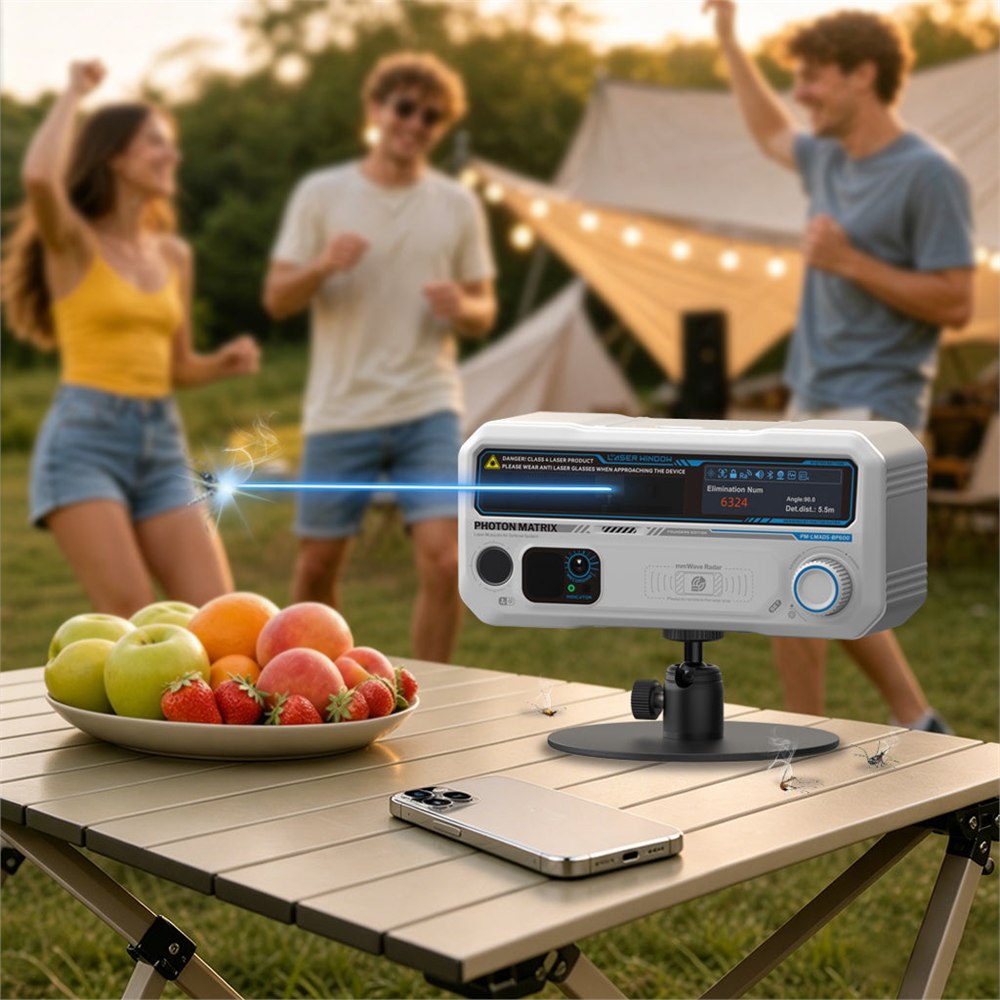
The listed effective area is a six-meter radius across a 90-degree horizontal fan-shaped scanning plane. That is an important distinction: one unit does not create an invisible 360-degree dome over your entire property. Placement matters. The company recommends aiming it toward likely mosquito activity near patios, terraces, campsite seating, poolside areas, windows, or doors, with a solid background inside the operating range.



The target profile is also intentionally narrow. Photon Matrix lists flying insects from 2 to 20 millimeters moving at no more than one meter per second. The company says that can include mosquitoes, sand flies, fruit flies, and similarly sized insects, while larger creatures such as moths and wasps are outside the intended profile. Actual performance can vary with the insect, distance, weather, background, lighting, and installation position, because even a robot mosquito turret must eventually confront the chaos of real life.
- Patios and terraces where a 90-degree scan can face away from foot traffic
- Backyard seating or outdoor dining areas with a stable mounting location
- Campsites using the optional rotating base and compatible power-bank cable
- Poolside spaces where the unit can remain protected from direct rain and splashing
- Gardens positioned away from flowering plants, beehives, reflective surfaces, and unsafe sightlines
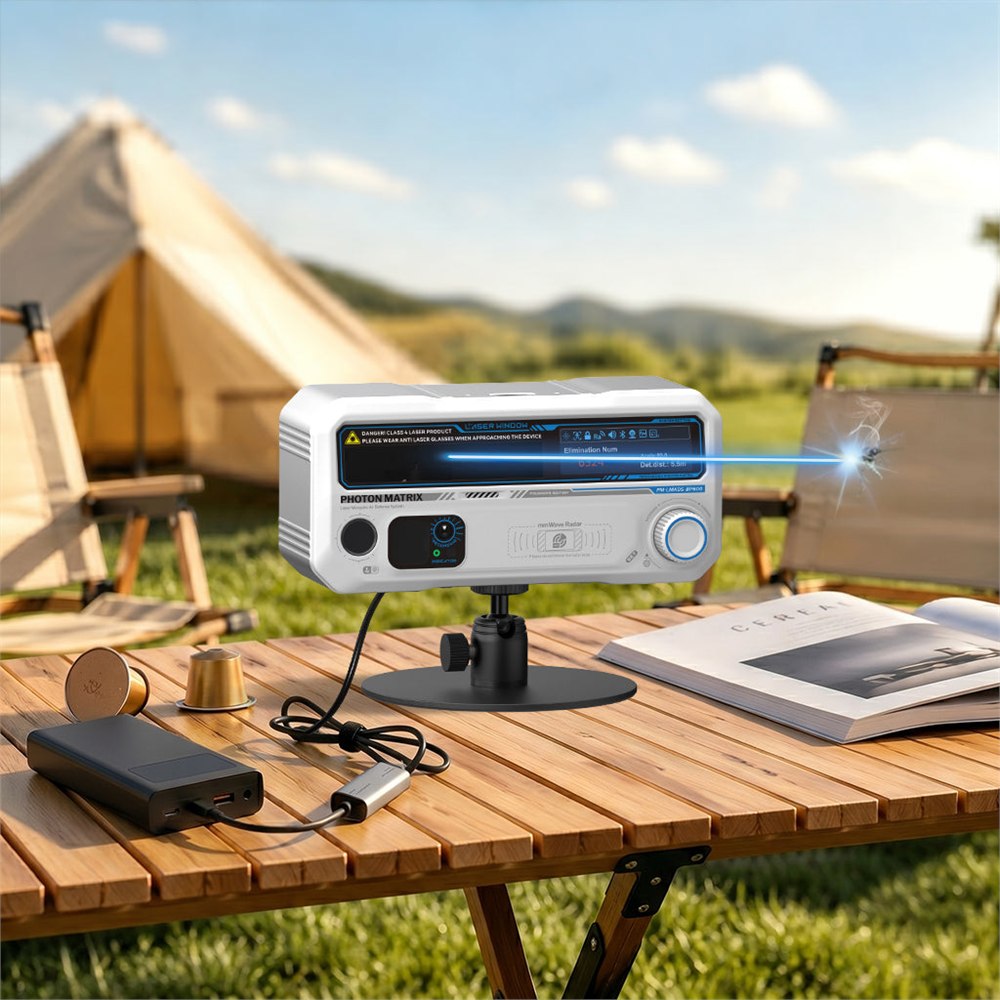
The blue model is primarily presented as the outdoor option because its 450-nanometer beam produces visible feedback. Photon Matrix also sells an infrared version for indoor spaces where a blue flash would be less welcome. The manufacturer says the two versions use the same core hardware platform and mosquito-control principle; the major difference is whether you see the light doing its extremely specific job.
The Hardware Is Small, but the Safety Label Is Not Decorative
The main unit measures 200 by 92 by 88 millimeters and weighs about 1.2 kilograms, so it is closer in size to a hefty portable speaker than a lawn appliance. Its enclosure combines aluminum alloy and engineering plastic, and the listed IP56 rating makes it splash-resistant for patio and garden use. Photon Matrix still advises avoiding direct rain and strong sunlight for longer service life, so this is not a gadget to abandon beneath a gutter and remember next spring.
| Specification | Manufacturer Listing | What It Means in Practice |
|---|---|---|
| Effective range | 6-meter radius, 90-degree horizontal fan | Placement creates a sector of coverage, not a full-room dome |
| Target profile | 2–20 mm flying insects at 1 m/s or slower | Built for mosquitoes and similarly small, slower insects |
| Core sensing | LiDAR, millimeter-wave radar, and AI vision | Multiple systems help locate and classify movement |
| Power | 24V DC, 20W or less | AC adapter is standard; power-bank use needs the proper cable |
| Outdoor rating | IP56; operating range of 0–40°C | Splash-resistant, but not an invitation to ignore weather |
| Noise | Less than 30 dB | Designed to run quietly around seating and sleeping areas |
| Size and weight | 200 × 92 × 88 mm; approximately 1.2 kg | Portable enough for a table, wall bracket, or campsite setup |
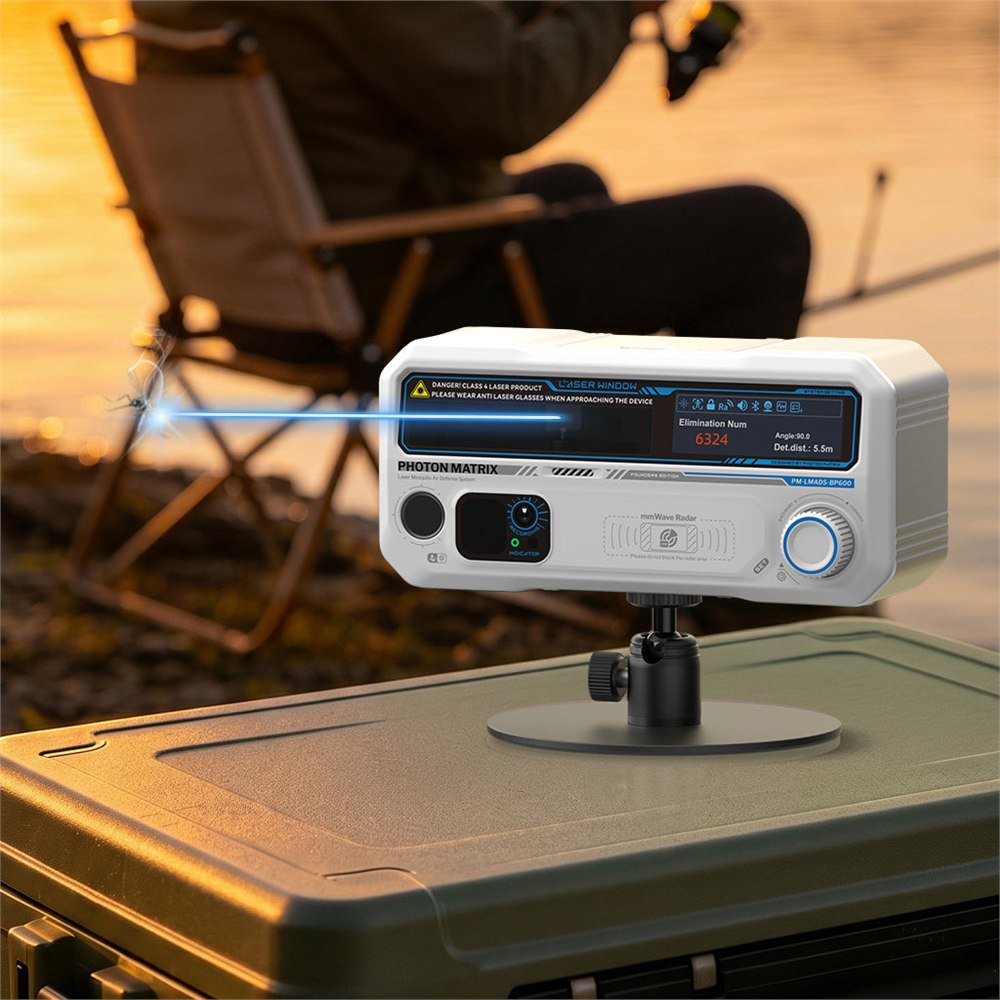
The laser hardware deserves more respect than the phrase “mosquito zapper” might suggest. The product page identifies an IEC 60825-1 Class 4 internal diode inside a fully enclosed system with multiple active safety protections. Photon Matrix says the device checks for a solid background and disables firing when the background is beyond range or cannot be detected. Its own terms also say users must never direct or expose laser components toward people, pets, eyes, reflective surfaces, vehicles, aircraft, or other unsafe environments.
That makes careful placement, setup, and supervision essential. This is not a toy, a medical device, a pesticide, or a public-health treatment, and buyers are responsible for following the manual and local rules governing import and laser equipment. The company’s claims about human detection and target filtering are manufacturer claims, not permission to improvise a front-yard laser obstacle course.
It Can Run From an Outlet or a Properly Equipped Power Bank
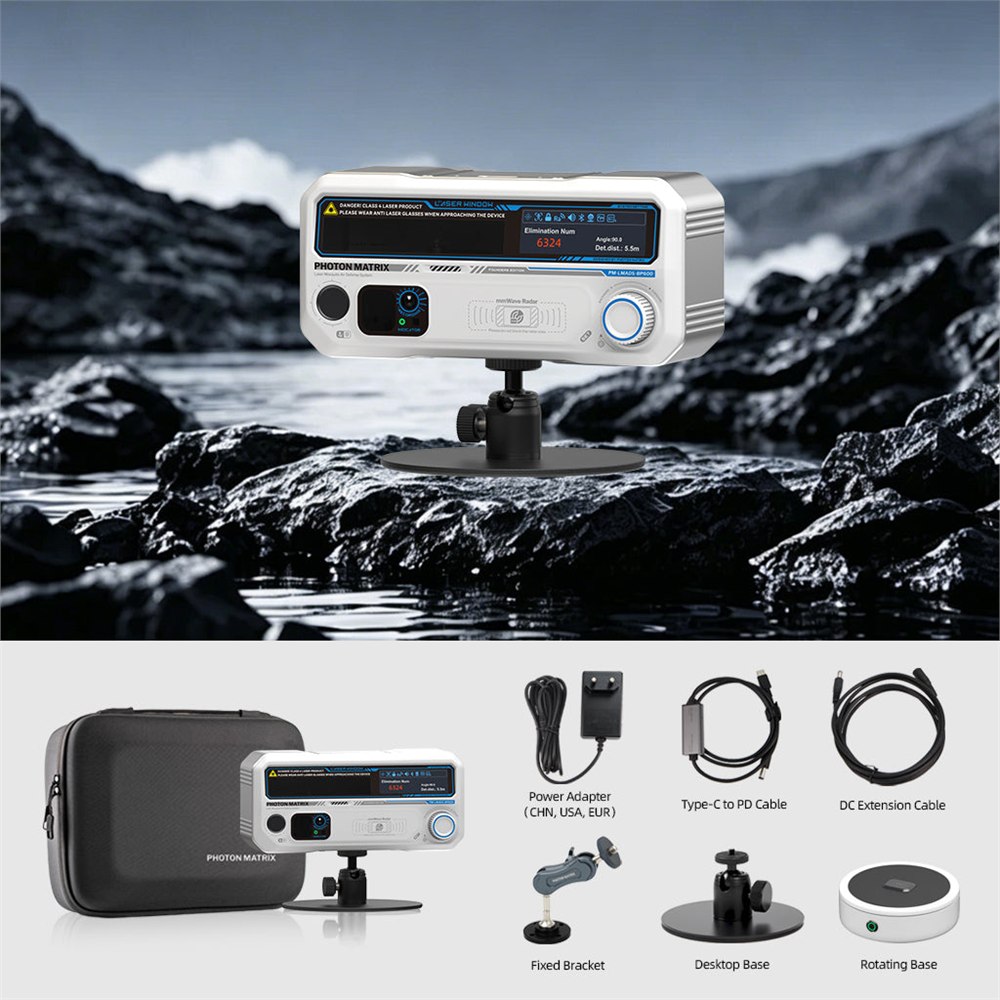
The standard package includes the main unit, a two-meter DC extension cable, a region-specific power adapter, a fixed mounting bracket, and a desktop base. The outdoor package adds a Type-C-to-DC adapter cable plus the magnetic rotating base. That rotating base expands the practical scanning direction by turning the unit, although the active scan at any moment is still described as a 90-degree sector.
For portable use, Photon Matrix says a 20,000mAh power bank with PD or QC fast-charging support can operate the unit for roughly four to five hours in its internal testing. That estimate will depend on the power bank and operating conditions, but it opens up a very modern campsite arrangement: tent, folding chairs, snacks, and one silver box quietly conducting a performance review of the local mosquito population.
Control is available through an onboard knob and a mobile app using Bluetooth or Wi-Fi. The company advertises status monitoring, scan-angle adjustment, range control, scheduling, device sharing, and an insect-activity heatmap. Those features make the system feel less like a passive trap and more like a tiny piece of backyard infrastructure, albeit infrastructure whose dashboard may eventually reveal that mosquitoes have unionized behind the hydrangeas.
Who Is Ready for a Four-Figure Mosquito Turret?
This is clearly not the economical answer for someone who needs to survive one picnic. It is a high-end preorder for people with persistent mosquito pressure, large outdoor living spaces, commercial patios, elaborate campsites, or a deep personal commitment to solving small problems with sophisticated optics. The most compelling part is its physical, chemical-free approach: there are no spray refills, coils, scents, or attractant cartridges listed as part of normal operation.
The limitations are equally important. It needs an appropriate background, a carefully chosen direction, power, protection from harsh weather, and insects that actually fit its size and speed profile. It also cannot promise that every mosquito will politely enter the scan plane. Nature has never been famous for respecting coverage diagrams.
All product images are courtesy of Photon Matrix.
The Photon Matrix Blue Laser Mosquito Air Defense is listed for preorder at $1,088, reduced from a stated market price of $1,288. The seller says orders ship within 120 calendar days after payment confirmation and includes worldwide delivery, while import duties, taxes, customs-clearance charges, and other local fees remain the buyer’s responsibility. The standard package and outdoor package are both offered with selectable regional plugs, and the device carries a listed 12-month warranty.
- Product: Photon Matrix Blue Laser Mosquito Air Defense
- Method: LiDAR and sensor tracking with a visible blue laser strike
- Coverage: six-meter radius across a 90-degree horizontal scanning sector
- Target size: flying insects from 2 to 20 millimeters at up to 1 meter per second
- Power: included AC adapter or compatible fast-charging power bank with the proper cable
- Outdoor details: IP56 splash resistance, 0–40°C listed operating range, and less than 30 dB noise
- Availability: $1,088 preorder with dispatch listed within 120 days
| Pros | Cons |
|---|---|
| Uses a physical, chemical-free mosquito-control method | The $1,088 preorder price is a serious commitment |
| Combines LiDAR, radar, vision, and automated aiming | Coverage is a directional 90-degree sector rather than a full dome |
| Can run from an outlet or a compatible power bank setup | Performance depends on placement, background, insect size, and conditions |
| Includes fixed and desktop mounting hardware in the standard package | The outdoor rotating base and cable require the outdoor package |
| Visible blue flash makes operation easy to perceive outdoors | The visible flash may be undesirable in darker or indoor spaces |
| Compact, splash-resistant housing suits patios and campsites | Laser hardware demands careful setup and strict safety compliance |
Where to find This Laser Mosquito Defense System Uses LiDAR to Zap Bugs Mid-Flight
OddityMall may earn a commission from qualifying purchases at no extra cost to you.