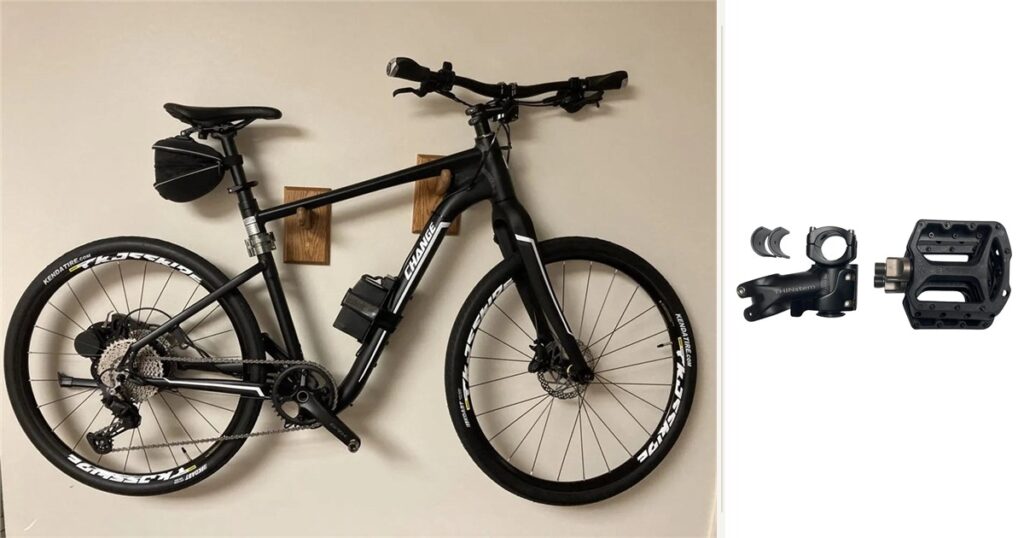
Bicycles are wonderfully efficient machines right up until you bring one indoors, where they immediately become a 6-foot-long coat rack with handlebars designed to locate every hip, doorframe, and freshly painted wall in the building. The Flatbike Flatten Your Bike Kit attacks that domestic geometry problem without asking you to replace the bike you already own.
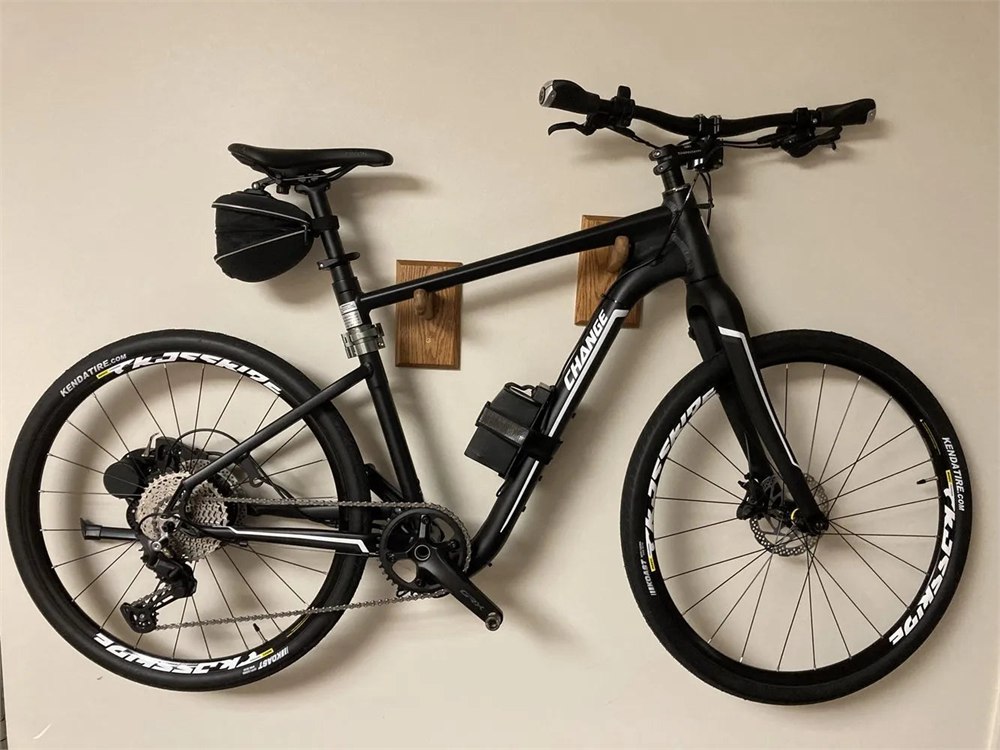
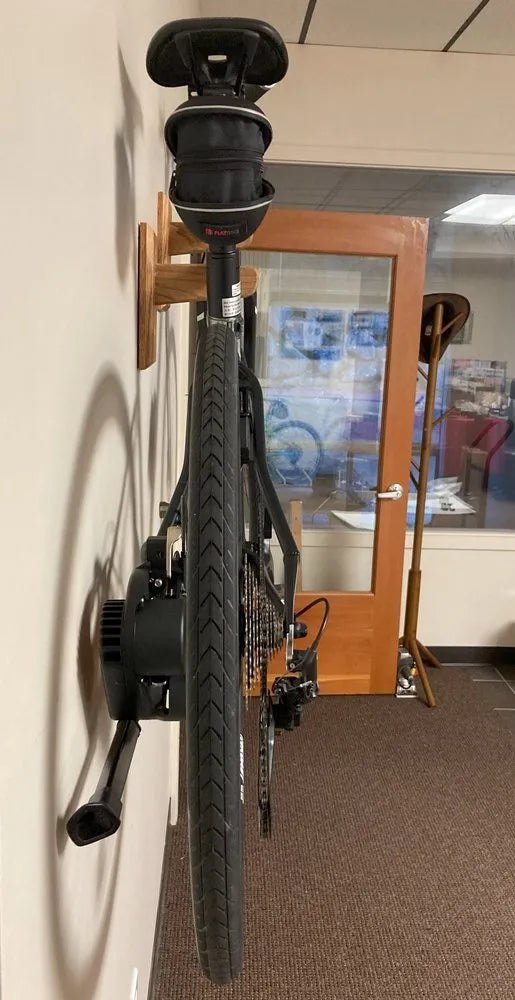
The kit combines Flatbike’s folding THINstem with its Pop-Off Pedals. Release the stem’s latch and the handlebars rotate 90 degrees until they sit parallel with the frame. Pull off the pedals and the other two shin-seeking protrusions disappear as well. Flatbike says the result lets a normal bicycle fit into roughly one-third of its usual storage width.
This is not a folding bicycle conversion, and the frame does not hinge itself into a travel-sized metal pretzel. The wheels, frame, drivetrain, saddle, and general dignity of the bicycle stay where they are. The kit changes the parts that stick out sideways, which is a much less dramatic answer to a problem caused almost entirely by parts sticking out sideways.
That distinction makes the system interesting for riders who already like their current bike. A dedicated folding bike can be a brilliant commuting tool, but buying another bicycle just because your hallway was designed by someone who feared personal possessions is not always the sensible move. Flatbike’s hardware is meant to give an existing full-size bike a narrower storage profile while leaving its basic ride and frame intact.
It Flattens the Awkward Parts, Not the Bike
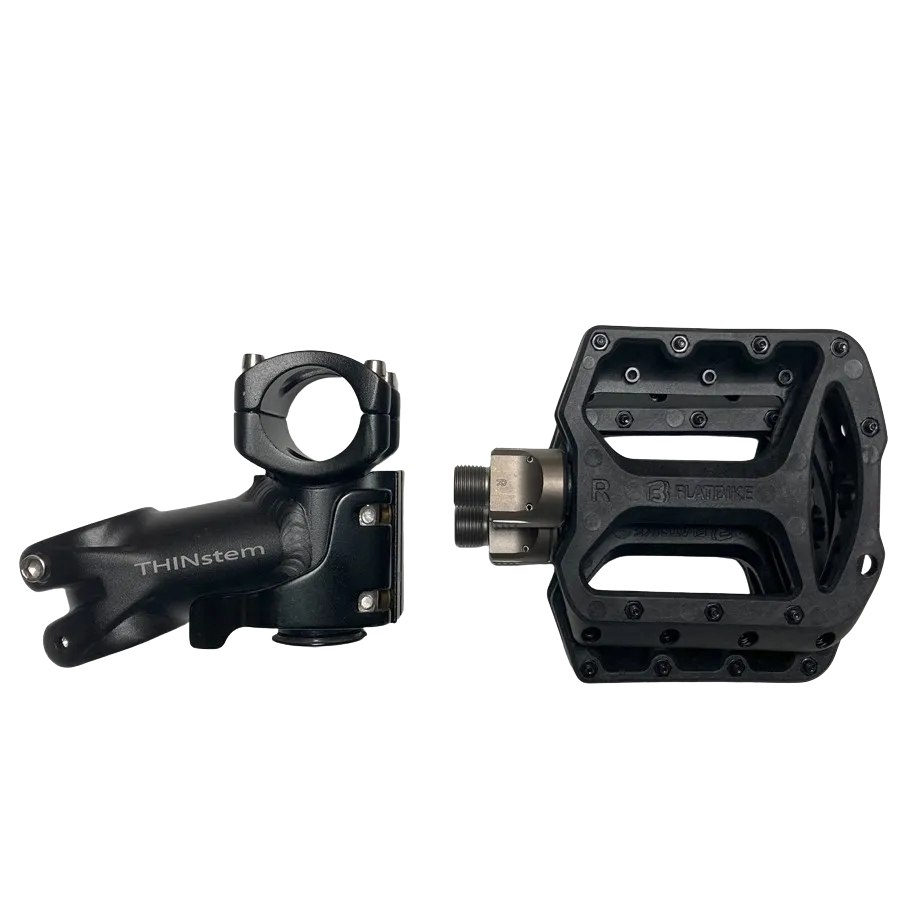
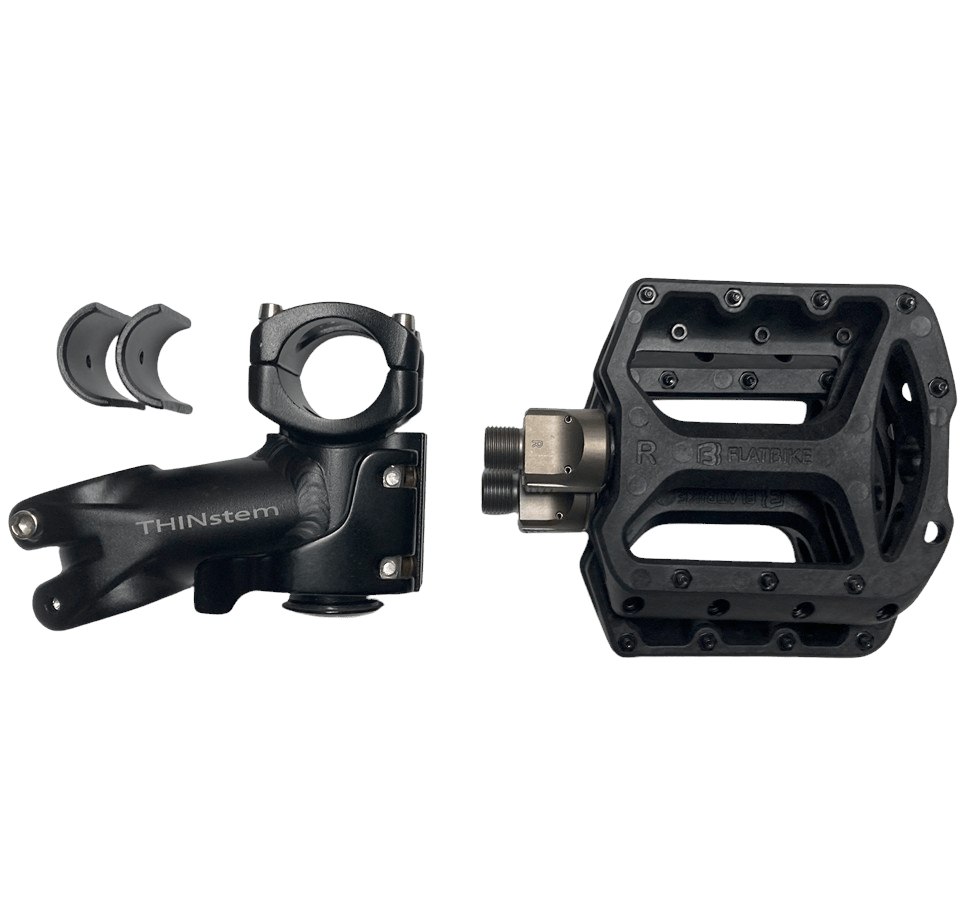
The THINstem is the pivotal character here, both mechanically and in the sense that it finally gives your handlebars a productive side hustle. Its hinge and latch let the bar swing from the normal crosswise riding position to a position along the bike. Instead of forming a wide doorway barricade, the handlebar tucks into the silhouette of the frame.


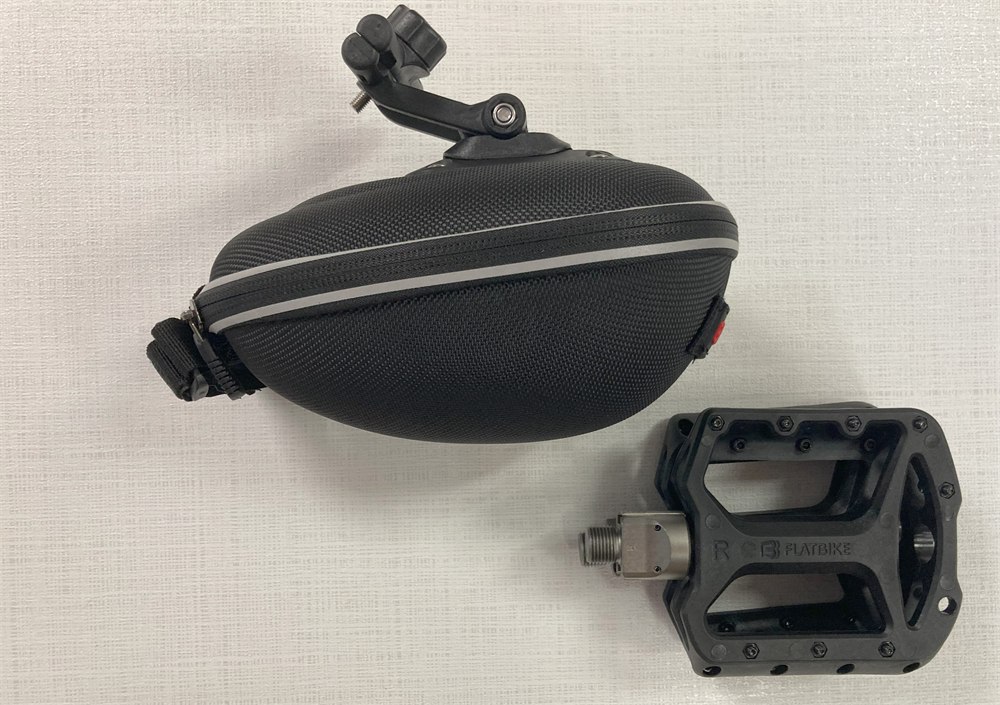
The pedals solve the same problem lower down. Flatbike’s removable platform pedals use a quick-release connection, so they can be pulled from the crank area for storage and returned before riding. The official kit uses cleated MTB-style Pop-Off Pedals with Flatbike’s patented pinch latch. The optional expandable seat bag gives the detached pedals somewhere to live instead of letting them roam the garage like two extremely aggressive paperweights.
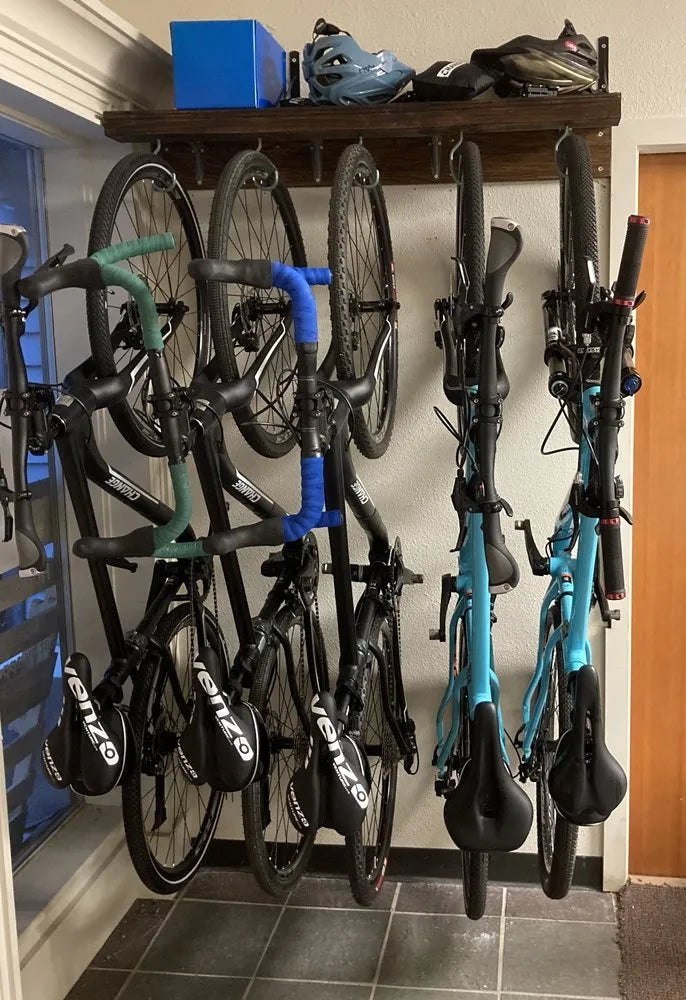
Together, those changes are useful anywhere side-to-side clearance matters. The company specifically pitches easier wall storage, less awkward loading into cars, and simpler handling around racks. It also notes that removing the protruding pedals and turning the bars can make a heavy e-bike less combative when you are guiding it past paint, upholstery, or another bicycle.
- Rotate the handlebars parallel with the frame using the hinged THINstem.
- Remove both platform pedals with the Pop-Off Pedals’ quick-release connection.
- Store the bike closer to a wall, beside other bikes, or inside a vehicle.
- Add the expandable seat bag option to keep the removed pedals with the bike.
- Return the bars and pedals to riding position before rolling back into society.
The important word in all of this is width. A bicycle can be perfectly acceptable in length and still dominate a room because its handlebars and pedals occupy an invisible rectangular kingdom around it. Reduce that kingdom and suddenly the same bike can sit along a wall without demanding a formal right-of-way agreement from everyone who walks past.
| Part | Storage Action | Space Problem It Addresses |
|---|---|---|
| THINstem | Lets the handlebar rotate 90 degrees | Wide bars blocking walls, doors, and neighboring bikes |
| Pop-Off Pedals | Lets both pedals detach from the bike | Pedals catching legs, paint, upholstery, and other frames |
| Optional seat bag | Holds the pedals after removal | Loose parts wandering away before the next ride |
| Existing bike frame | Stays full-size and unchanged | Avoids buying a separate folding bicycle for storage alone |
A Small-Apartment Truce With Bicycle Geometry
Apartment riders are the obvious audience. A bike in a studio or narrow entryway is never merely stored; it becomes a roommate with terrible spatial awareness. The bars snag sleeves, the pedal rotates into a calf, and the front wheel slowly turns until the whole arrangement appears to be plotting an escape. Making the bicycle narrow does not create more square footage, but it lets the bike use the thin strip of space a wall was already failing to monetize.
Garages and shared bike rooms benefit for the same reason. Bikes stored side by side are often spaced according to their handlebars rather than their frames. Once the bars line up with the bikes and the pedals stop projecting into neighboring territory, several bicycles can occupy a tighter arrangement. The official images show full-size bikes parked unusually close together, a scene that will look deeply emotional to anyone who has ever tried to extract the middle bike from a six-bike handlebar knot.
Vehicle loading is another sensible use. Flatbike describes sliding bikes into cars without handlebars fighting the upholstery, and the logic is easy to see. A narrow bike is easier to guide through a hatch or past a seat, while removable pedals eliminate two common contact points. This does not magically make a bicycle short, light, or compatible with every vehicle. It simply removes some of the pieces most likely to snag things and test the driver’s vocabulary.
The product is especially appealing for a heavier bike or e-bike because awkward width becomes more annoying as weight rises. Rotating a lightweight road bike around a narrow corner is one kind of inconvenience. Steering a heavy e-bike around the same corner while a pedal threatens the wall is an involuntary strength assessment. The kit cannot make the bike lighter, but it can make the path less argumentative.
Compatibility Still Deserves a Tape Measure
No bicycle component should be purchased on the strength of vibes alone. Flatbike says the kit fits the common 1.25-inch handlebar center section, identified by the wider bulge where the bar meets the stem, as well as the 1-inch handlebars found on some older bikes and e-bikes. That covers the configurations the seller names, but buyers should still confirm their handlebar and existing stem setup before ordering.
The kit page lists versions with and without the expandable pedal-storage seat bag. Every kit includes a folding THINstem and a set of removable cleated MTB-style pedals. Riders who have strong preferences about pedal shape, shoe grip, stem length, riding position, or cockpit setup should compare the supplied hardware with their current components rather than assuming every bike relationship is destined by fate.
Installation is also different from the daily storage routine. Once the compatible stem and pedals are correctly fitted, rotating the bars and removing the pedals is the recurring part. The initial component installation should be handled with the same care as any stem or pedal replacement. The point is to save floor space, not to introduce an exciting new interpretation of steering.
There are a few practical limitations. The bicycle remains full length and nearly full height. Wall hooks, floor stands, or other supports may still be needed depending on the room. The removed pedals must be stored somewhere, and the bars and pedals must be returned securely to riding position before use. This is a width-reduction system, not a portal to a dimension where bicycles fit inside kitchen drawers.
That narrow focus is also the product’s strength. It does not ask riders to learn a complicated fold sequence or trade away a familiar full-size frame. It looks at the three pieces most responsible for indoor hostility, gives them an exit strategy, and leaves the rest of the bicycle alone.
Price, Versions, and Key Details
At the time reflected on Flatbike’s official product page, the Flatten Your Bike Kit started at $175, with the seat-bag version listed at $199. The product details also list the THINstem and Pop-Off Pedals separately at $99 each. Flatbike advertises free North American shipping on the kit. Pricing, options, and availability can change, so the official Flatbike store is the place to confirm the current configuration before ordering.
- Product: Flatbike Flatten Your Bike Kit
- Main purpose: reduce a full-size bicycle’s storage width
- Included hardware: folding THINstem and removable MTB-style platform pedals
- Optional extra: expandable seat bag for the removed pedals
- Claimed space result: roughly one-third of the bicycle’s usual storage width
- Listed handlebar fit: common 1.25-inch centers plus 1-inch bars on some older bikes and e-bikes
- Official listed starting price: $175 for the kit
Images courtesy of Flatbike.
| Pros | Cons |
|---|---|
| Makes an existing full-size bicycle much narrower for storage | Does not reduce the bike’s length or height |
| Targets both wide handlebars and protruding pedals | Requires compatible handlebars and component installation |
| Useful for apartments, garages, racks, and vehicle loading | Pedals must be removed and reattached for each storage cycle |
| Optional seat bag keeps removed pedals with the bicycle | May replace a preferred existing stem or pedal setup |
| Leaves the bicycle frame and basic riding format unchanged | Wall or floor support may still be needed |
| Particularly helpful when maneuvering a heavy bike in tight spaces | Current price and options should be confirmed with the seller |
Where to find This Bike Storage Kit Turns Handlebars and Removes Pedals to Flatten Your Bike
OddityMall may earn a commission from qualifying purchases at no extra cost to you.